A Simpson 715 AC VTVM Part 5: Finishing up capacitors and testing the repair.
Thursday, February 5, 2026 at 09:52:30
There’s very few parts remaining on the Simpson 715 - mostly just the board that fits on the meter itself. This has a single electrolytic on top, and that connects down to the diodes and then to the meter studs themselves. That was easy enough, the new part is much smaller than the old one and easily fits on top of the board.
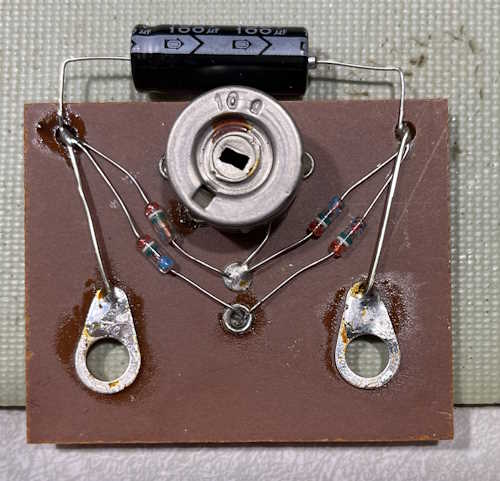
That goes back on the meter itself, and a couple of other parts connect to it.
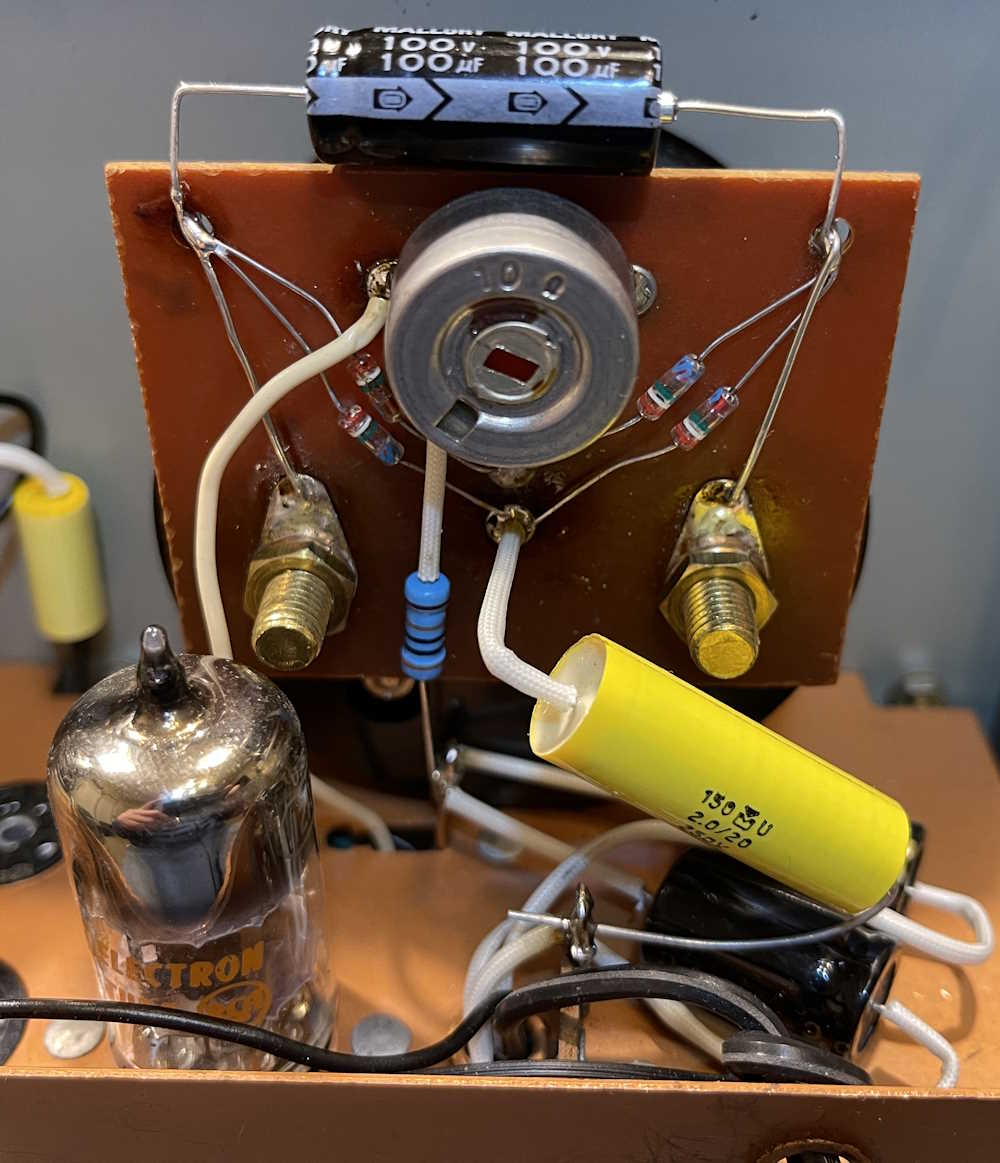
For now, the parts are simply tacked on to their respective tie points, as the meter board will need to come out at some point when the selenium rectifier is replaced. But for now, the meter is ready to test. It does zero now, mostly…it still seems to want to ride just a bit above zero, but it does go to zero, more or less. But there are obviously problems in the divider ladder as evidenced by the readings:
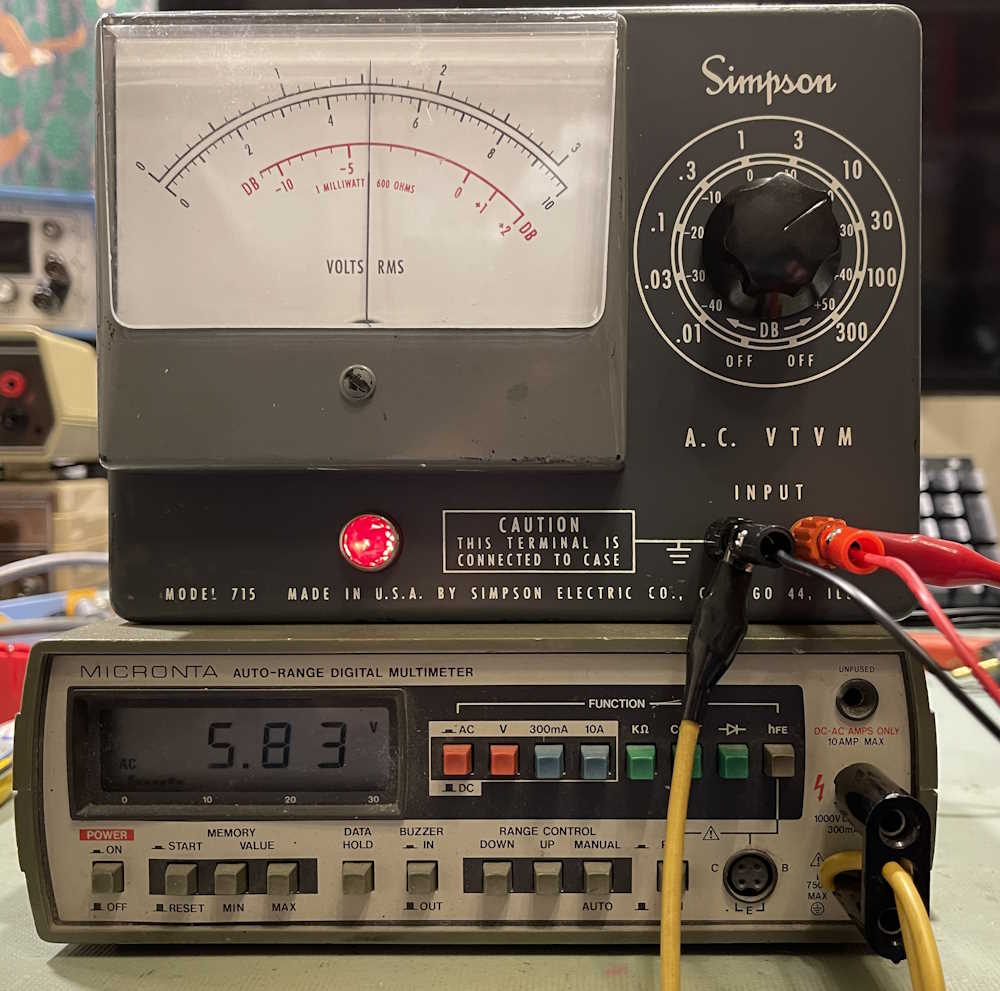
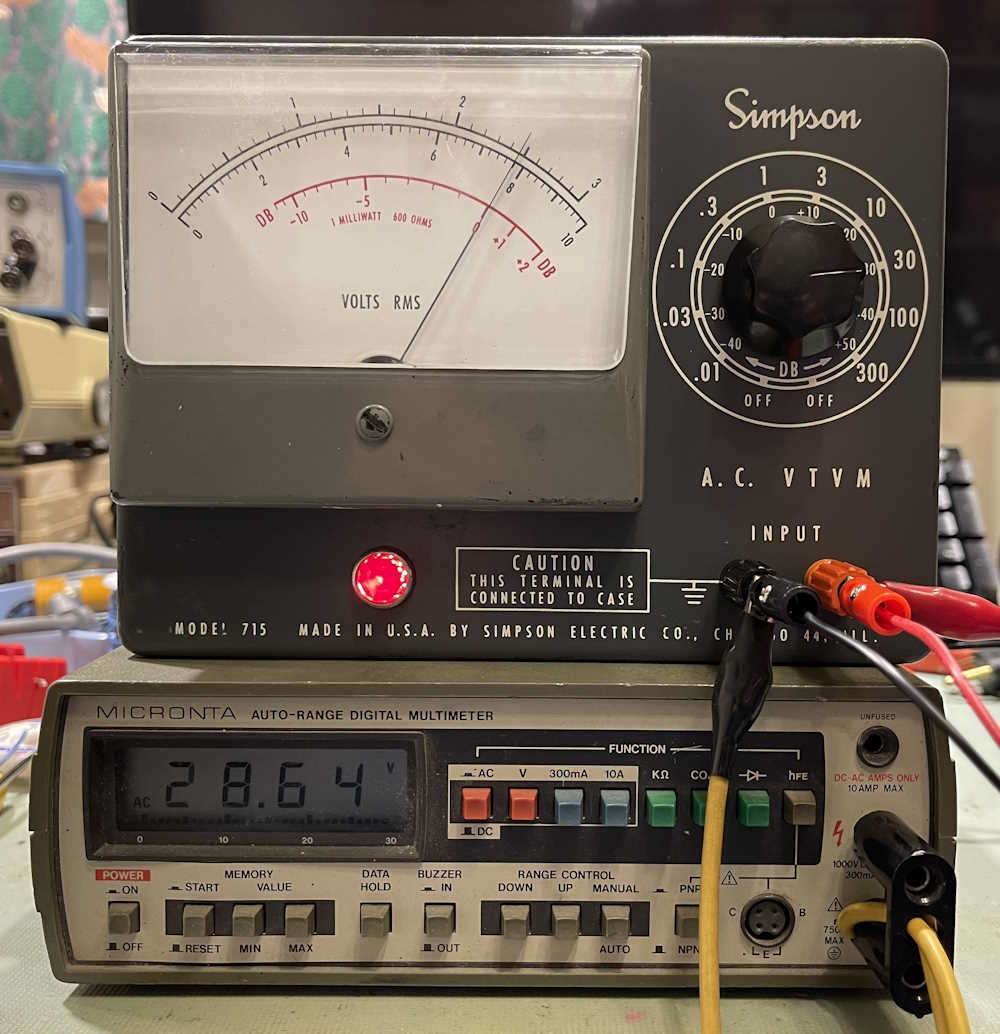
As you go higher the scale, it gets worse. There’s a bad (or some bad) resistor(s) in the divider ladder. That was expected, and wasn’t tested at the start because it was understood that there would be other problems. I wanted to correct the main issue first.
It does work, however, so it’s time to move on to the elephant in the room - the selenium rectifier. In order to replace this with a silicon diode, we need to know the current draw so an appropriately sized dropping resistor can be used in front of the first B+ point. We know that 1mA should be drawn at the second B+ point, so we could probably assume that similar will be drawn from the first B+ point, for a total of 2mA. First thing to do, however, is measure the output on the transformer. It looks like about a 1:1 output, as I have 118VAC on the secondary.
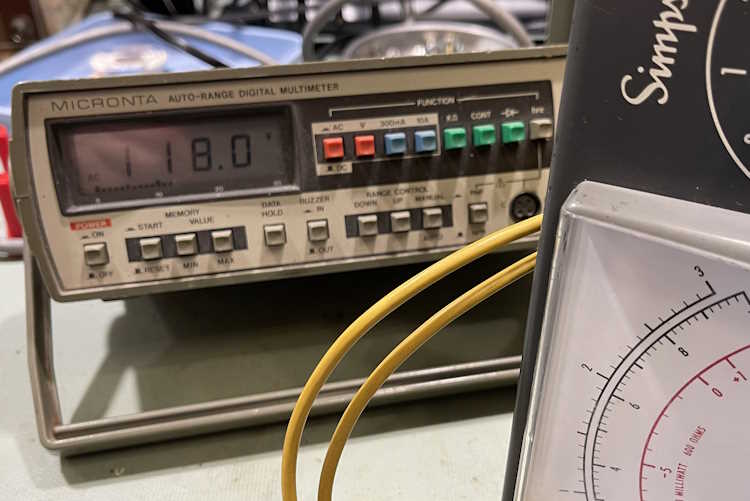
That should give us ~167VDC rectified, since Vr=Vin*1.414 or 167=118*1.414. Approximately.
Since selenium is inefficient, it drops a lot of voltage across it’s junctions, and we actually get ~142VDC. Therefore, the rectifier is dropping about 25VDC.
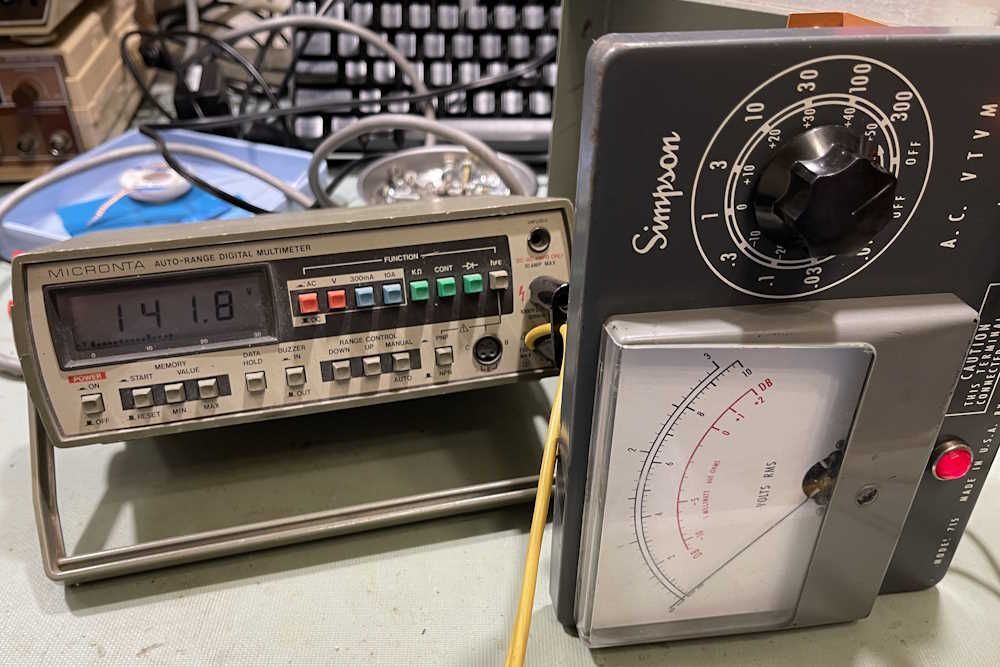
This is at the first B+ point, which should be 130VDC. The second B+ point should be 120VDC (which is it) with the drop being across a 10kΩ resistor, for 1mA of current. There’s obviously more being drawn here, as there’s still 120V on the second B+ point, so about 2mA of current is being consumed. I’m going to stick with the theory that 1mA should be consumed, so I’ve removed the connecting wire from the first B+ to measure the current in it. I get about 900μA, so we’ll call that 1mA.
And, the rectifier pops. It doesn’t burn, which is good, but it just quits. Nothing on the output anymore. Well…that’s good that I got to measure what I needed first, but that also gives me a chance to use something I picked up at a hamfest as a curiosity.
This is a Jackson Model 710 Selenium Rectifier Tester. Made by the Jackson Electrical Instrument Co. of Dayton, Ohio, this specific purpose device only tests Selenium devices. It was cheap and I got it for $1, but the only reason I bought it was that it looks cool. However, we get to use it!
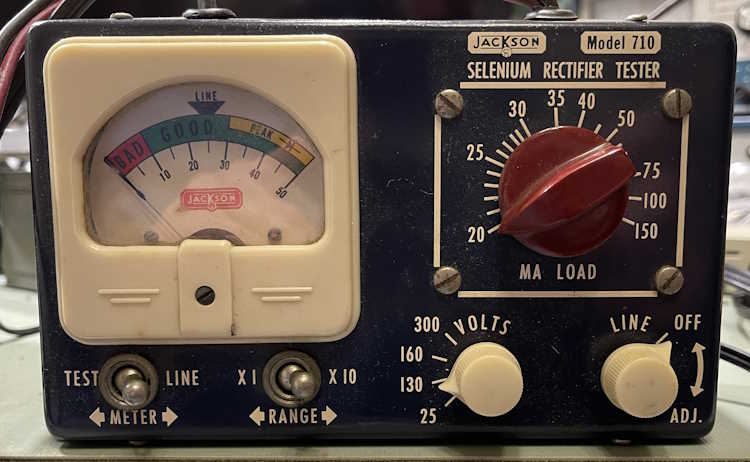
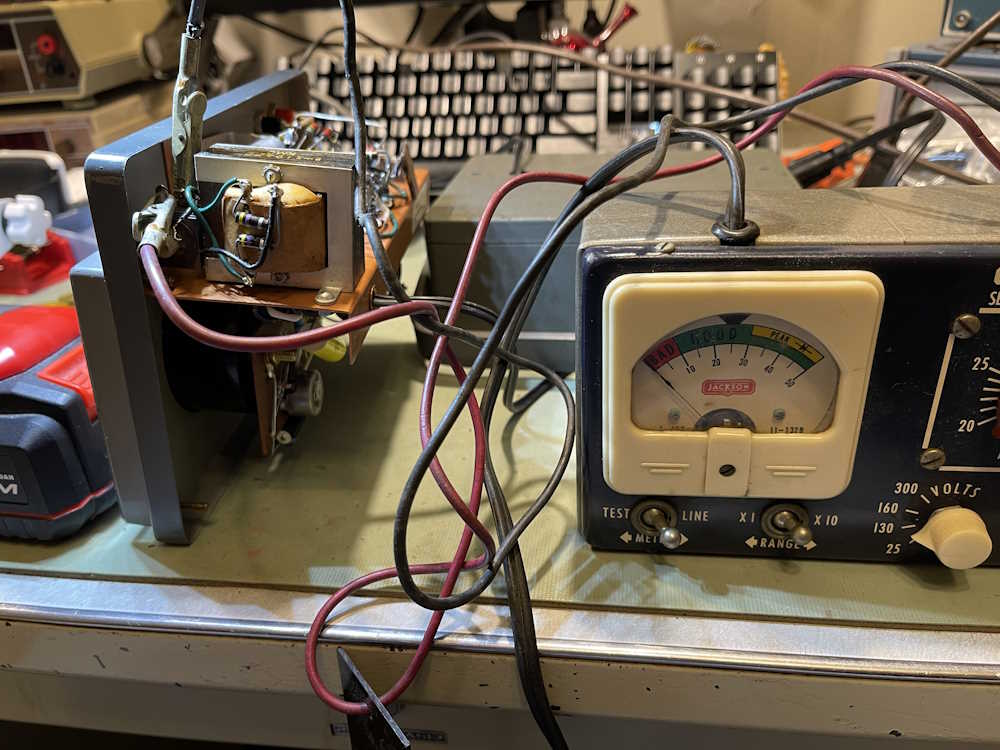
The device really needs to have it’s leads replaced as they’re cracked, but it will work for my purposes. I’m not sure what the ratings on the rectifier are, so I set the tester to 130V and 25mA.
Yeah, nothing either way.
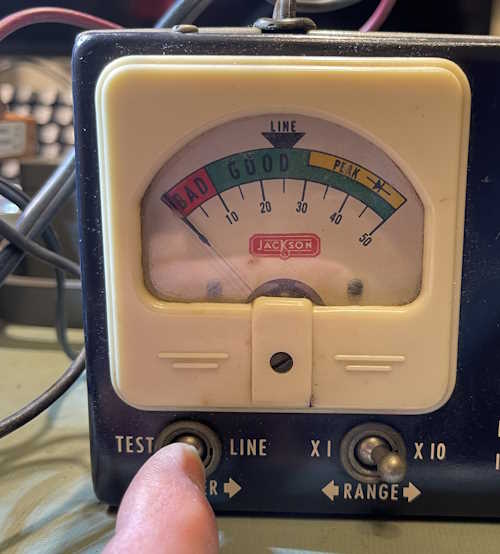
I tried every direction and combination of switches I could thing of. No results. Of course, we know it’s bad, but this was just a confirmation of that fact.
I did some work with the tester itself - it’s bad. Post on that coming soon.
That solves the problem of do I actually replace the rectifier, but now I need to get some resistors and check my calculations. This device goes back together and in the queue until I get some parts. Stay tuned!
Next part of this series: https://wereboar.com … part-6-intermission/
Previous part of this series: https://wereboar.com … t-4-filters-and-wtf/
Wrapup and final thoughts: https://wereboar.com … -and-final-thoughts/