Checking out some recent acquisitions - #4 - Odd Heathkit Stuff
Thursday, January 22, 2026 at 07:19:13
Here’s a device I picked up as part of a stack of stuff - A Heathkit IB-5281 RLC Bridge. This is a “more modern” equivalent of the old eye tube tester, and dates to the late 1970s. This is probably the last gasp of this type of device, as digital capacitance checkers started to become more readily available as the 80s moved on.
There was a whole set of devices in this range including:
AF Generator
RF Generator
RLC Bridge
Signal Tracer
Multimeter
They’re all in giant blue plastic boxes:

The device has a fairly short range of values it can test, and definitely seems to be geared towards the transistor era. One of the neat features is this device can also do matching by comparing the component in Zs with Zx, and dialing the main indicator away from 1.0 to give a determination on how close a match they are.
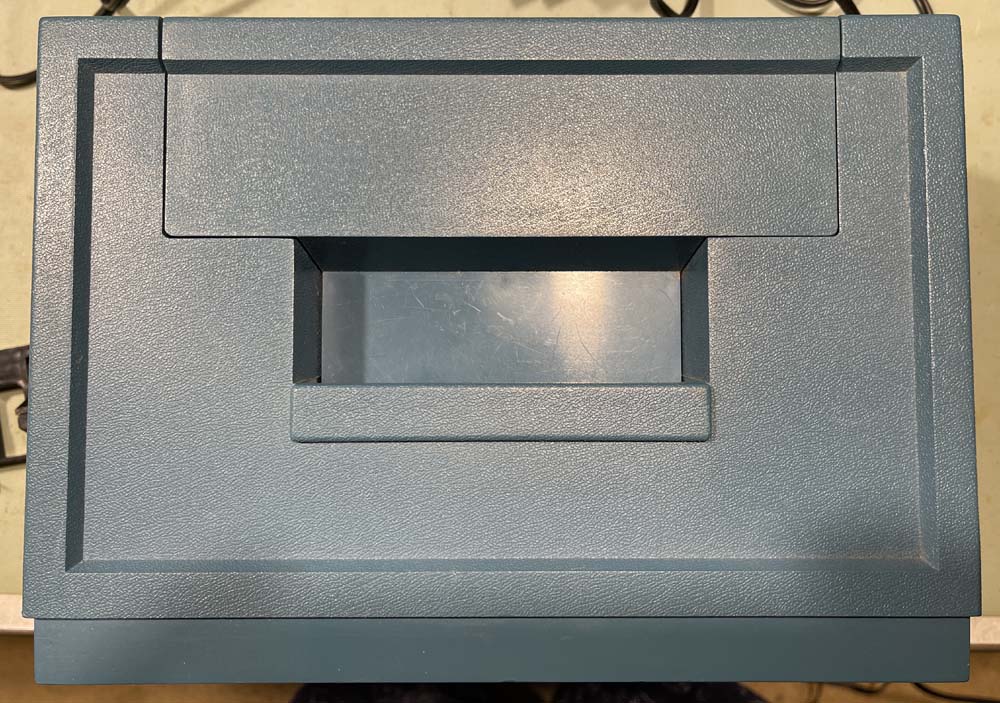
The top has a handle and a space that pulls up for cable storage:
And the back has the power input.

The device requires +/- 9VDC, and can run on either a pair of 9V batteries - which you have to disassemble the case to get at - or an external power supply. Originally, this would have had a molex connector similar to an old floppy drive power input, but the previous owner removed it and added a terminal strip.
Inside of the device is pretty sparse.
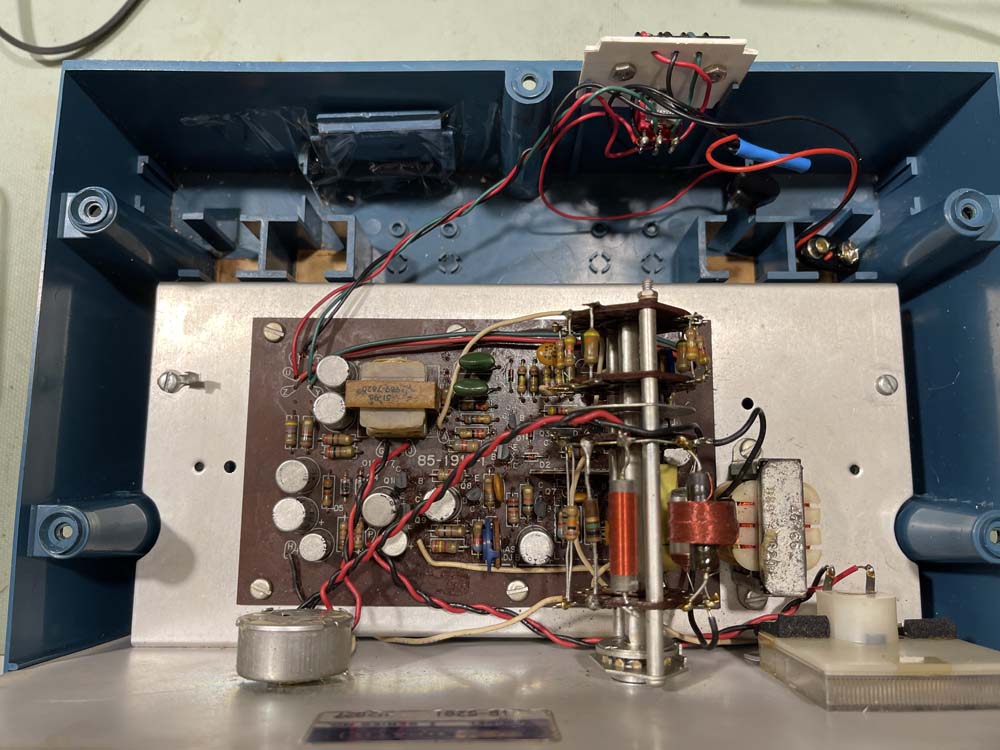
A single board with all the components, the mode switch, meter, and value pot. The batteries go in holders at the back, if you choose to use them.
Let’s hook a part up to this and see what it does. I chose a bumblebomb from the Simpson 715 that is currently on the bench. It’s marked 0.047μF but reads about 0.052μF on my digital meter.
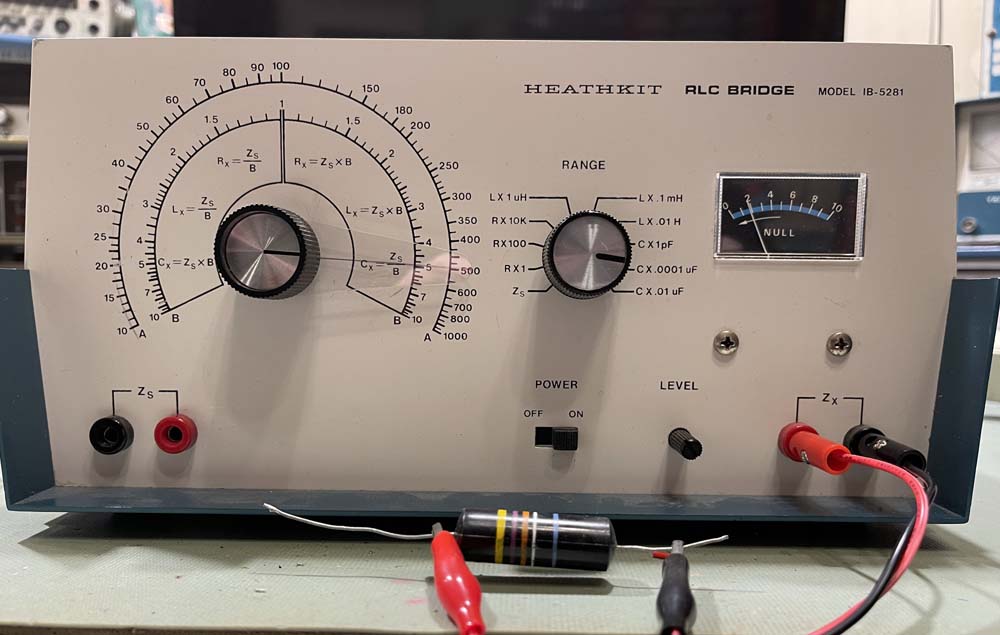
Lead length is important here. I tried these cheap long leads, but ended up having to rig up a set of shorter ones to get an accurate reading.
To use this, you:
Connect the unknown.
Set the range switch appropriately.
Turn the value dial as far away from the believed value of the unknown.
Adjust the meter level until it’s “10.”
Turn the value dial to get as close to “0” on the meter as possible.
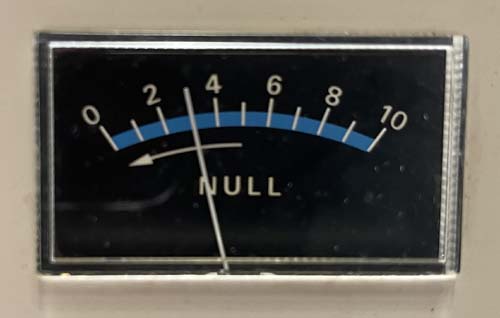
Adjust the meter level control back up towards “10.”
Re-adjust the value dial to null again.
Repeat the above two steps until you can’t go up and/or null anymore.
I ended up with this for the part under test:
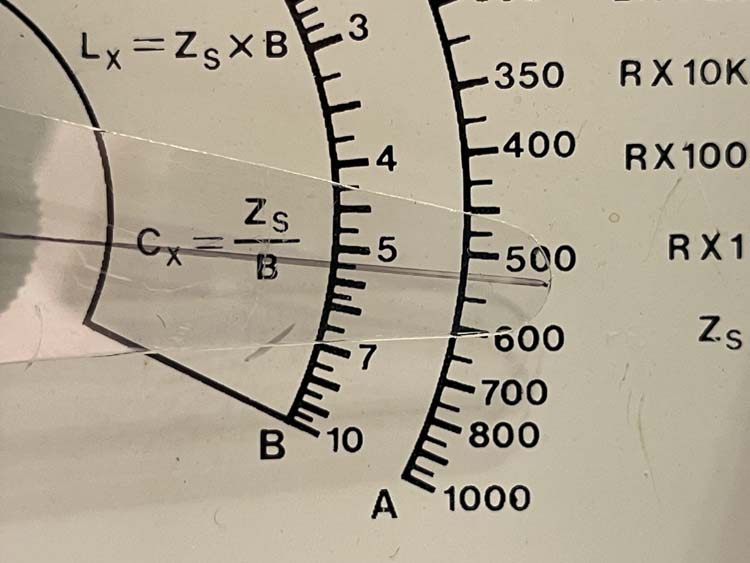
So…it works as expected, even though I can see the level pot wearing out quick since you’re constantly adjusting it. I have to wonder why that control didn’t get a nice knob - that little plastic shaft is difficult to turn accutrately, especially considering that meter is quite unstable. Who knows.
I’ll probably keep this, just for the novelty, but who knows. You may see it and it’s brothers at a show near you.
Next part of this series: https://wereboar.com … -odd-heathkit-stuff/
Previous part of this series: https://wereboar.com … 3-radio-shack-lives/