An EICO 249 VTVM, Part 1: Observations
Thursday, April 2, 2026 at 08:04:00
Another selenium-laden device. Why do I do this to myself?
The EICO 249 (And it’s small-form-factor cousin the 232) are VTVM units that offer both a P/P and RMS scale on their wonderfully large, but not parallax corrected face. It offers VDC, VAC, and Ohms (via an internal 1.5V battery.) These date the 1960s, and as such, are probably one of the last-gasp devices that had both tubes and selenium rectifiers for the power supply.
The EICO 249 - The repair candidate
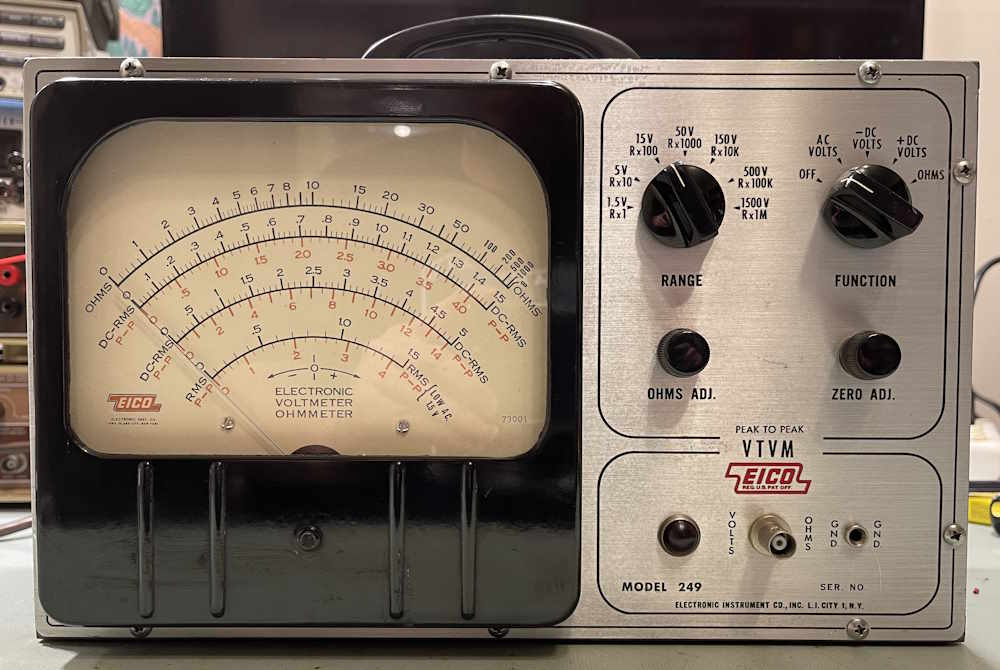
This unit came from the Cuyahoga Falls ARC hamfest along with the PACO G-30 that was on the bench earlier. It was the same vendor, so it has similar repairs inside - including replacement parts that don’t meet certain specs of the unit and will need to go if this wants to be in service.
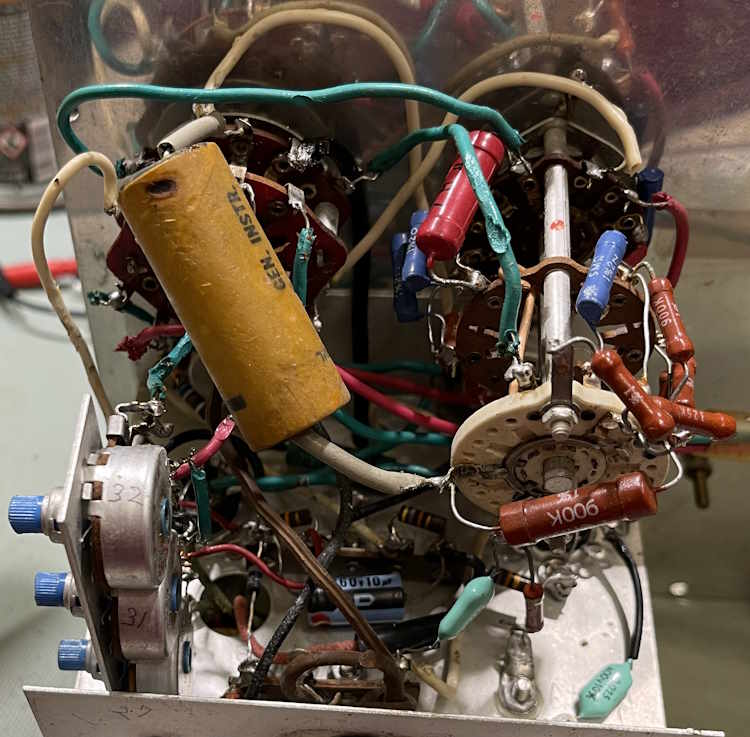
The inside of the unit shows obvious work. It’s organized chaos.
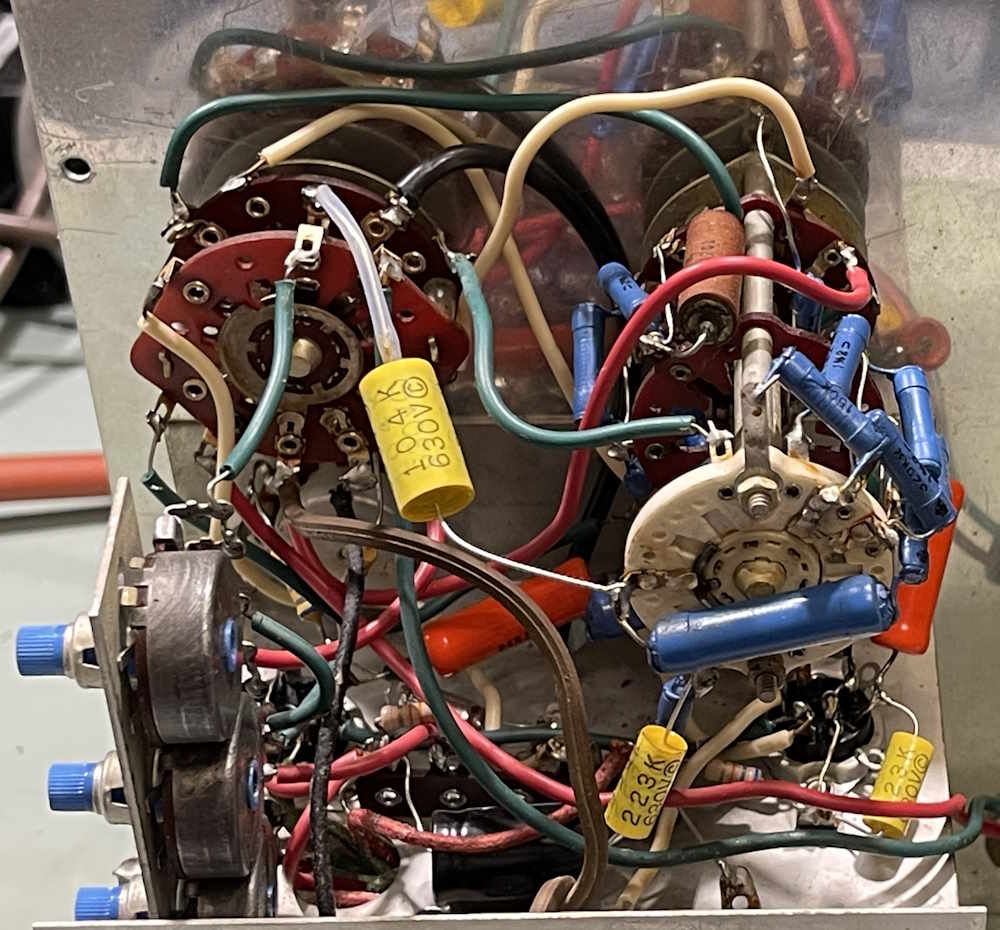
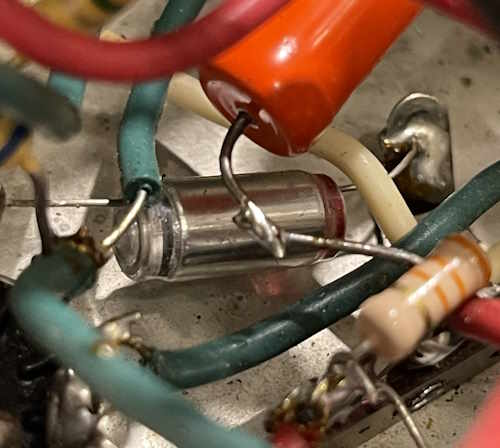
The capacitors have all been replaced, as have some of the non-divider resistors. The orange parts near the bottom aren’t capacitors, but big resistors chained together to make some value. Front and center, however, is the 0.1µF @ 630V capacitor. This one is called out as 1000V in the specs, as this is an input blocking capacitor and may see a higher voltage on the input. The person doing the replacement just used a regular part without considering why that voltage was chosen. Of the most interest, however, are those blue resistors on the switch assembly. This is the voltage divider ladder, and we’ll come to that shortly.
The wiring seems to be thick and rubberized, and some is breaking down. It will need to be replaced as well, although not all of it.
The bottom of the chassis has the input jacks - the input was replaced with a BNC connector - the tubes, transformer, battery holder for the ohms function, as well as an enclosed 35mA selenium rectifier. This particular unit uses a split rail supply, so it’s going to be interesting seeing how it reacts with a modern silicon diode instead of this non-linear rectifier.
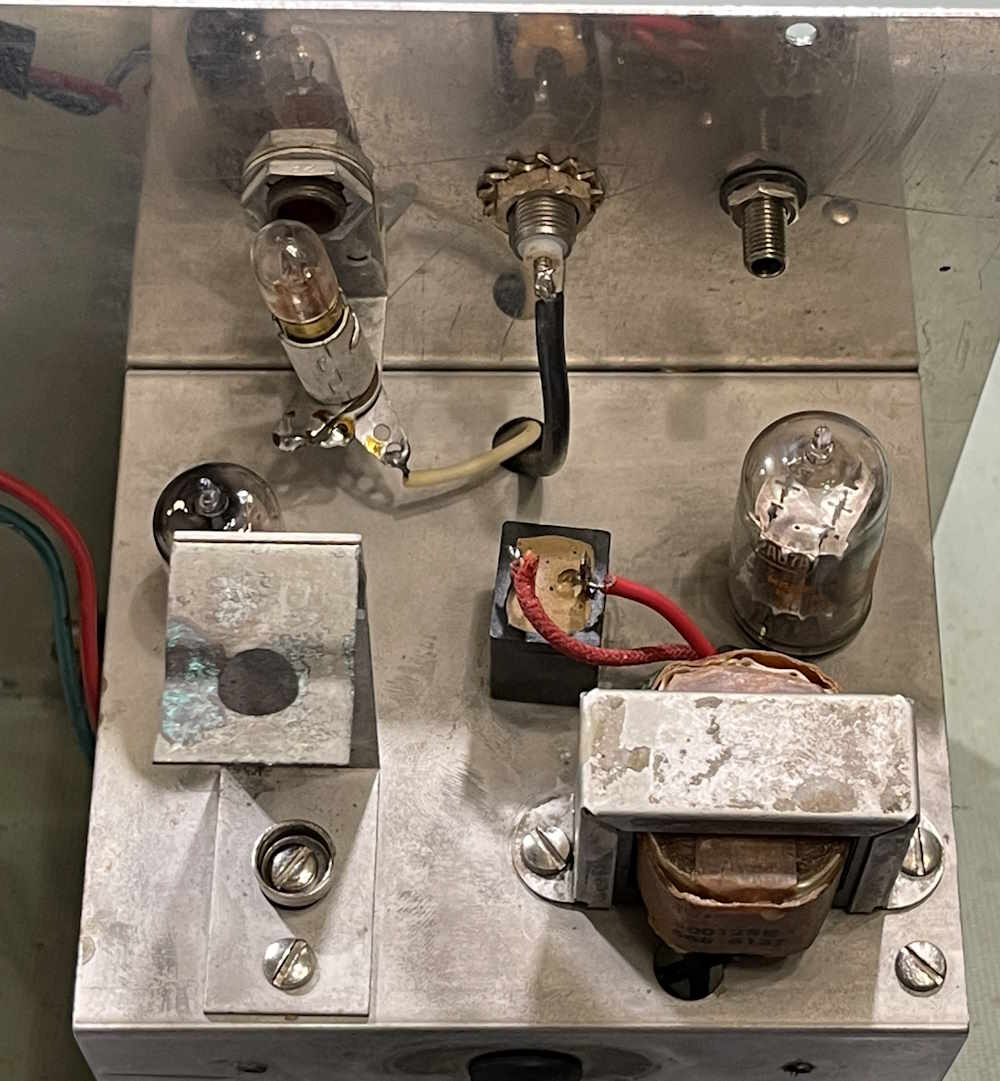
B+ total is about 150VDC between the positive and negative rails, so it’s not going to be difficult to work with. I question the use of a 150V filter capacitor in this circuit, however…those old paper caps did things differently and I’d probably chose a 200-250V part these days.
How does it perform? It’s…accurate-ish. Some scales are ok, others are not.
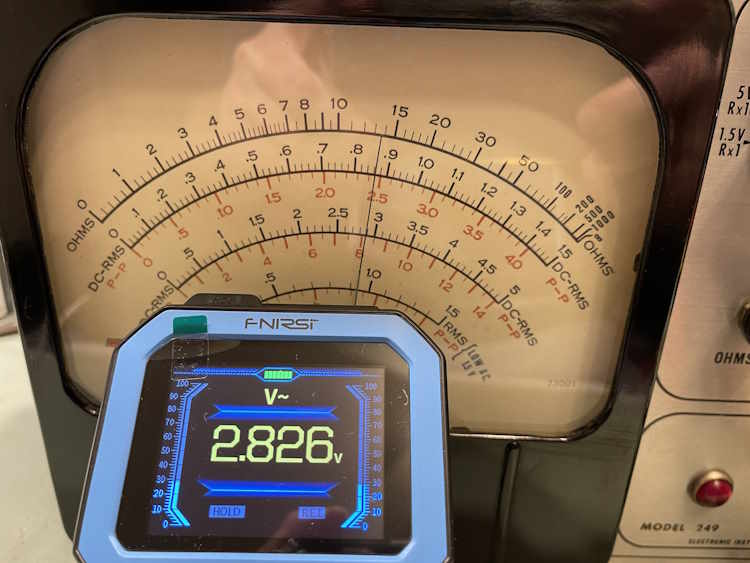
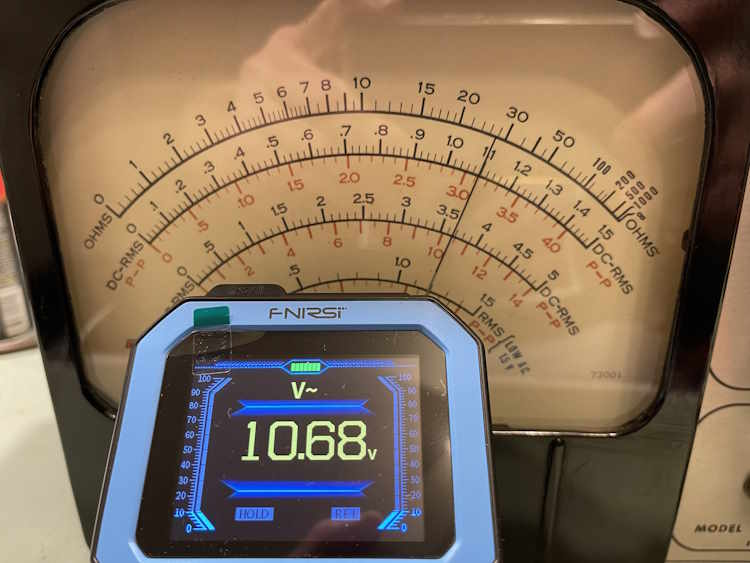
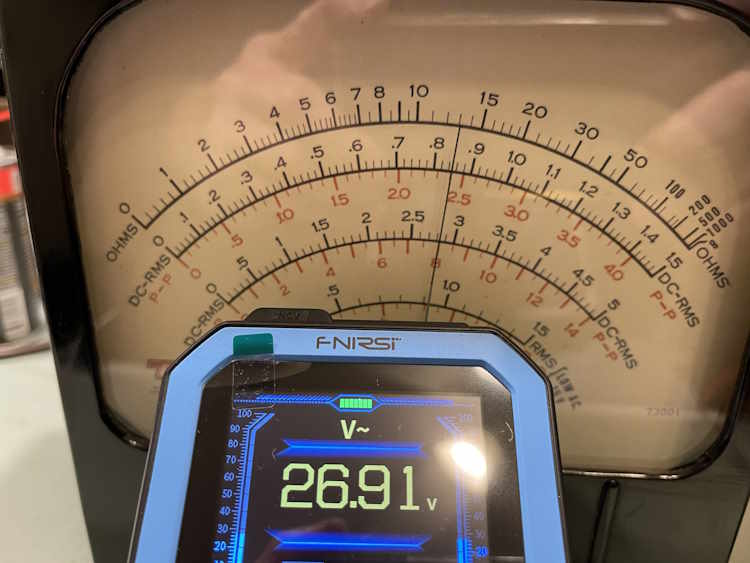
While the voltages were close after dialing in a test point with the adjustments on the side, they’re still off. That’s because the resistors in the divider ladder are all out of tolerance. These were 1% parts when new, and have simply drifted some over the years. That it’s not much is a testament to the quality of the parts themselves.
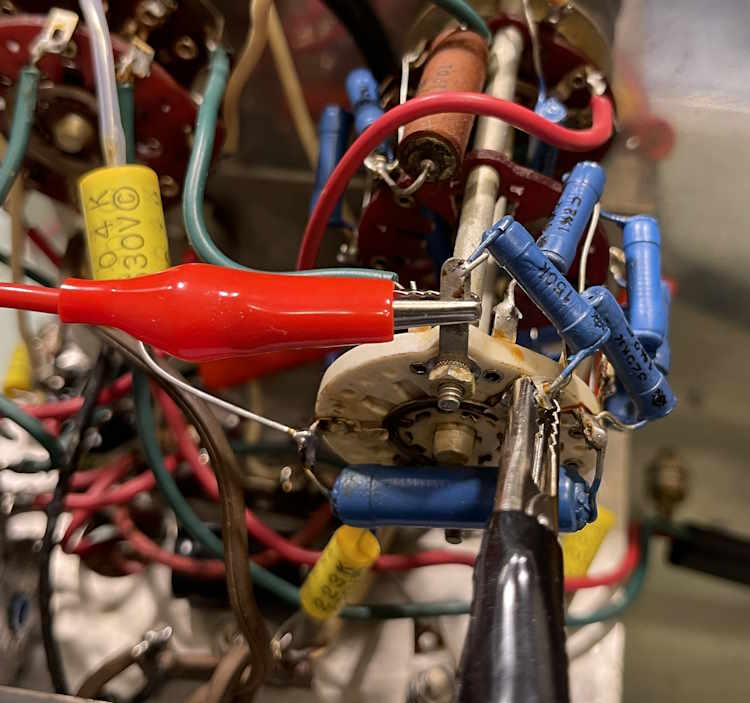
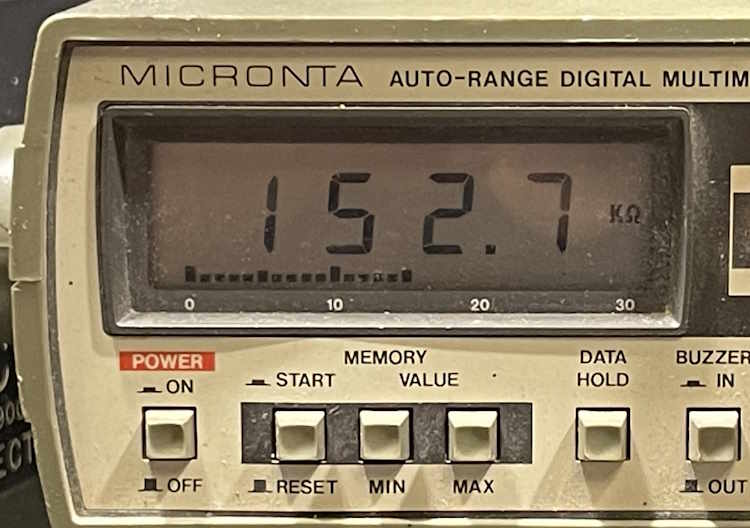
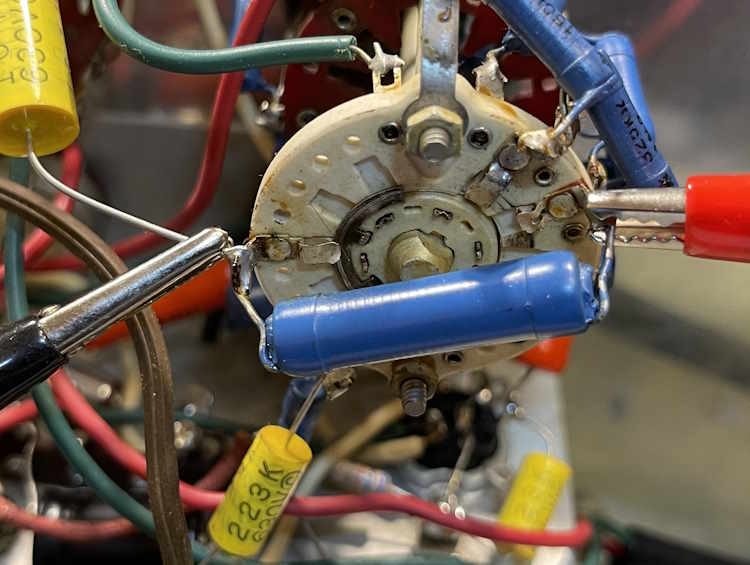
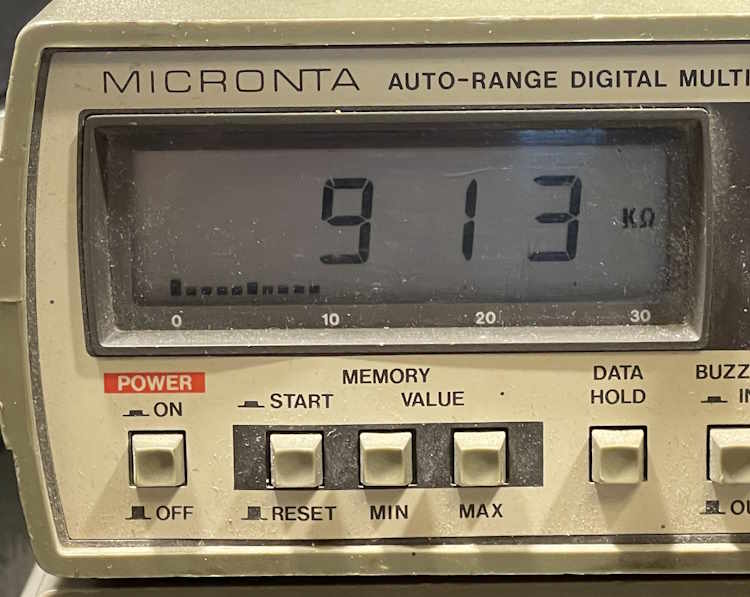
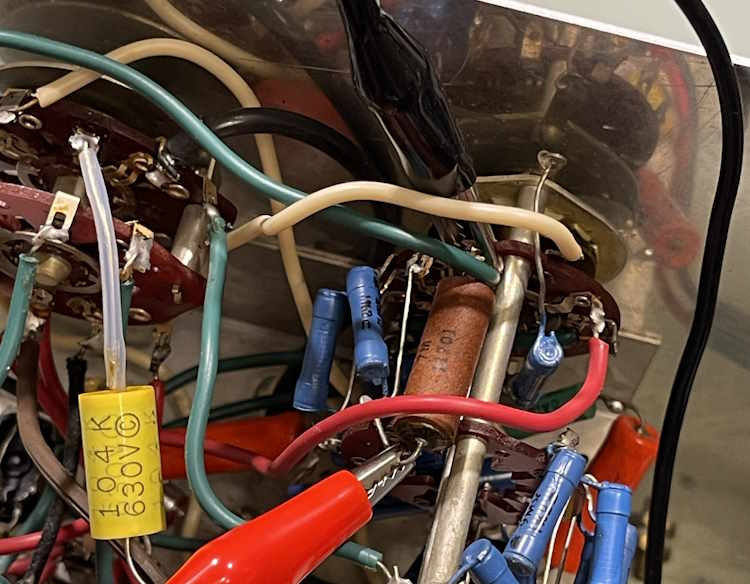
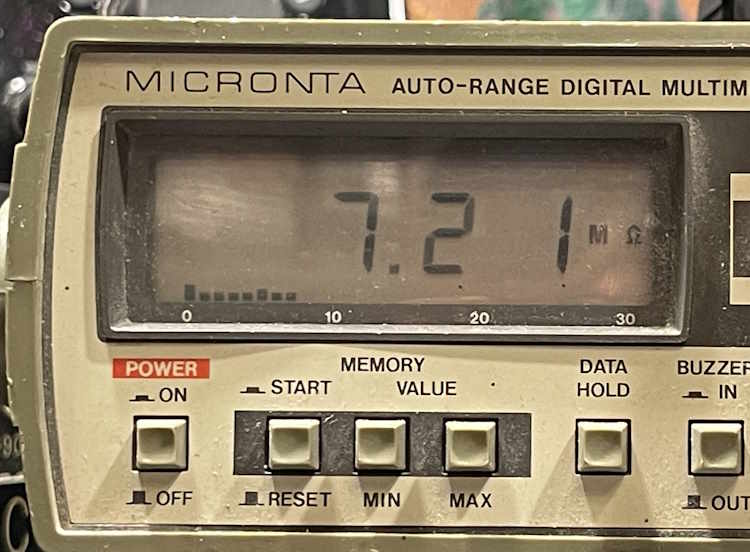
Others in the ladder were similar. They’re all bad. While 2% may not seem like much, it’s all of them in series with one another being off that causes drift and deviation. The unfortunate thing here is that most are unusual values and will require some chaining to replicate. Fortunately, these values can be made with standard values either in series or parallel.
The EICO 249 - The parts unit.
Setting that one aside for now, I have a second unit. This unit was purchased on fleebay, and the person packing it didn’t pack it well. The box was destroyed and the meter movement was damaged. That’s kind of a shame because this movement was the later, clear style. At least, I think it’s later…the date stamped was 1968. The golden color on the face is the glue from the original paper protector material, the paper apparently not having been removed until too late. There was still evidence of it under the nuts on the controls.
This one still has a lot of it’s original parts inside, with some old replacements. This one no longer had it’s selenium device, someone had put a diode in it without considering the effects of the much lower voltage drop on the power supply. I wonder how well that worked? I won’t know because it wasn’t functional when I got it, the meter being jammed to one side and coming unstuck broken.
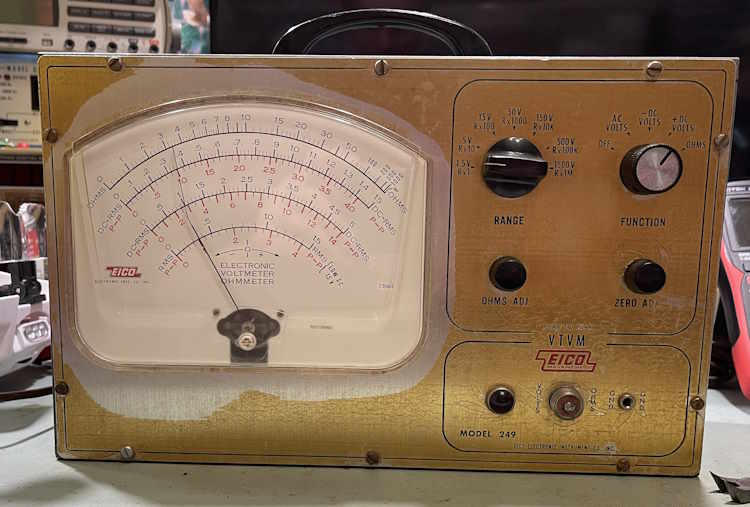
This one is a mishmash of garbage and sadness.
These capacitors didn’t measure anywhere near the marked values.
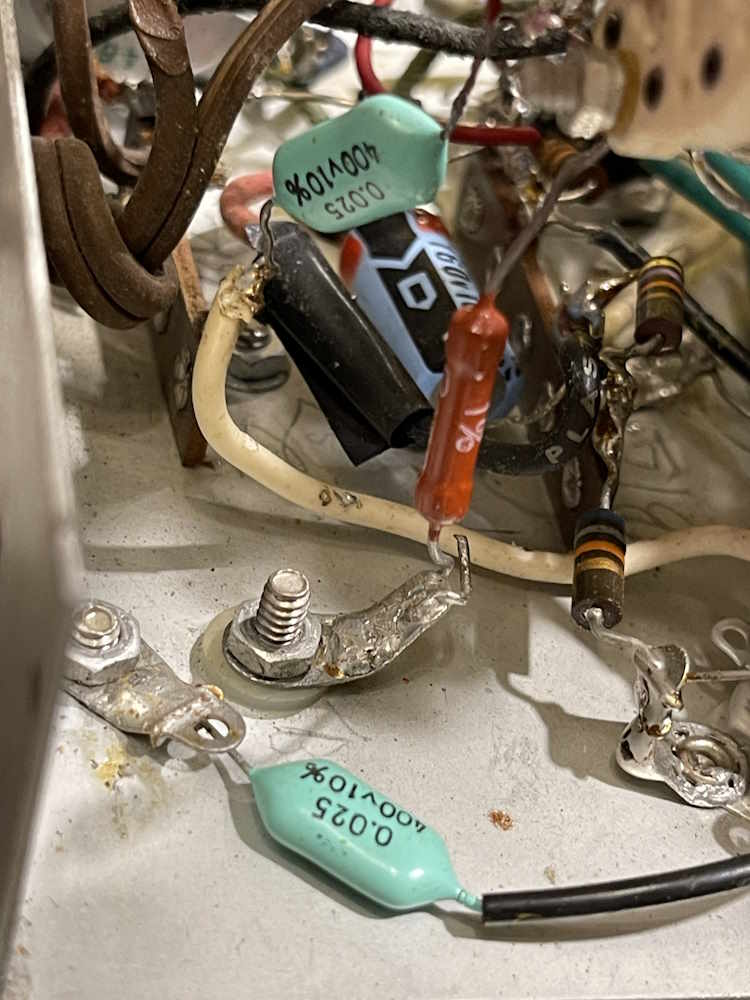
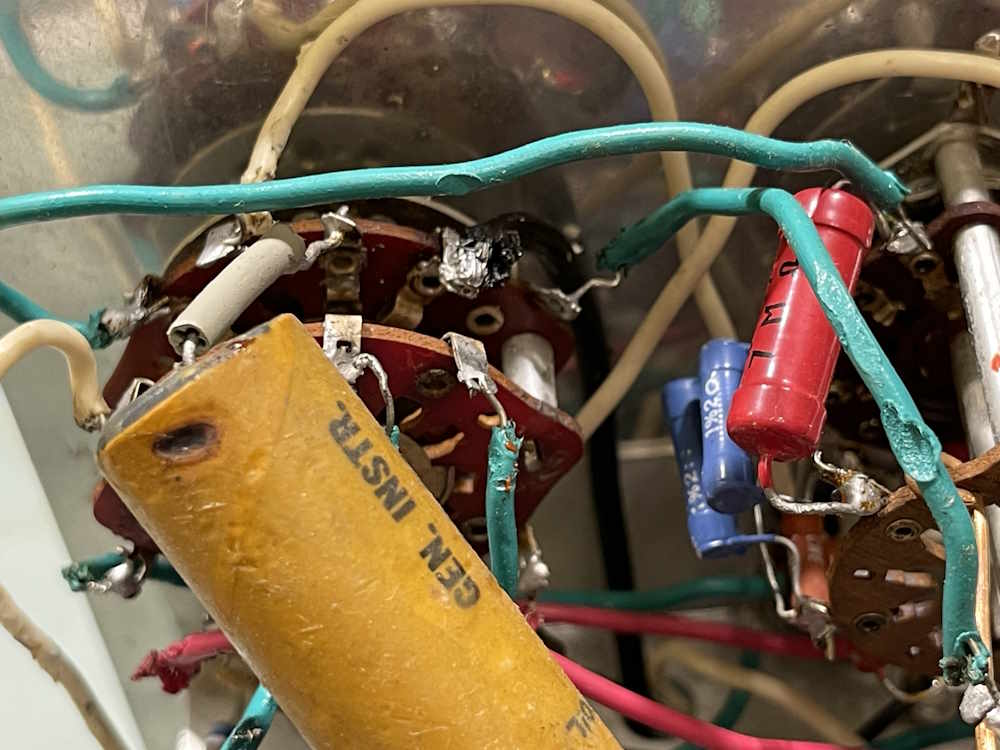
Wiring was burnt. Almost every wire. Every. Single. One. Even the big 1000V capacitor in front of us is burnt.
How are the resistors in this one’s divider ladder?
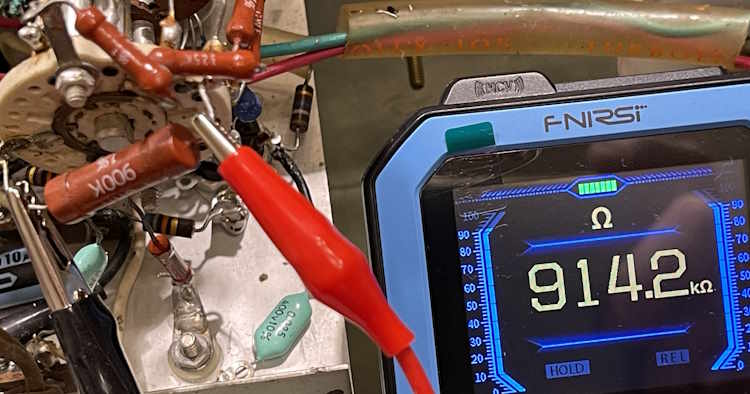
About the same. There’s a couple in there that are right on, so…maybe I’ll take them off and see if they can be reused.
However…this one is not a unit that I can save, so it’s parts. Literally, a pile of parts.
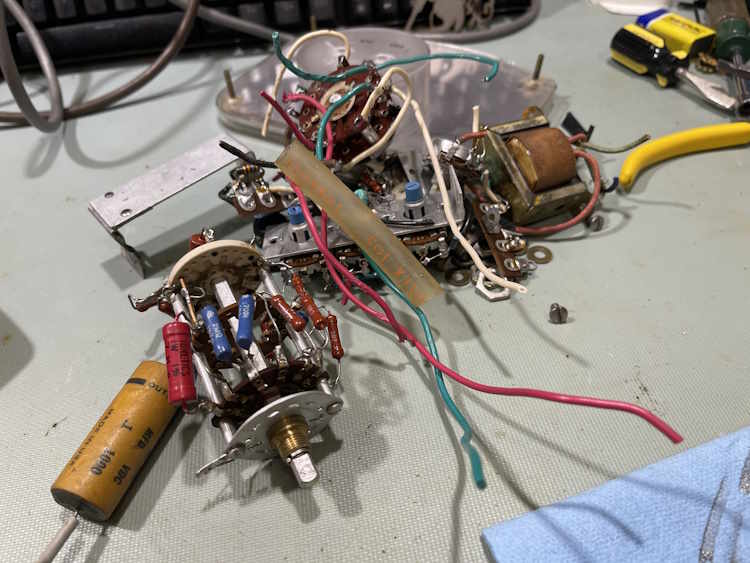
But, all is not lost. The range switch may be a candidate for out-of-unit rebuild. I took some time to remove a hold-down mod the person put in for one of the contacts, and cleaned the metal rings. It seems to work ok, so I’m going to try it.
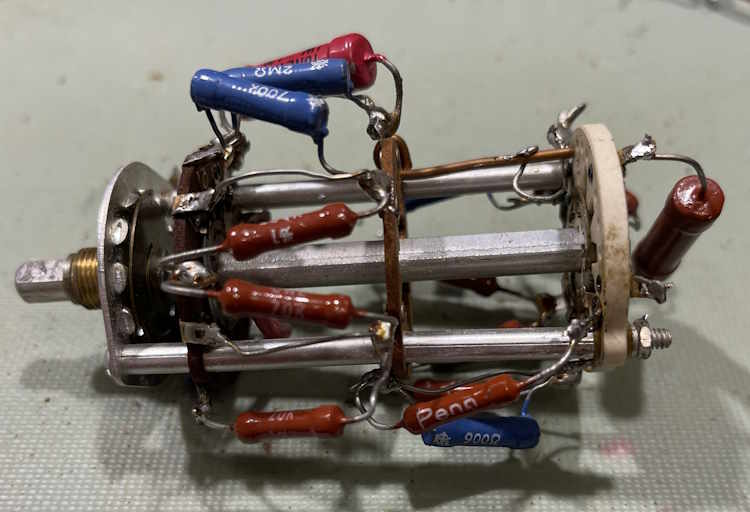
This thing may have a good chance of living again. Stay tuned!
Next part of this series: Coming soon.
Wrapup and final thoughts: Coming at some point.