The Trekster 4-band and 6-band radio kits
Monday, April 20, 2026 at 13:00:28
I feel it necessary to mention that these kits were offered to me with no cost, in exchange for a review.
After the Trekster Crystal Radio Kit post, the creator asked if I’d like to review a couple of his other kits. Of course, I love kits, especially ones that actually do something - and a radio is the best “does something” you can have. There are two kits in this package, a 4 band and a 6 band kit. Each is packed in it’s own labeled box, along with some notes from the creator and stickers. Stickers in a pack is always cool, and these will probably end up on the network rack somewhere.
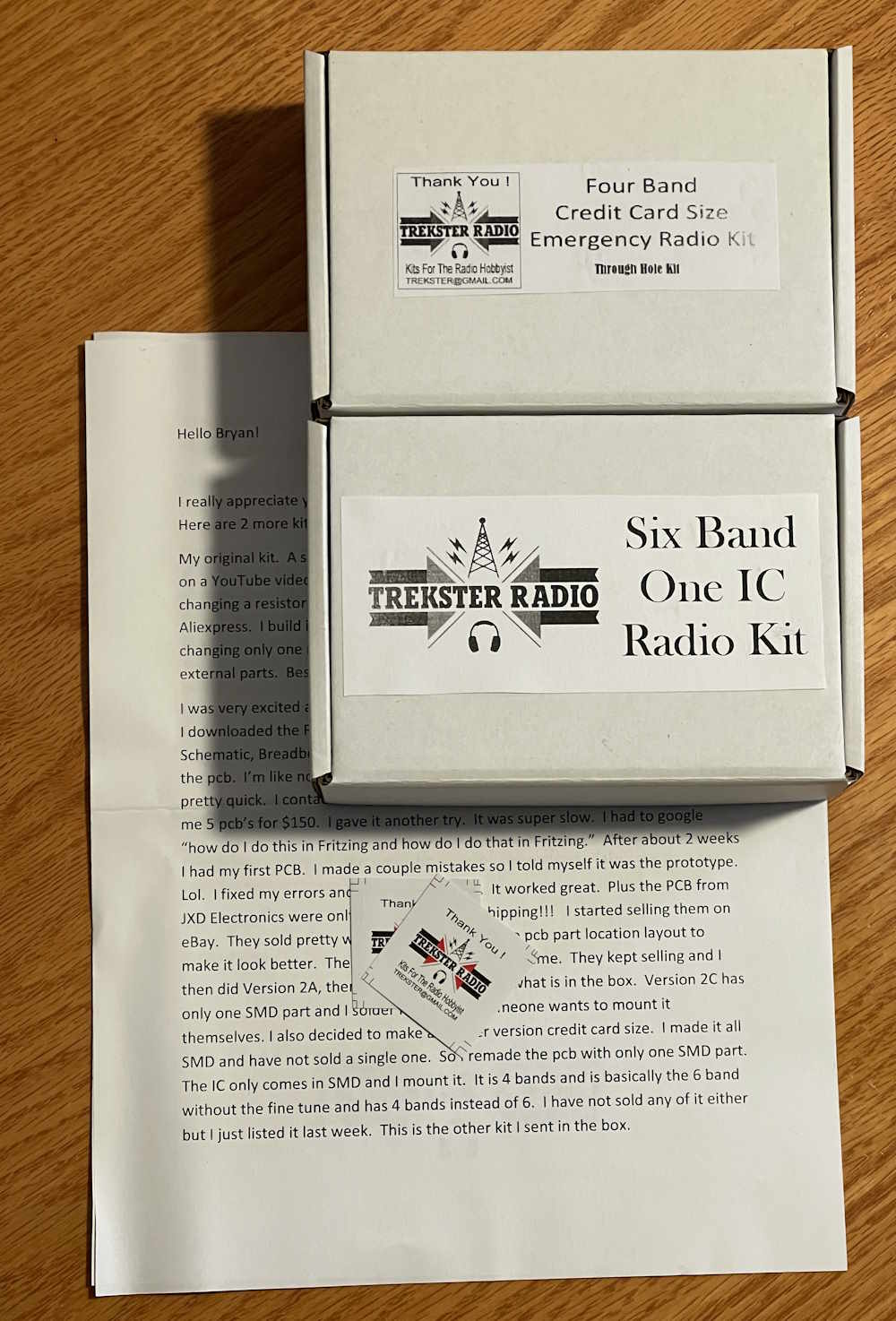
Let’s start with the four band kit first. The creator has stated that he envisions this as a device you can keep around in the event of an emergency - be it a simple power outage, or something far more damaging. Because of that, the size was kept to a minimum. So what’s inside?
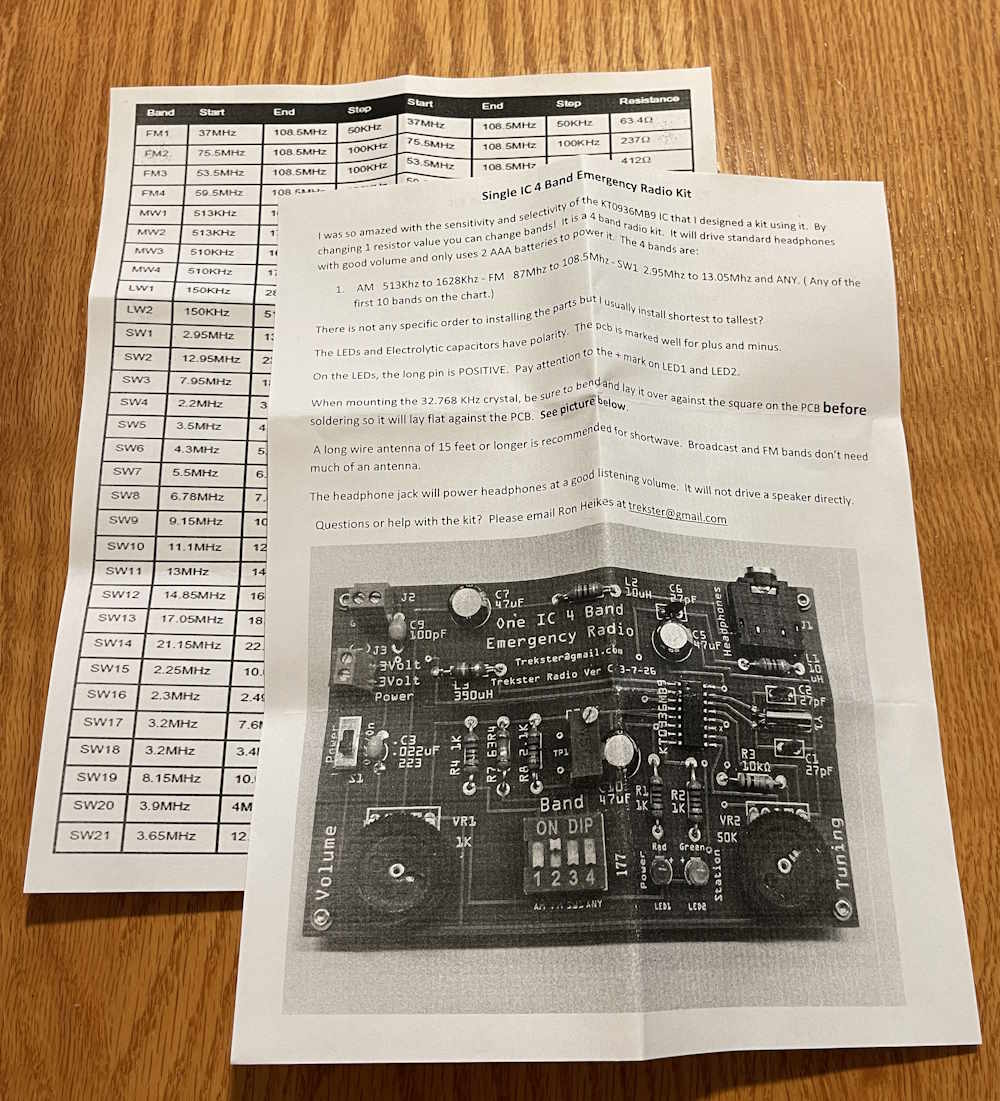
Some paperwork, including some kit assembly notes and a sheet detailing what resistances are for what band.
There’s a nice PCB, and yes - it’s credit card sized.
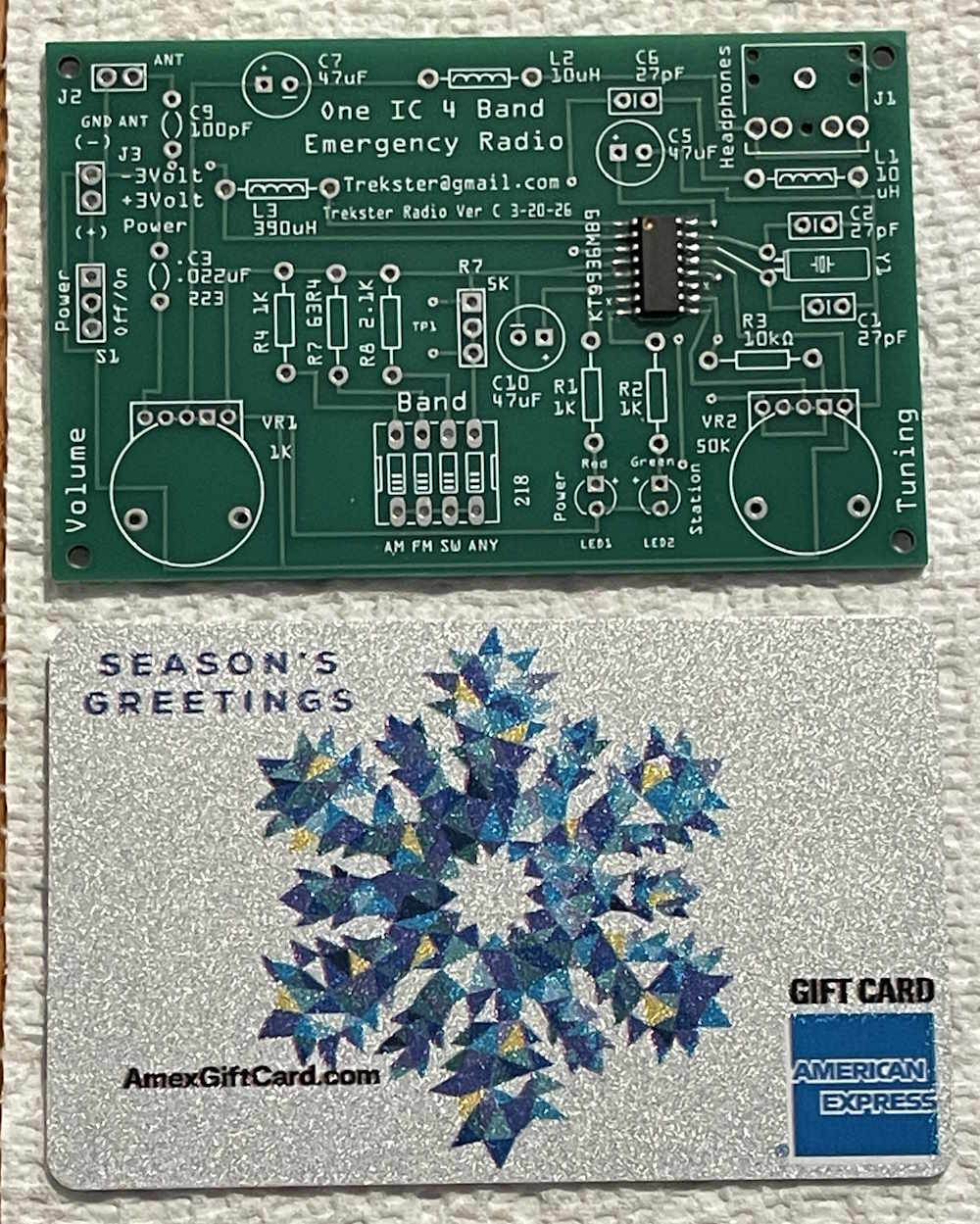
The creator has soldered the main IC on to the board for you ahead of time, although you can request that this not be done. SMT soldering can be a bit tricky, so this is a very nice touch, especially for beginner kit builders.
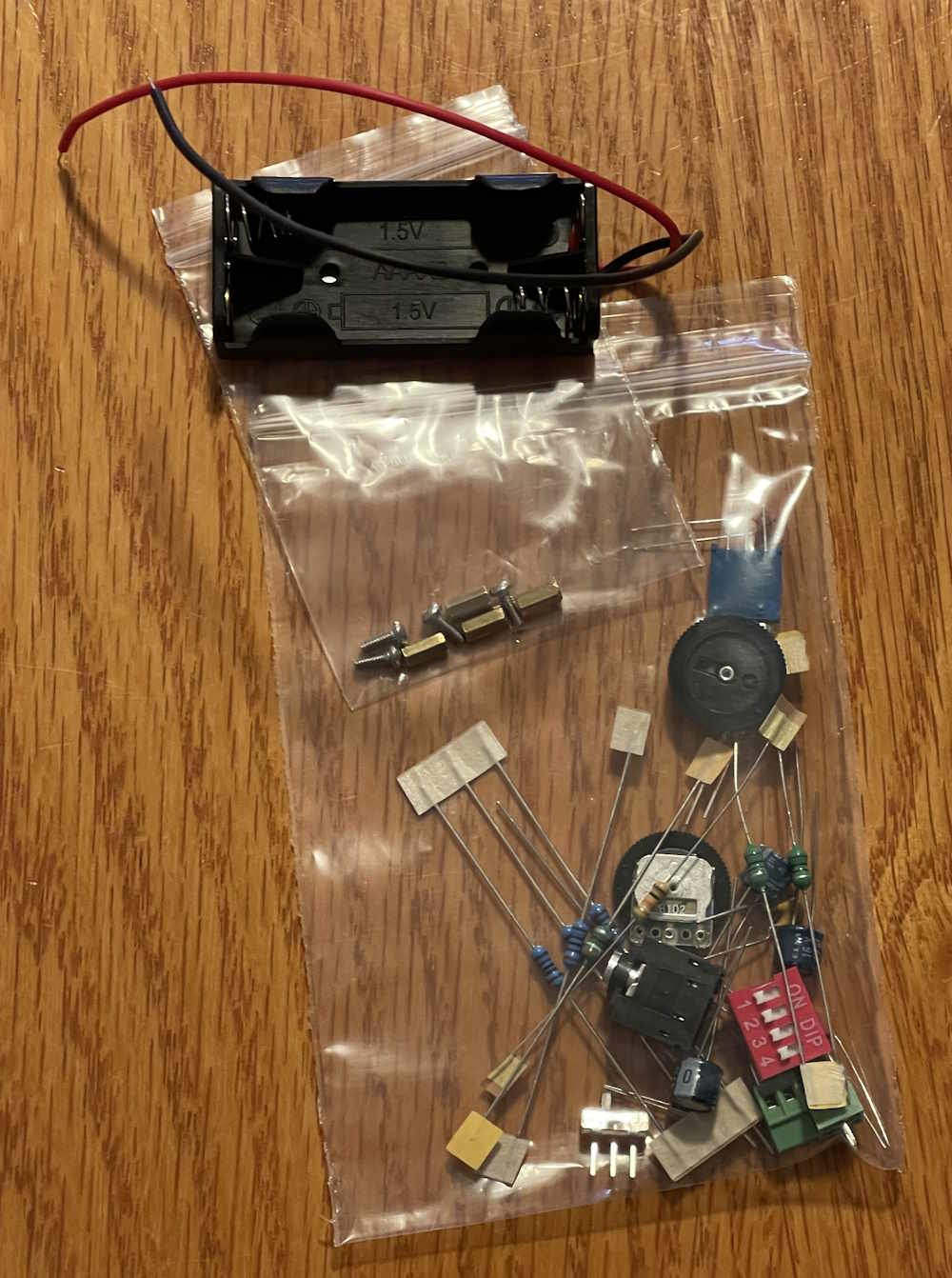
And of course, parts. You need parts. This is a fairly small amount of parts, so this would be a very easy kit for someone looking to do their next build.
Note the battery holder. This guy runs on 3VDC provided, in this case, by two AAA primary (not-rechargable) cells. Why is that important? You may not have power in an outage or other emergency, so something you can just shove some batteries in is an imperative. You can probably get batteries, can you get a charger for that unusual cell in your other device? 3V is also a nice, easy voltage to get - if you have LiFePO4 cells available, a single cell with a Ge diode in series will give you ~3V when charged, and there are plenty of other ways to get that small of a voltage in the event you can’t get it from regular alkaline cells. This is a kit, don’t be afraid to experiment!
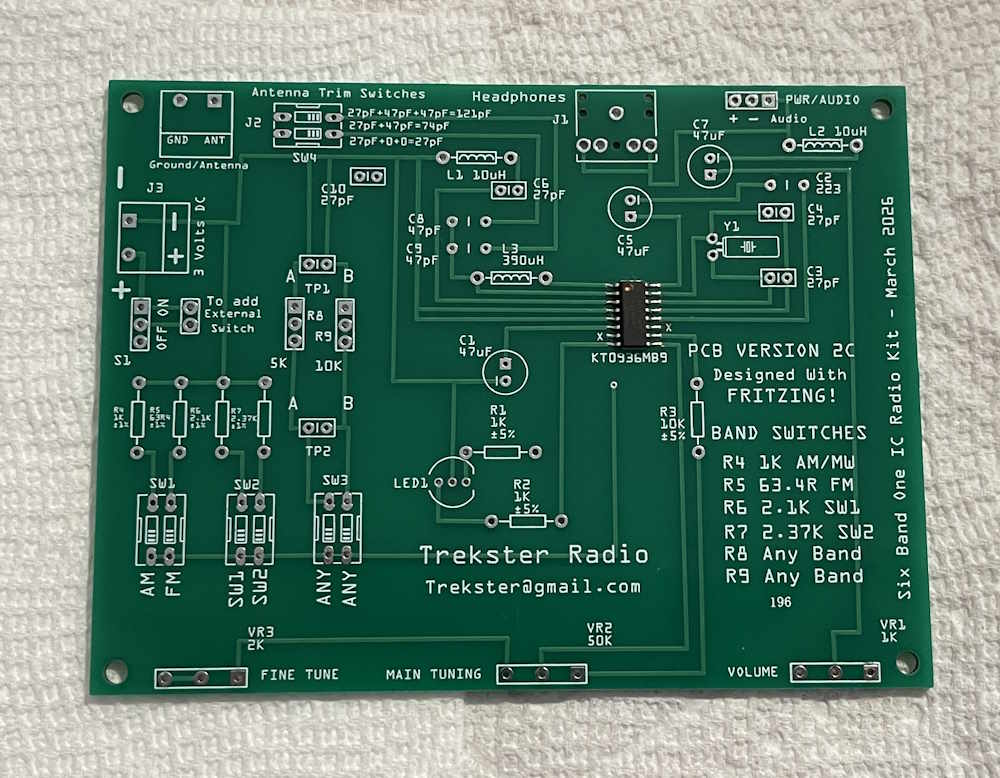
The Six Band unit is similar to it’s little brother, save it offers…6 bands! This one also comes with the main IC soldered, or not depending on how you request it. There’s also some instructions and a band selection sheet inside the box. The PCB has grown a bit to accommodate the extra components for more bands.
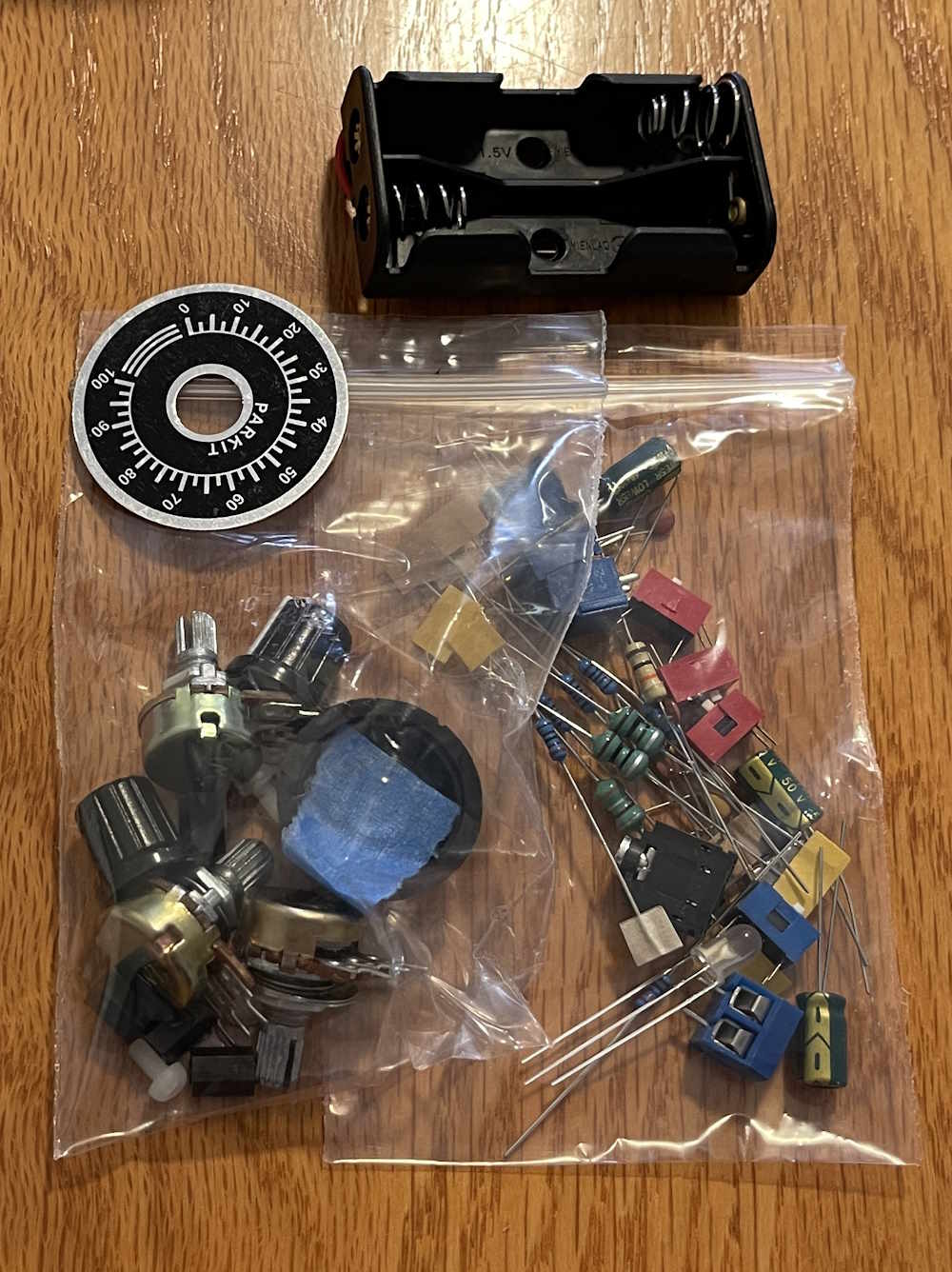
This one comes with quite a few parts. I’d probably put this in the “Just past beginner” level. Note that it also runs off primary cells, but in this case we’re using AA batteries. The above notes for the 4-band also apply here, don’t be afraid to get 3V from other places.
In conclusion? What can I say, the crystal kit was a solid 10. It did what it was supposed to without fuss, and was easy enough to put together. The board is clean, well marked, and should present no problem to anyone with a little bit of electronics experience under their belt. I don’t expect any problems from these devices.
You will need something to make an antenna with - 50ft of 22ga wire is probably fine, and something to get an Earth ground with - depending on what you’re trying to receive. Those are on you, but really - it’s just wire. Order a spool on eBay and be done with it.
I’m looking forward to putting these together, and I’m going to try and get that done soon. Dayton is coming up, so it may get pushed back just a bit - but I think I may go all out with the “no power” theme and see if I can make this run on a bleach cell battery. As always, if you’d like to get one of your own, you can purchase direct from the creator’s store: https://www.ebay.com/usr/trekster4tw7.
Stay tuned!
Next part of this series: Coming soon.