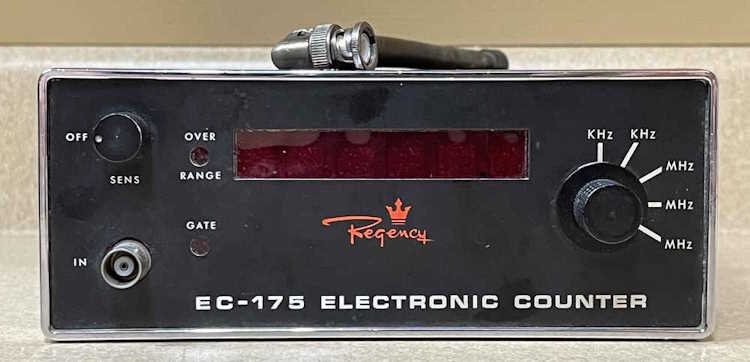
Earlier this year, I went to the Cuyahoga Falls hamfest and brought home a Regency EC-175 frequency counter. This device has a OCXO in order to maintain a low PPM deviation for FCC compliance use. It’s really kind of an odd piece for Regency, and was going for next to nothing.
The Regency counter works, but is off by a considerable margin. I suspect this is probably just the 10MHz oven needing some adjustment.
My plan was to poke around inside of it and determine what was what, as I don’t have a service or operators manual. (I’ve since found an operators manual and will post it as soon as possible.) I was planning on using a cheap Lodestar signal generator and my Fluke 1910A 125MHz frequency counter to try and bring the Regency into adjustment.
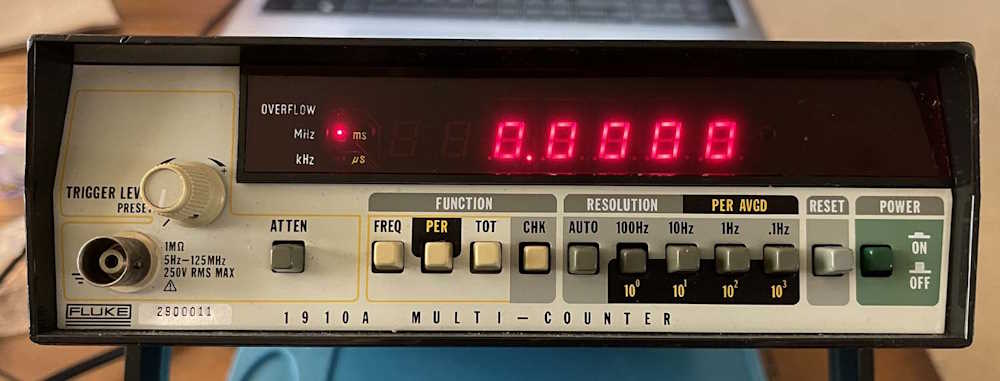
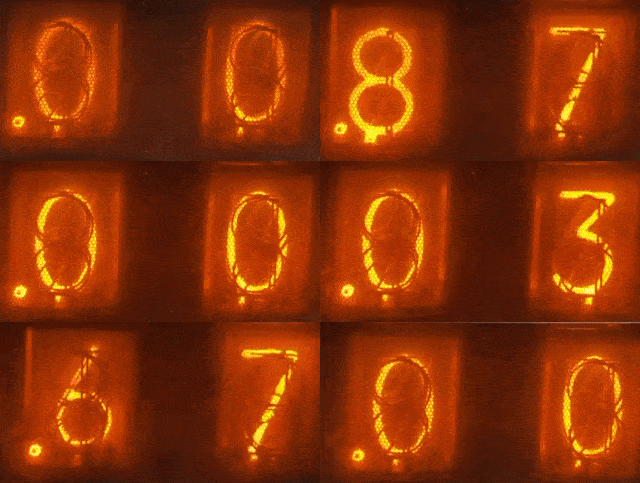
So I set up, and…the Fluke counter doesn’t work. It will work as an up-counter, but won’t count frequency input. Hitting the “CHK” button, I get nothing:
This should be showing me the internal 10MHz clock. I play with various things and get nothing.
Time to open it up.
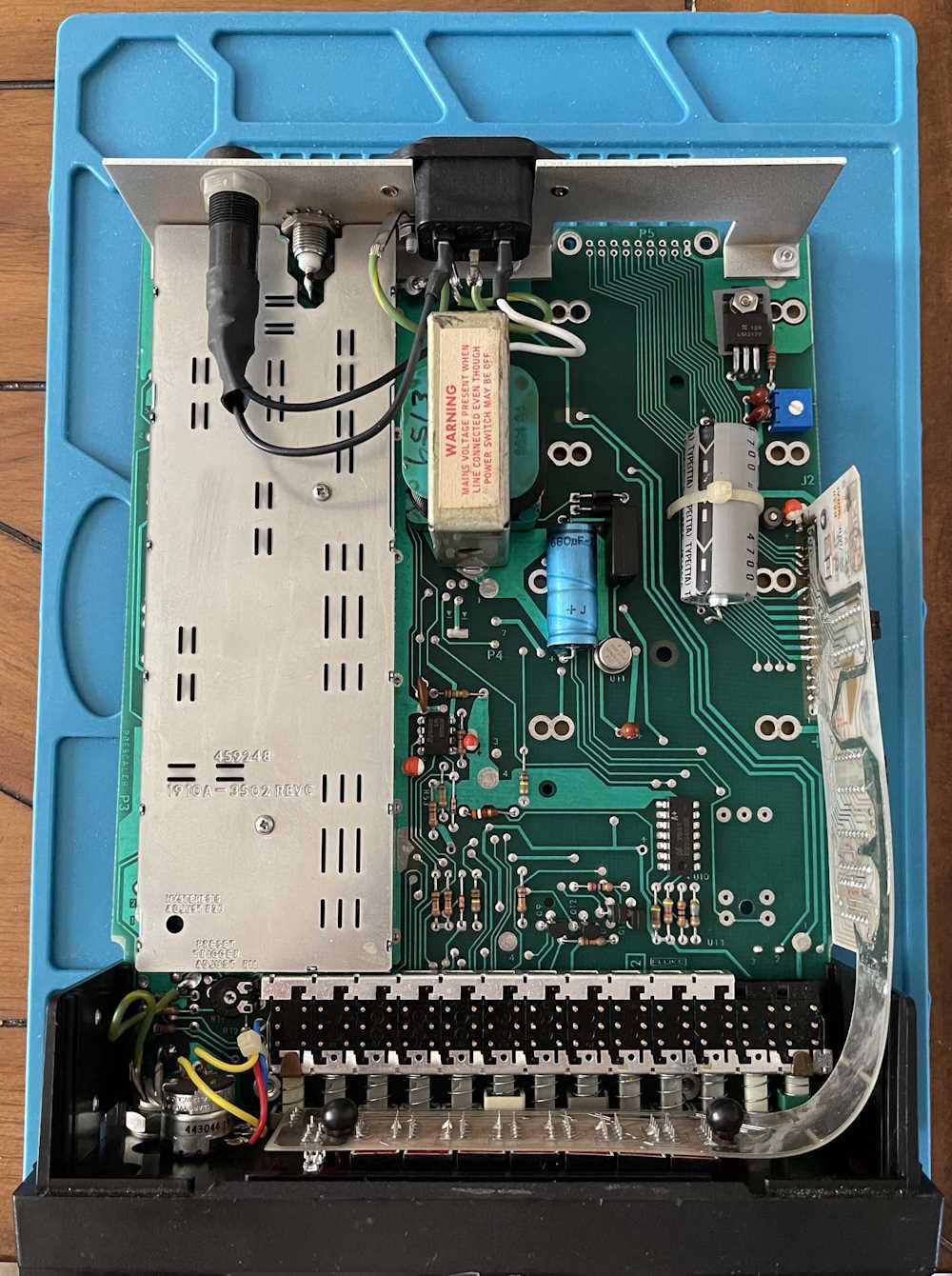
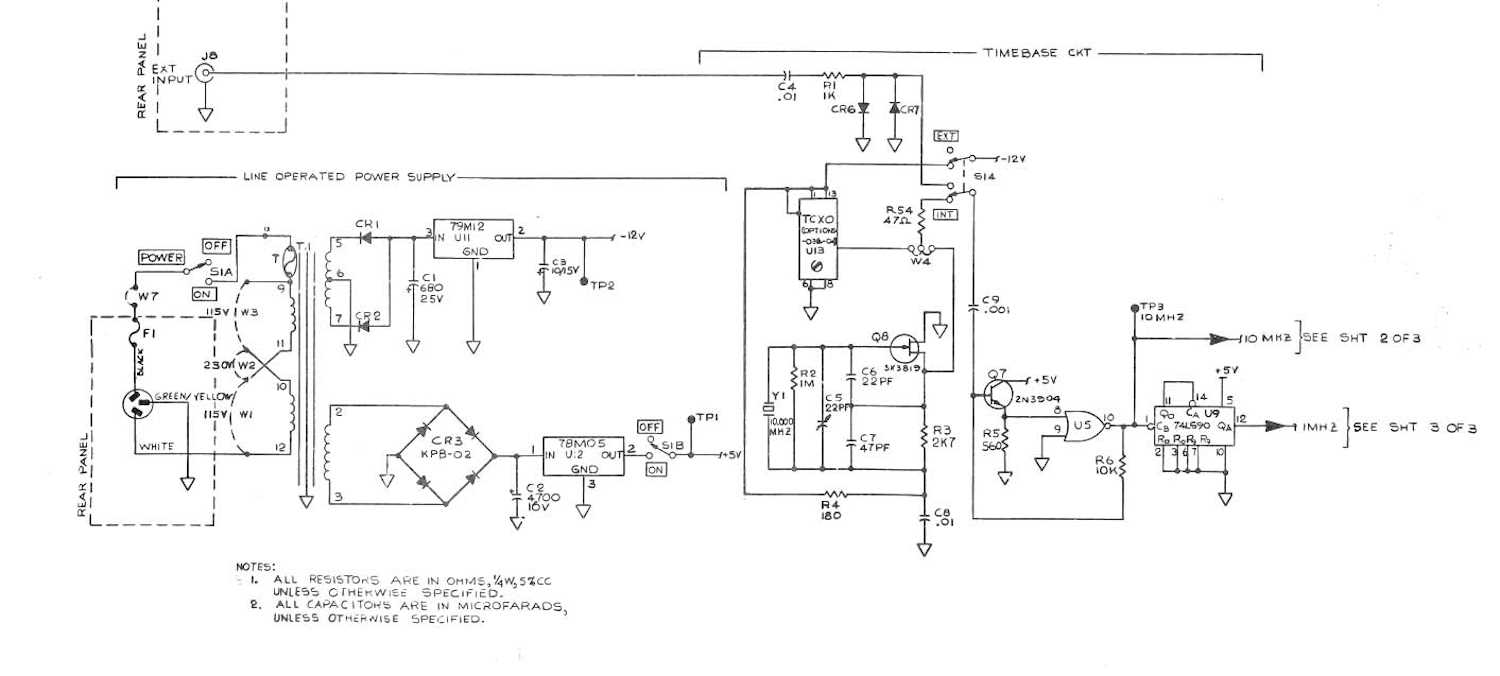
Nothing looks burnt. The section I need is underneath the RF cover, so off it comes. The parts in question, according to the schematic, are at the back of the unit near the metal backplate.
But before we get into those parts, a quick power supply check is in order. There are two voltages, +5 and -12.
+5 = 5.02
-12 = -11.80
The -12V is a TO-5 can device, and is pretty warm. I’m not sure if that’s supposed to be like that, but since -12 isn’t in the oscillator circuit, I’m going to ignore it for now. The logic supply of +5 is fine, however, so we’re good there.
The parts I’m going to be interested in here are :
U5
Q7 (under the heat-shrunk connector in the foreground)
Q8
Y1
I’m not really worried about U9 here because if I don’t have any 10MHz, I’m not goign to have any 1MHz. U9 is a divide by 10, so we’ll worry about that when and if 10MHz is available.
U5 pin 10 should be 10MHz. There’s nothing, so move back.
Q7 Base should be 10MHz. There’s nothing there, either.
I’m now going to switch the counter to EXT mode, as to remove those two parts from the circuit.
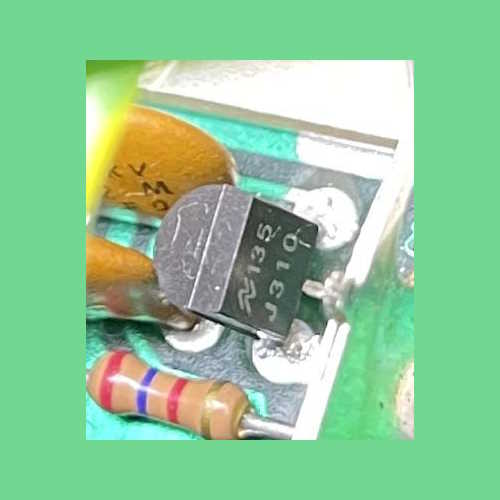
Q8 is an interesting part here. It’s a JFET, and the schematic appears to show a 2N3819. (It actually looks like SN3819, which isn’t a valid number.) However, that’s not what’s in the unit. I have a J310 VHF JFET which has a different pinout.
Always be careful, sometimes manuals you find online contain older or newer revisions of the device you’re using!
This confused me at first, because I was trying to test it like a 2N3819 and was getting a short on Gate to Drain, Pin 2 to 1. What I was actually reading was Drain to Source, which should be a somewhat low resistance. In this case, I had 37 ohms. That’s probably fine for a JFET, since Drain and Source are mostly the same slab of silicon. Without pulling this guy out and testing in an active tester, I assume it’s good.
No capacitors appear to be shorted. The few resistors in the circuit are fine for what they are, and are well within tolerance.
That just leaves the crystal. I don’t really have any way of testing it. I can try capacitance, but the resistors in the circuit will ruin that low pF measurement, so the only way is to pull it out.
The conclusion is the oscillator isn’t. The assumption here is the crystal is bad. Maybe cracked or internally damaged from time or handing? I don’t know - I’m going to try and obtain something similar to swap in and see if it works. There’s also a possibility I could find a cheap TXCO or OXCO to put in the area where Fluke would have mounted a TXCO, which should provide a better device.
That assumes the device is operational up front. These aren’t known for being reliable as they age, perhaps I’m just wasting my time with this. But I know where the problem lies, so there’s no harm in getting a few dollars in parts to try and make it work again.
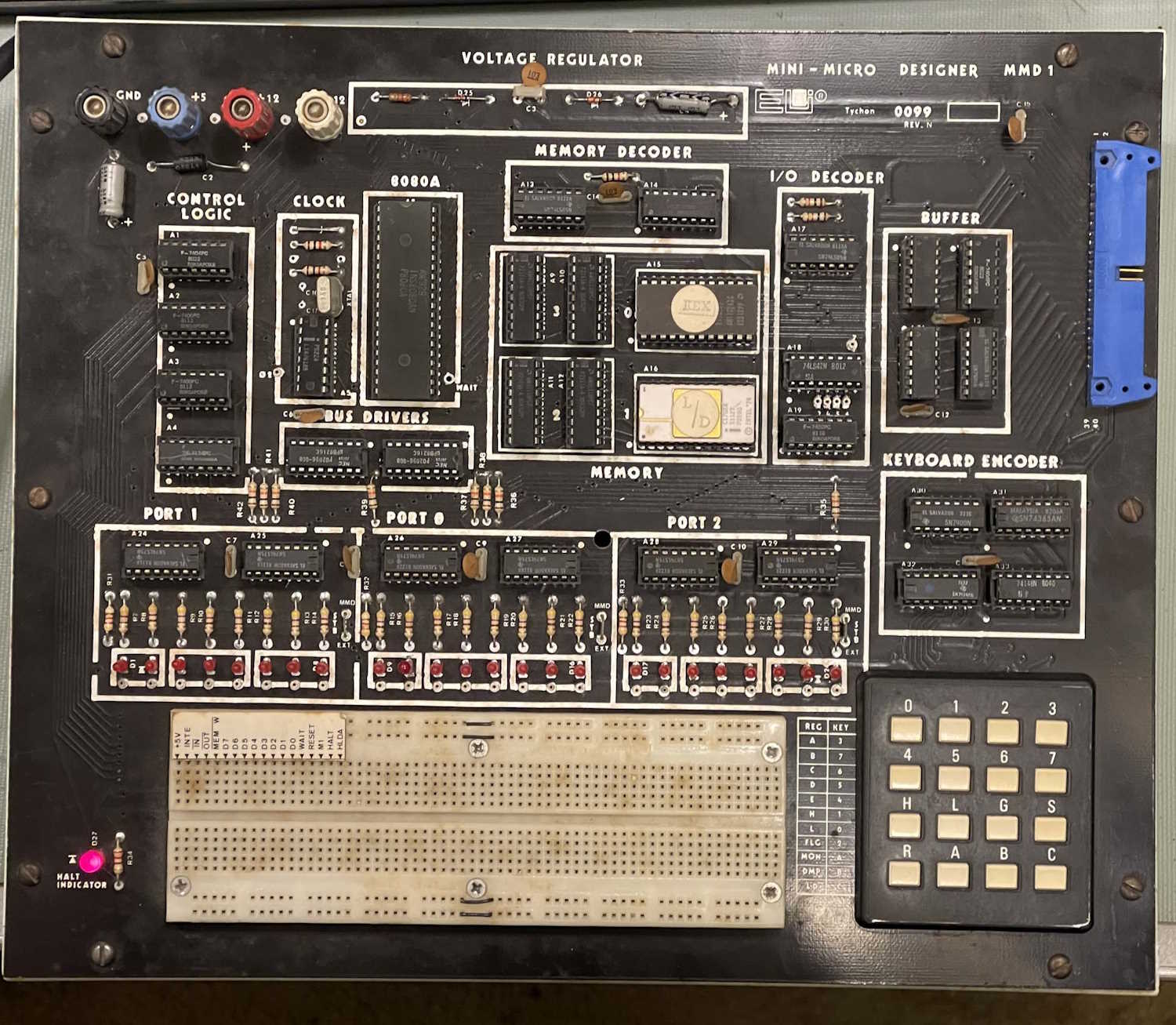
This guy was given to me, well, probably in the late 90s because it was missing it’s 8224 clock chip. The person that gave it to me, since deceased, didn’t really want to go through the trouble of finding one so he asked if I’d like the device instead. Sure, why not.
I eventually found an 8224 on a device at a show, and put it in recently. I then realized that, unlike most other trainers, this one has no LED numeric displays! Well… the HALT LED will light and extinguish if I play with the keyboard, so I assume something is going on since it didn’t do that before. I thought about dumping the monitor ROM, but someone has already done that. I also need to investigate the power supply, it has a very loud hum and may need some modernization.
It’s nothing really special, just another one of many 8080 trainers that were available on the market. It will go beside my FOX Z80 trainer and my BellMAC 8 device for display. After it gets a little cleanup, of course, the thing was filthy when I got it and I have not done a thing with it.
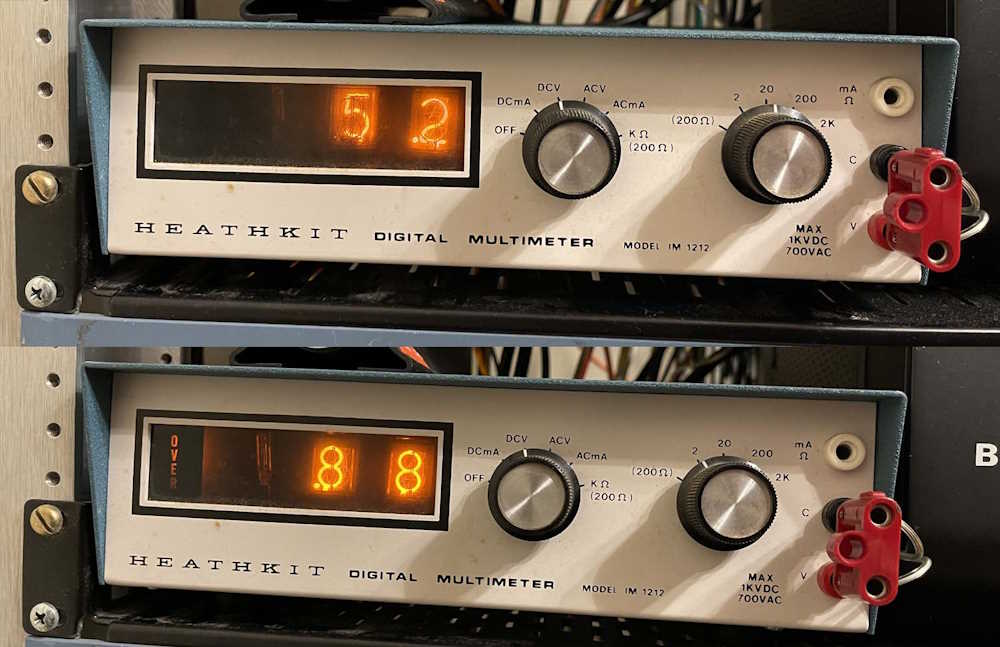
I decided to put the Heathkit IM-1212 meter in operation as a bus voltage monitor for my network rack. It’s currently on the 5V rail, but I’m working on a solution to get it on both the 5 and 12 volt rails.
5.2V is about right, considering it’s something like 5.11V at the distribution board.
The oscillator adjust, which should be 0.85, is already off. That’s about par for one of these.
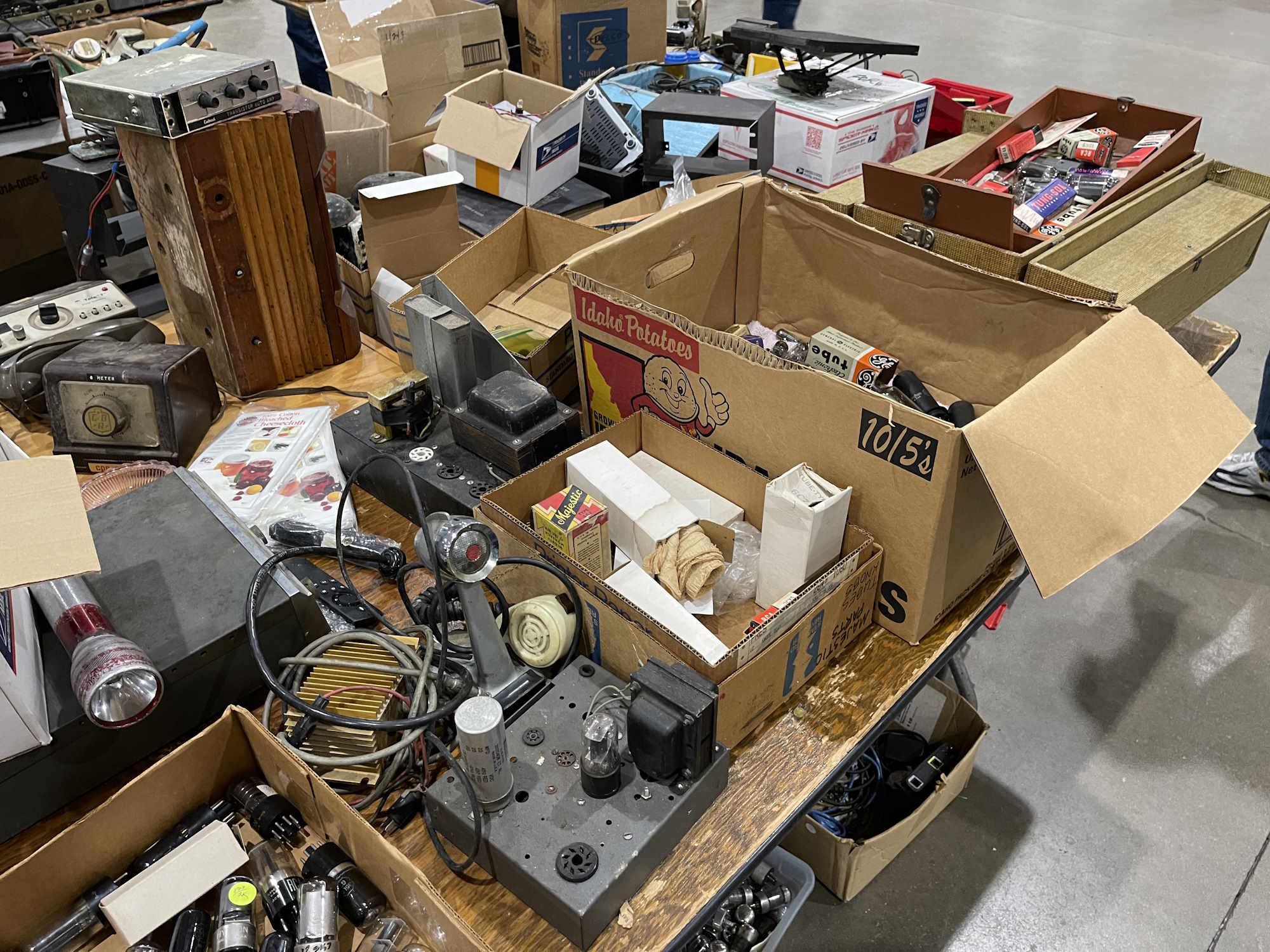
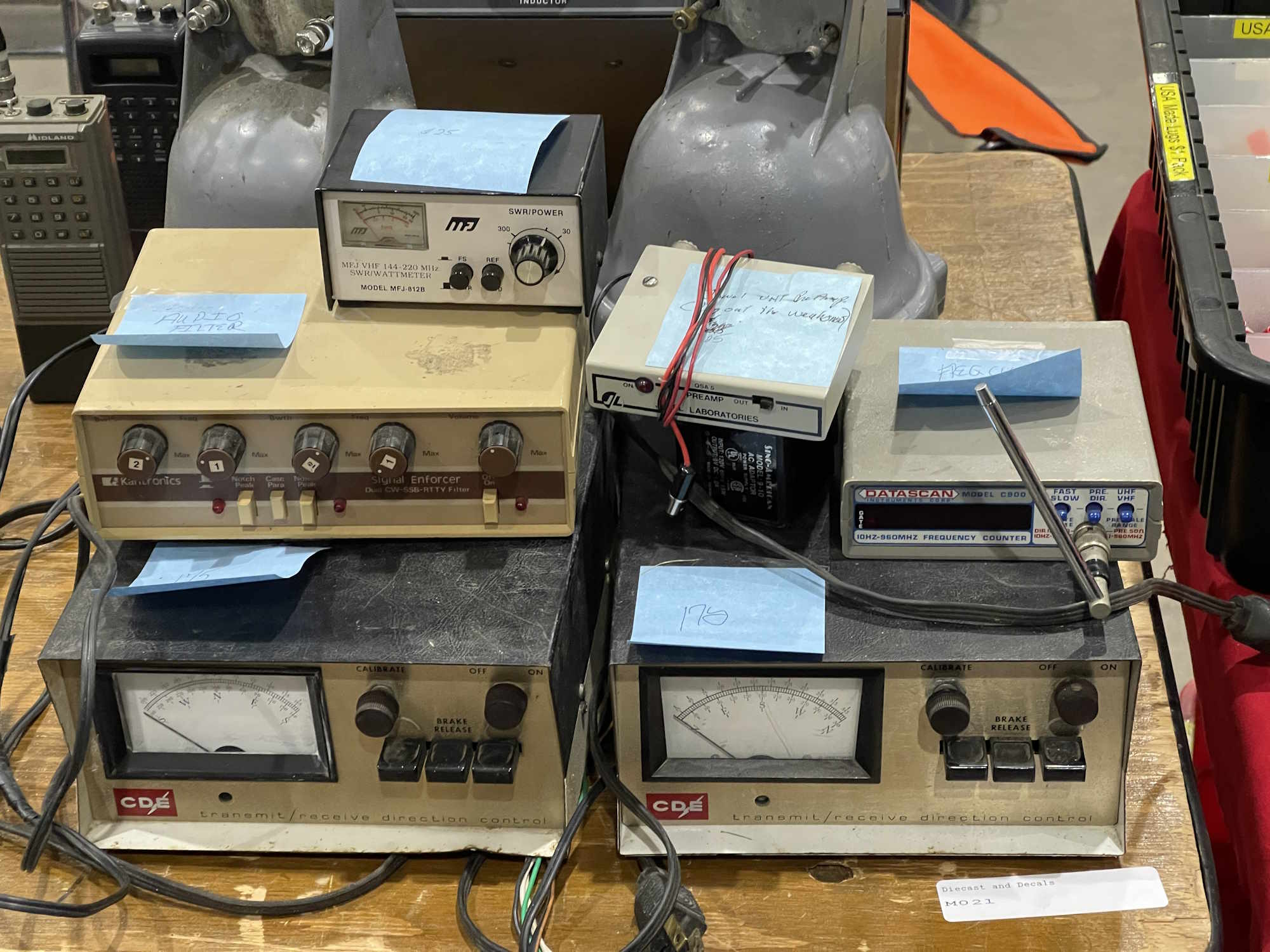
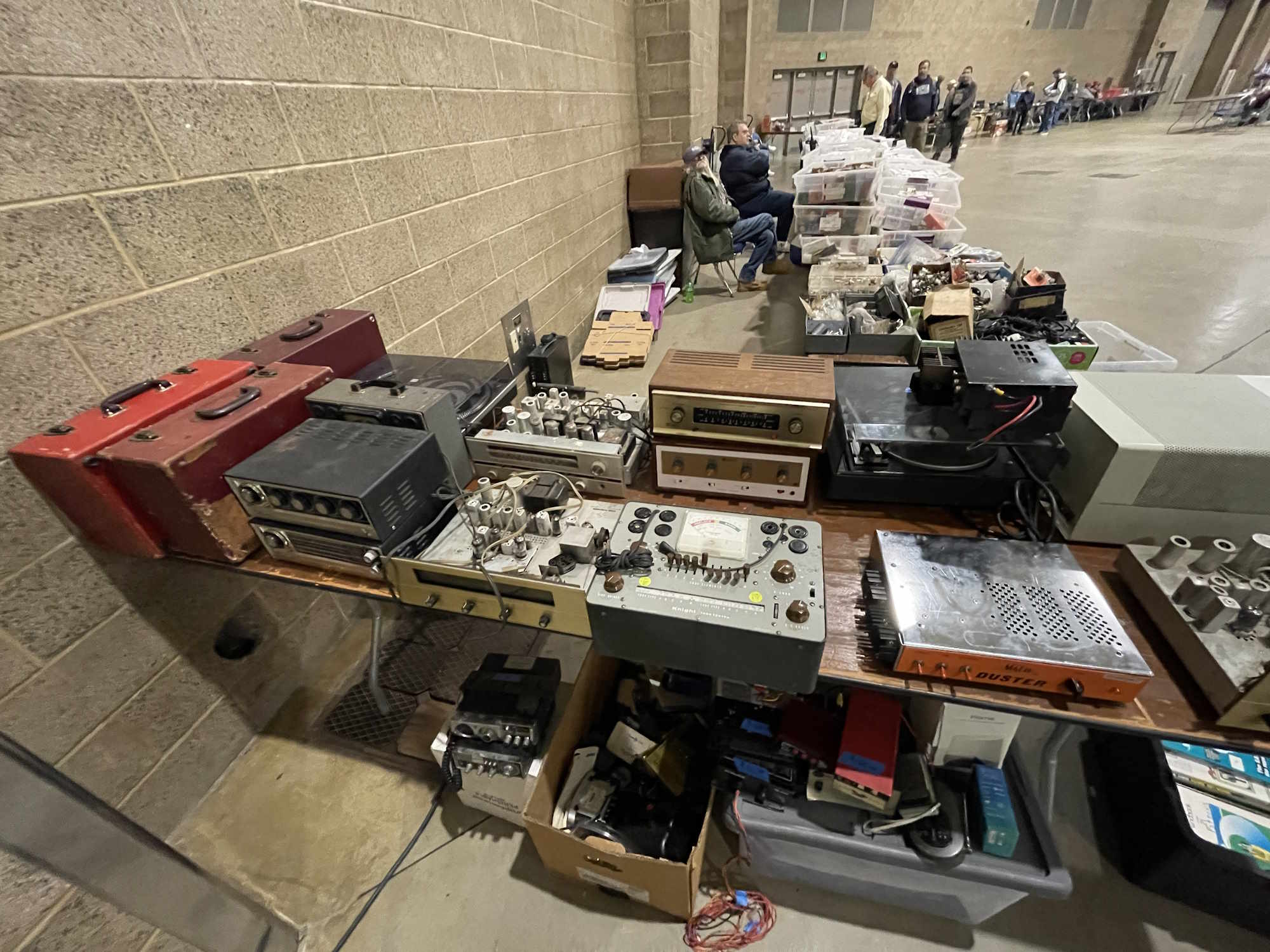
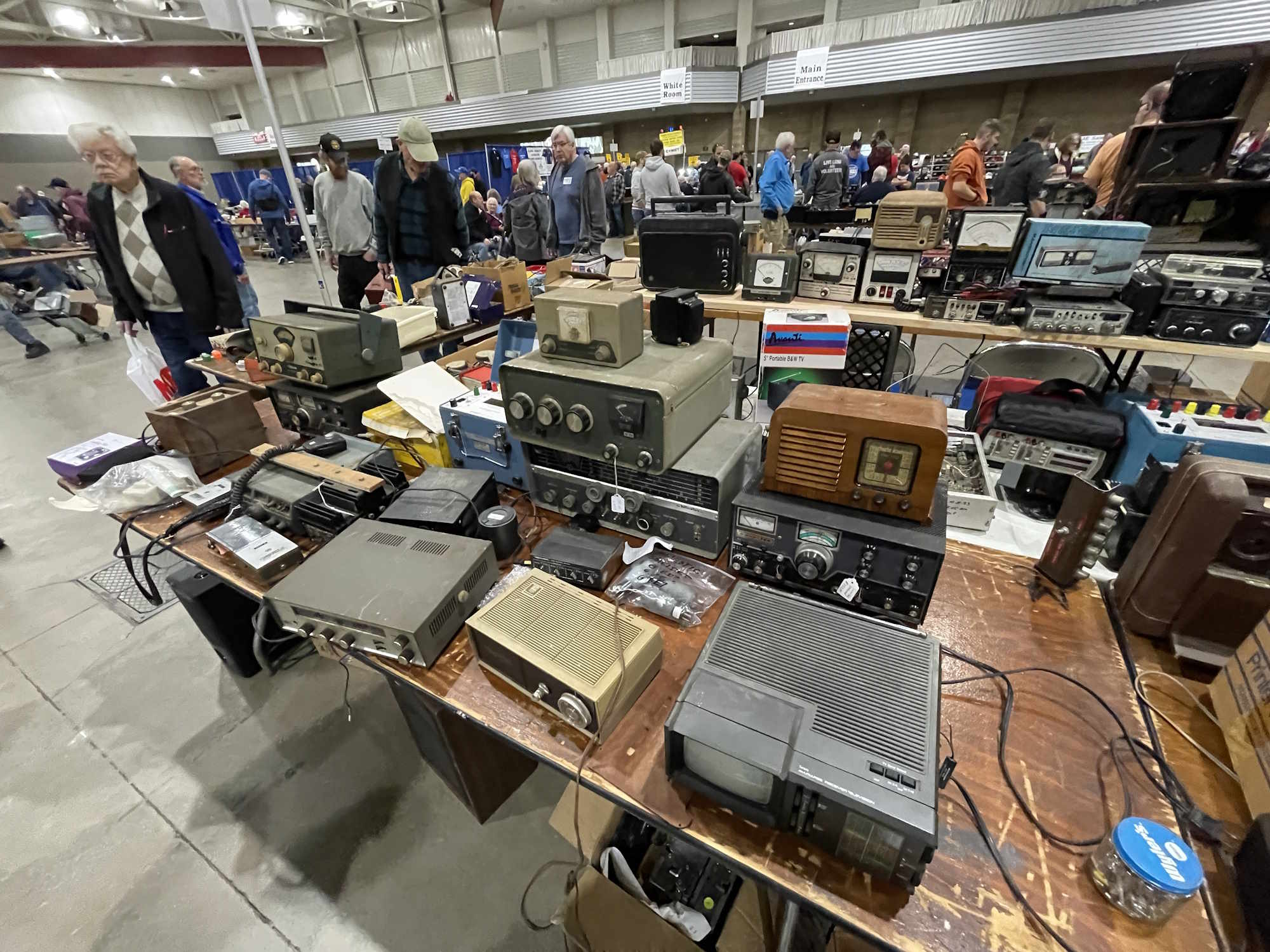
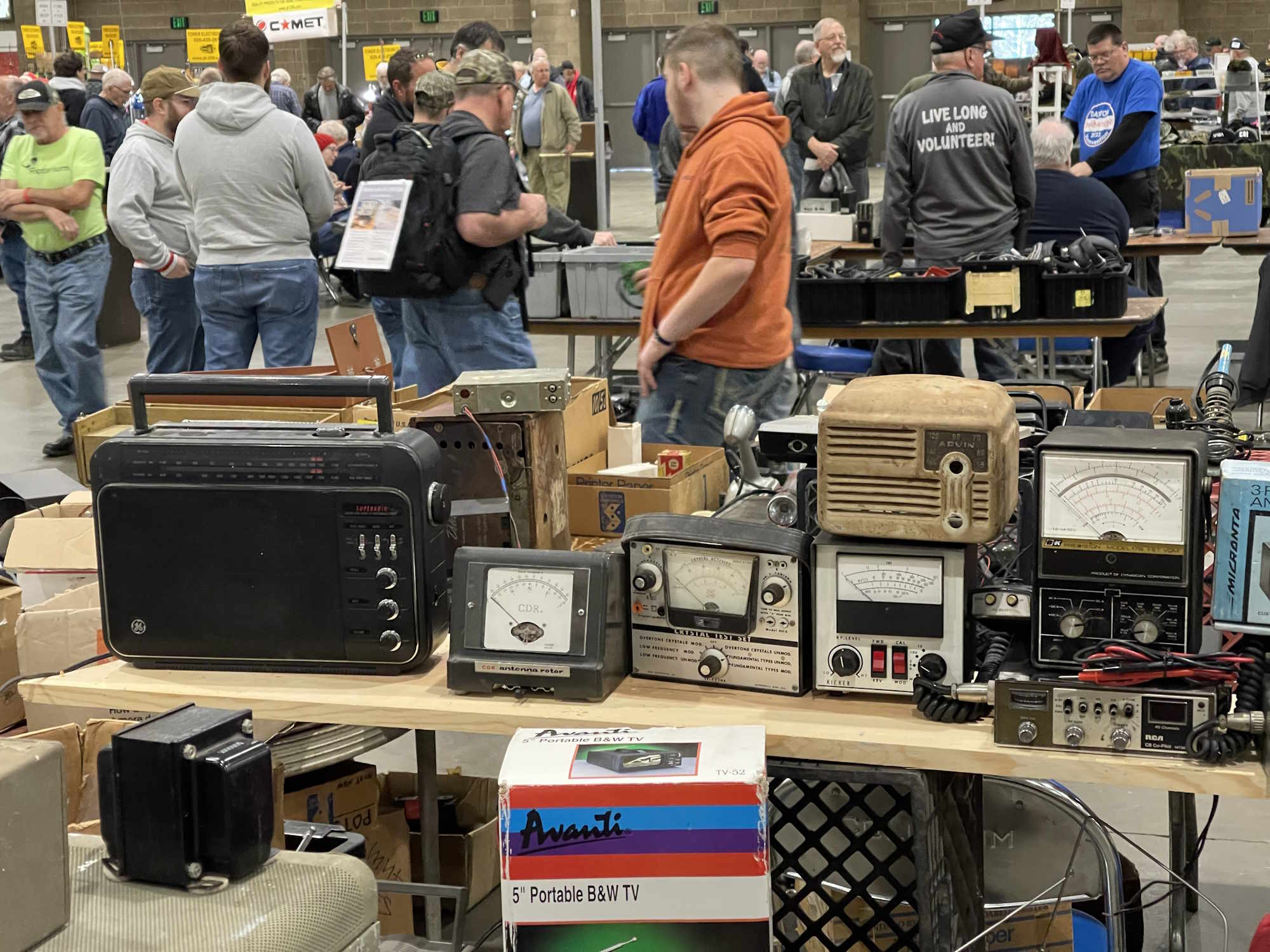
This show takes place monthly at the Ohio Expo Center (State Fairgrounds) and runs from November to April. There’s generally not a lot of electrical goods here, but this time I was surprised. A lot of radios and other technology related goodies showed up. I suspect this is in part due to the show being the first one of the season, and being close to the holidays - everyone is looking for that perfect gift.
While not all of the pictures I took were of electrical things, I found the stuff to be interesting (or strange!) enough to take a picture of. I’ll probably hit next month’s show as well, so stay tuned!
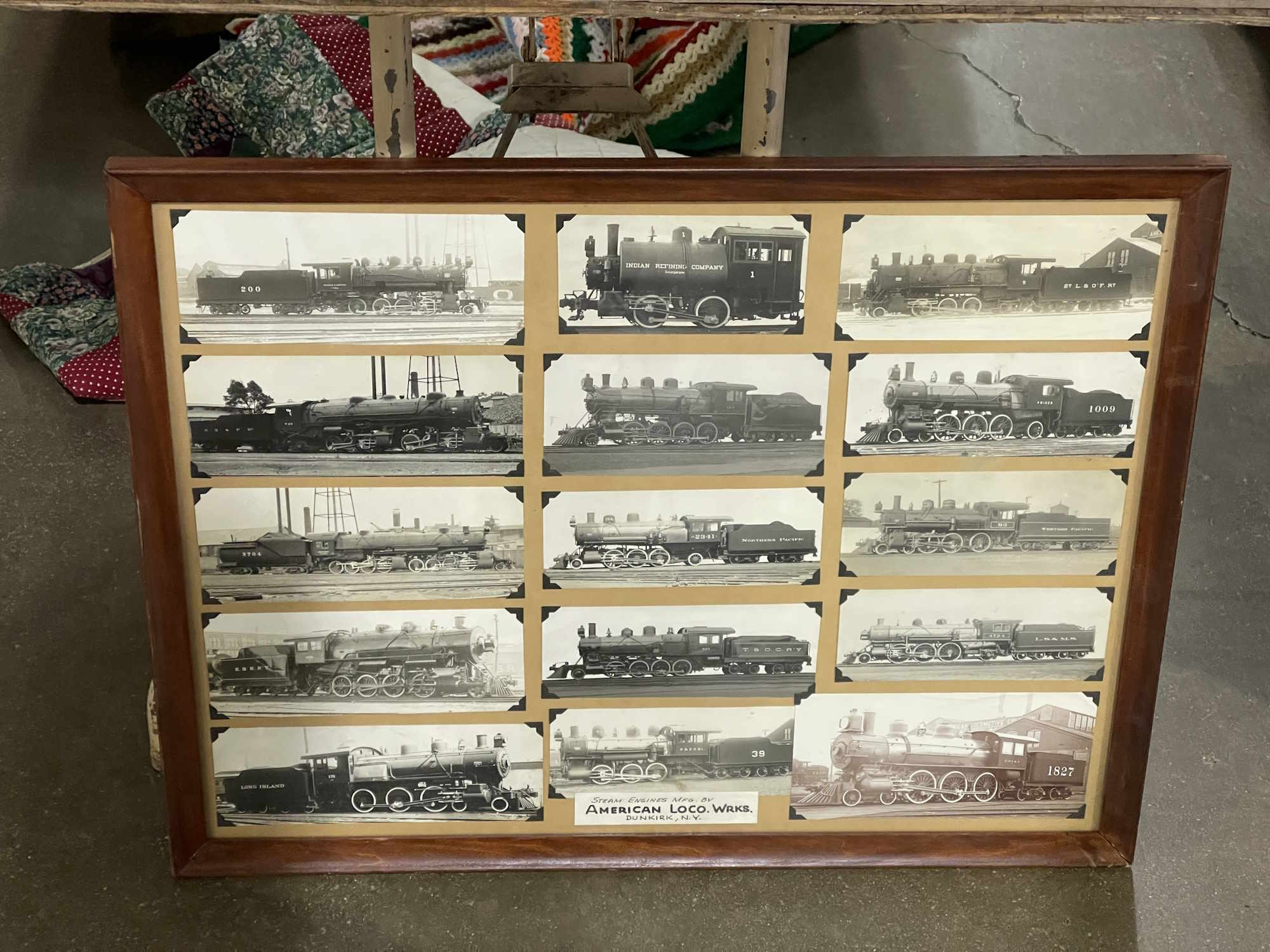
The American Locomotive Works lineup in picutures.
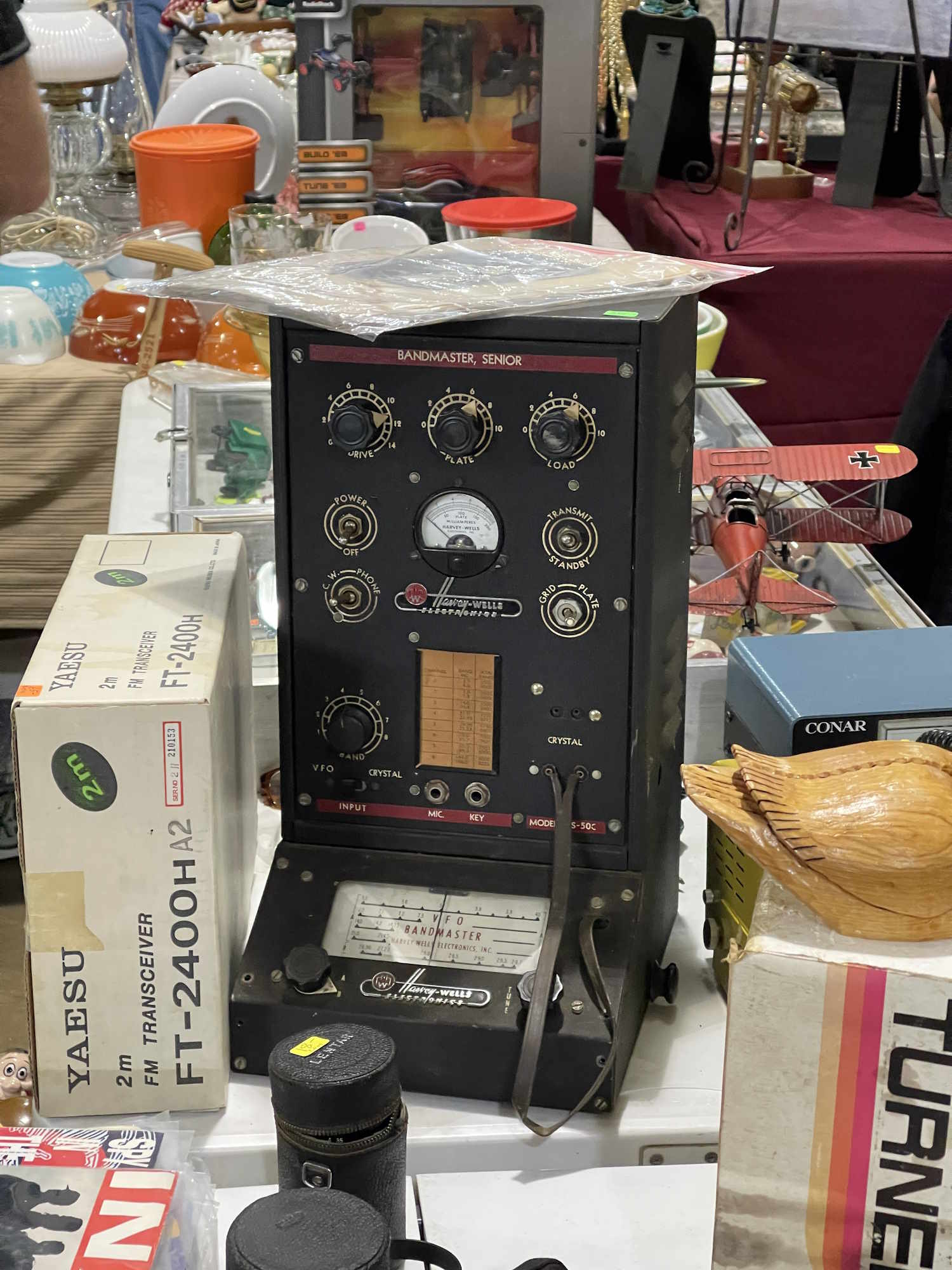
A “Bandmaster Senior” transmitter with VFO.
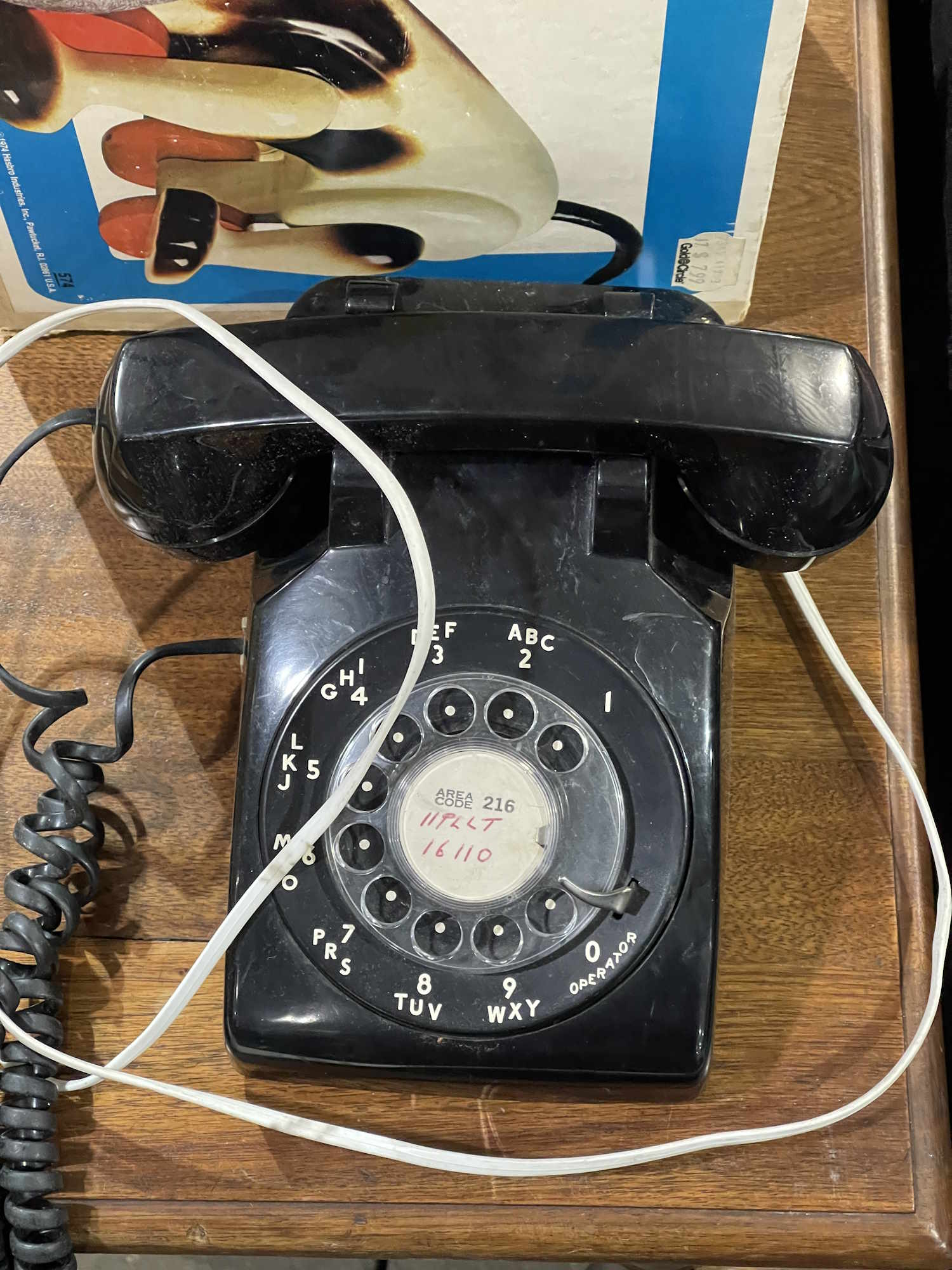
A Ma Bell special.
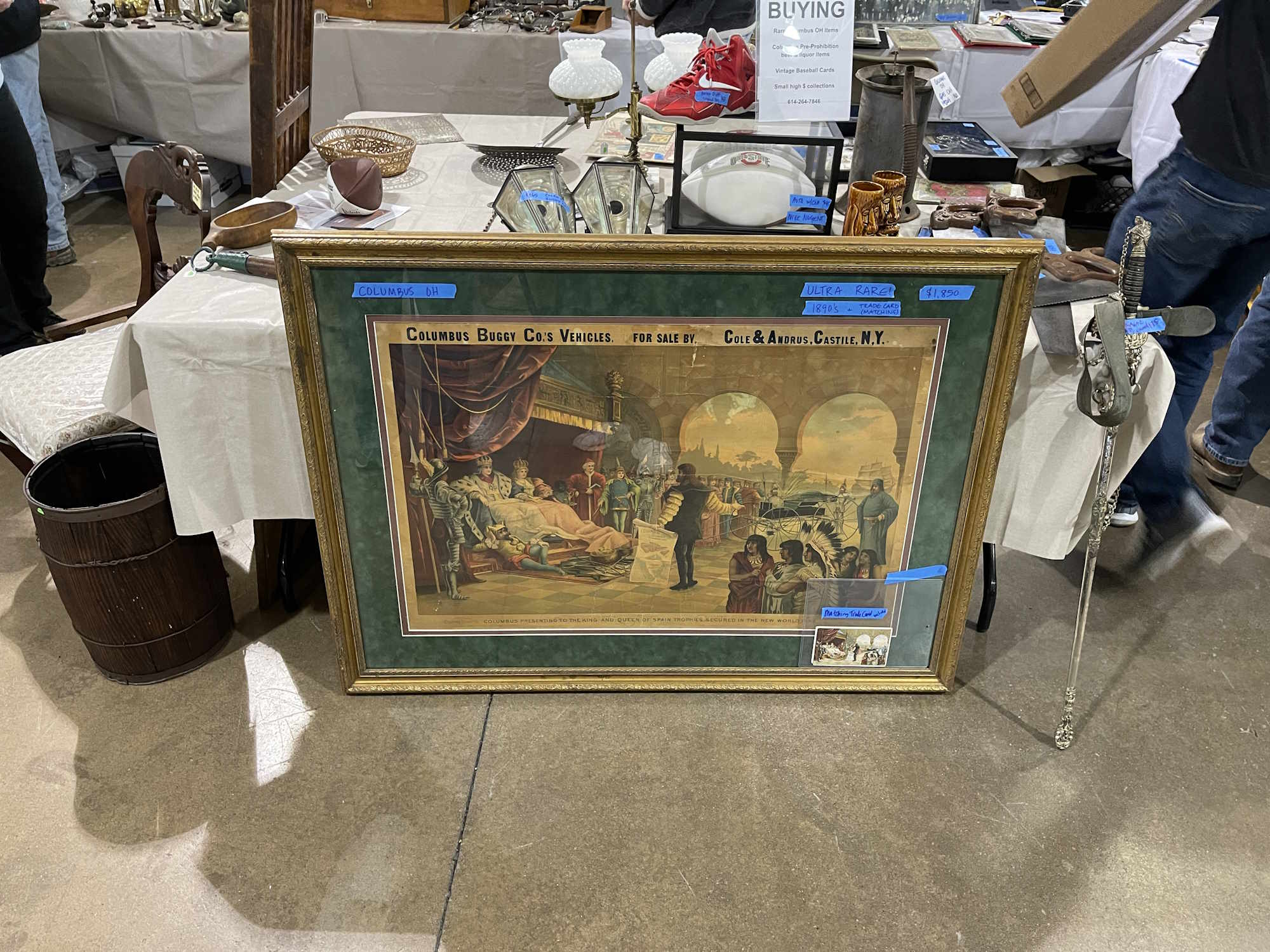
The Columbus (Ohio) buggy works.
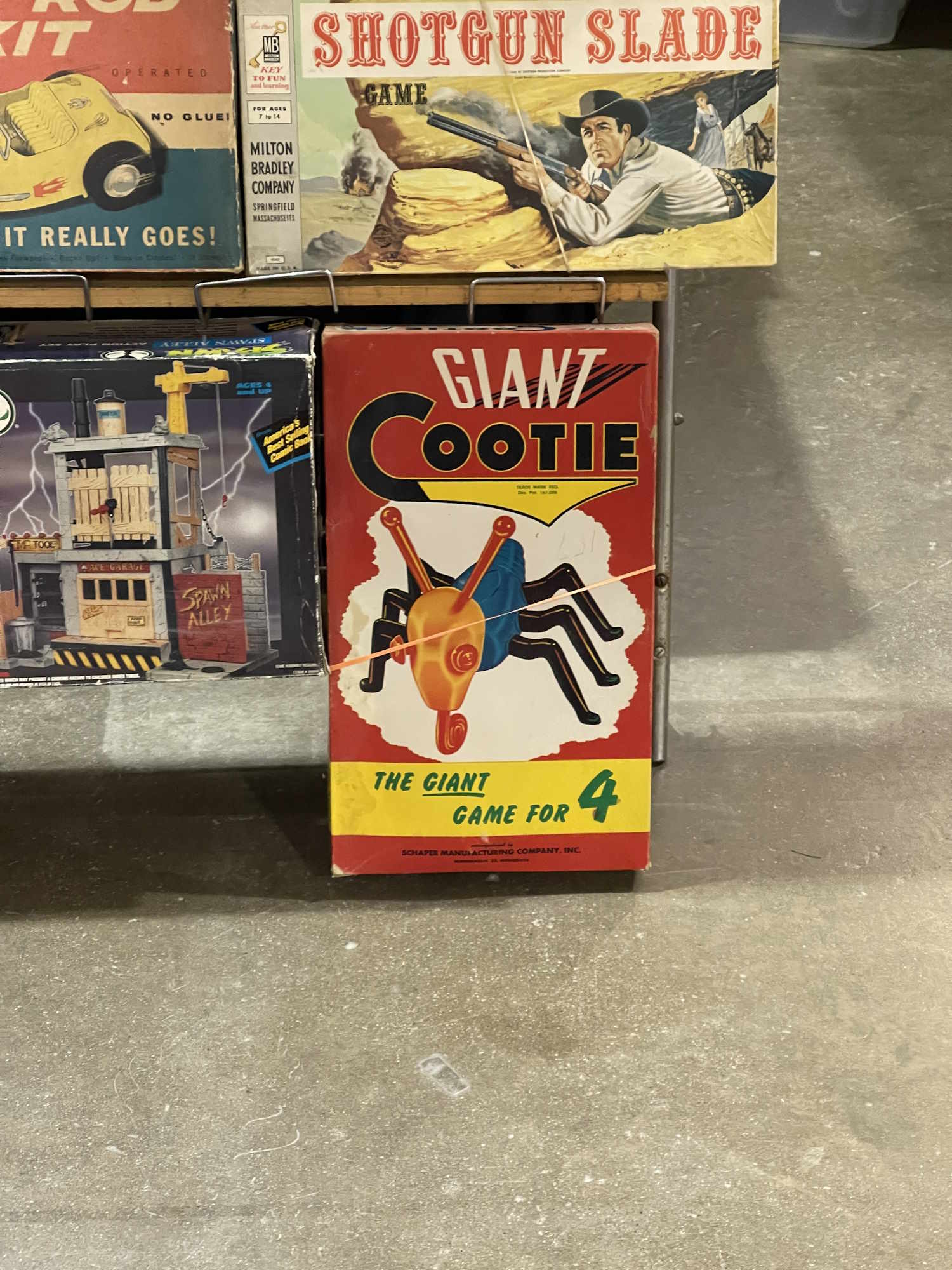
Ooooooo cooties! Giant ones, no less!
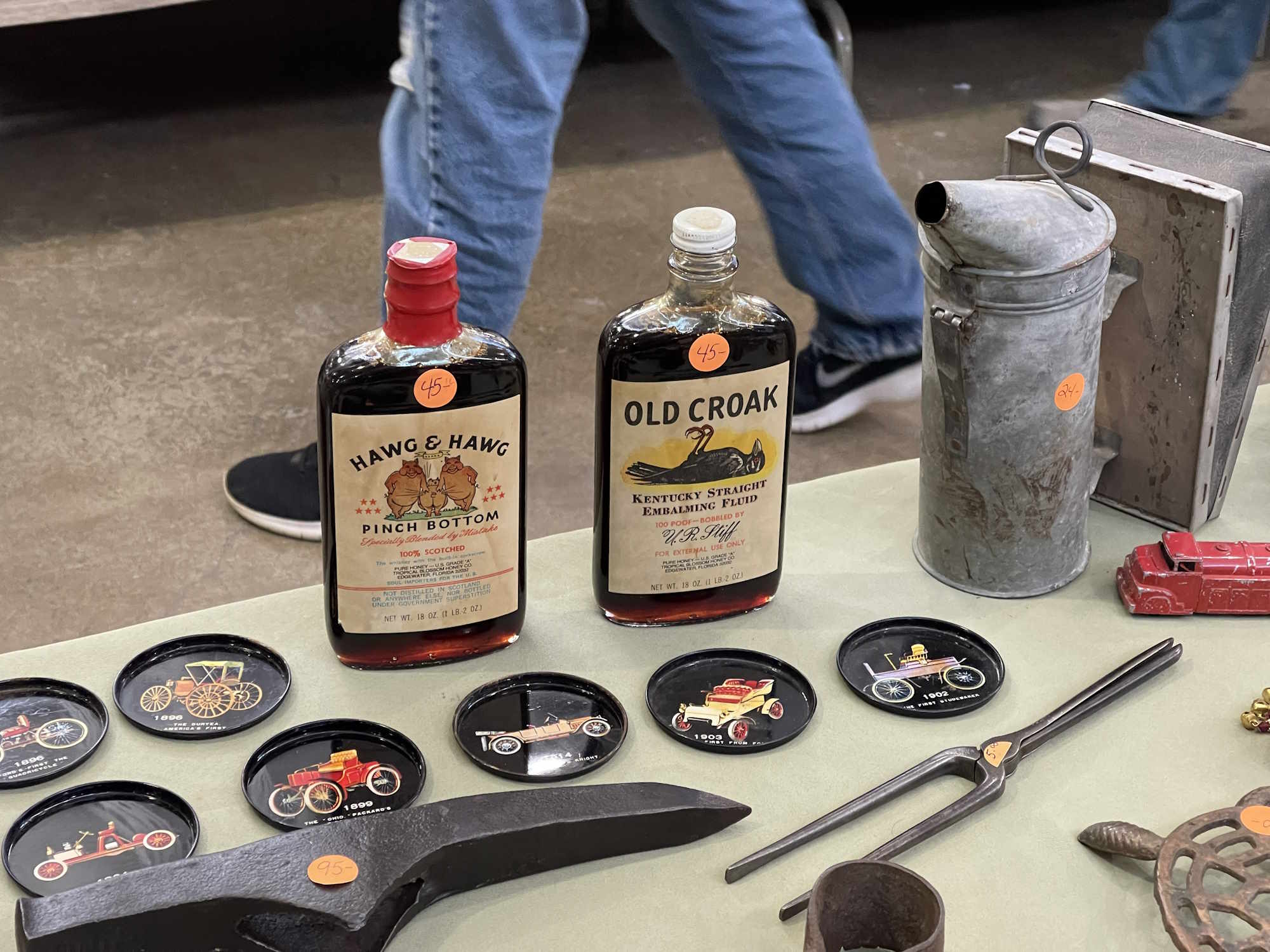
Honey in various gag gift bottles.
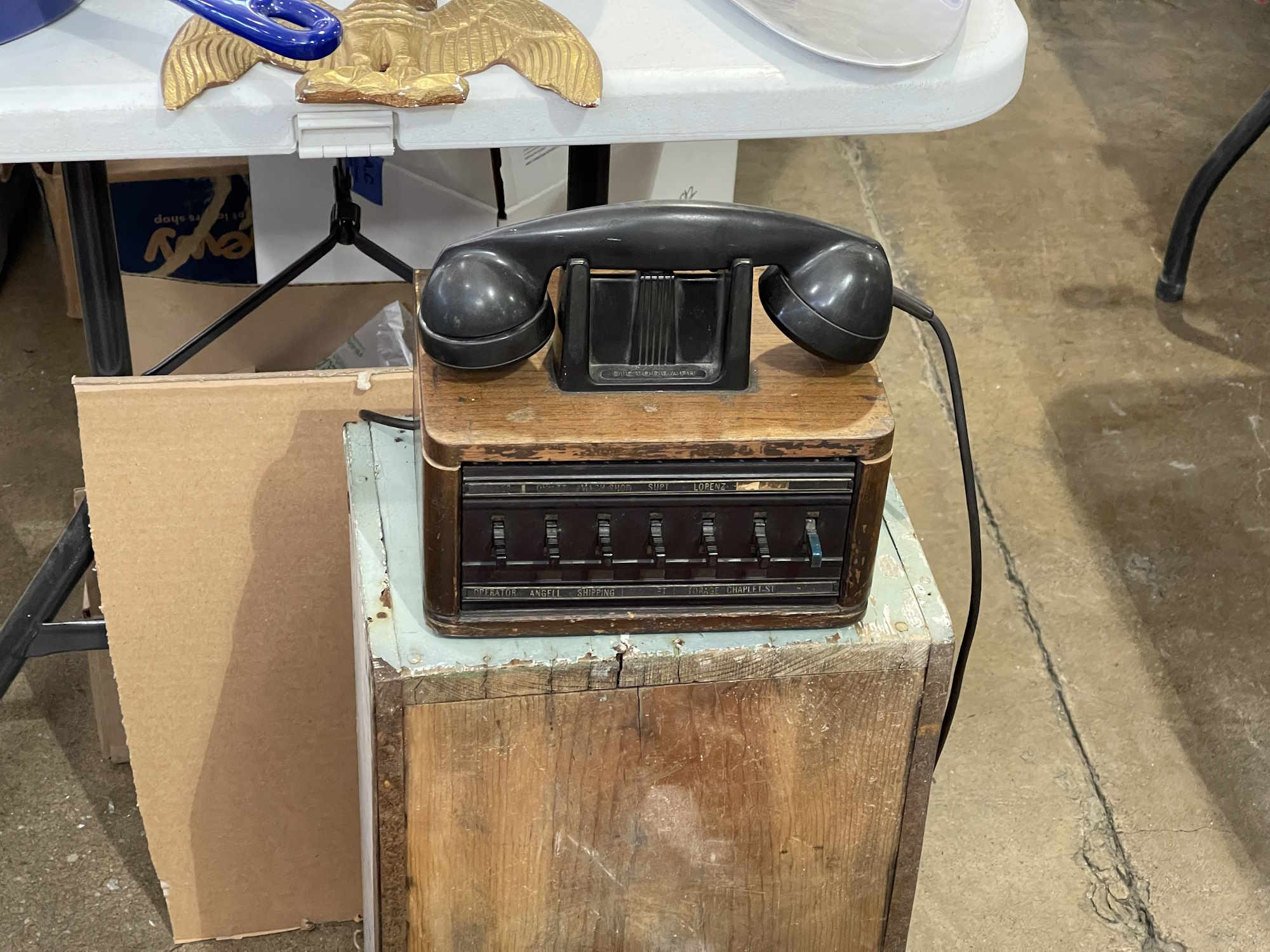
A “Dictograph.” Looks like a multi-station shop phone.
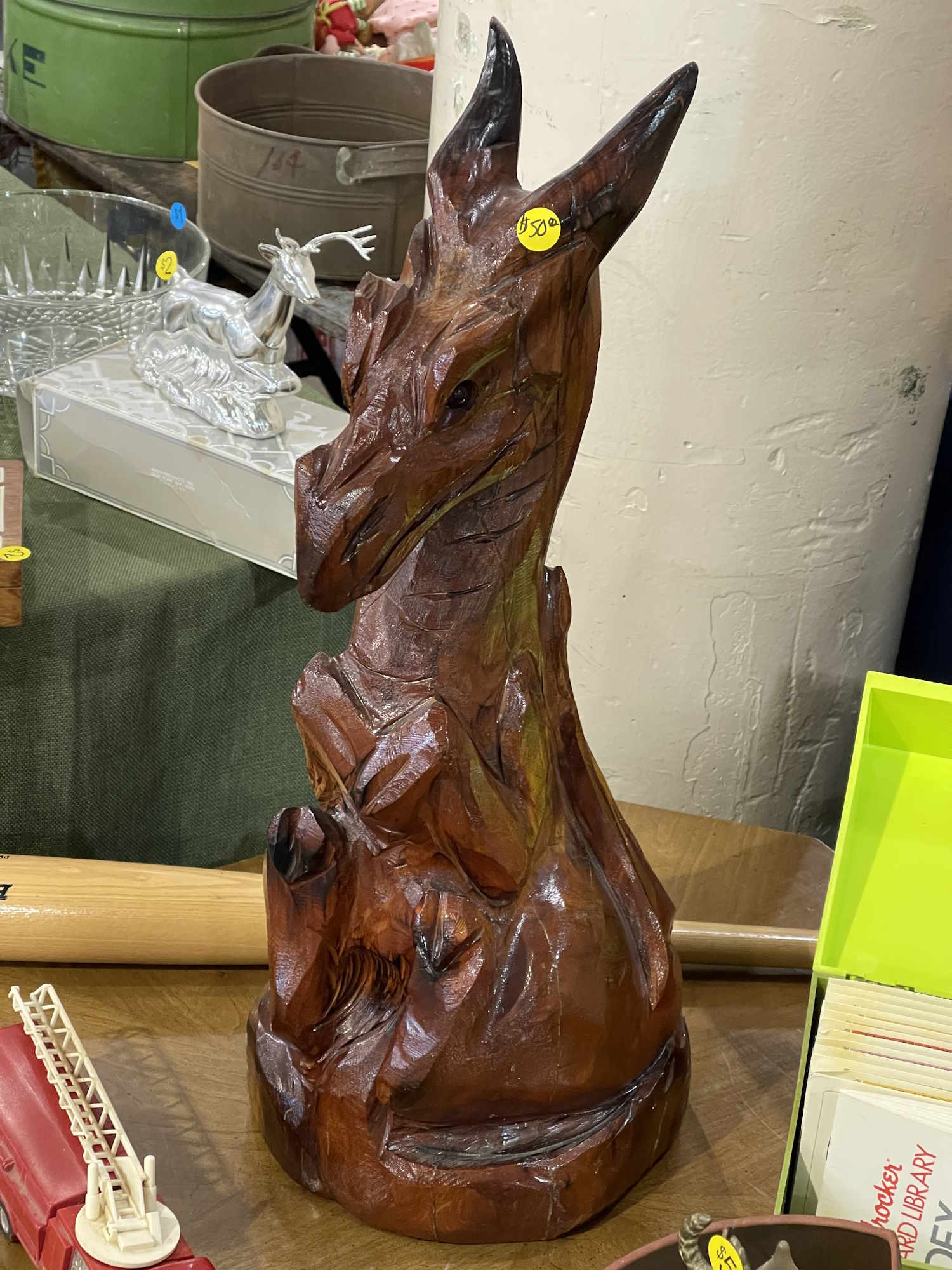
A big wooden dragon.
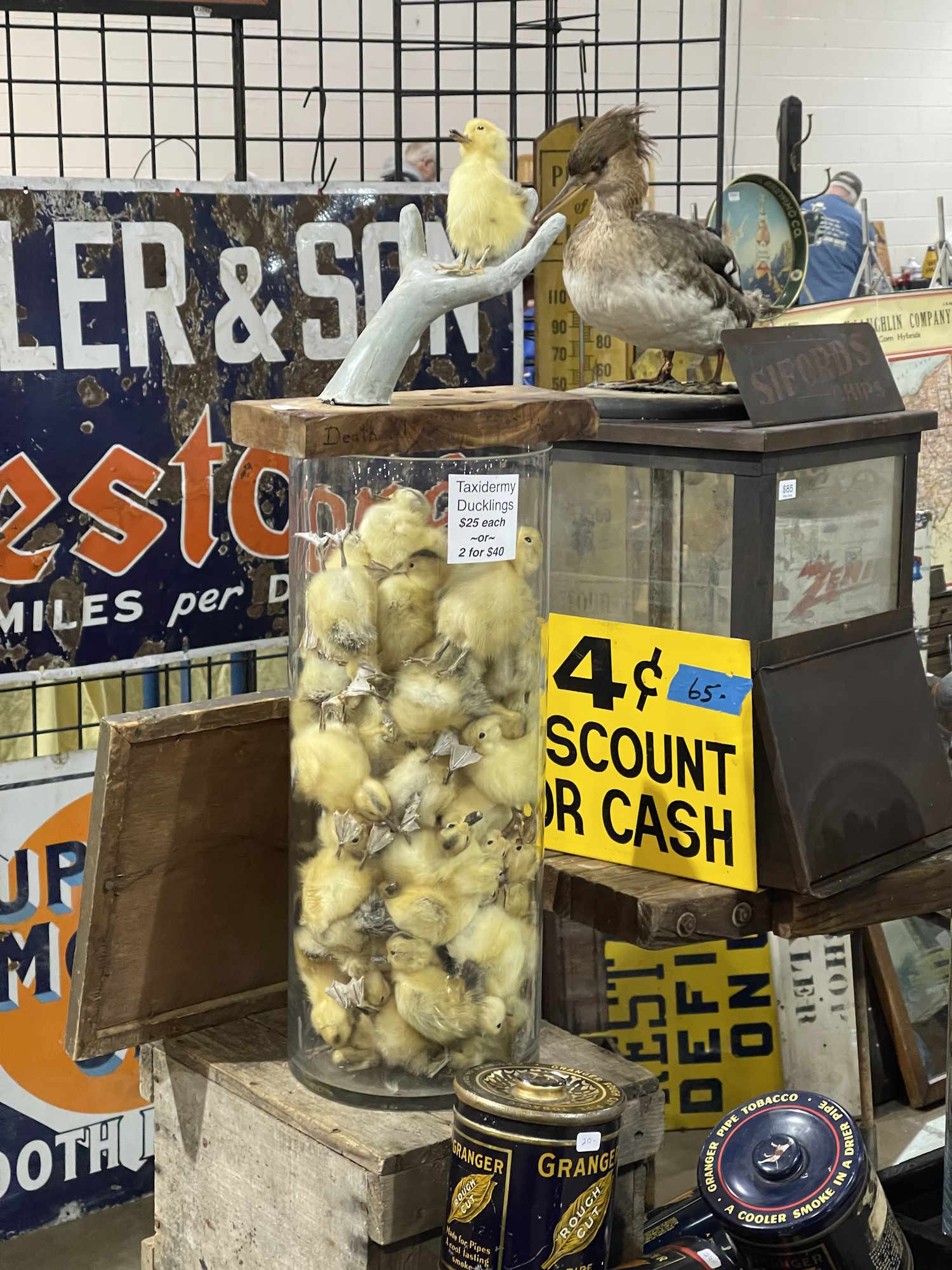
When snack makers go bad.
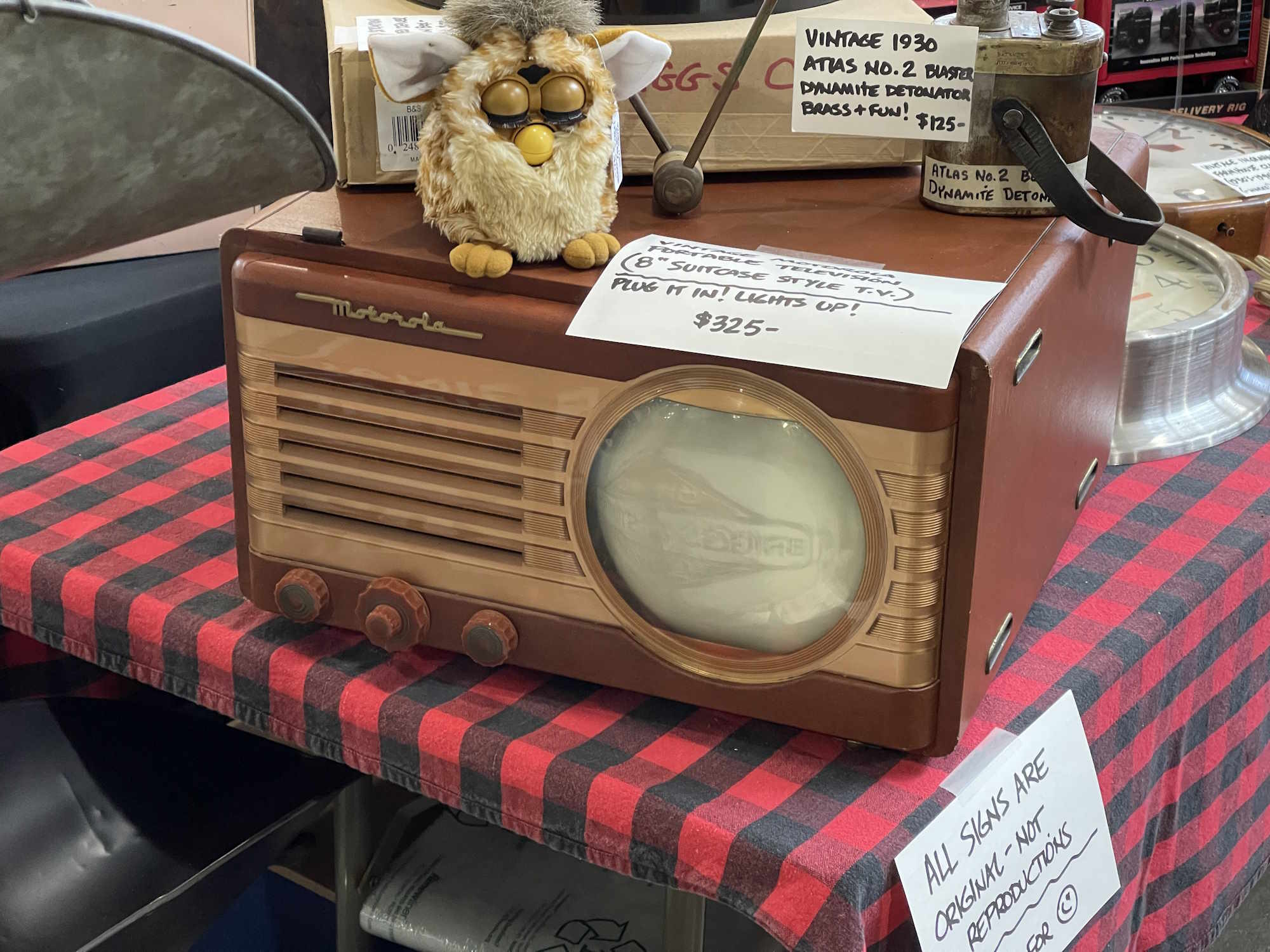
A nice Motorola Electrostatic Television. Don't plug that in!
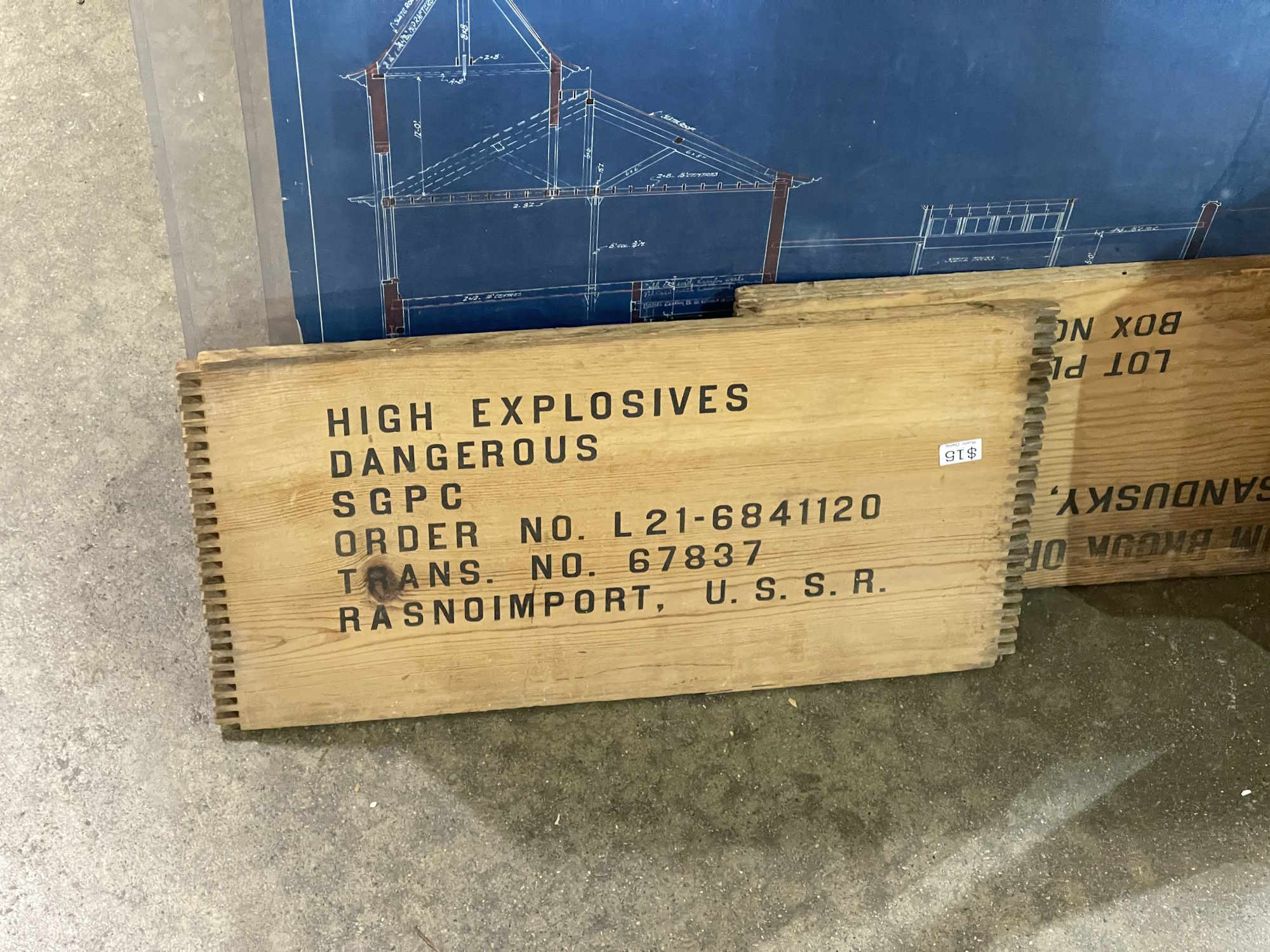
Apparently meant for export to the USSR.
Better call Batman!
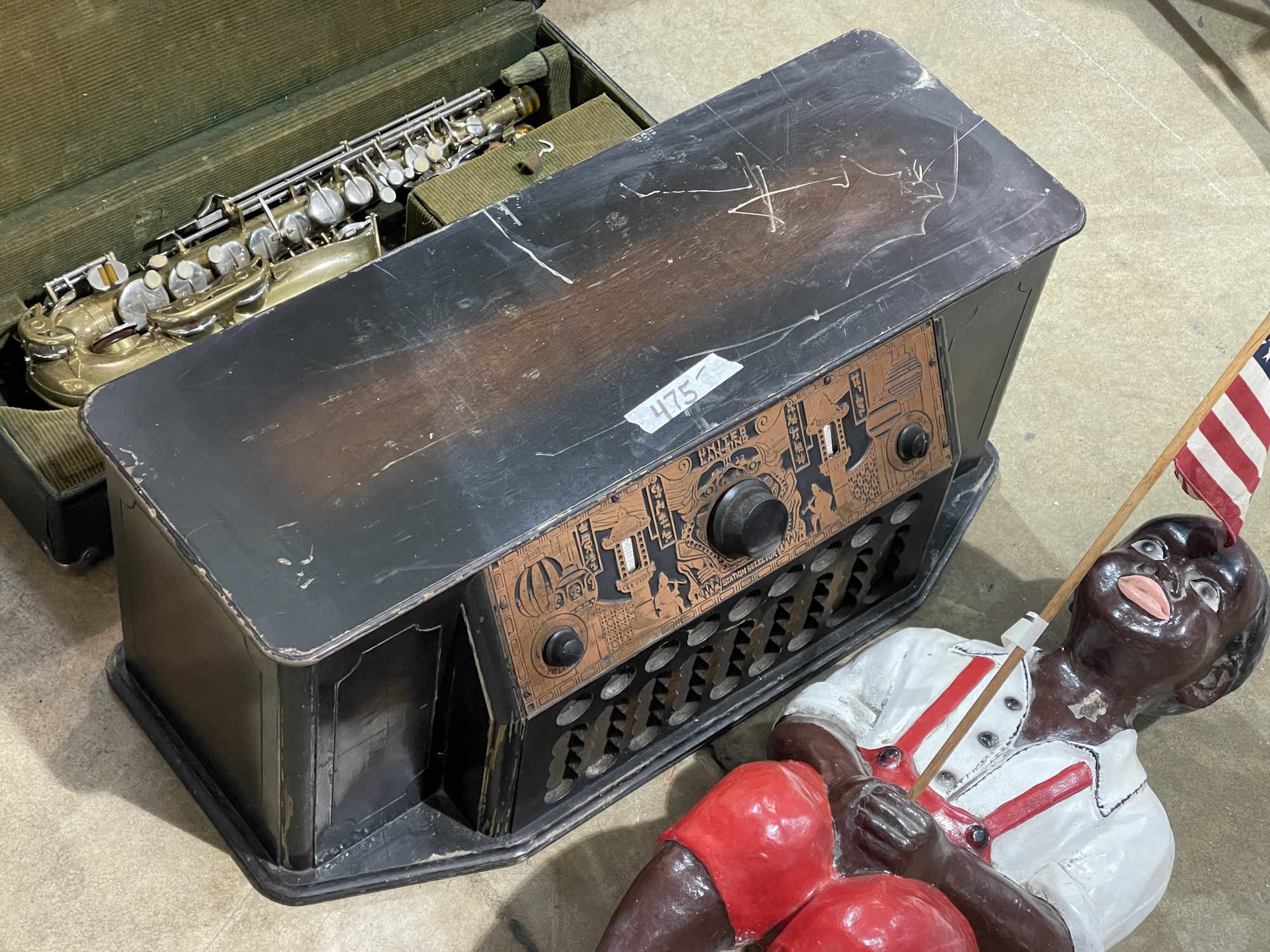
A “Chinese” radio from the United Lan-Sing company.
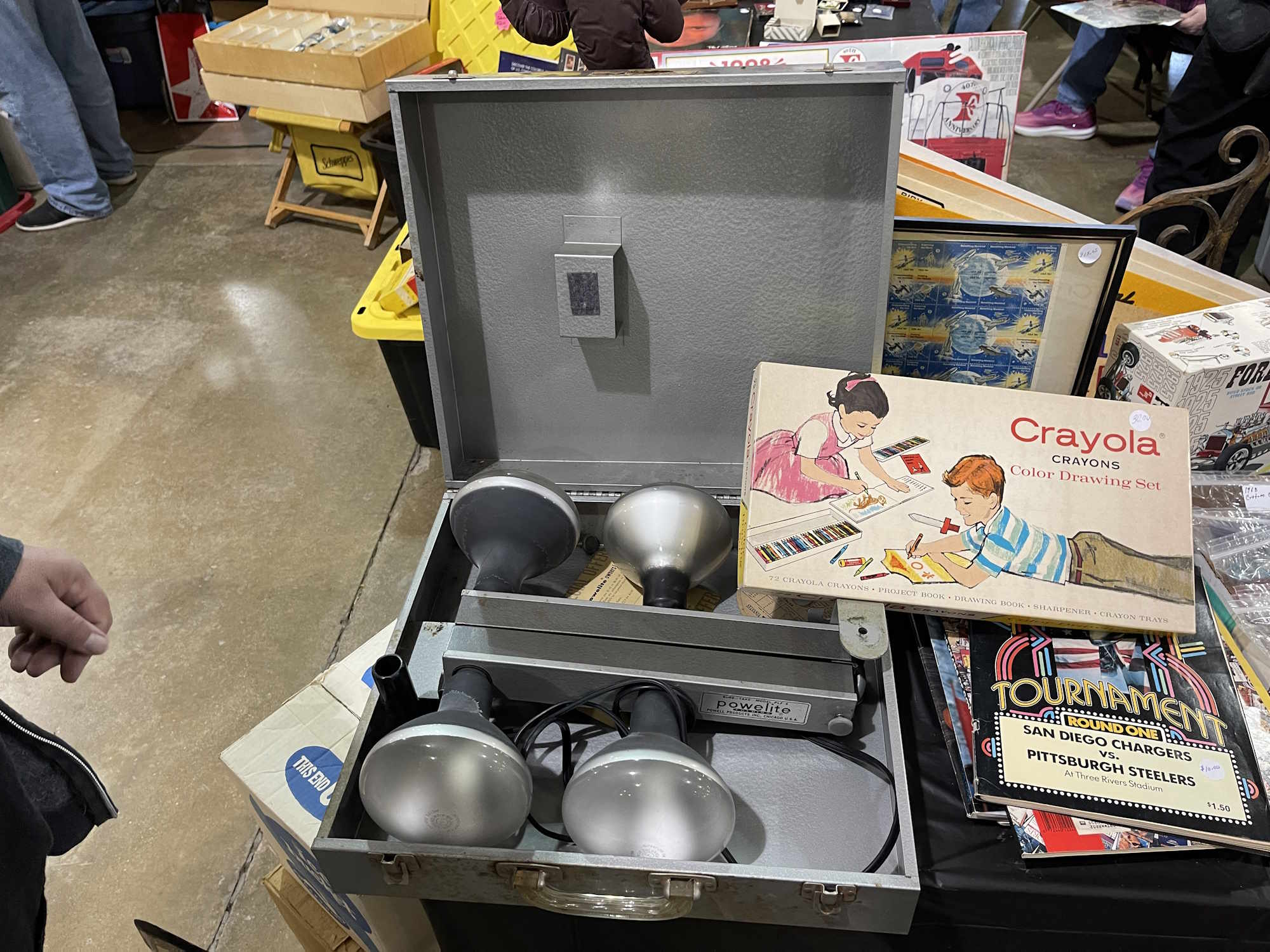
A light for home film, each bulb is 375W!
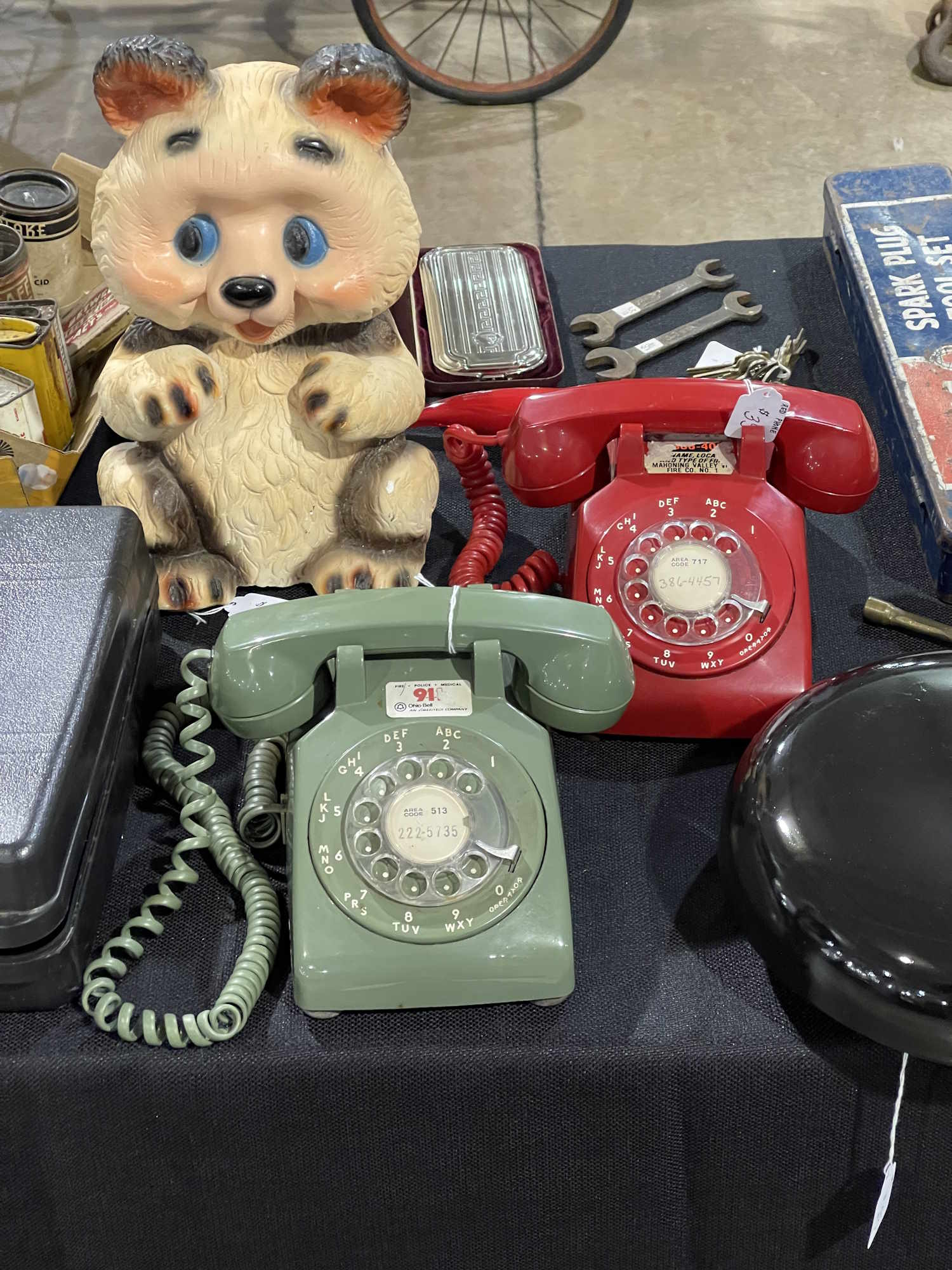
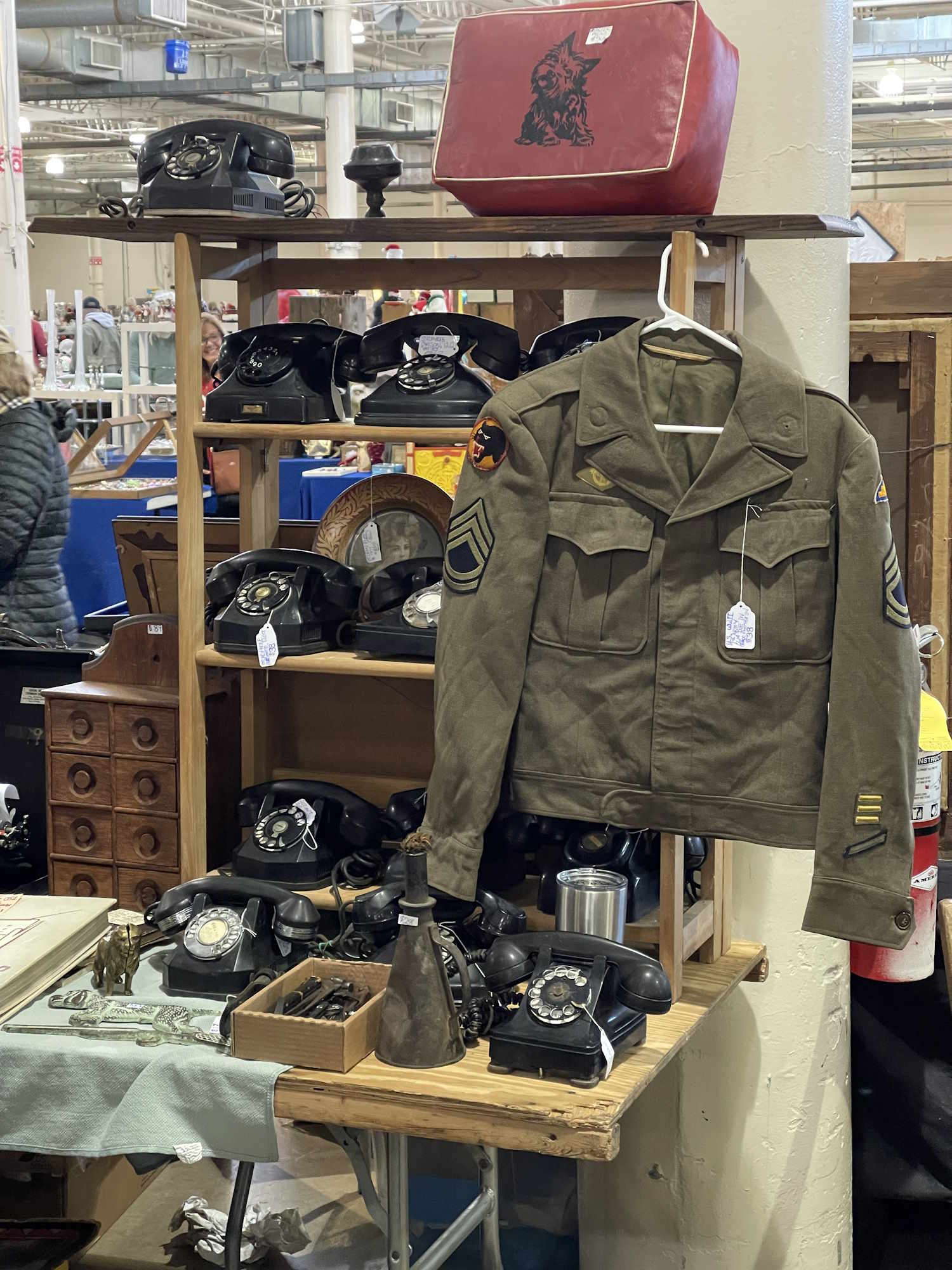
A collection of vintage telephones.
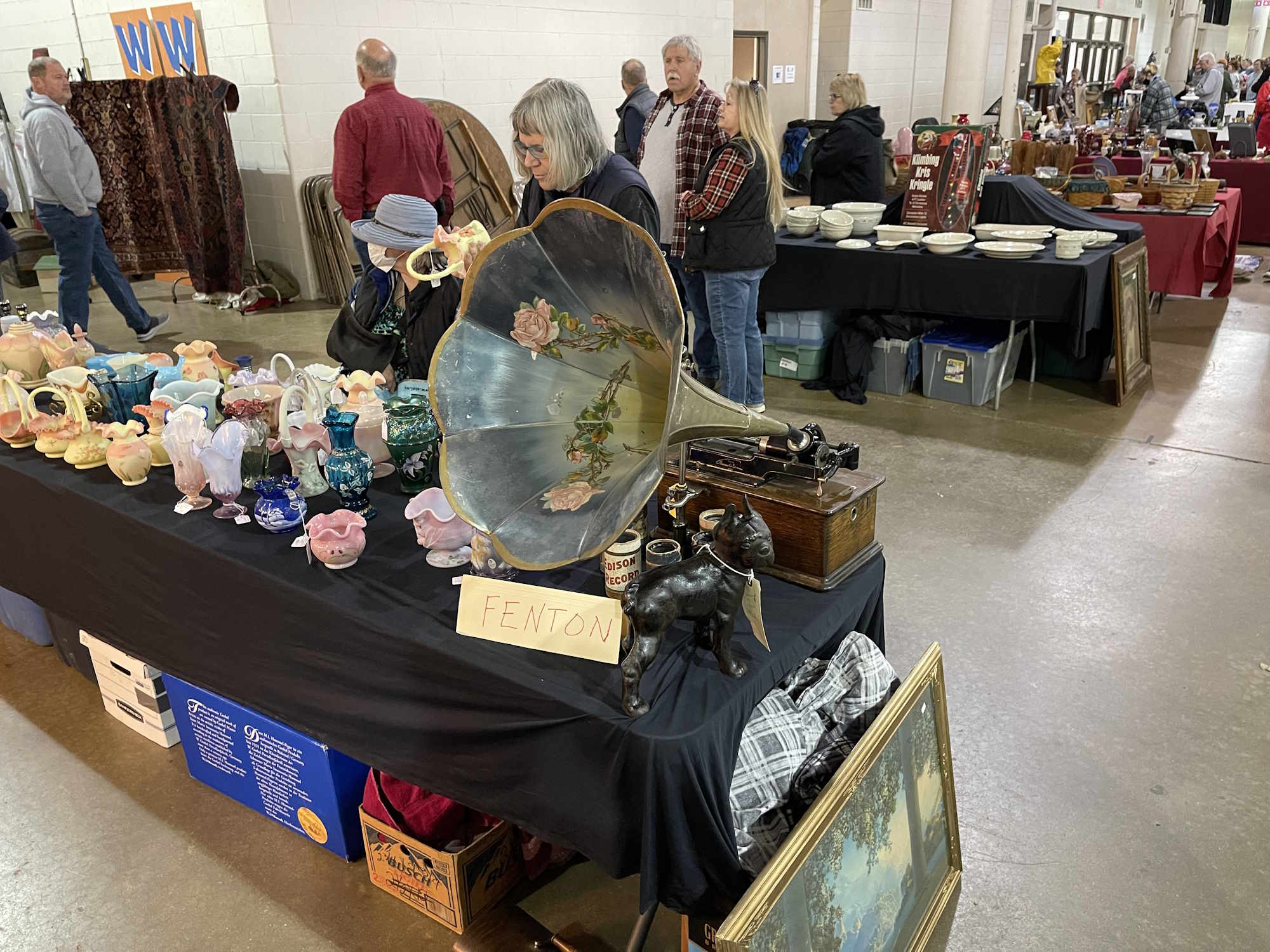
Cylinder players.
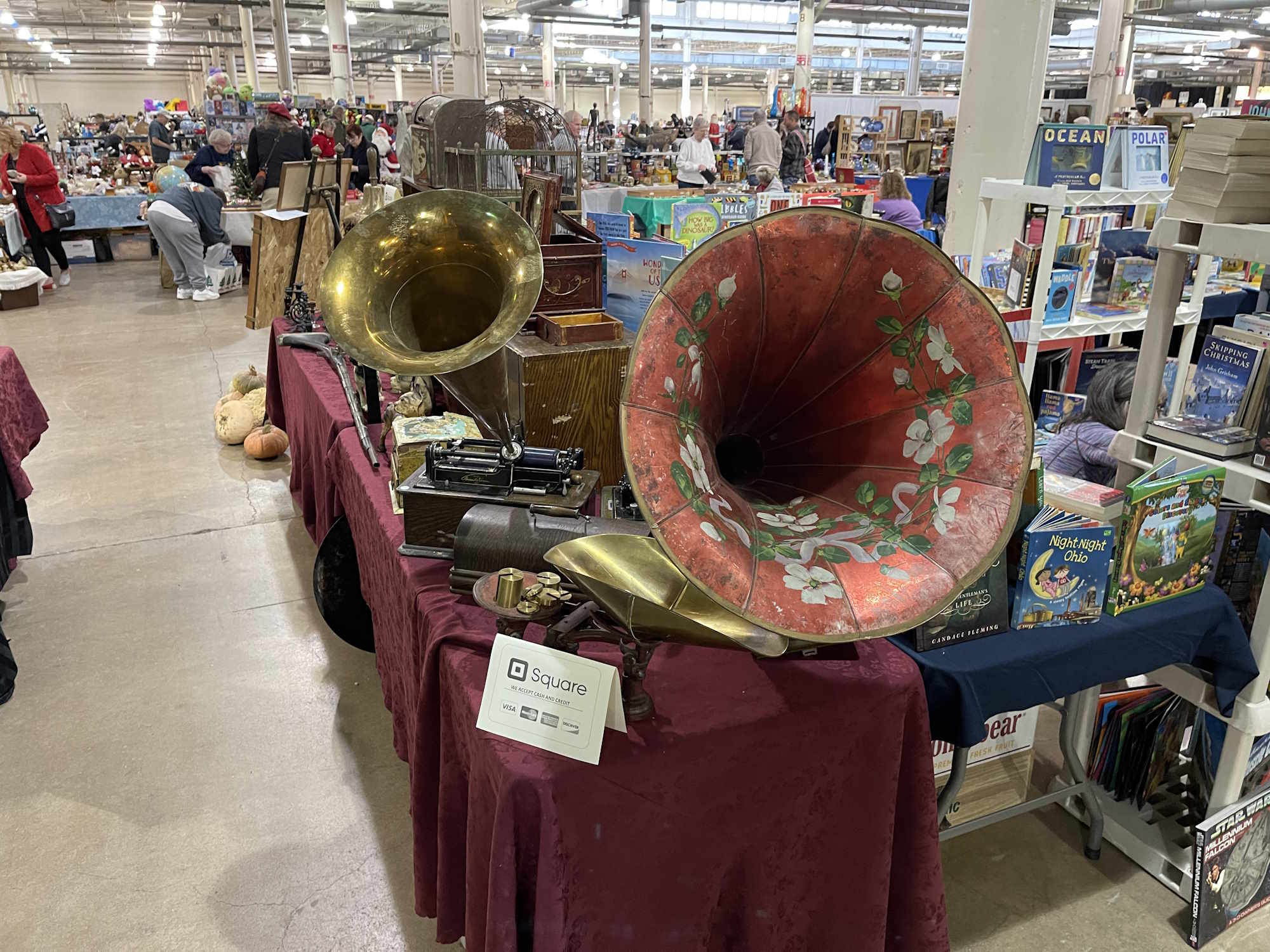
A couple more cylinder players.
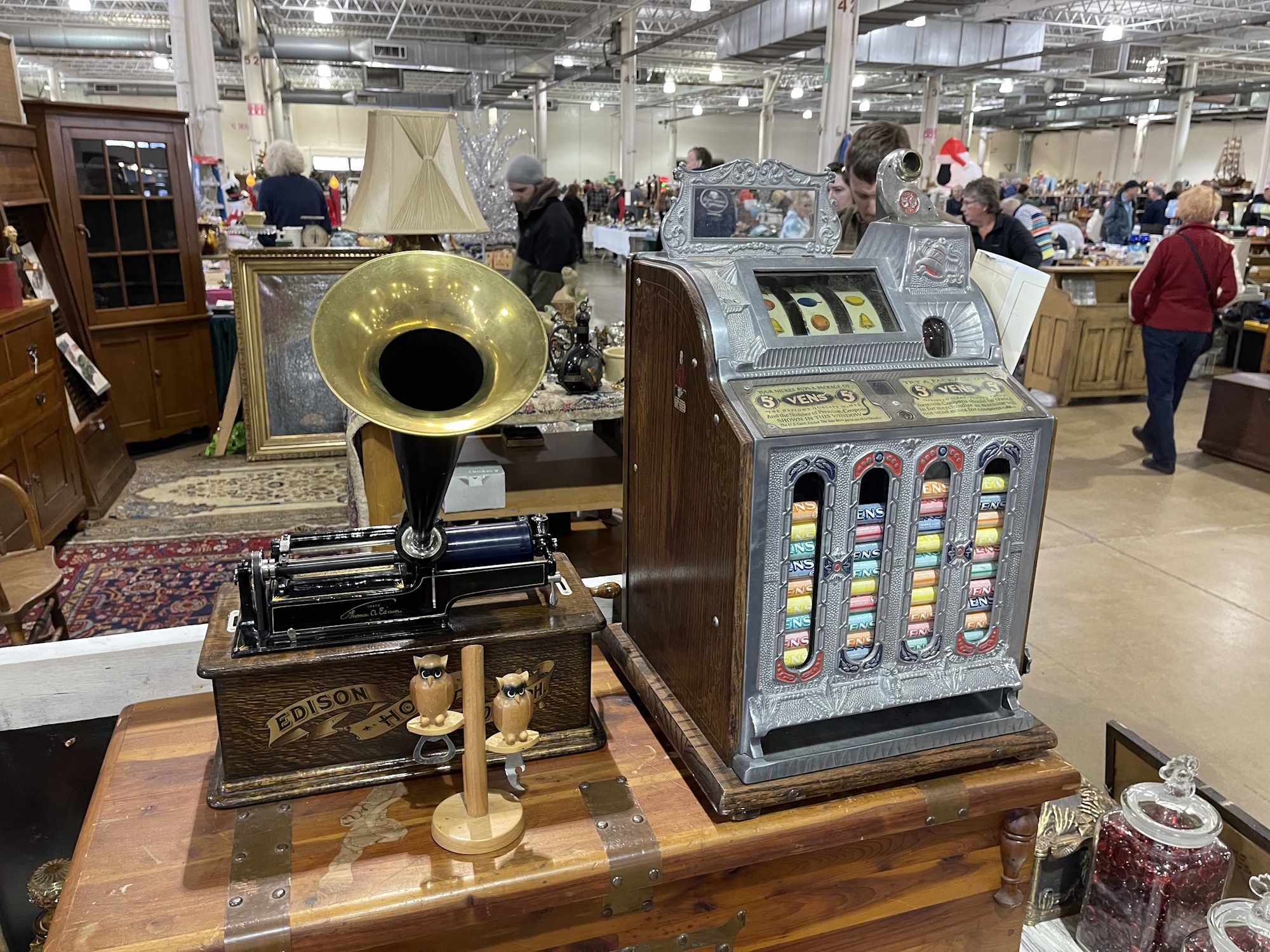
A nicely restored Edison Home with a rude yet historically important cylinder.
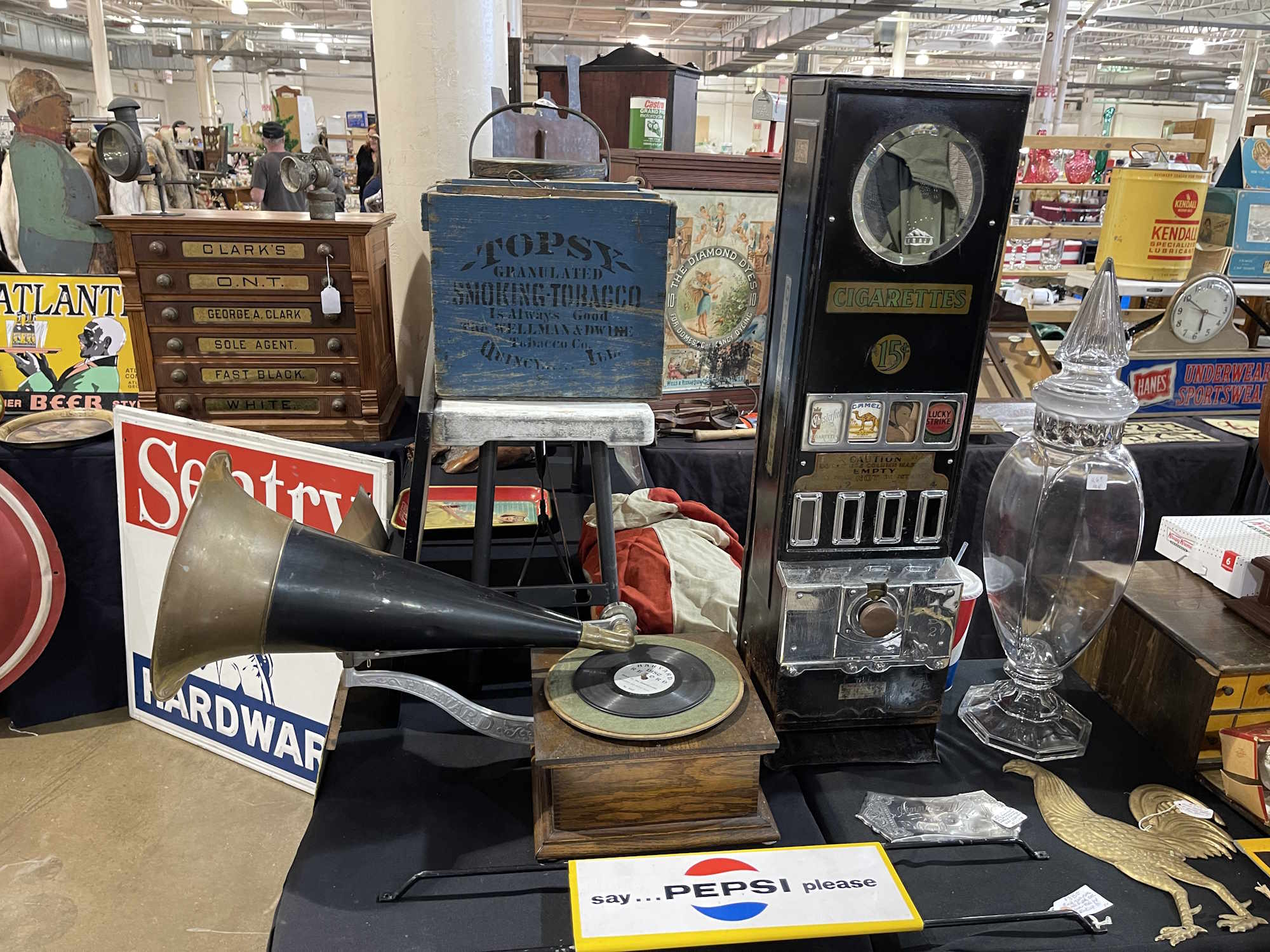
A “victrola” type record player.
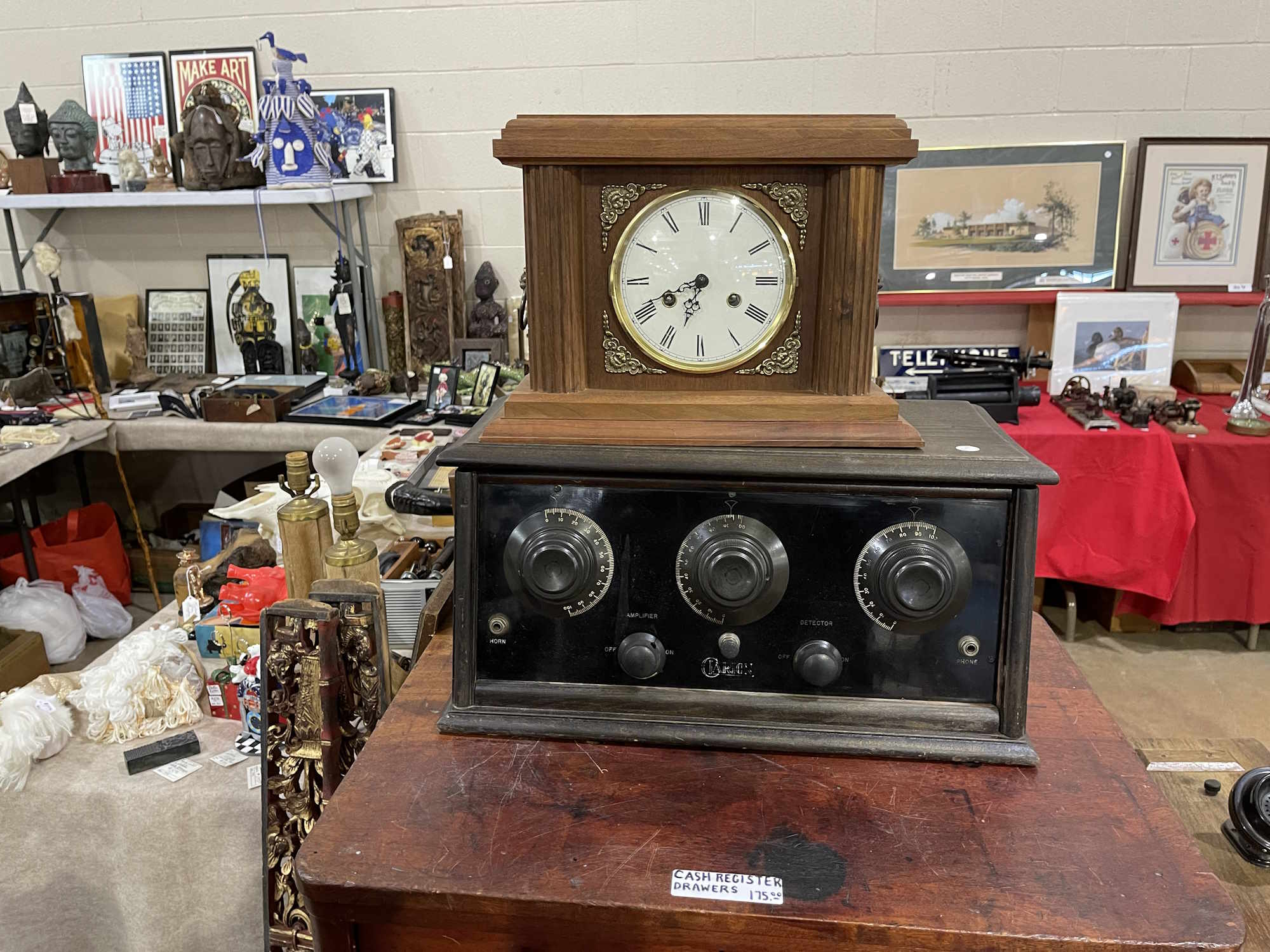
A Clarion receiver.
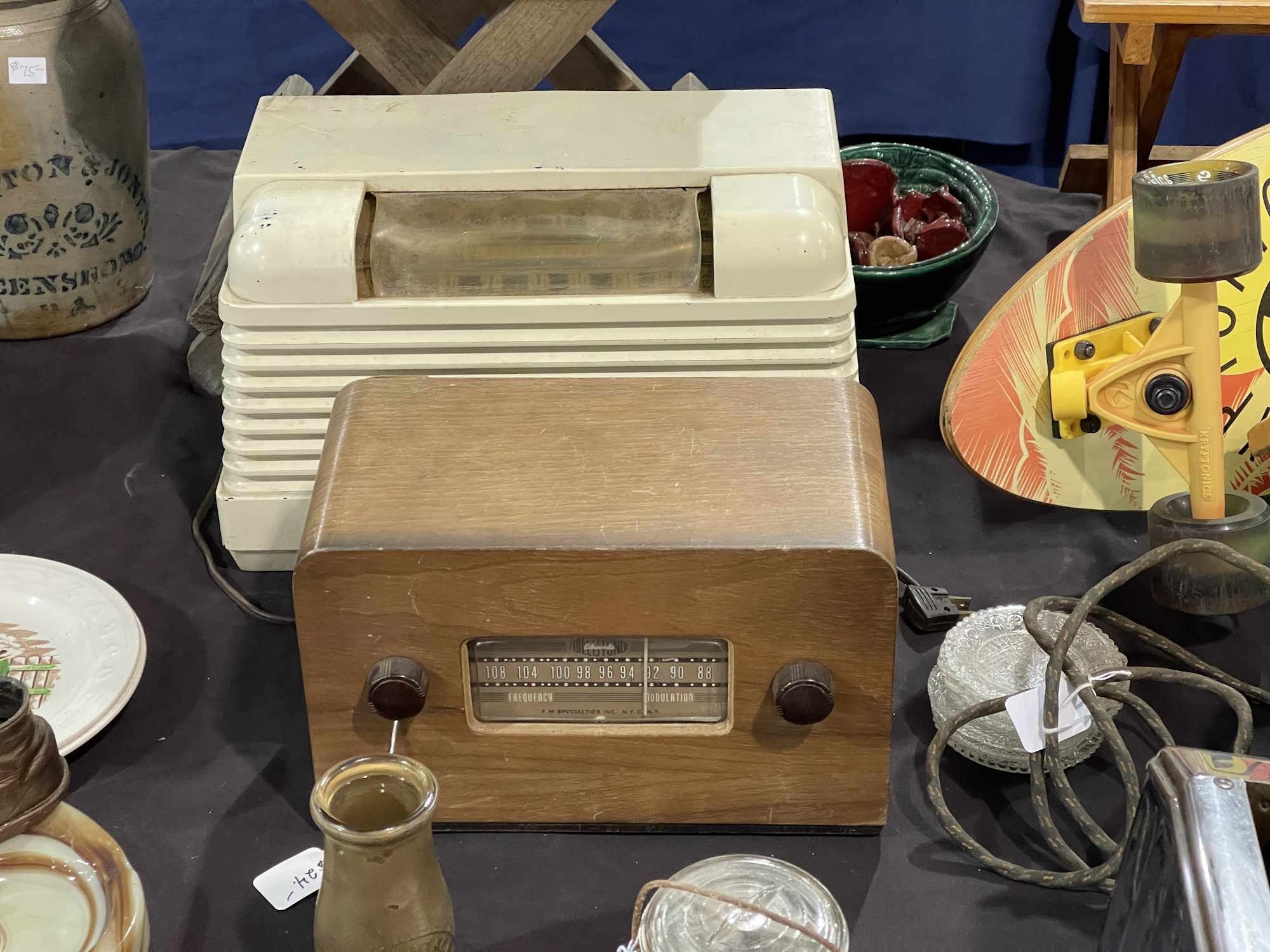
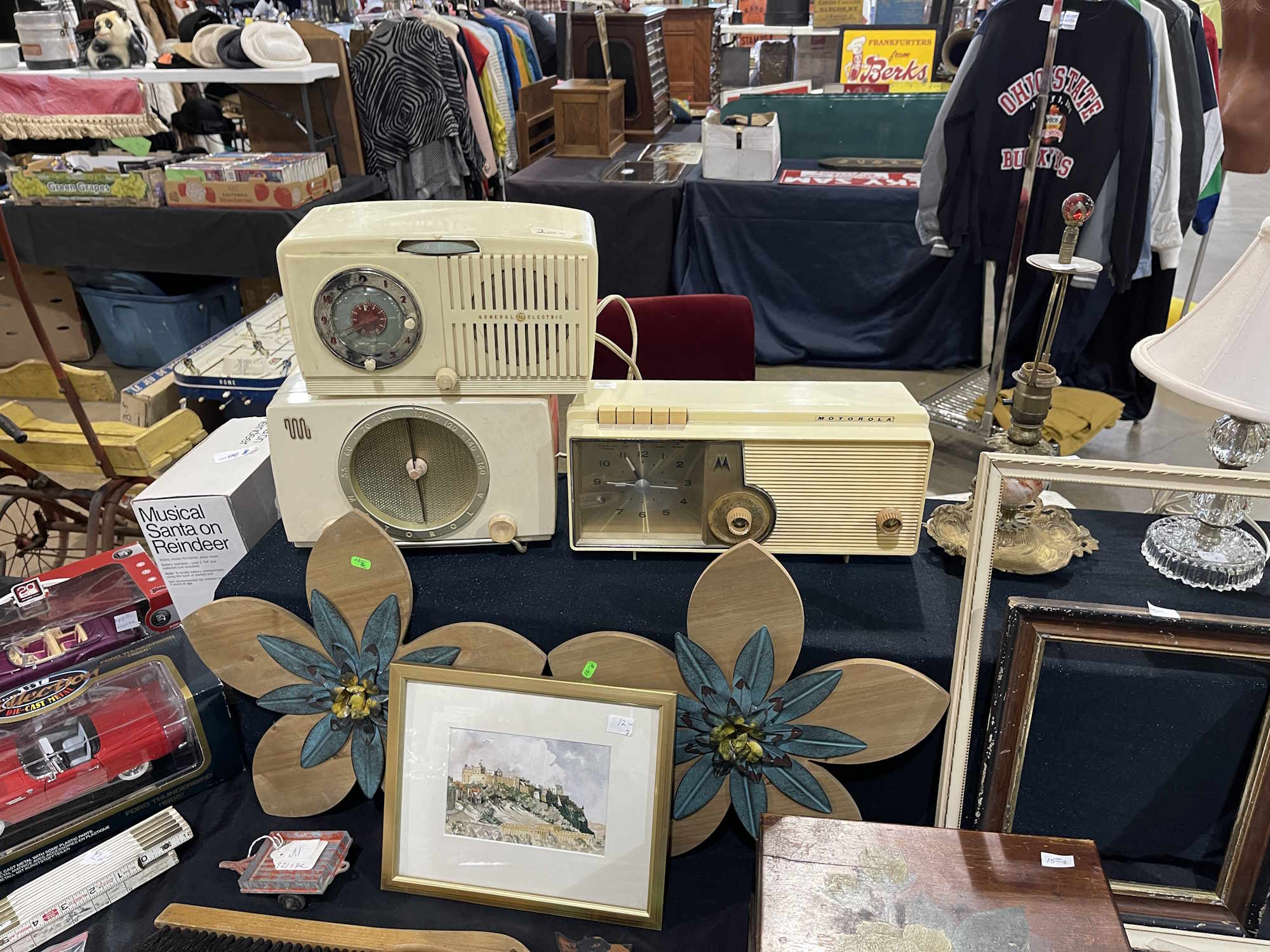
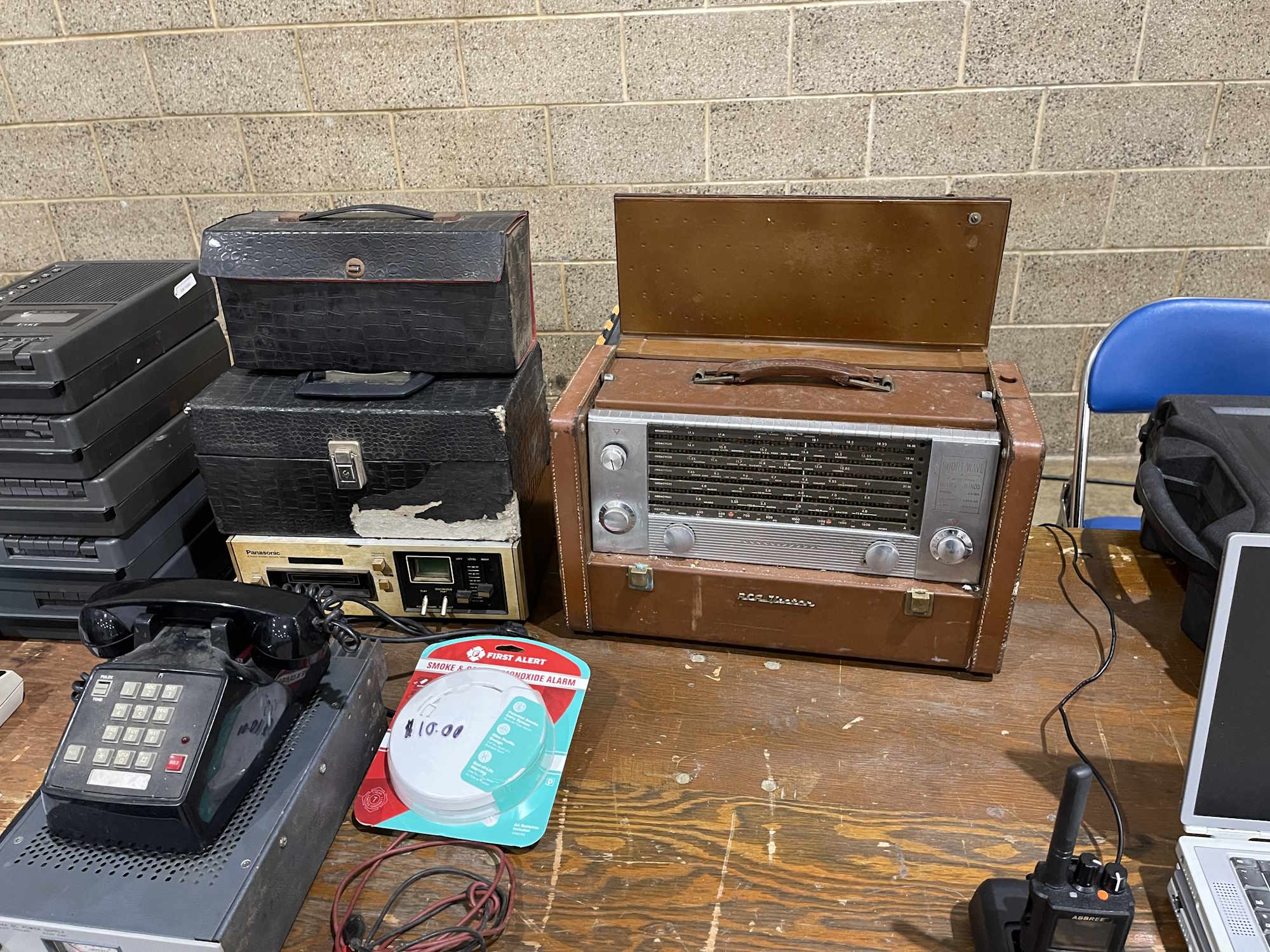
A couple of random radios.
Listen to the worn out clocks go clunkclunkclunkclunk.
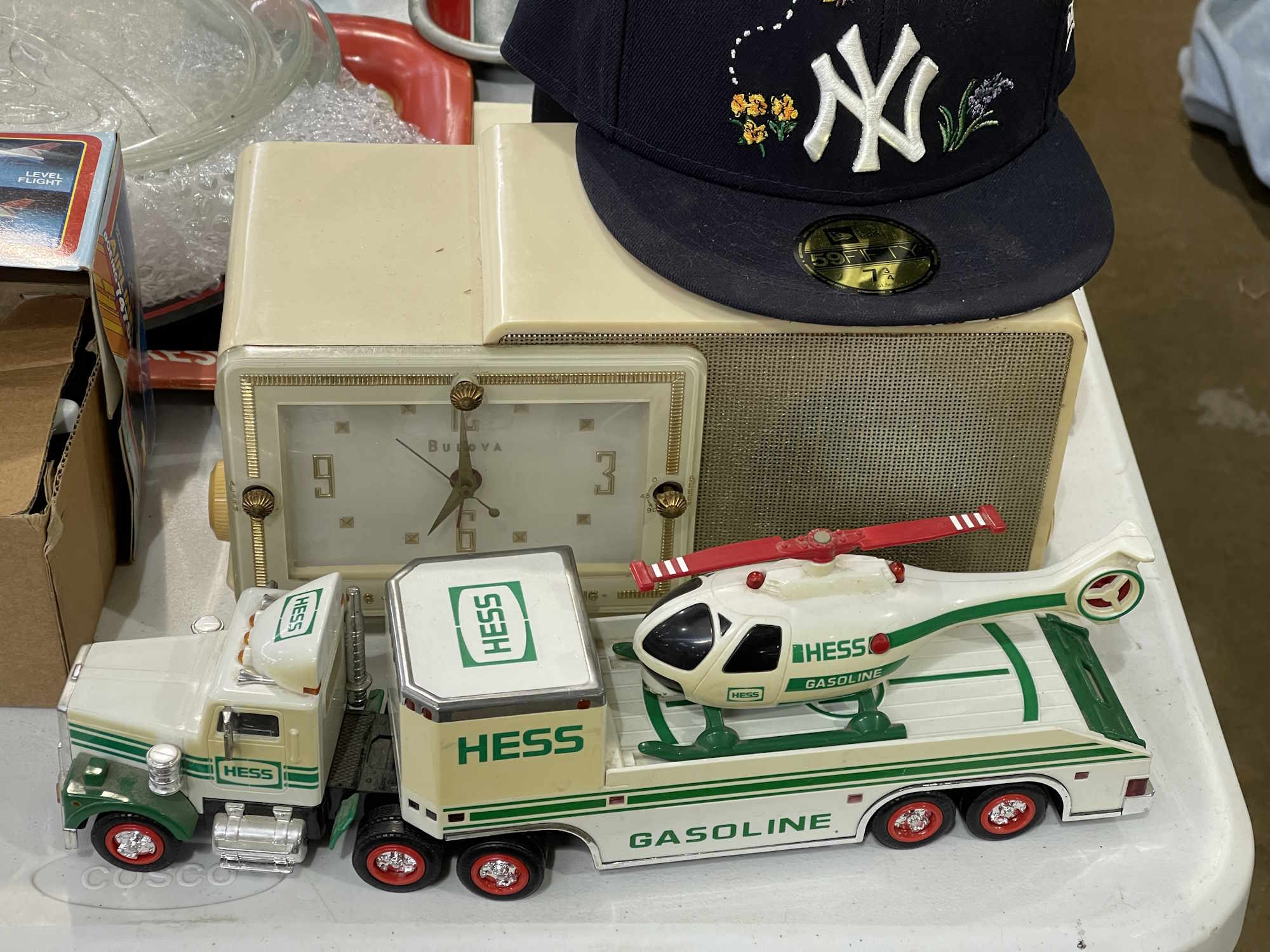
A radio with a Bulova clock.
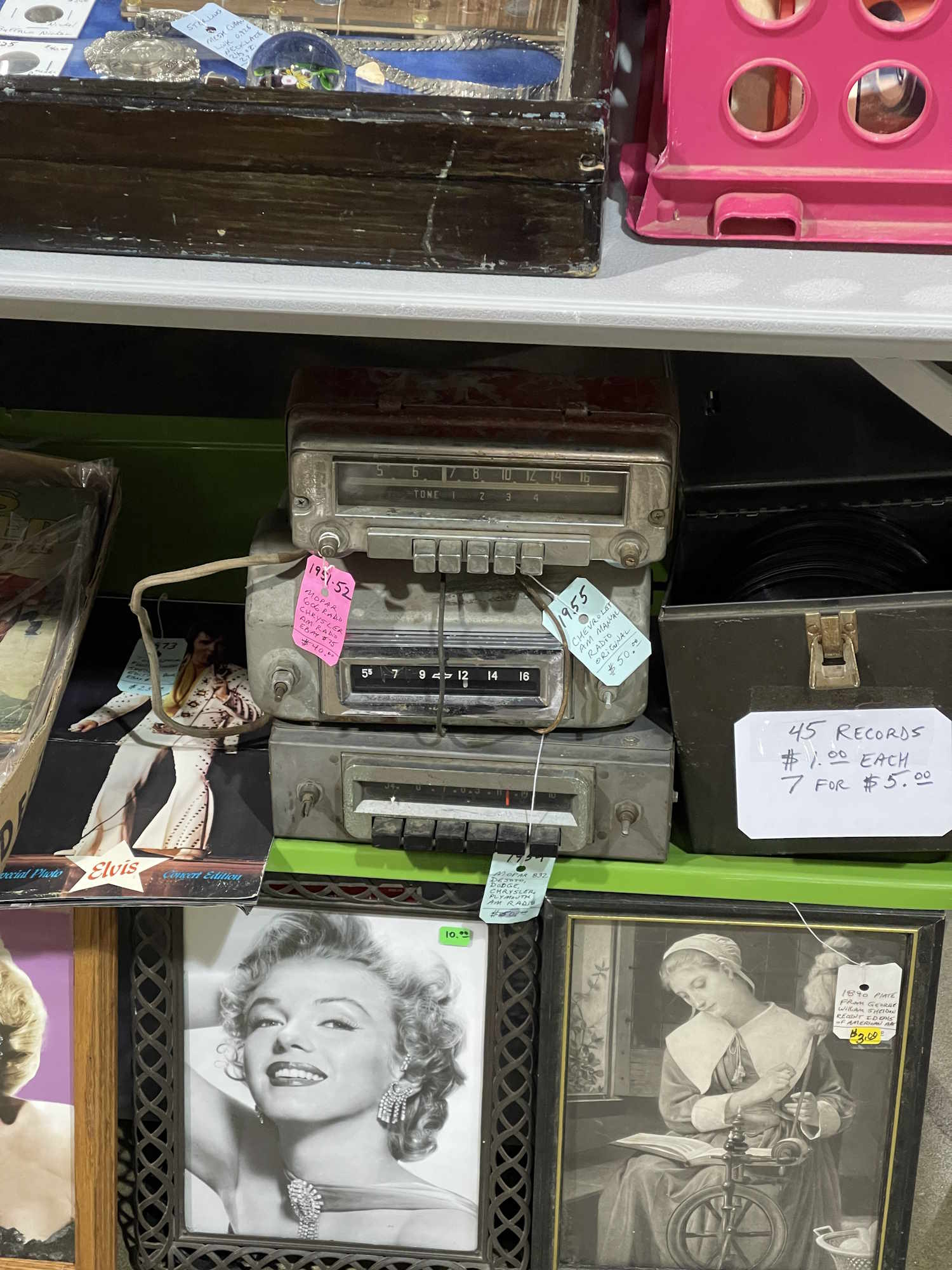
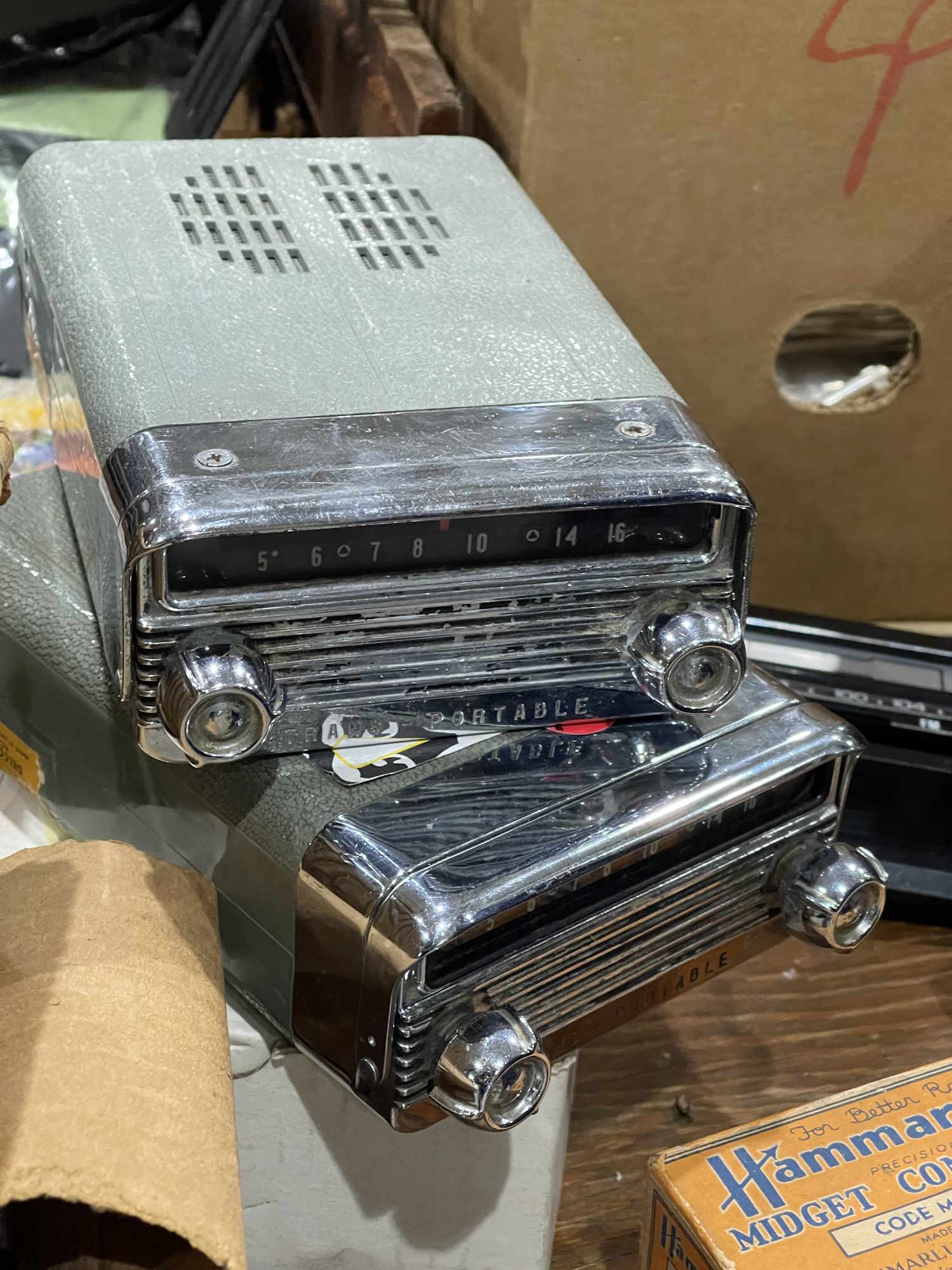
Car radios from who knows where.
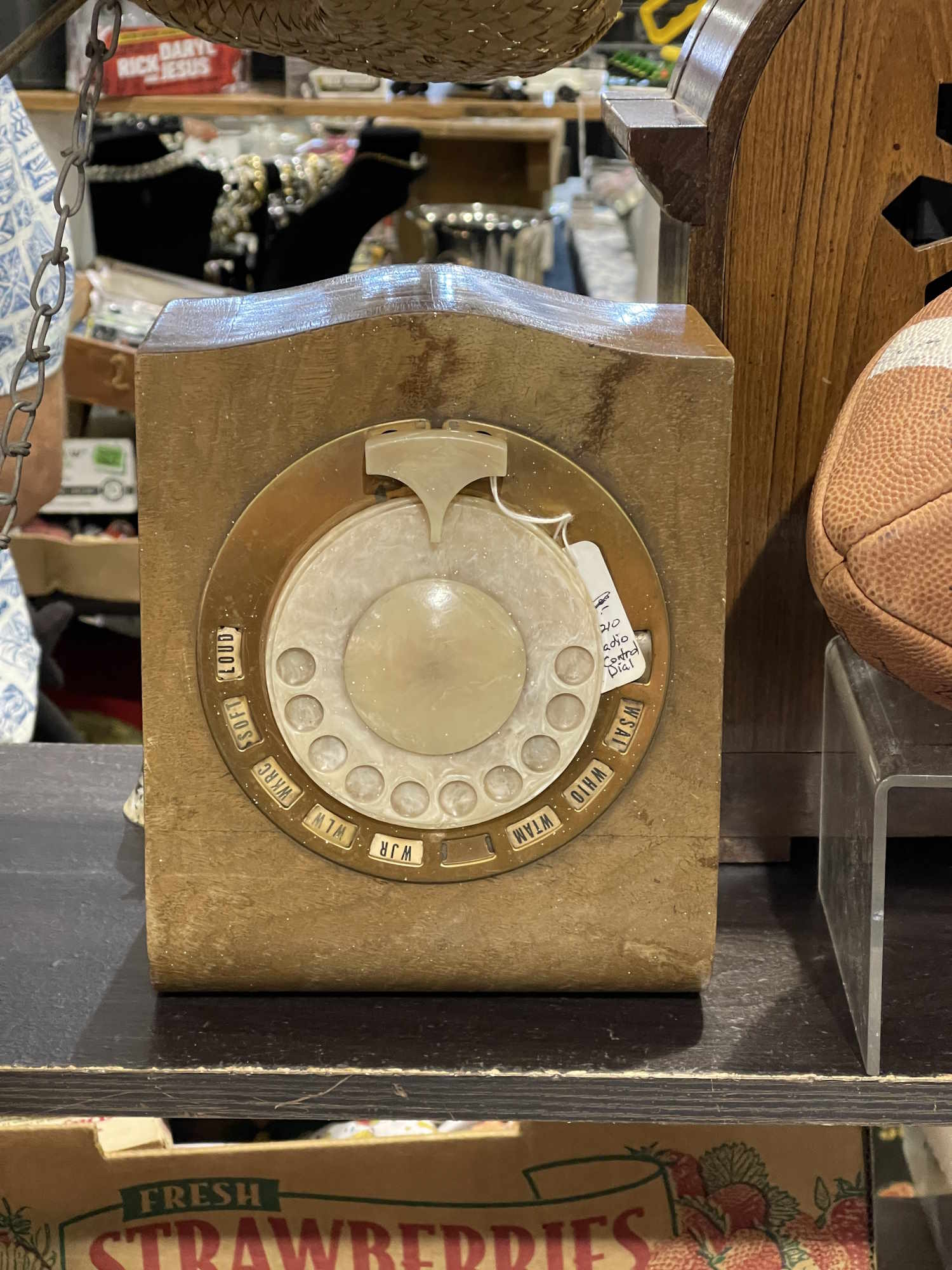
A Philco “Mystery” wireless remote.
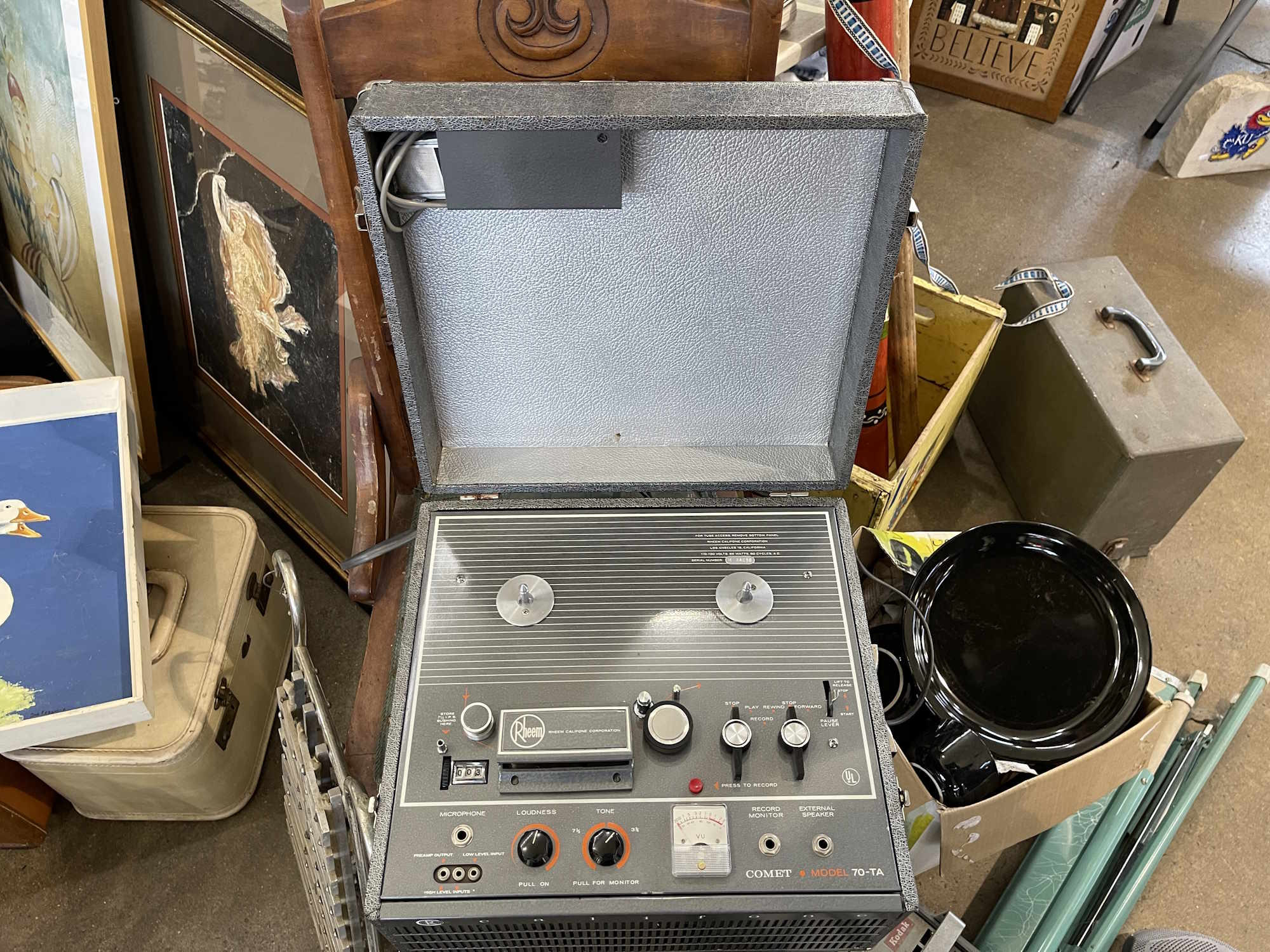
A Rheem Reel-to-Reel player.
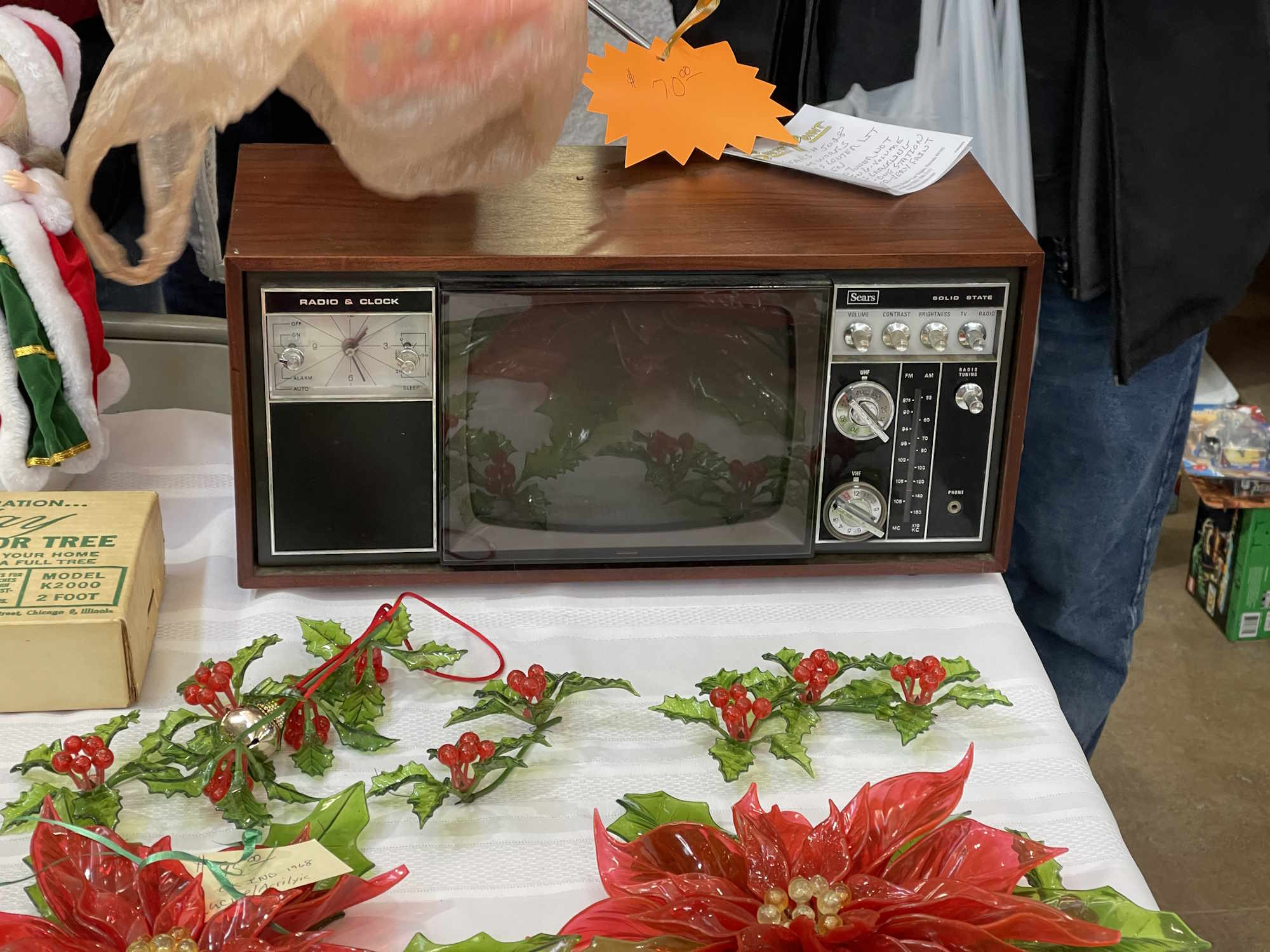
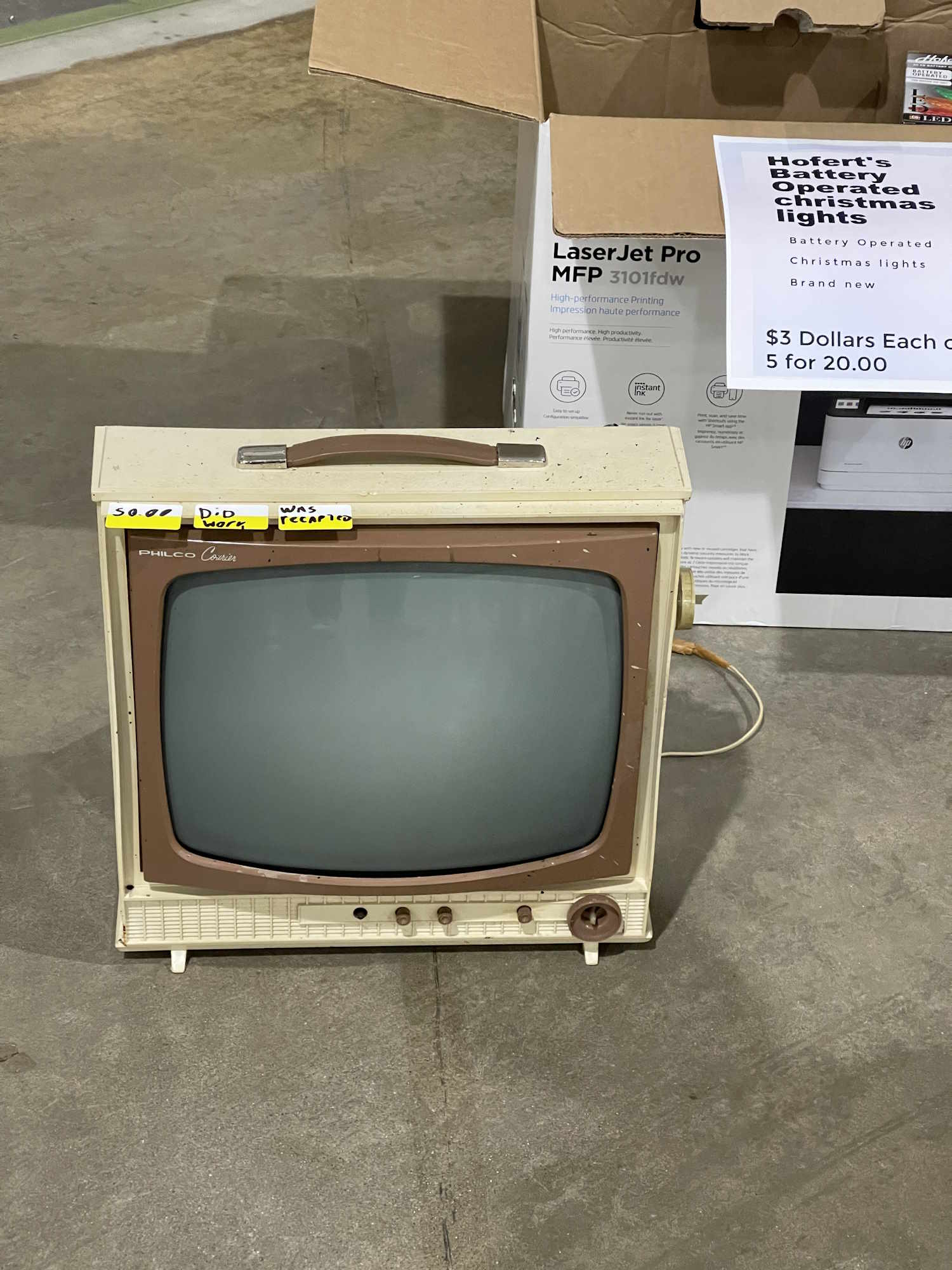
Cool, but ultimately useless analog television.
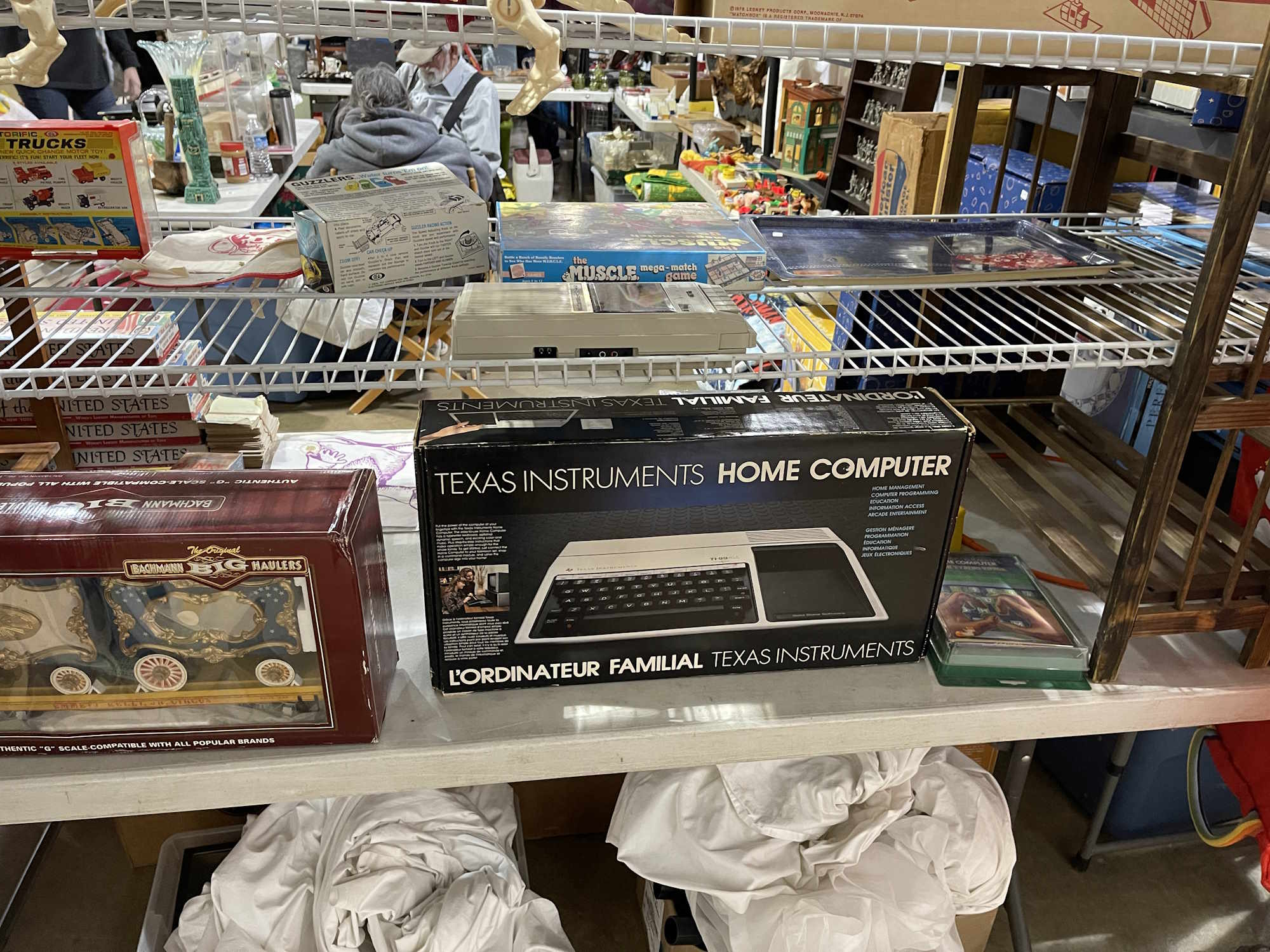
A TI 99/4A still in the box. Was abandonware when new!
This year’s show seemed to be a bit smaller than normal, but it may have been just my imagination. Regardless, there was a lot to see and the show was, as usual, busy. I tried to limit what I brought home to things that were on my want list, and I mostly did so - only diverging for a book that looked interesting. I’ve written about one of the pieces, a meter from Heathkit, so check out the posts just previous to this one for a look at that piece.
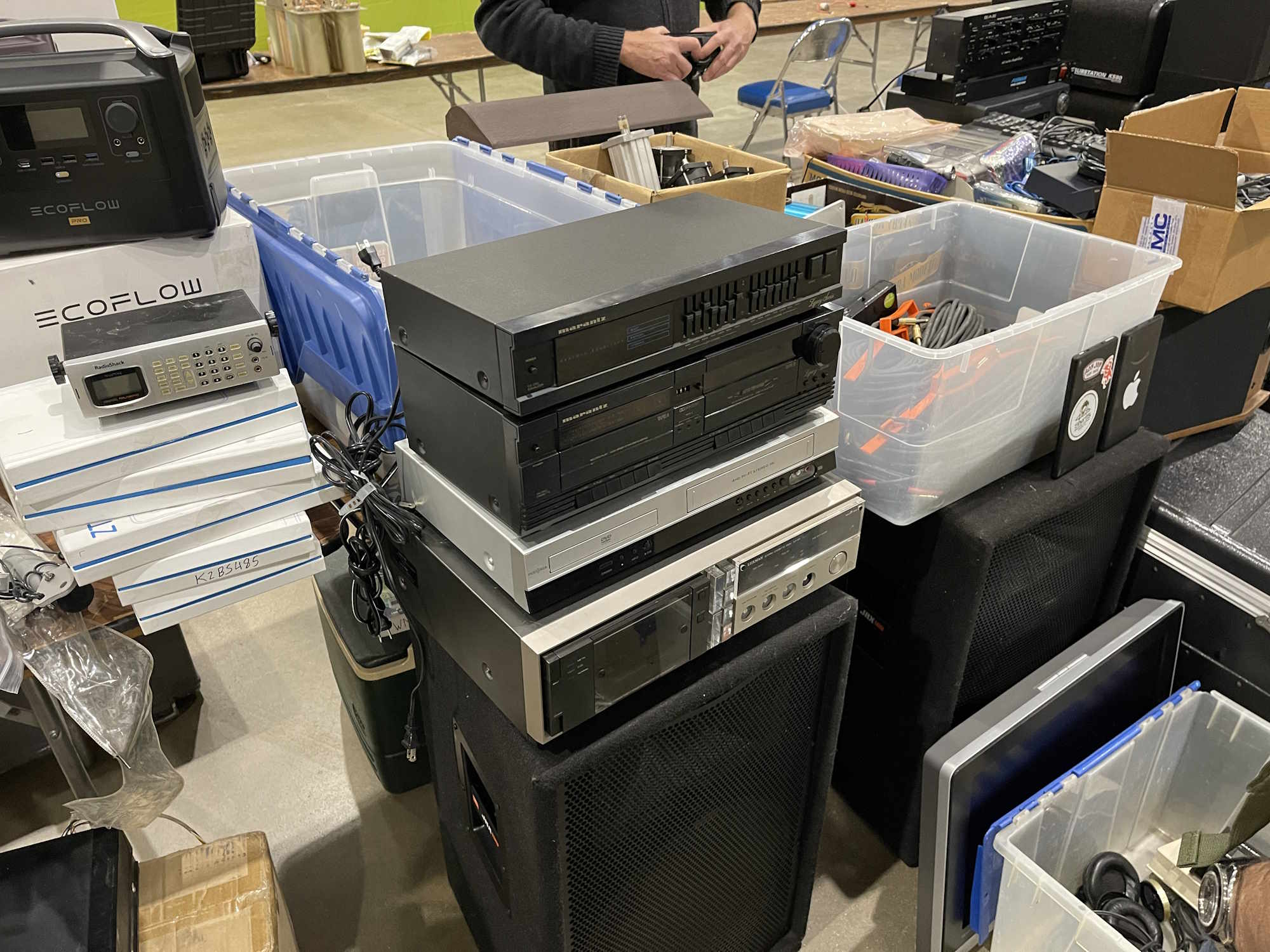
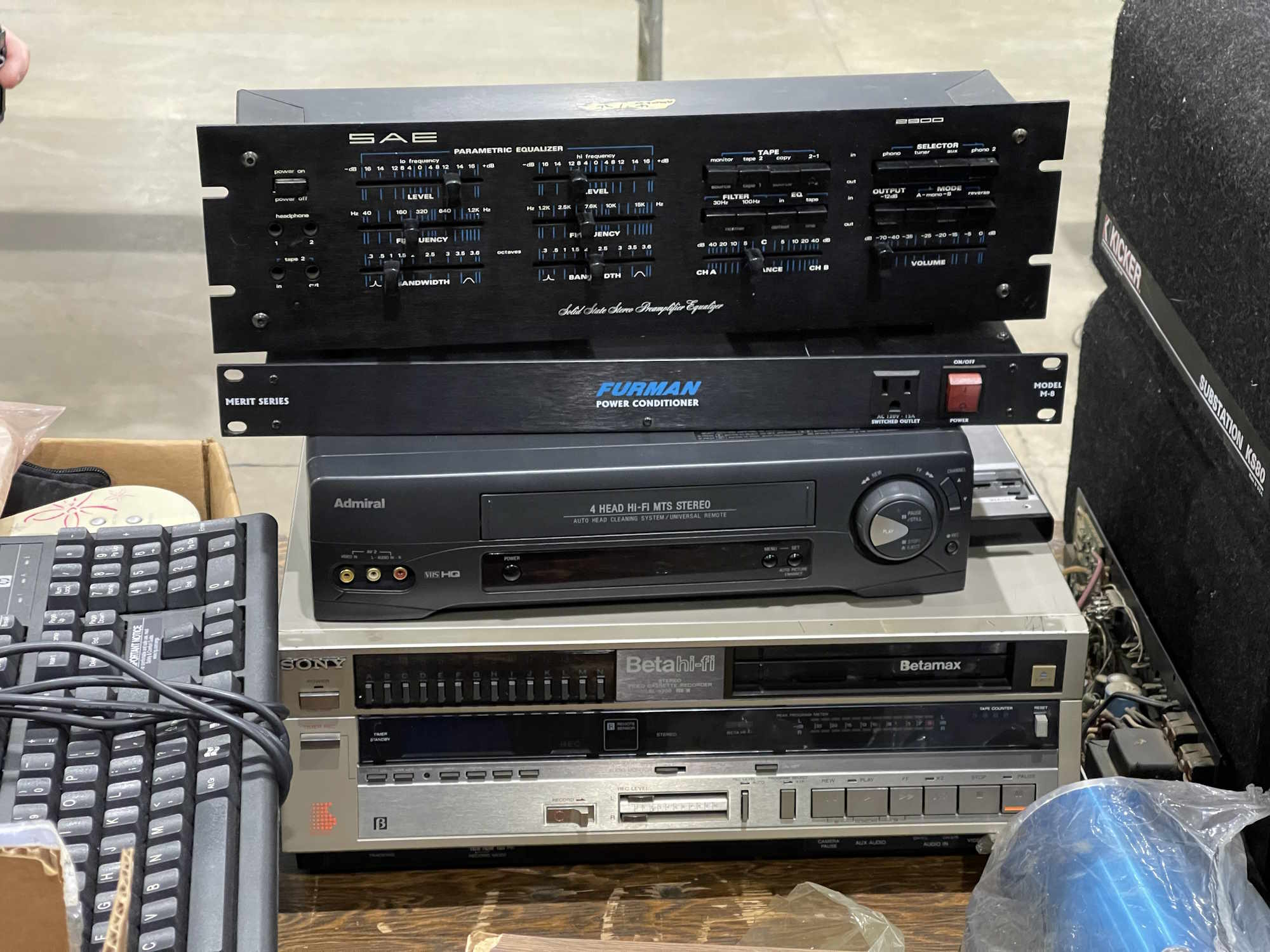
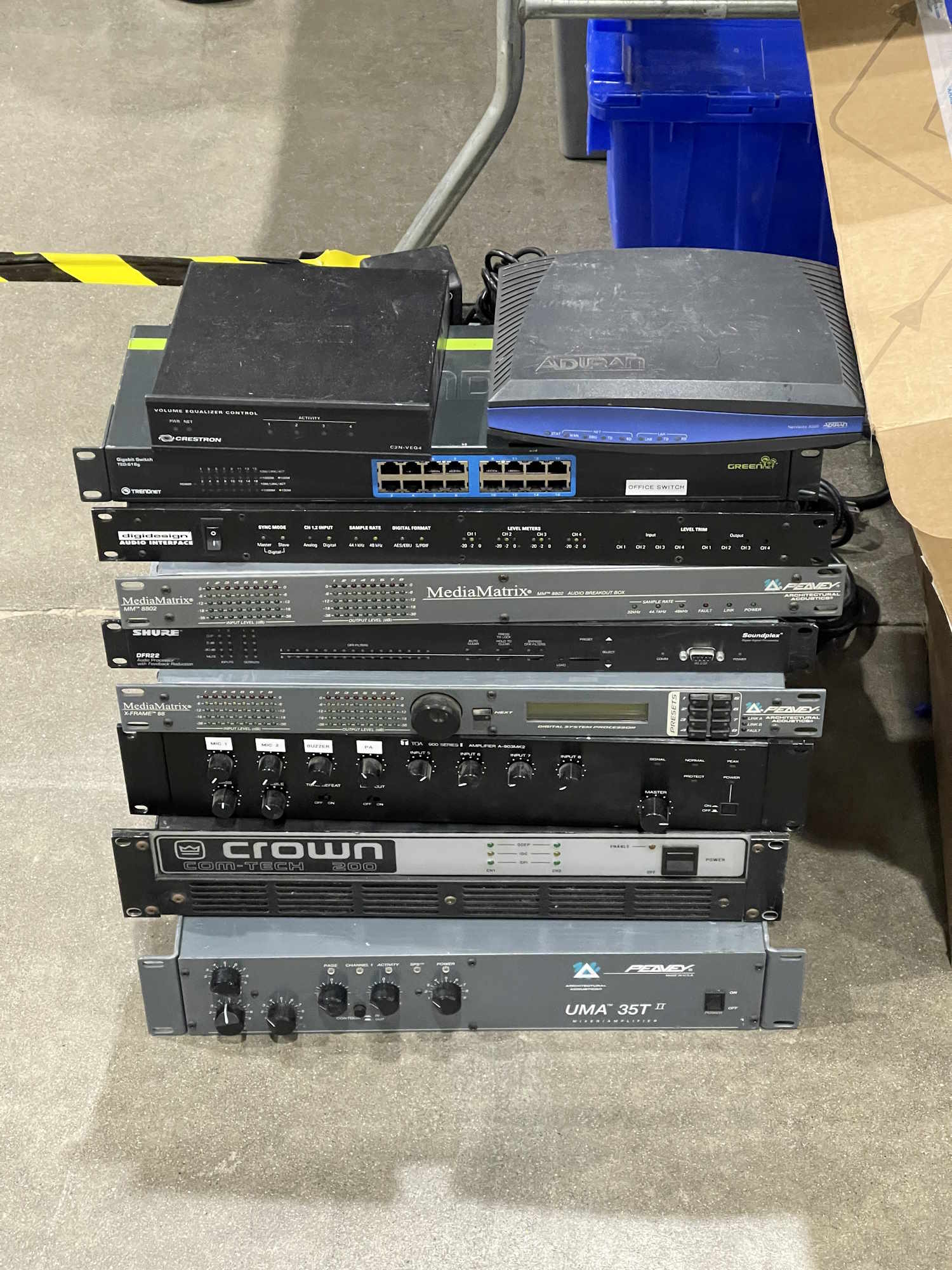
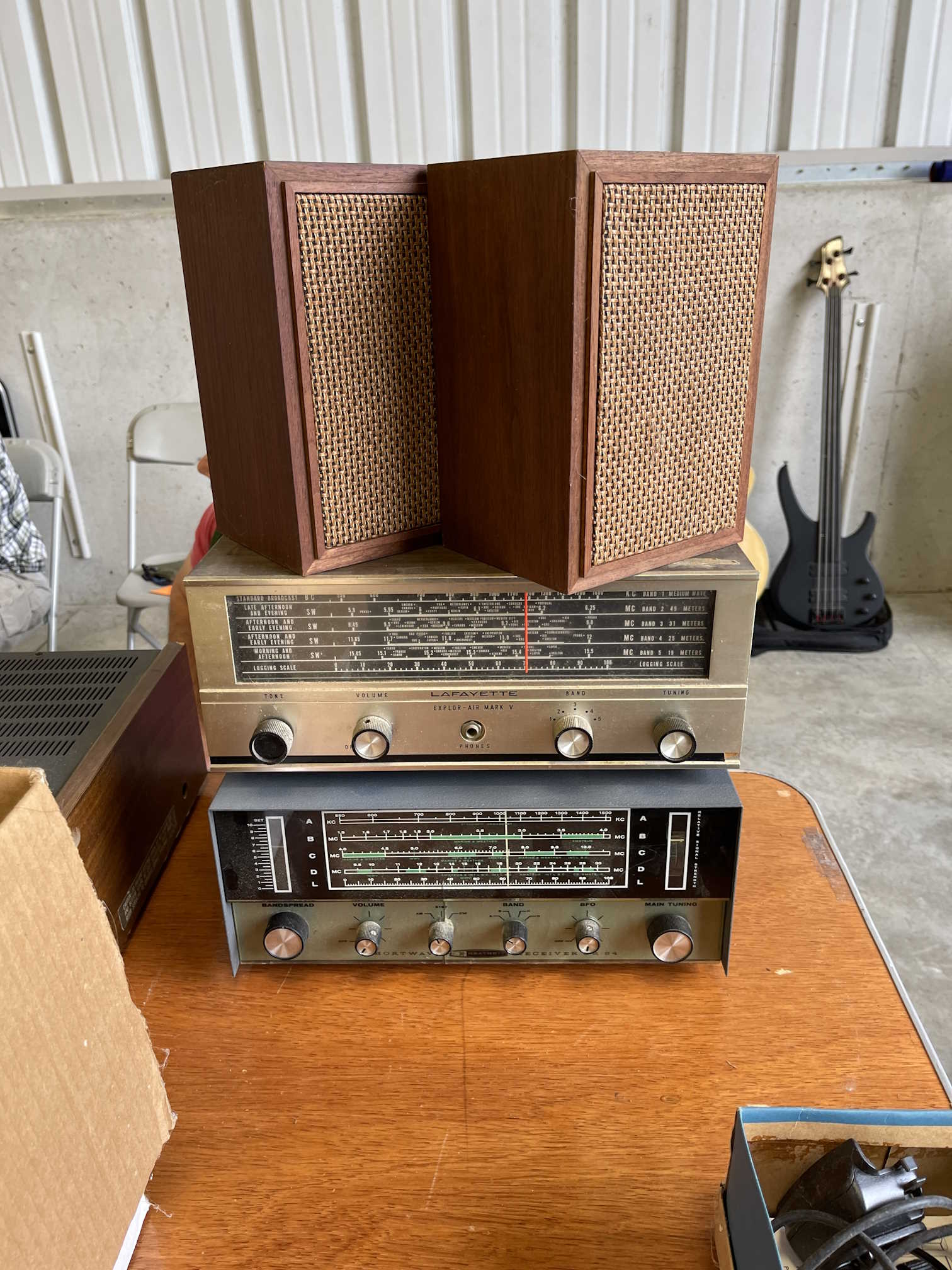
A stack of audio gear.
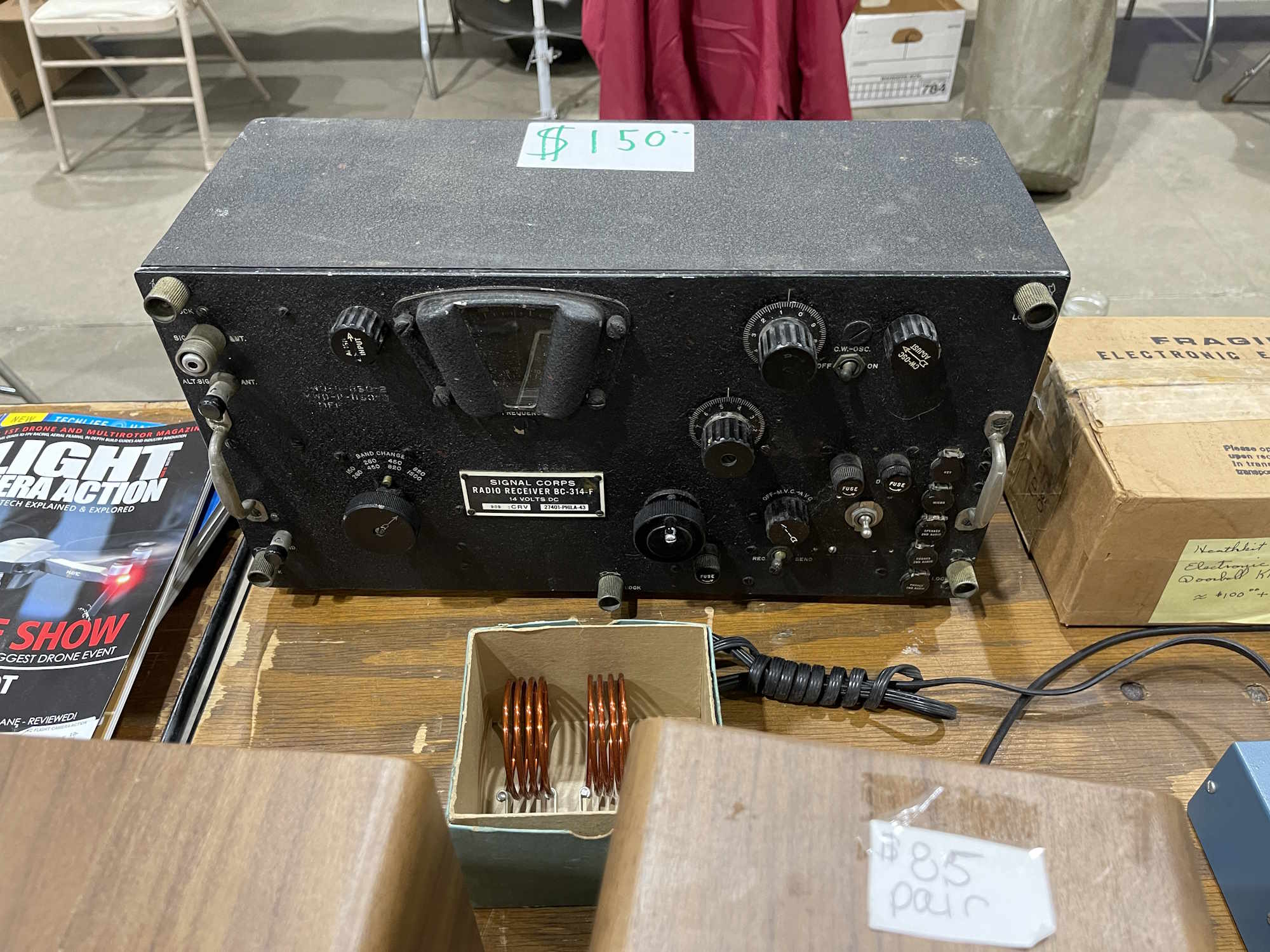
A nice, unmodified BC-314 radio.
A Betamax player under some audio gear.
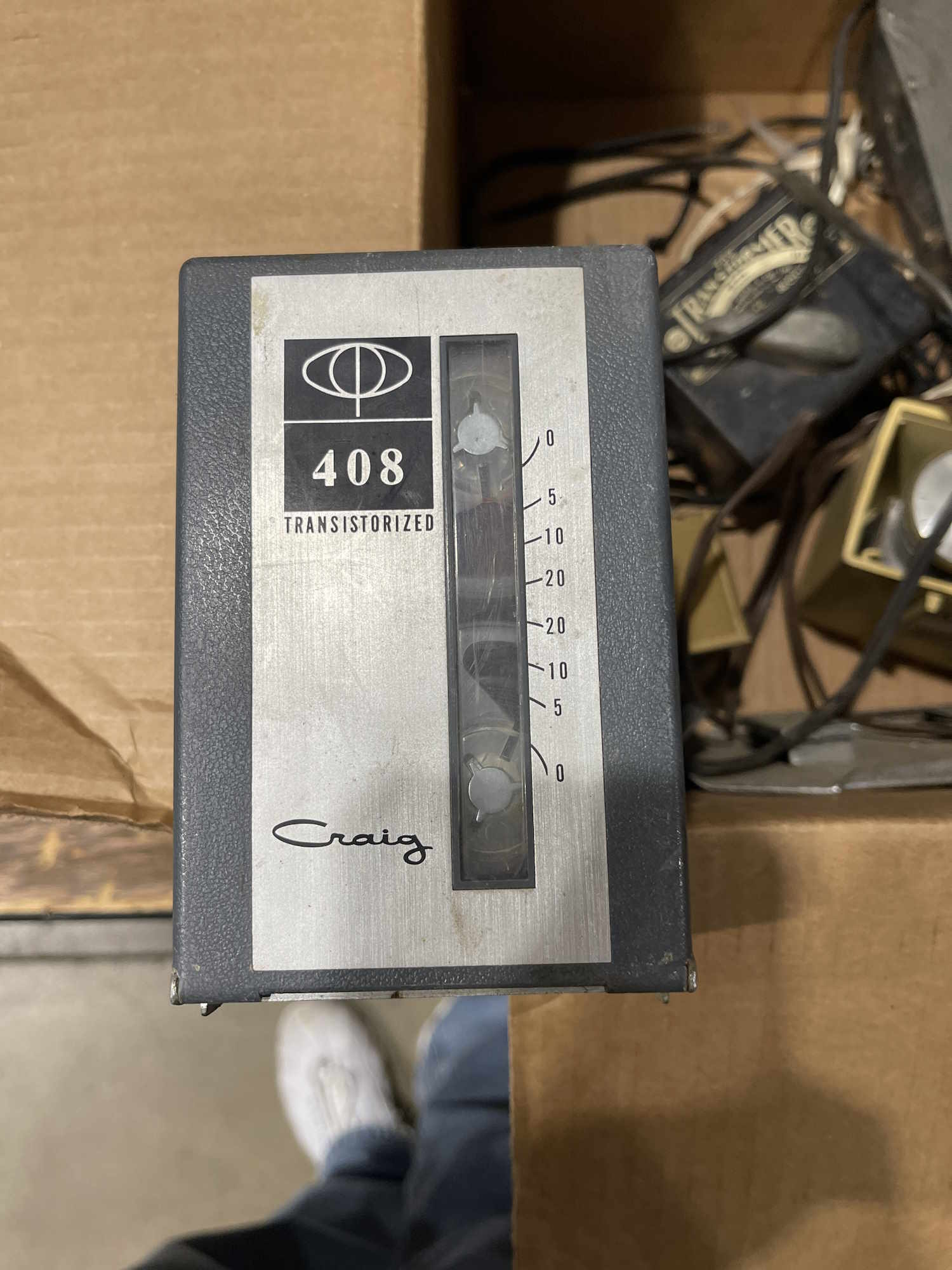
A Craig 408 mini reel recorder.
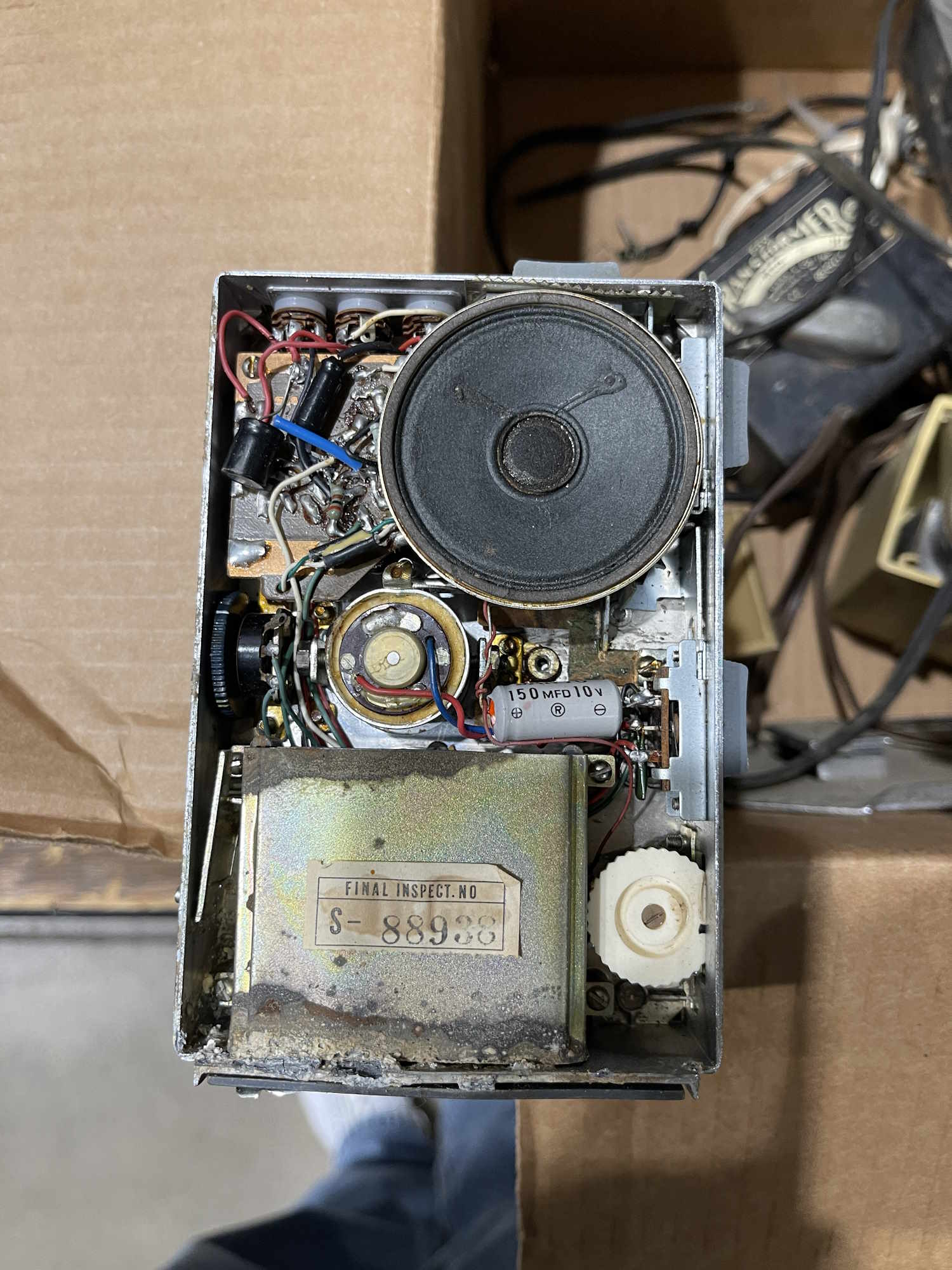
The inside of the Craig 408.
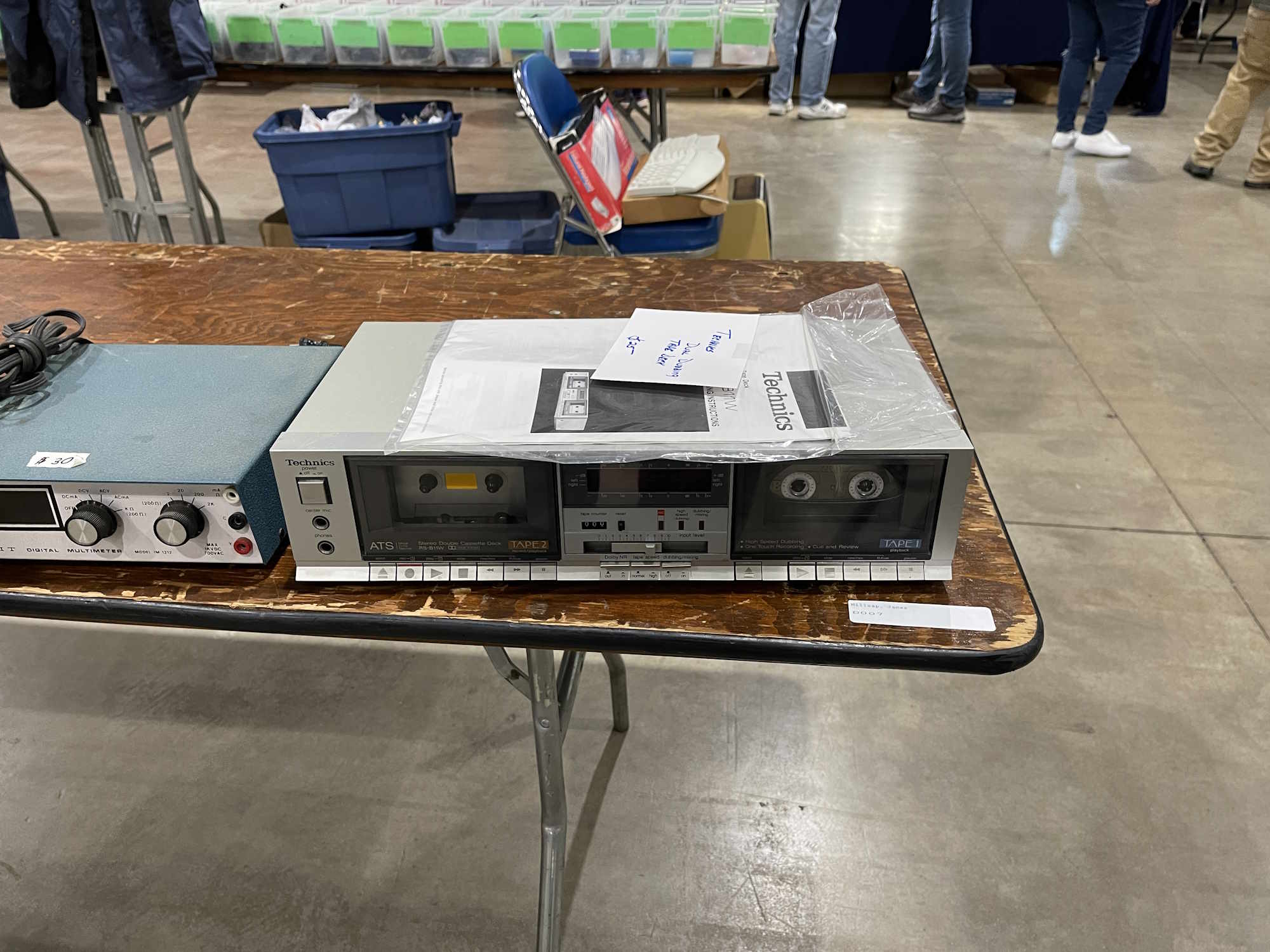
A dual well cassette deck that went home with a friend.
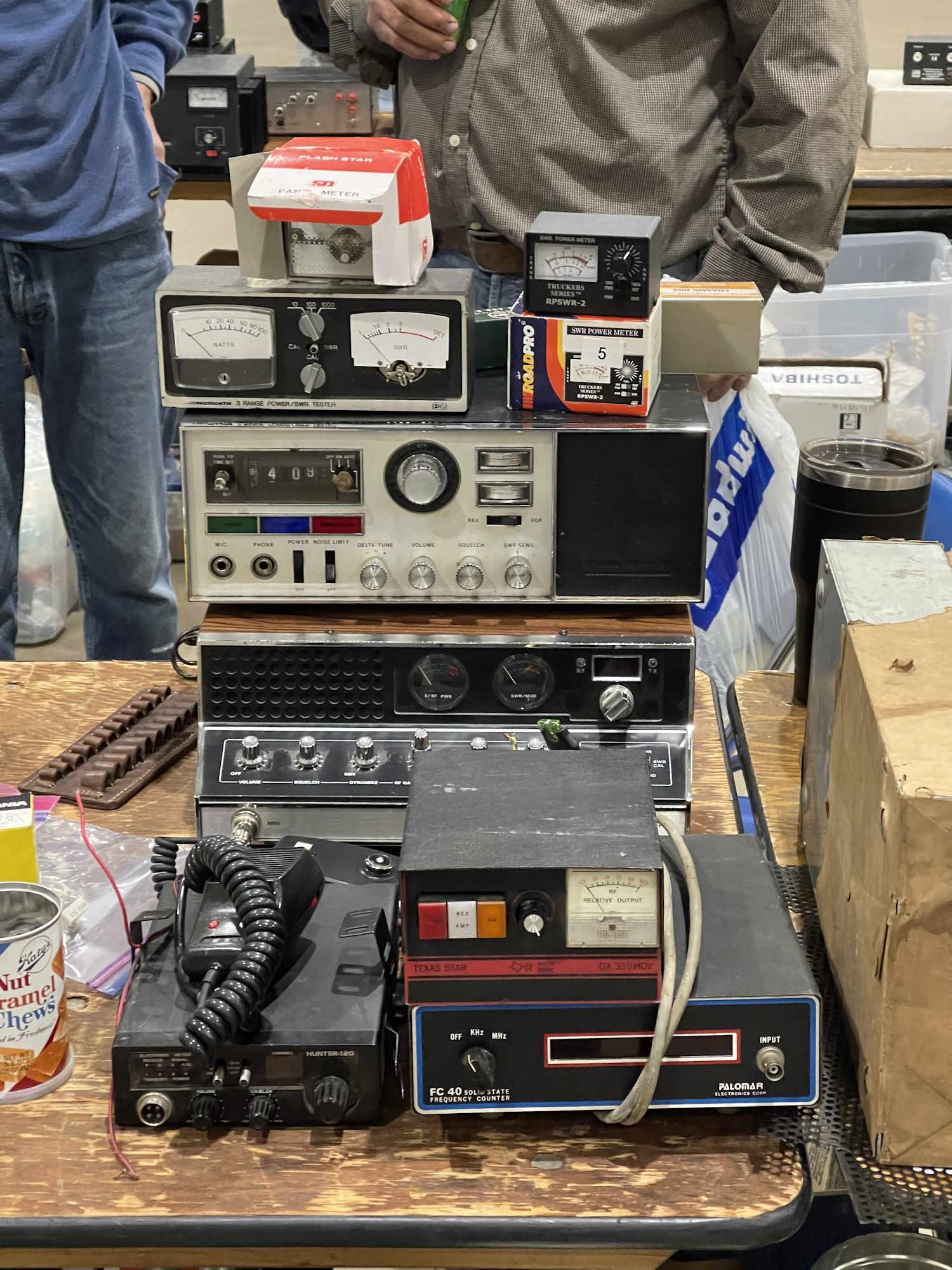
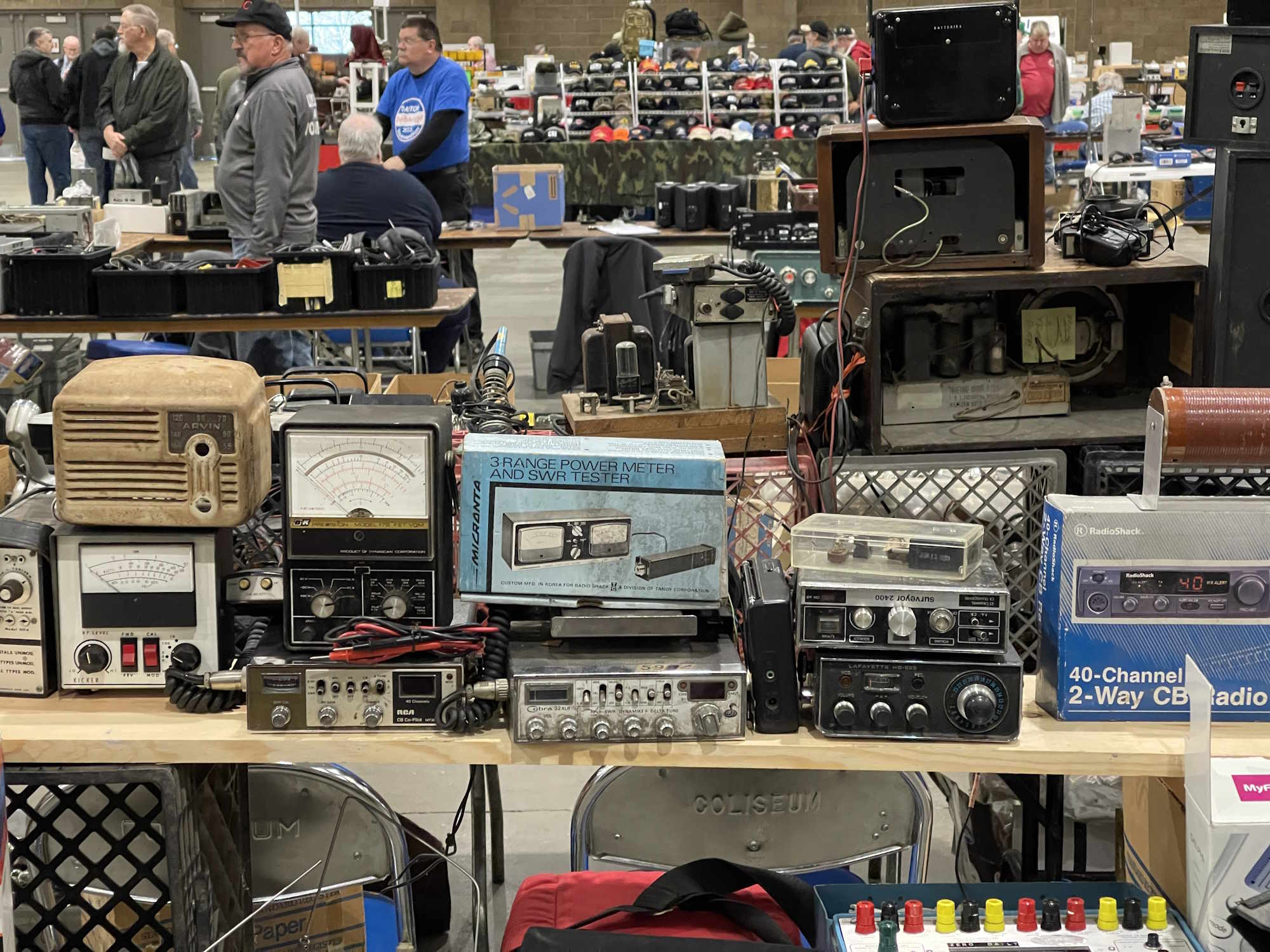
A stack of 1970s CB gear. Love the big lamps on these.
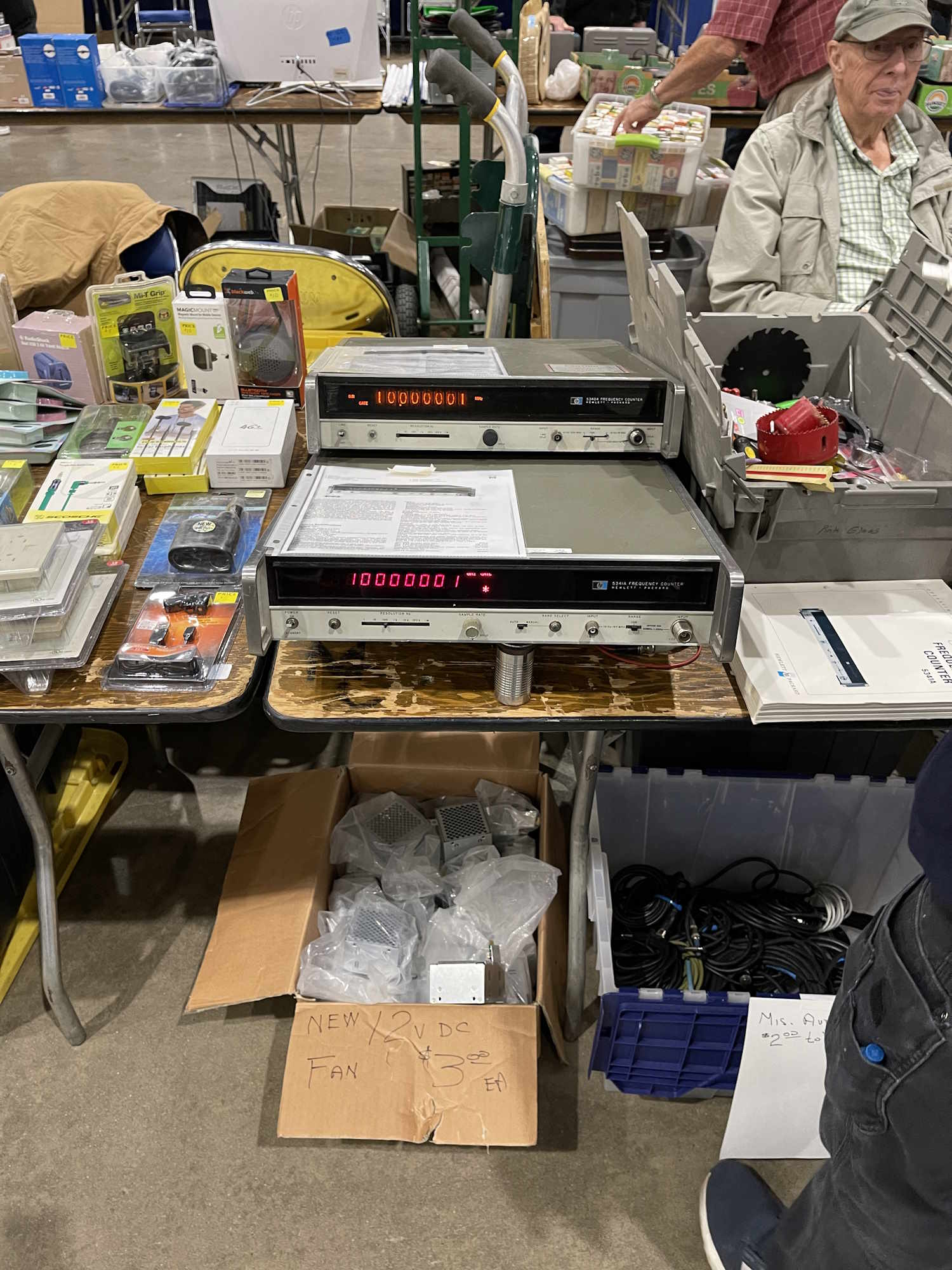
Two vintages of HP frequency counters.
Rockbound Radio.
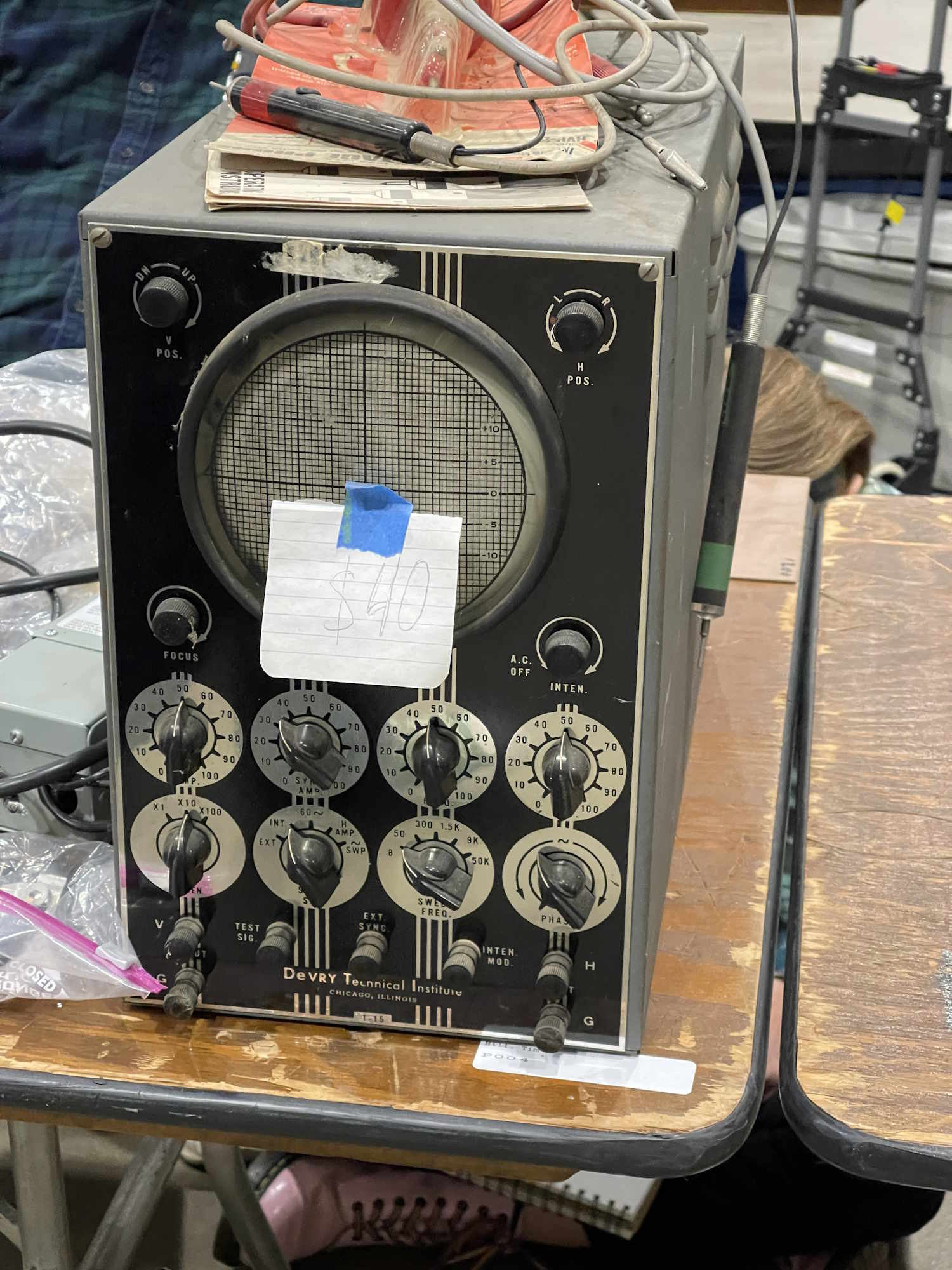
A DeVry oscilloscope.
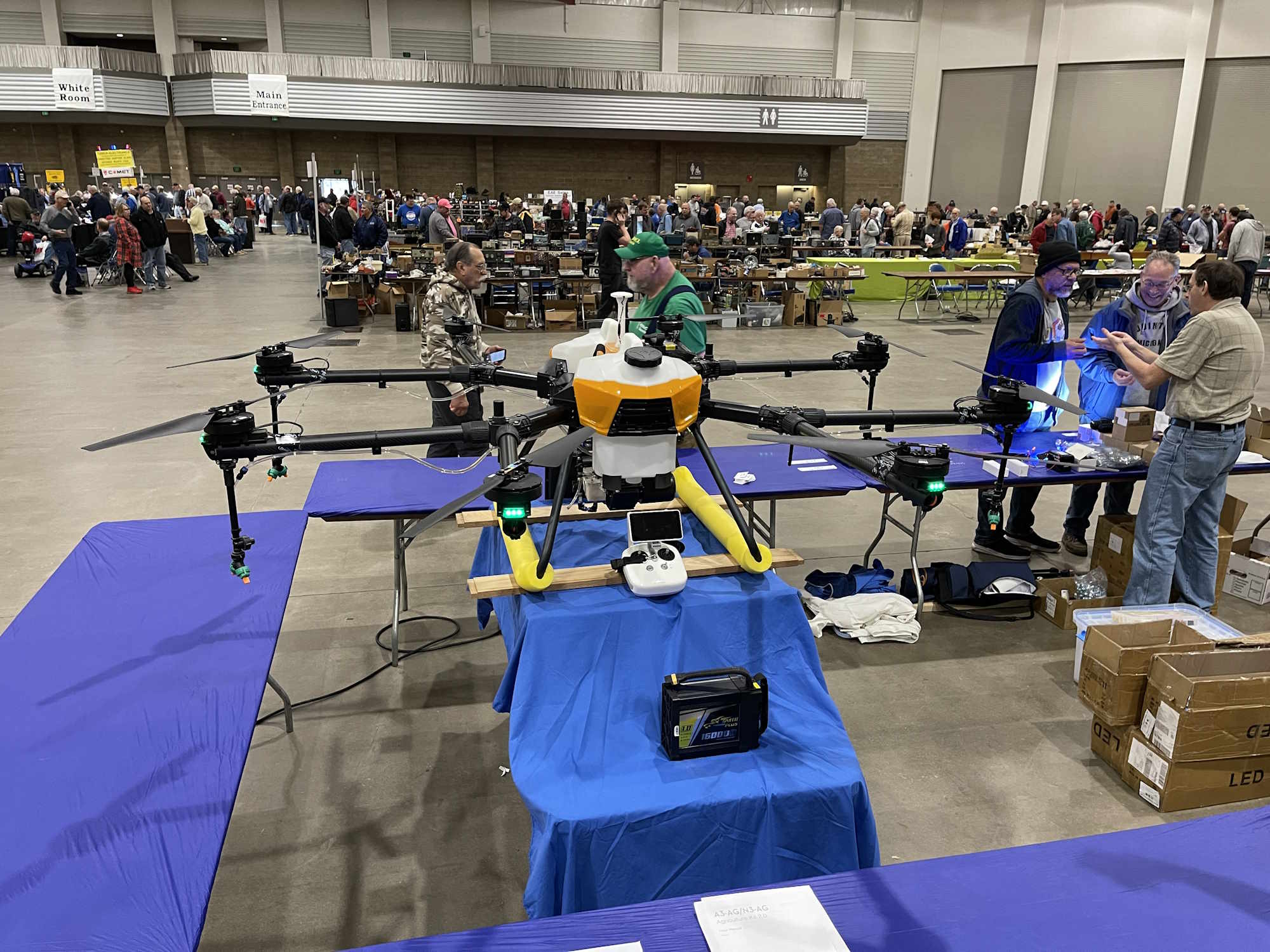
A big agricultural drone.
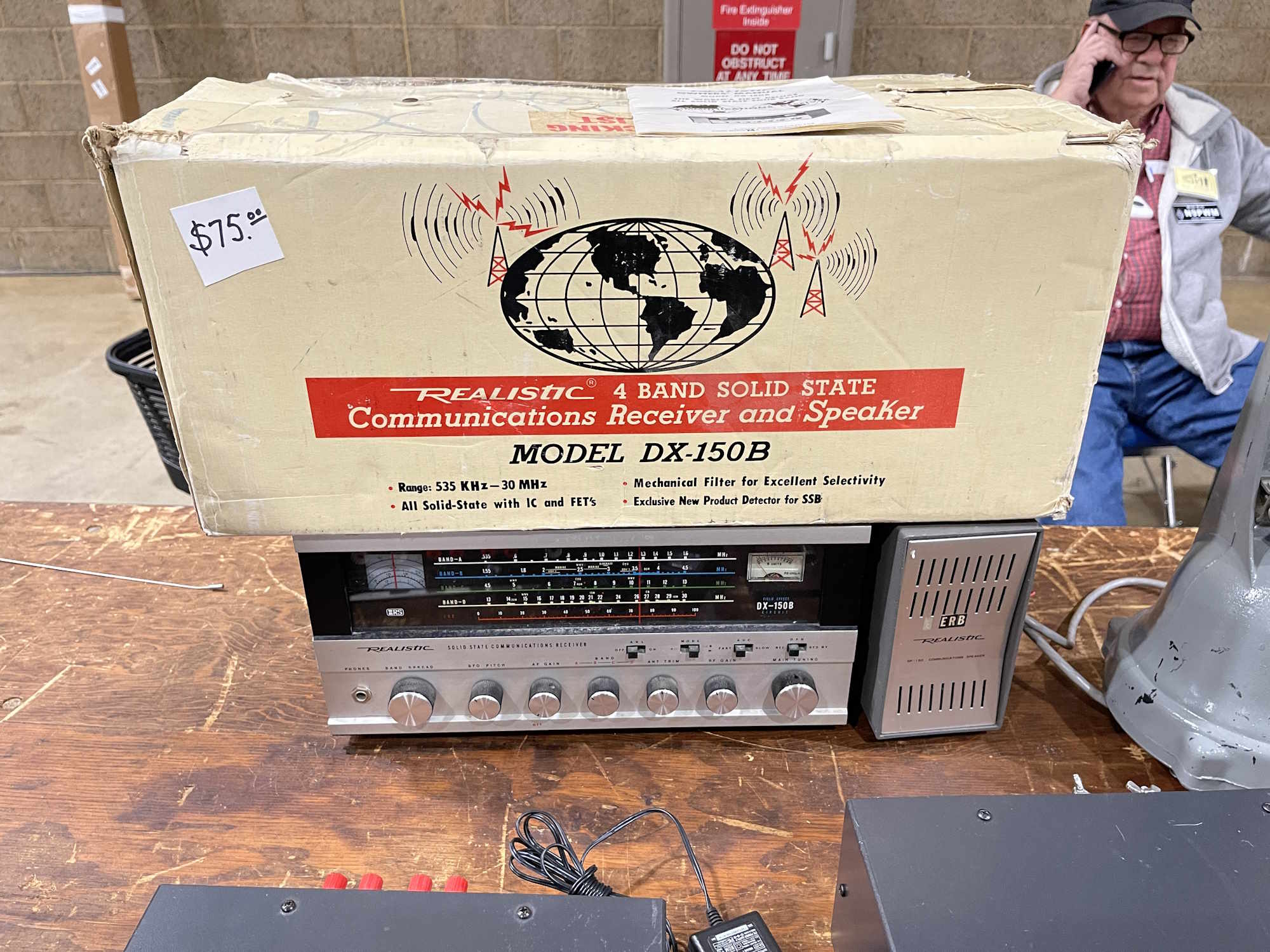
A Rat Shack DX-150B radio. It went home with me for $50.
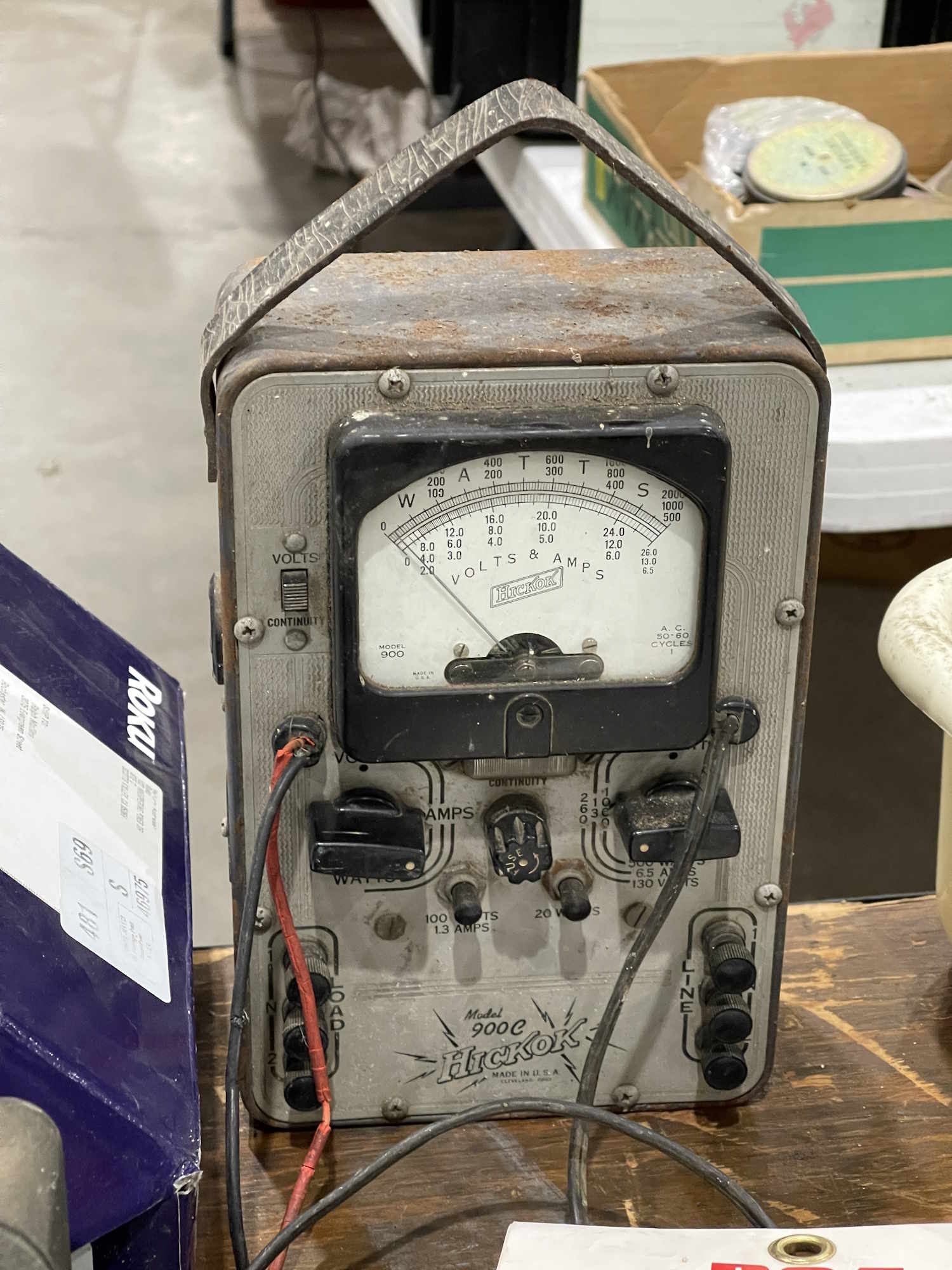
A neat Hickok 900C VTVM.
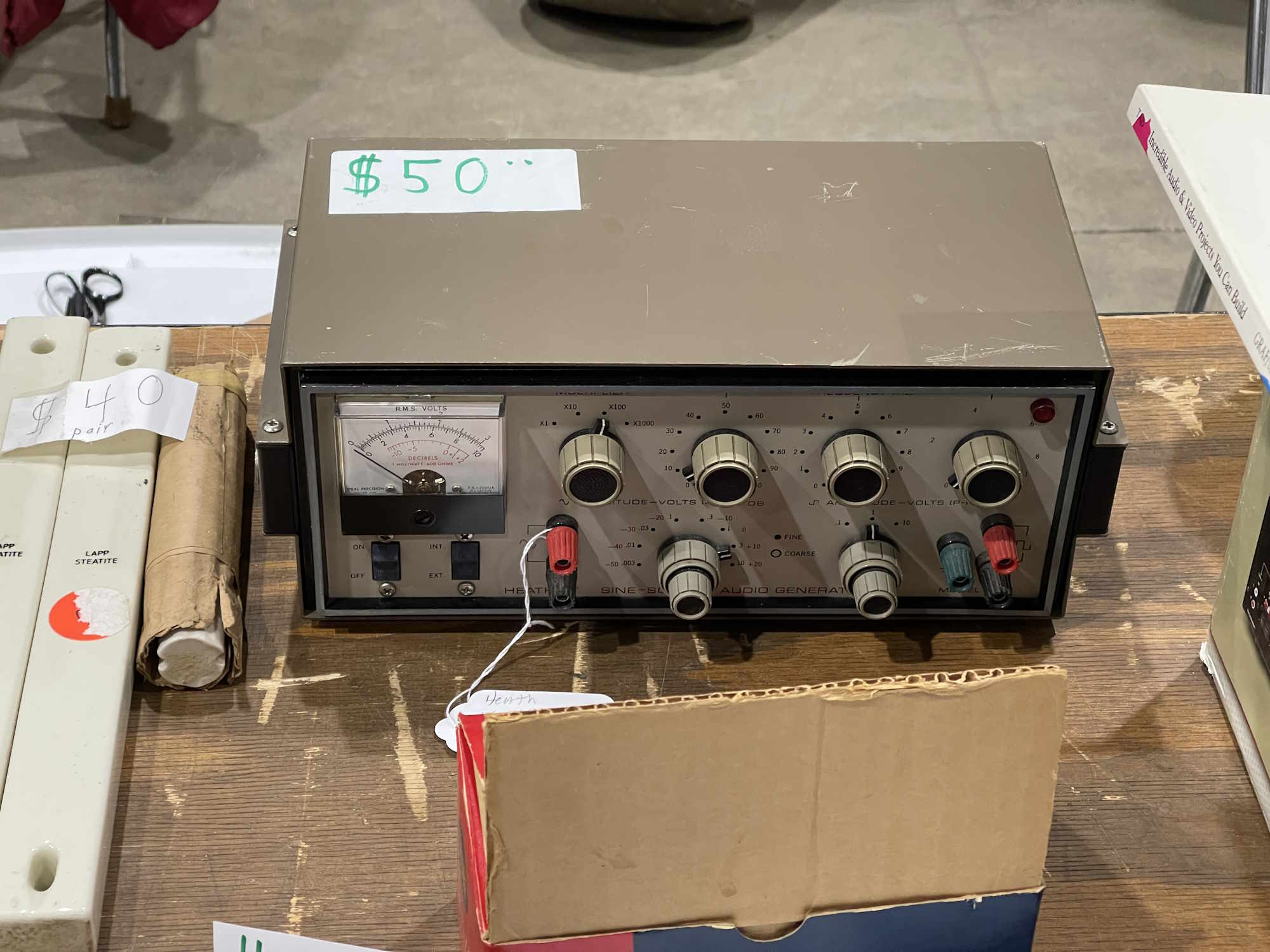
A 70s-ish? Heathkit Sig Gen.
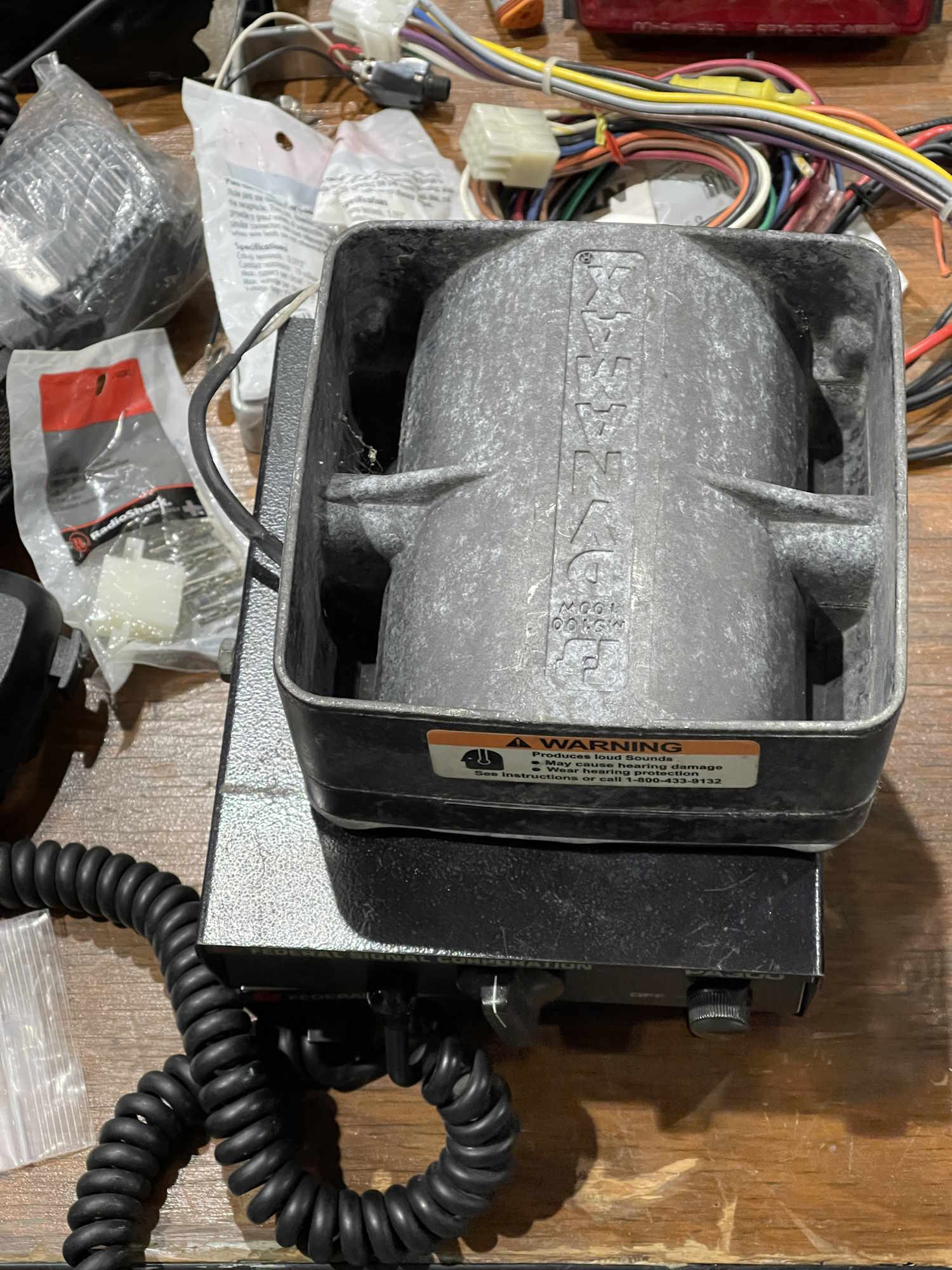
When you need to hear it, here it is.
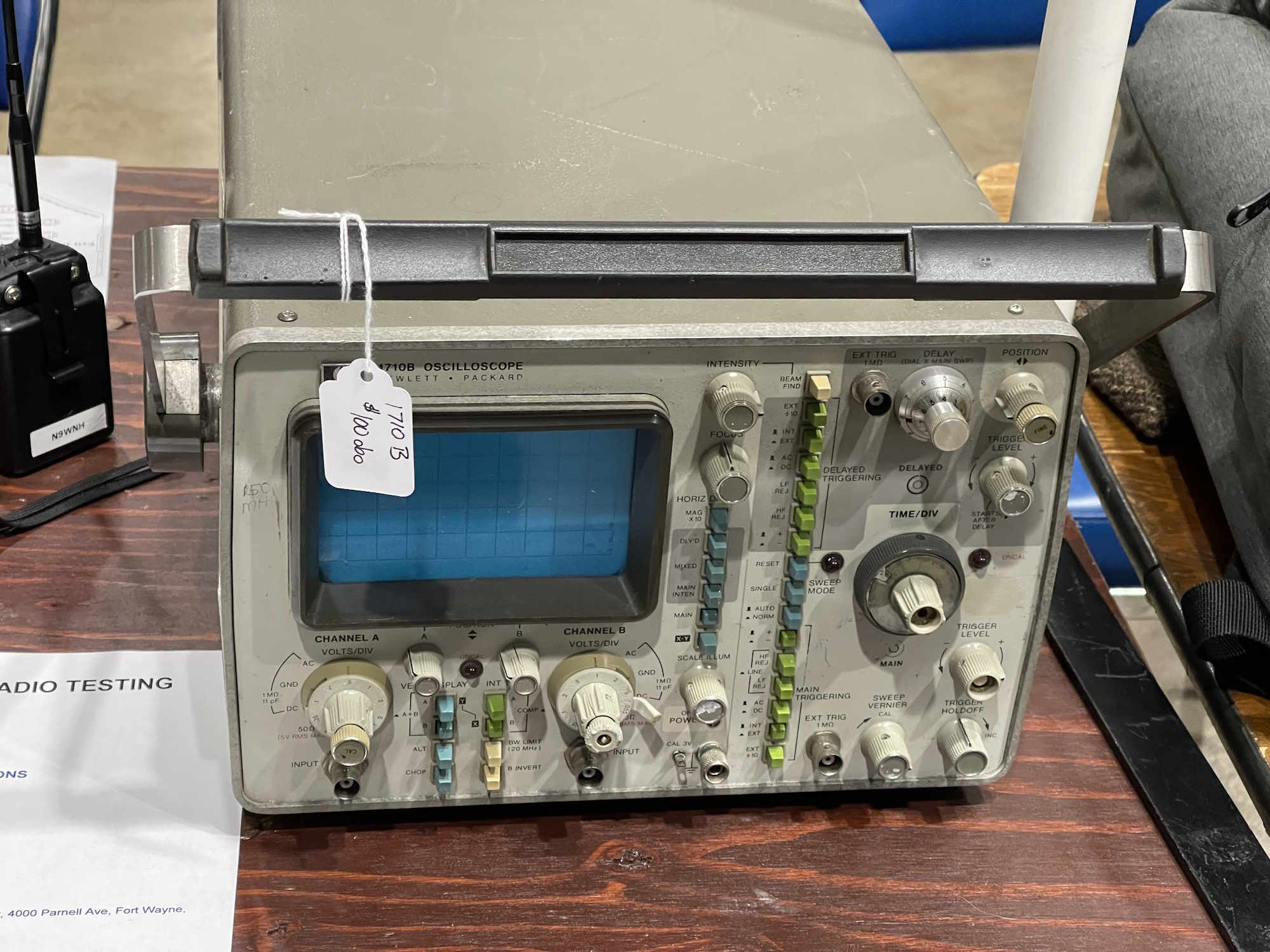
A cool old HP scope with 70s color buttons.
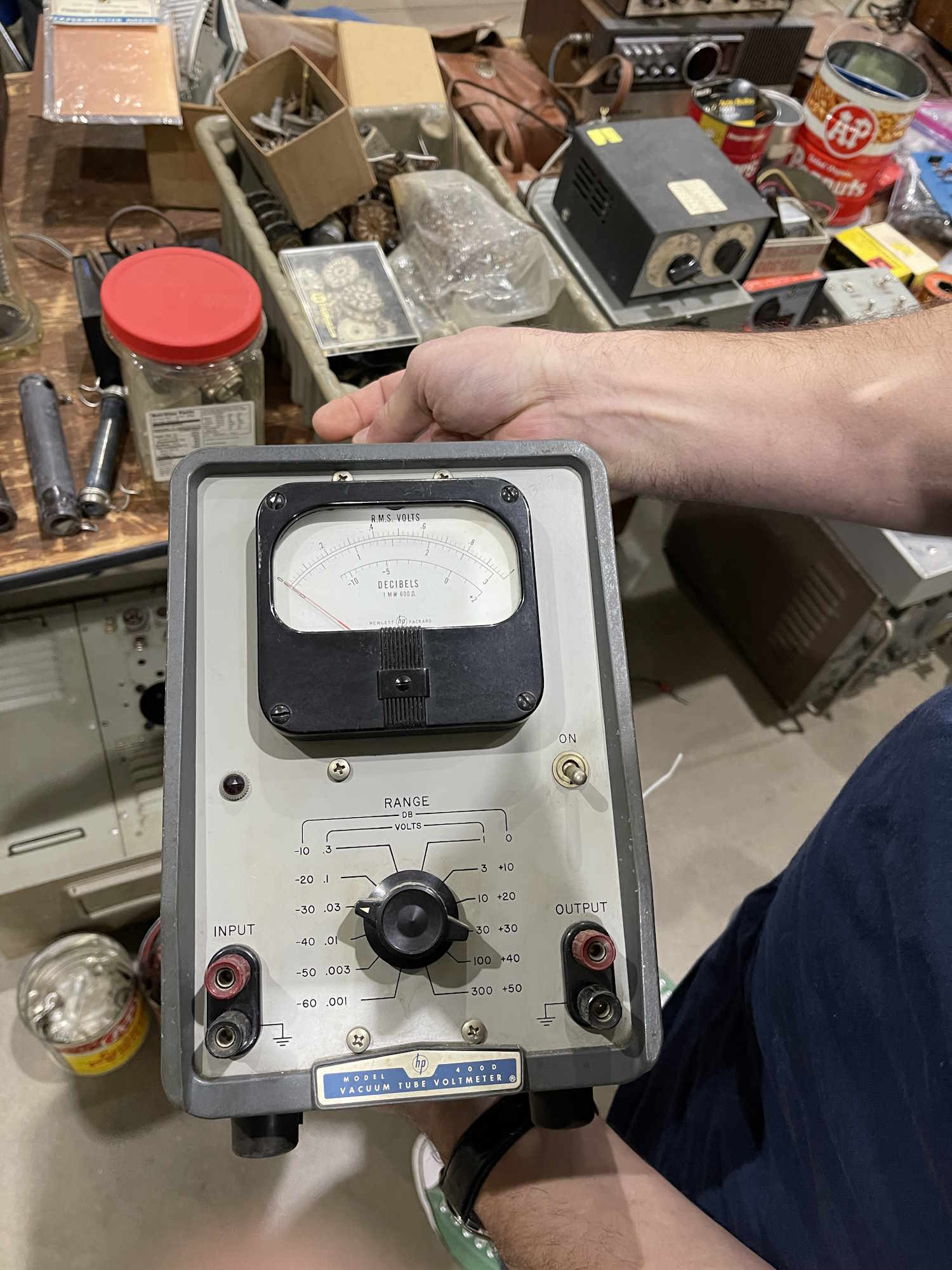
An HP 4000 VTVM with a dB scale.
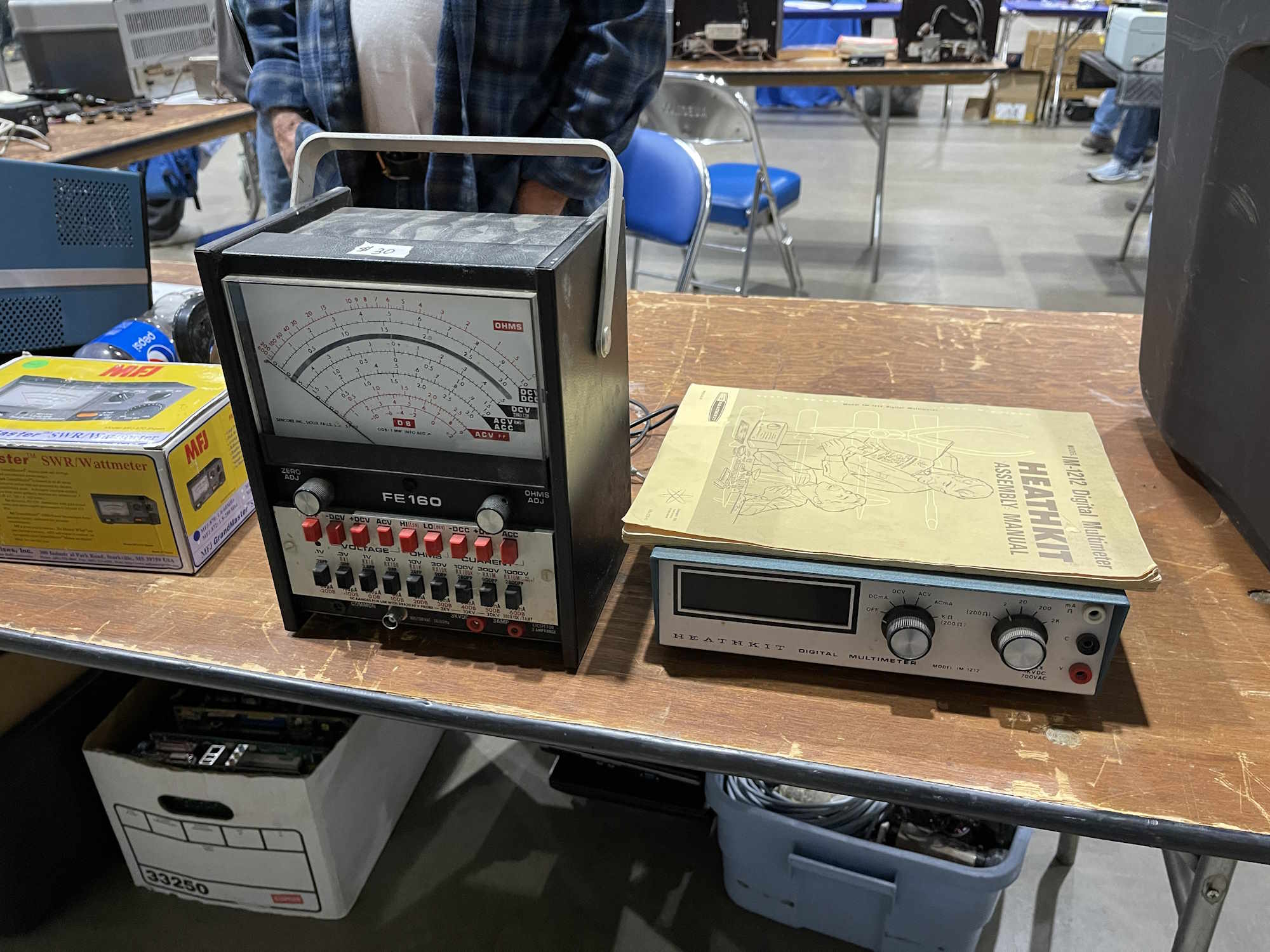
A couple of meters. The IM-1212 (blue) went home with me.
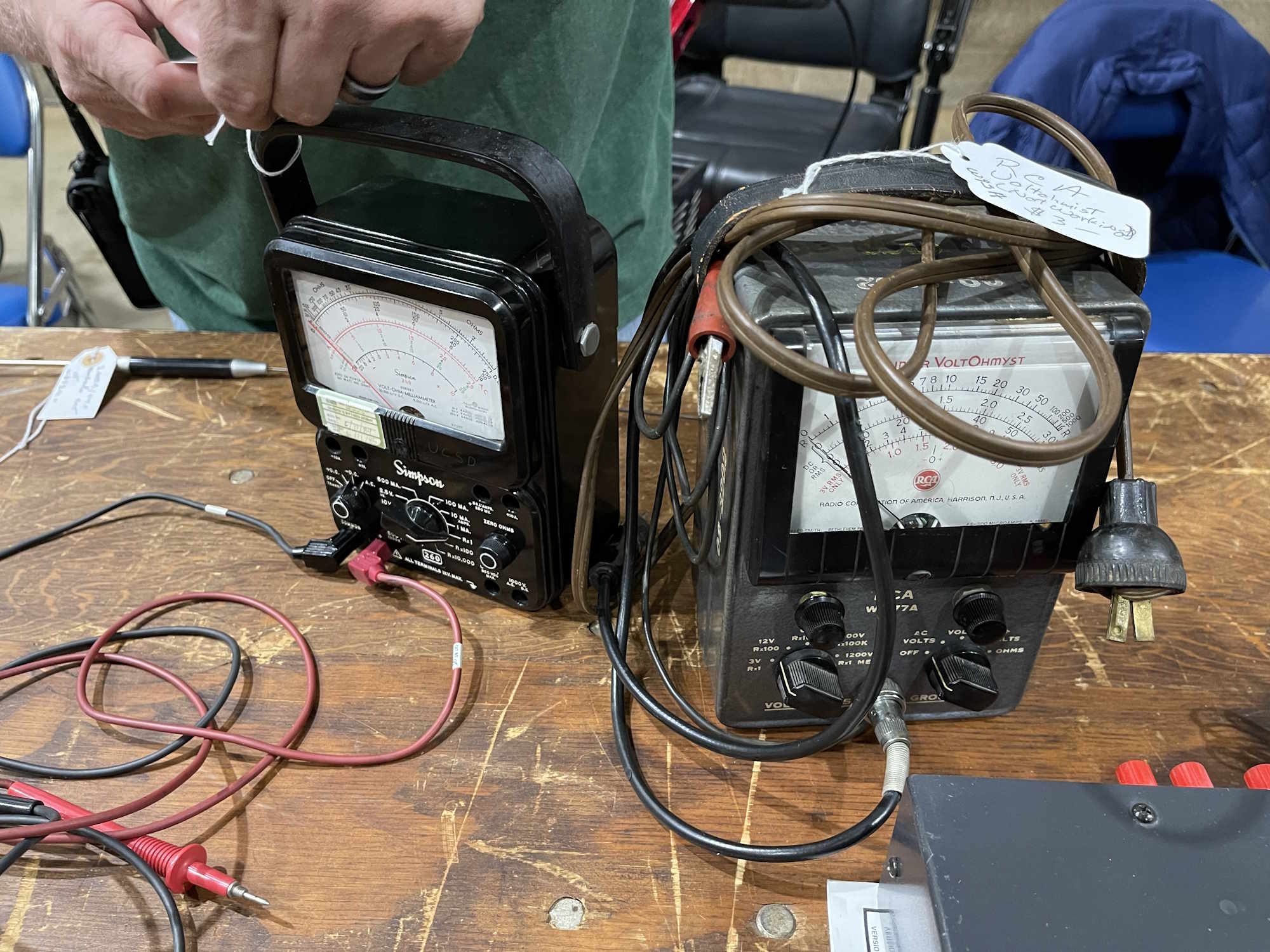
A couple of old-school meters. The 260 went home with a friend.
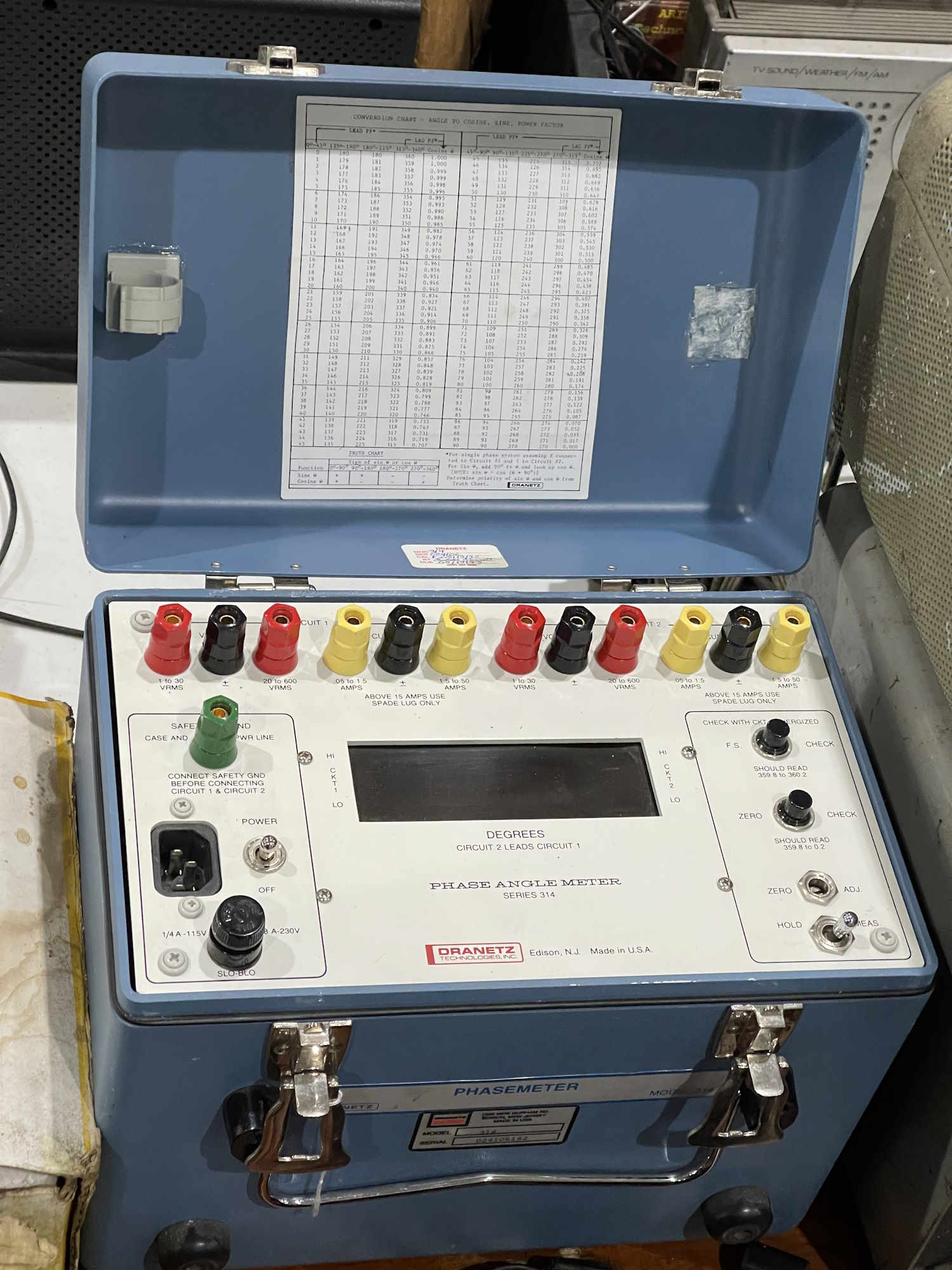
A rather unusual Phase-Angle meter for 3-phase systems.
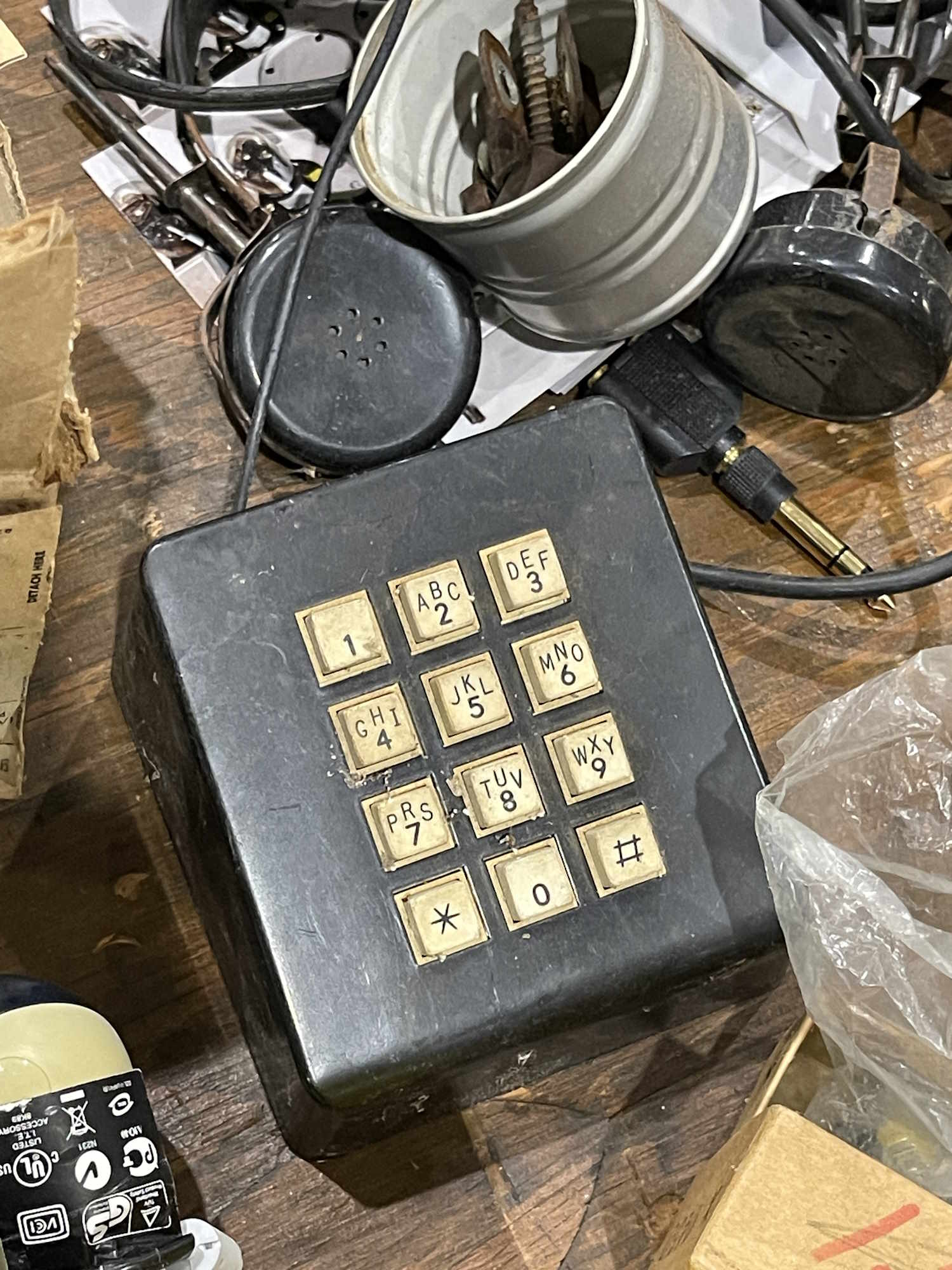
Calling MAin-2 2222!
Radios from a GM car - could be removed and played on AA batteries!
Random Radios.
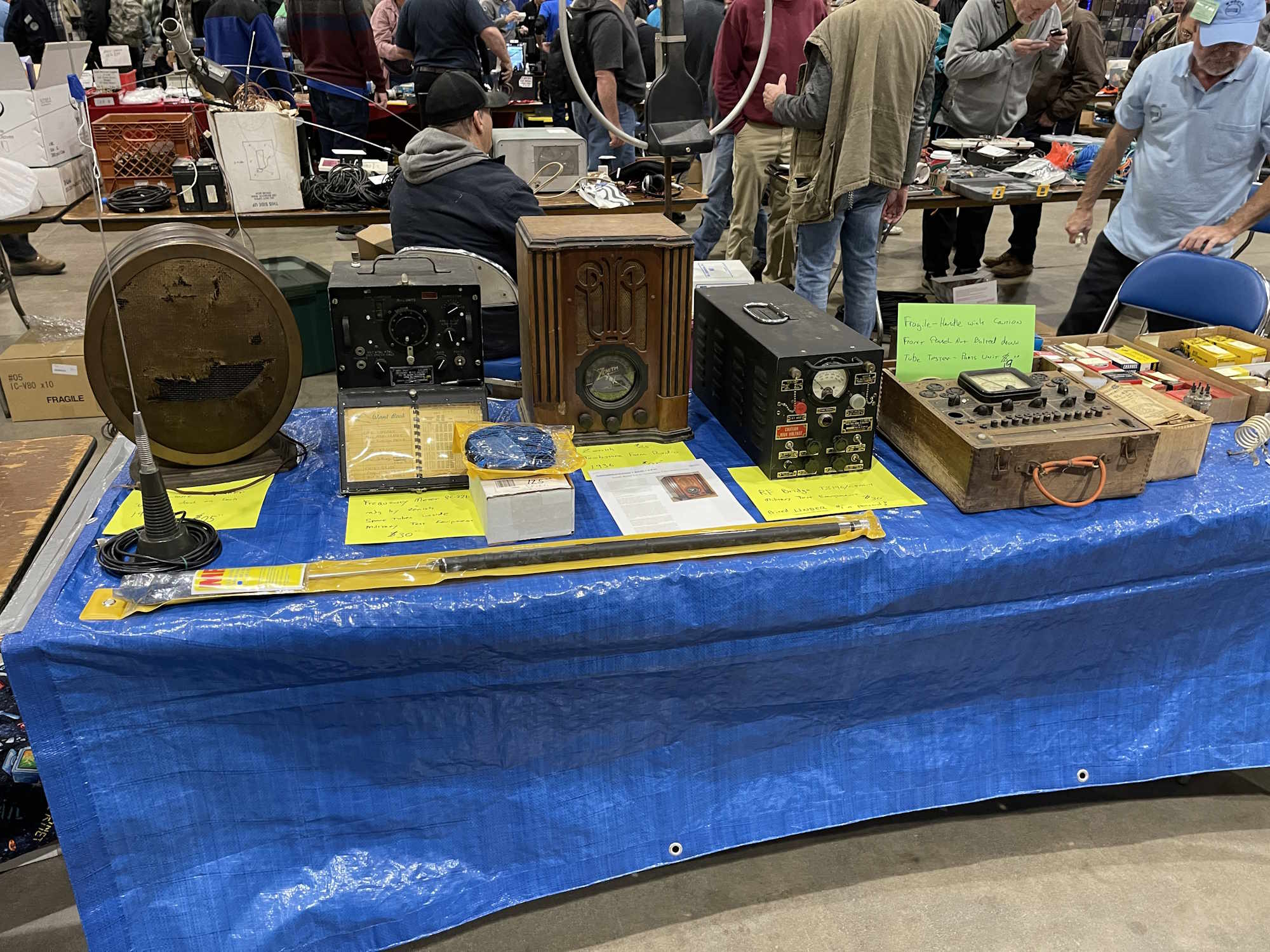
A selection of radios, testers, and speakers.
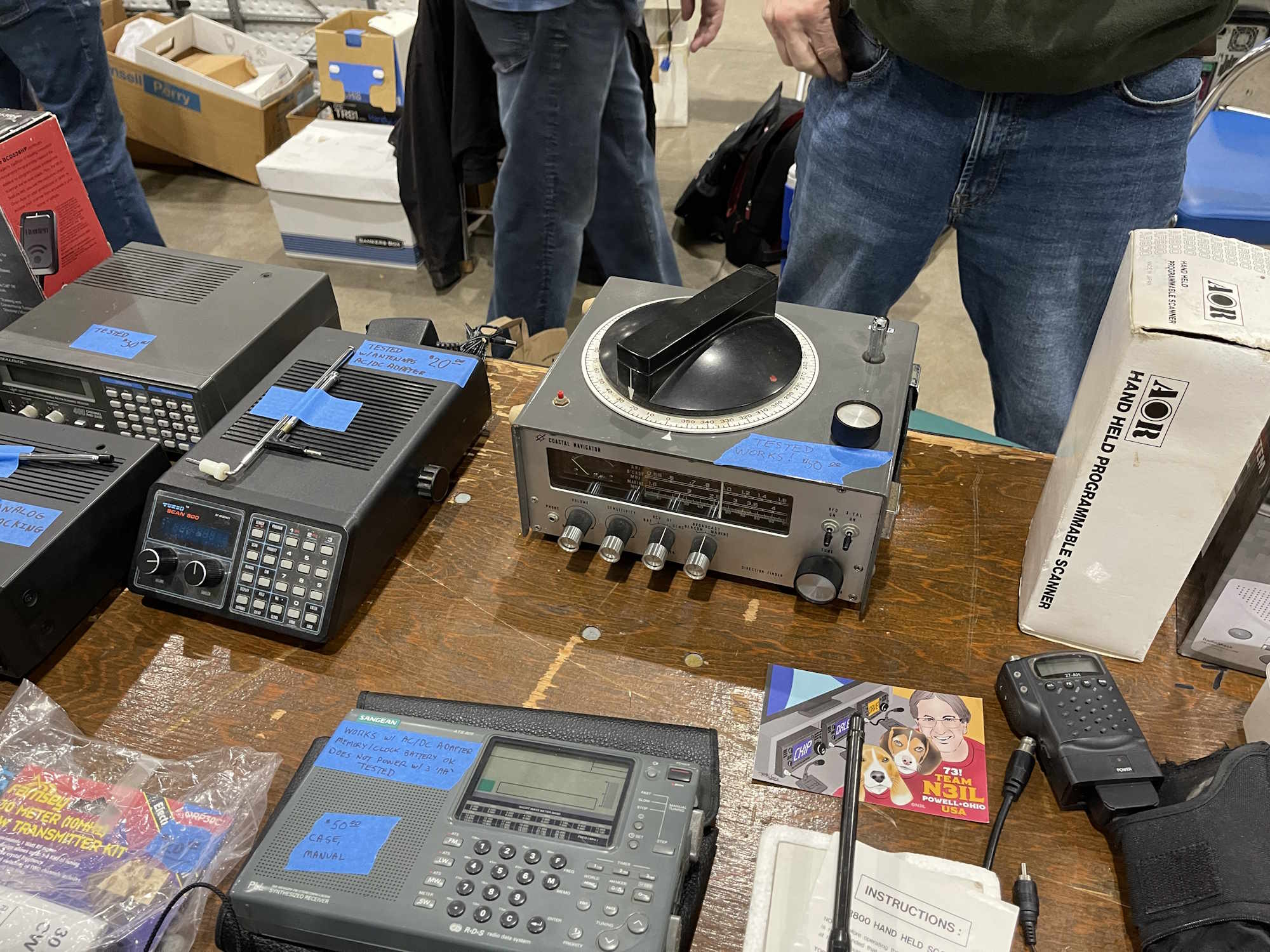
A neat direction finding radio.
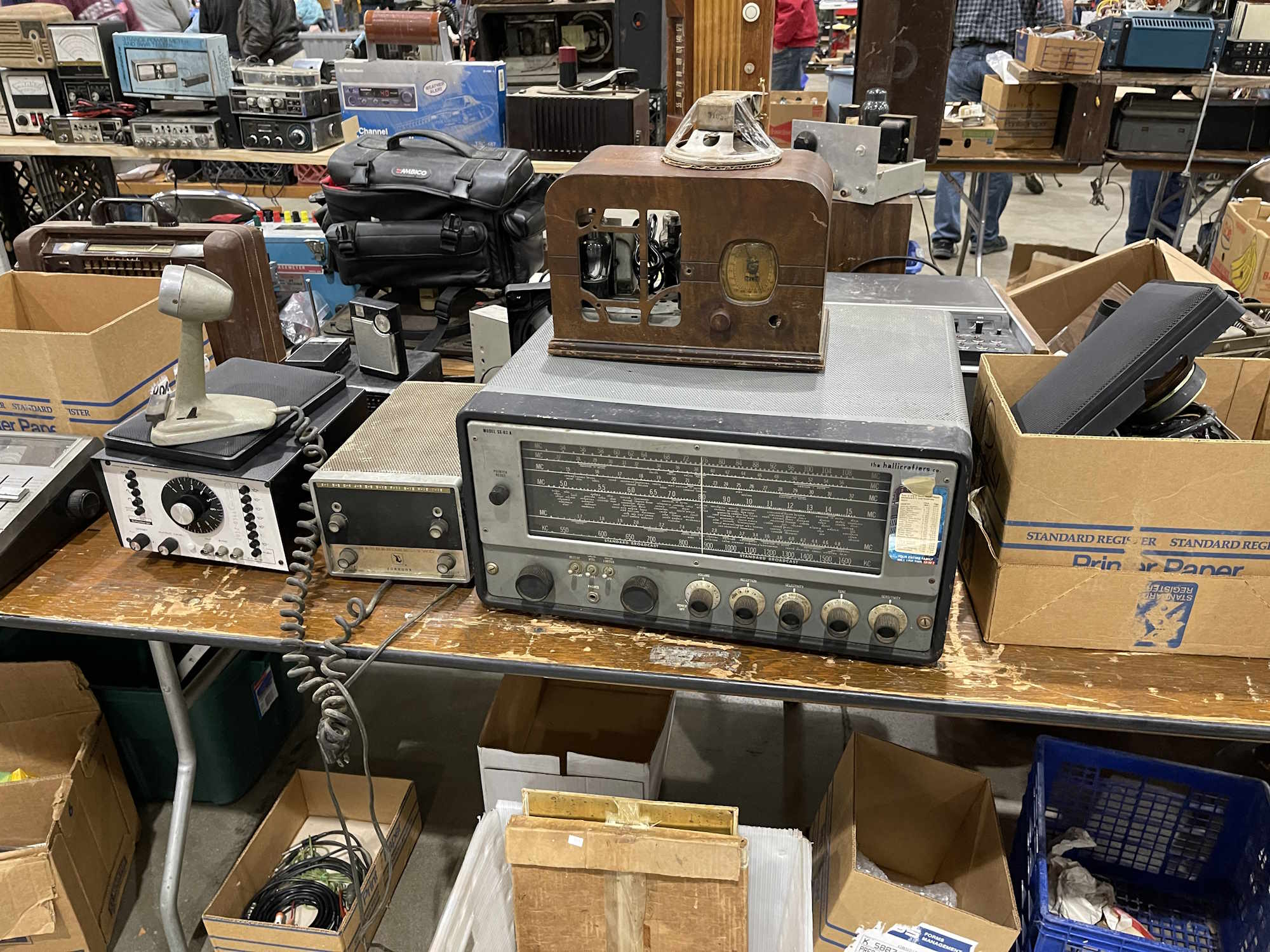
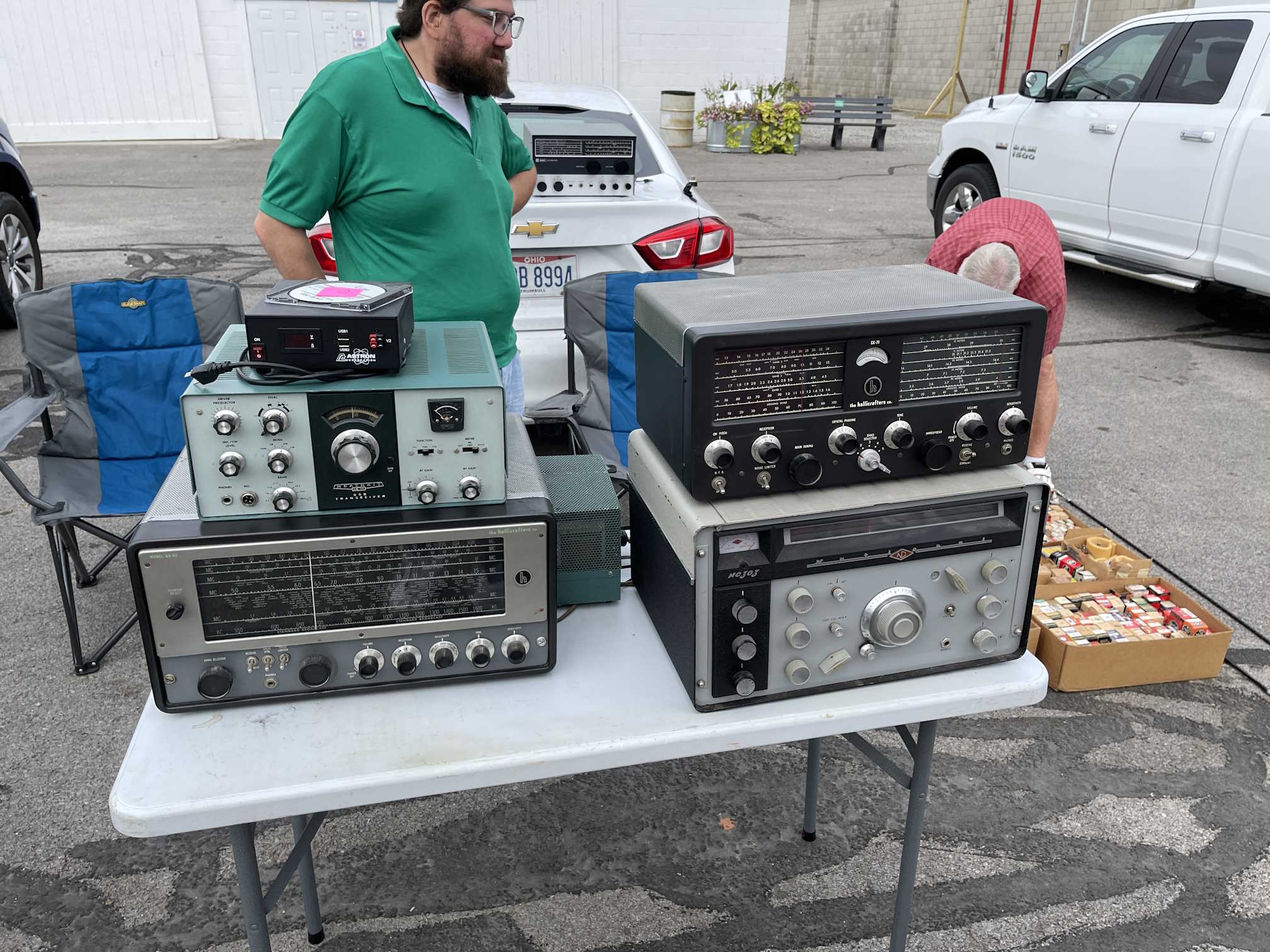
A Hallicrafters rig and other things.
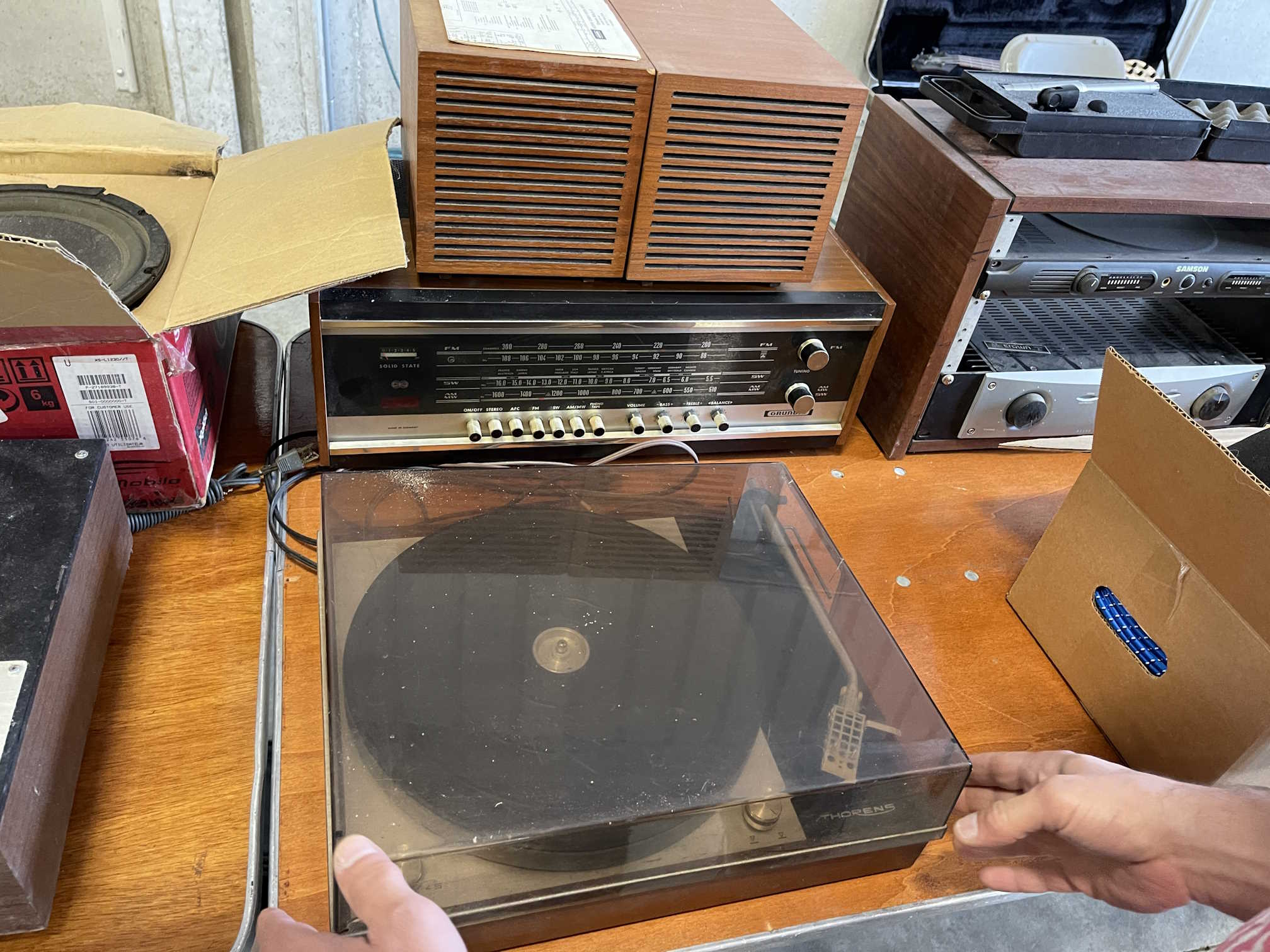
More random radios and a turntable.
Radios and meters. The meter was cool but required odd batteries.
Radios and speakers.
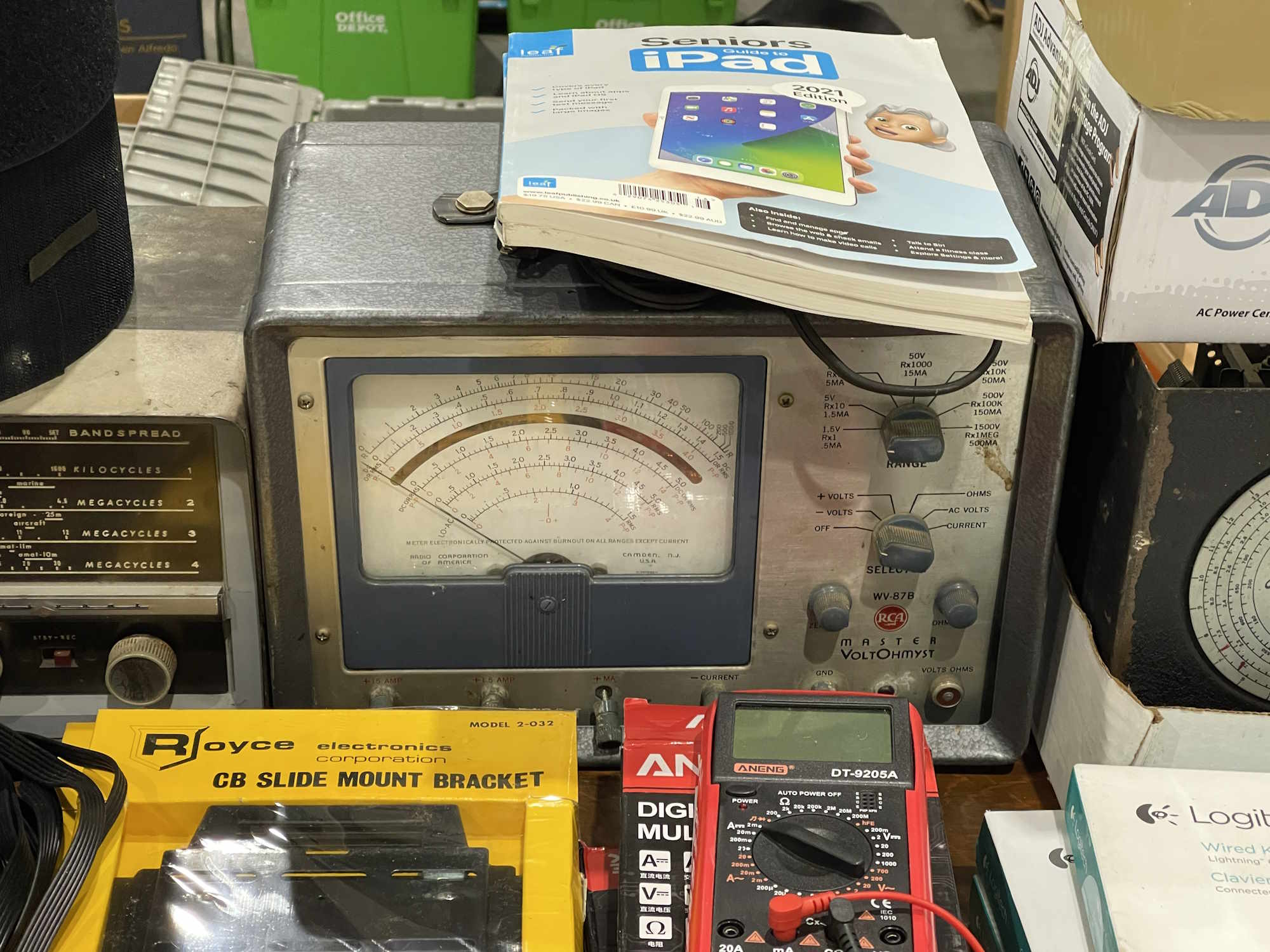
A RCA VTVM, pre-VIZ.
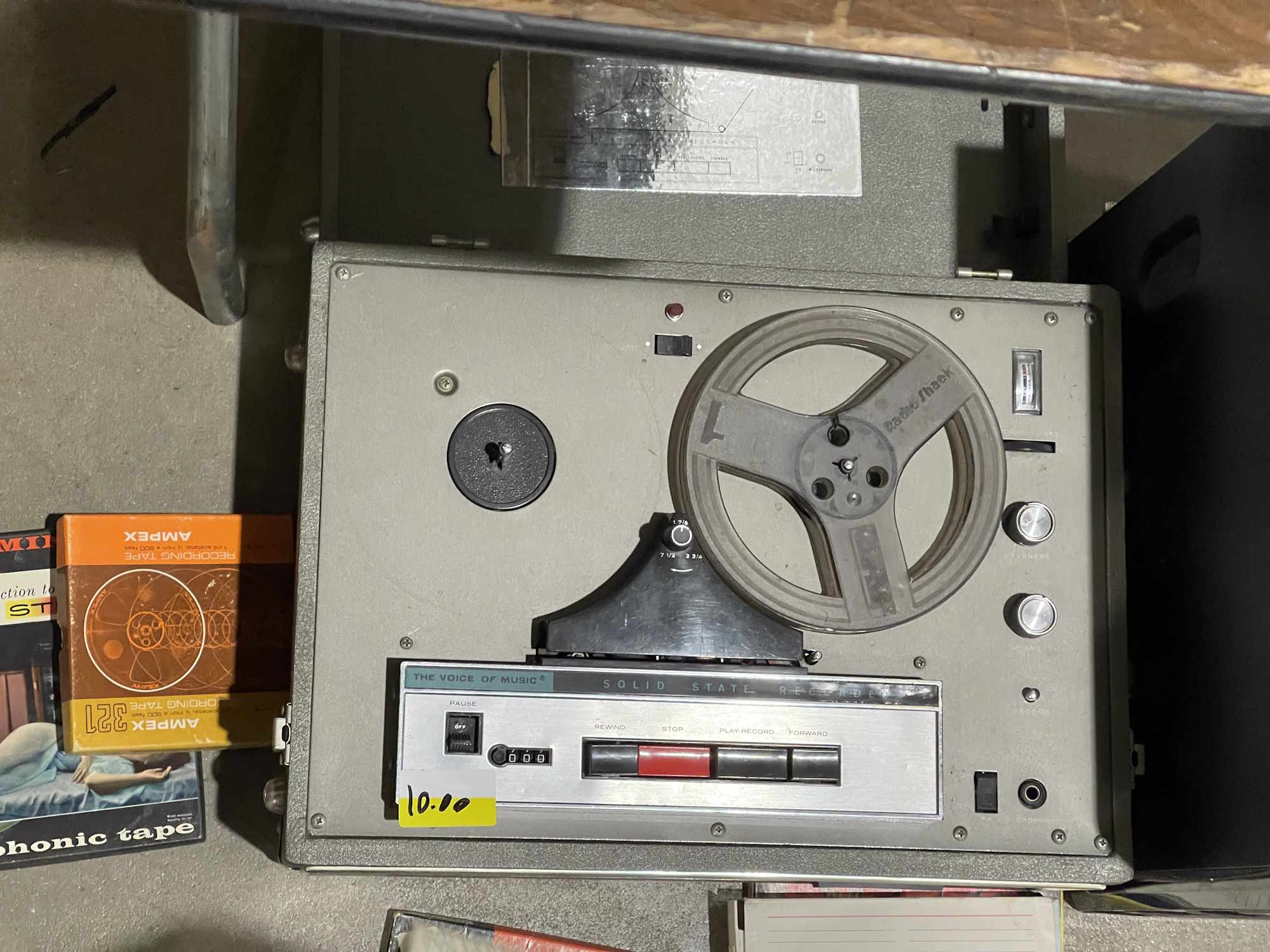
Random reel-to-reel player.
A rather unusual “Sailor” radio.
Random solar cell. Always find one of these at a show.
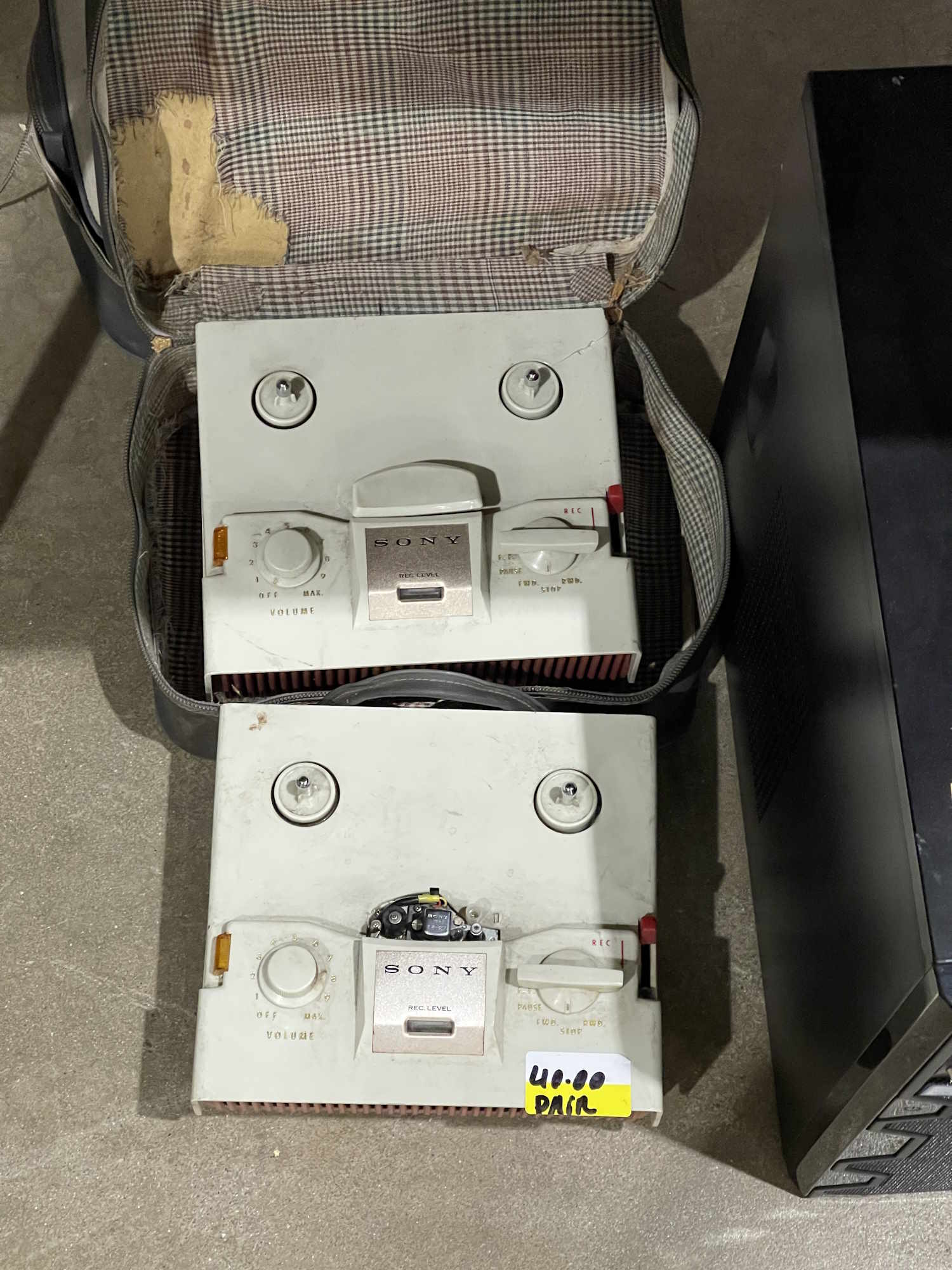
A couple of Sony reel tape players.
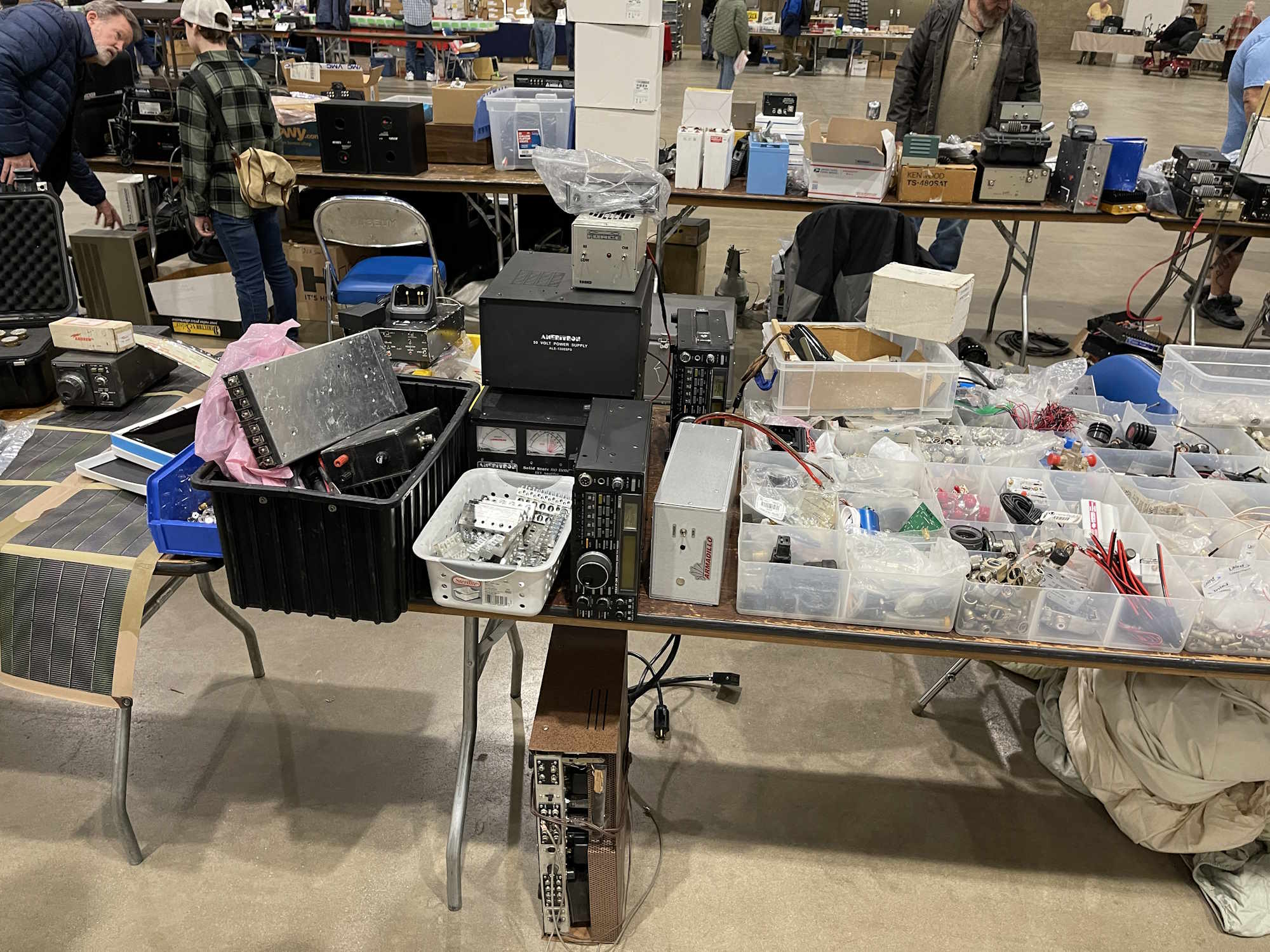
A stack of miscellaneous gear.
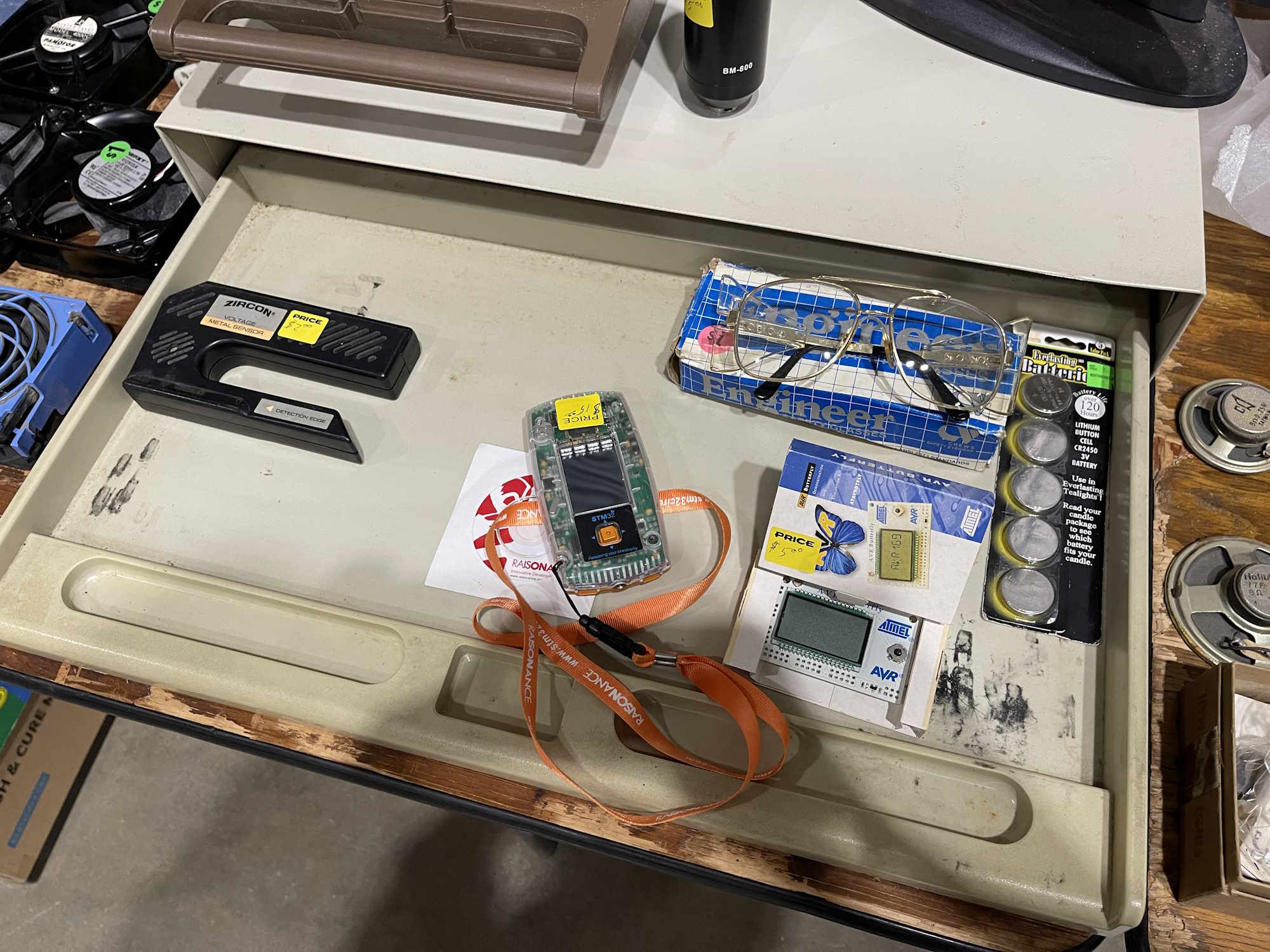
A microcontroller test platform in the shape of a game device.
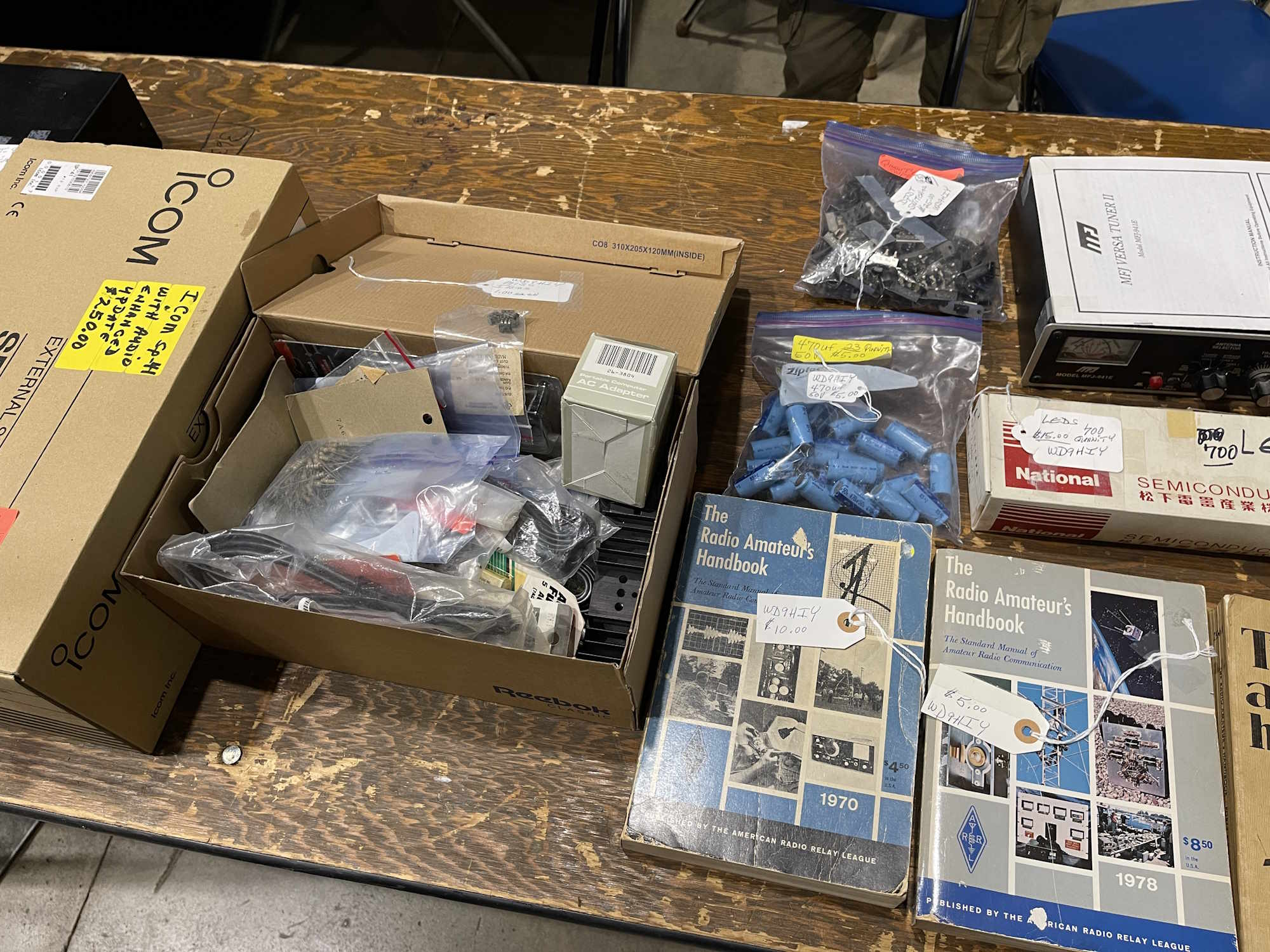
Books n things.
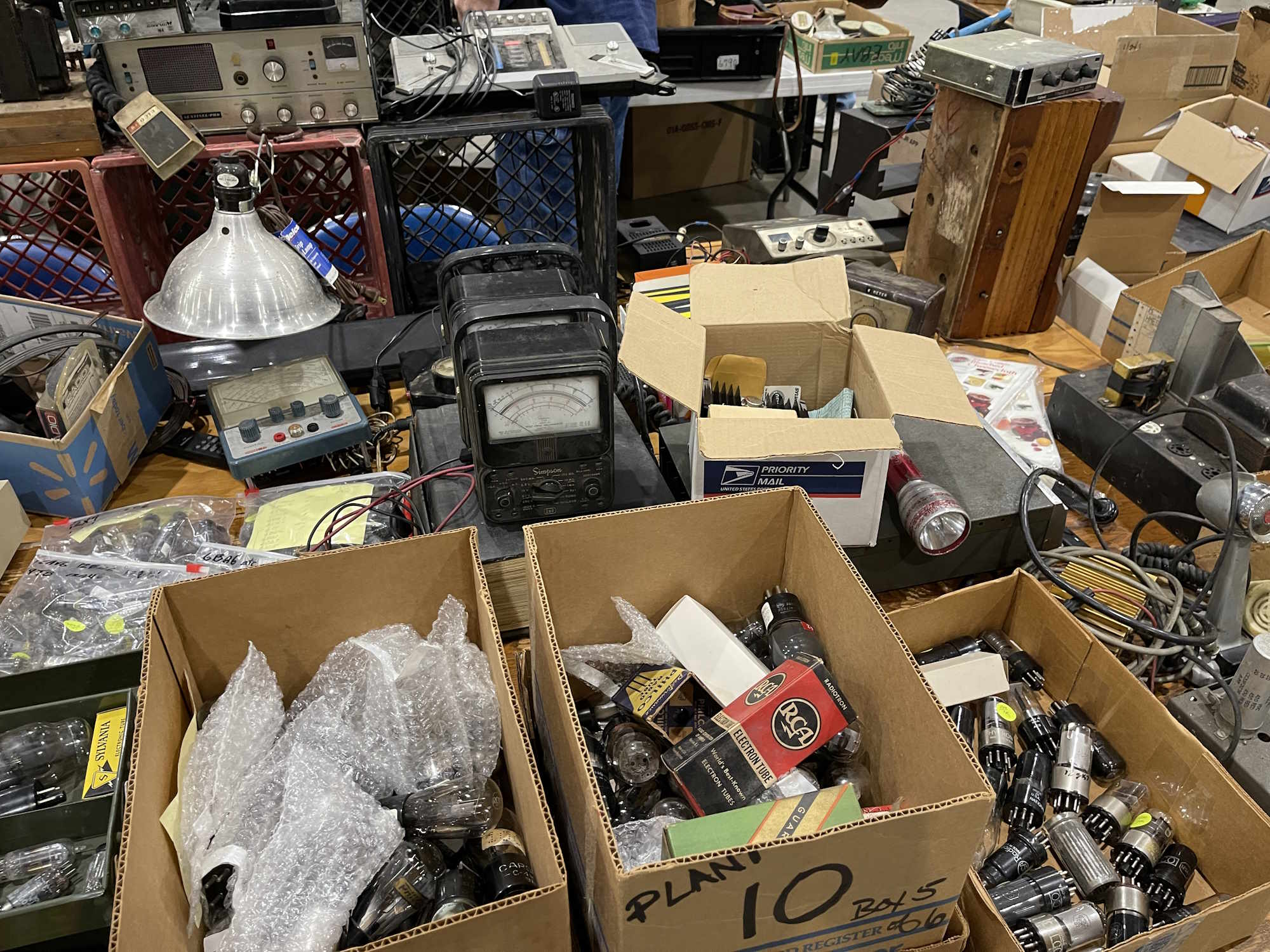
Just stuff
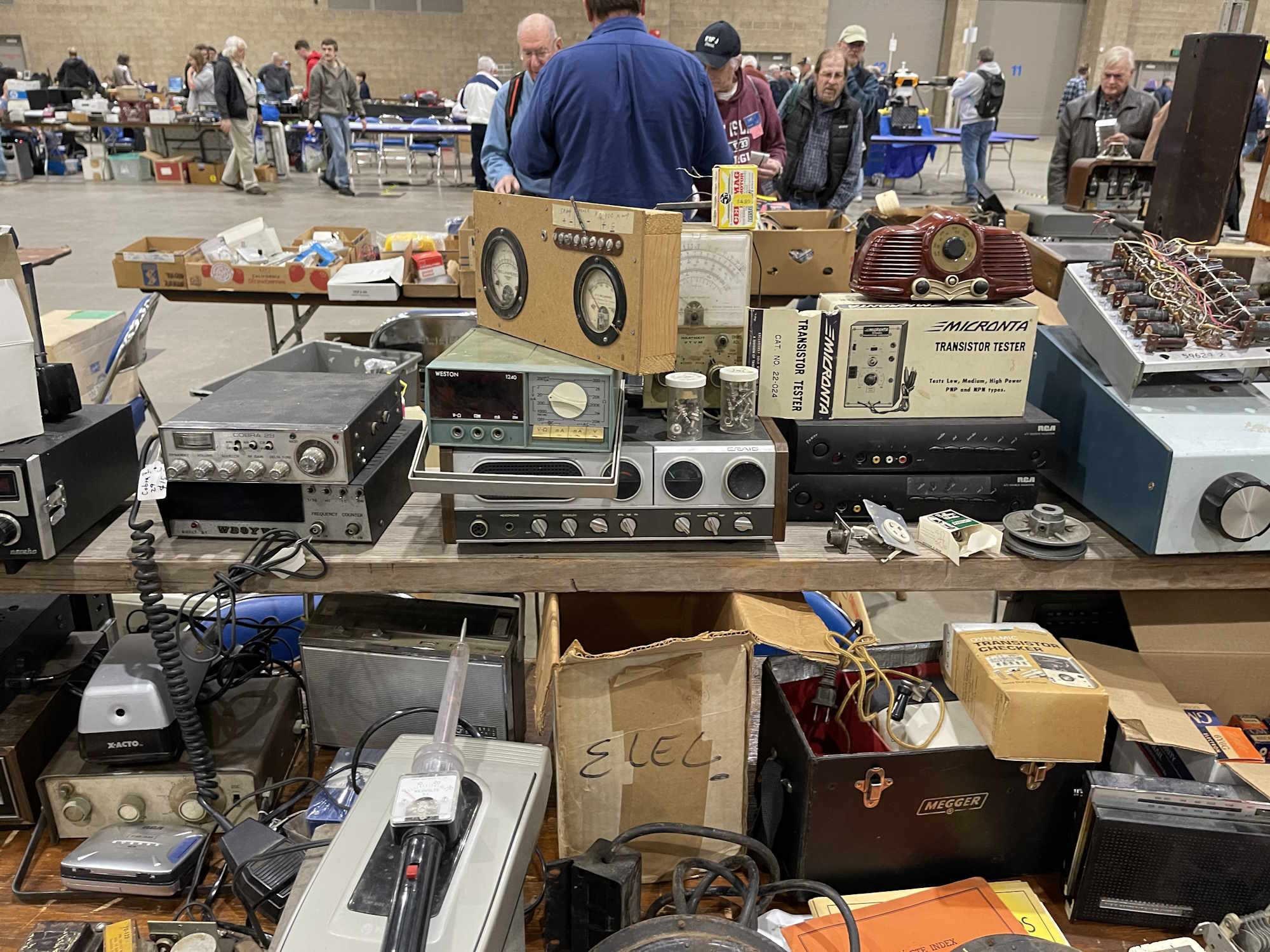
Random test equipment.
Random things.
Televisions and radios and just stuff.
Random meters and a Superradio III.
More things from the table above.
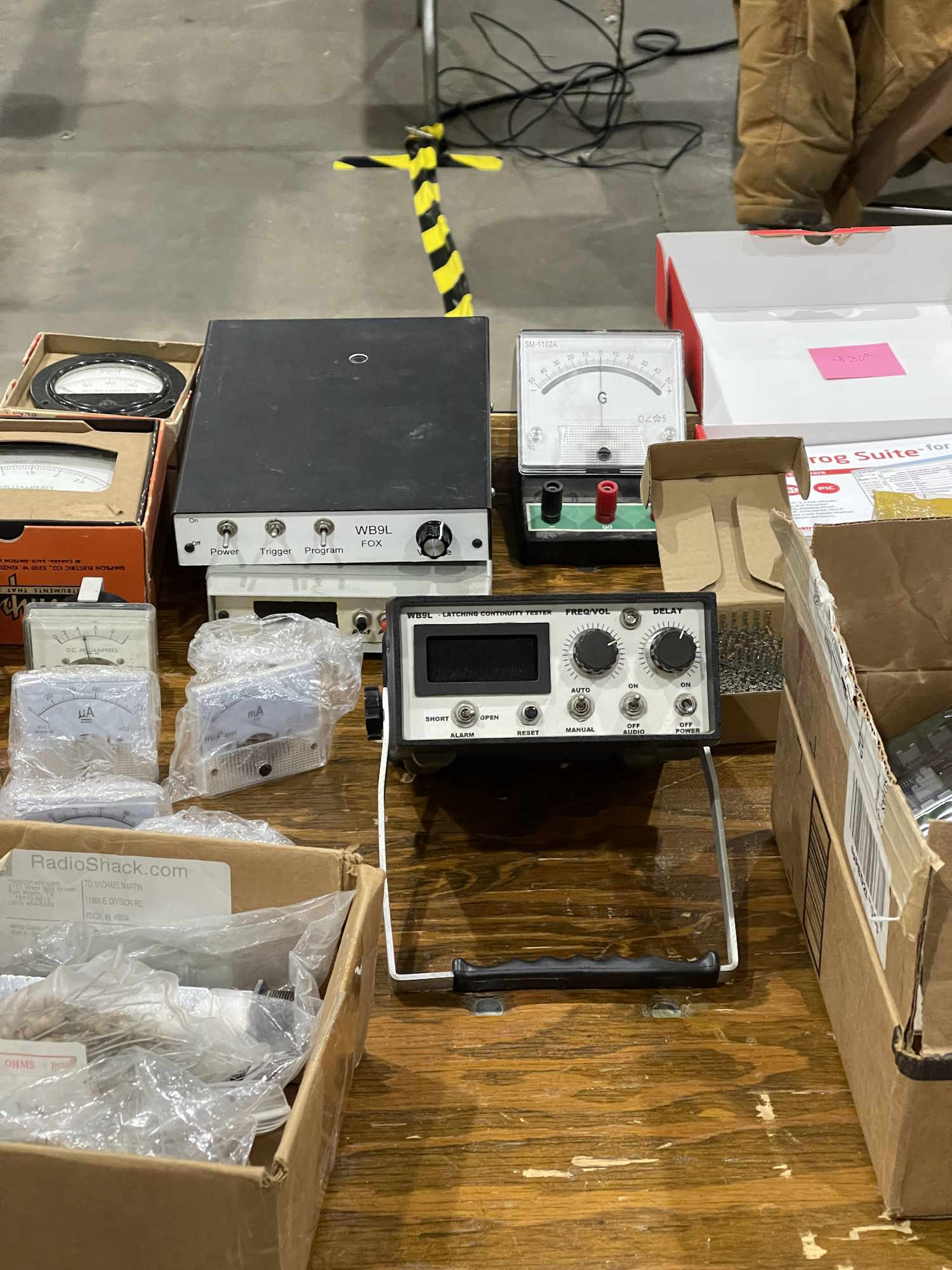
A NIXIE meter right in the middle.
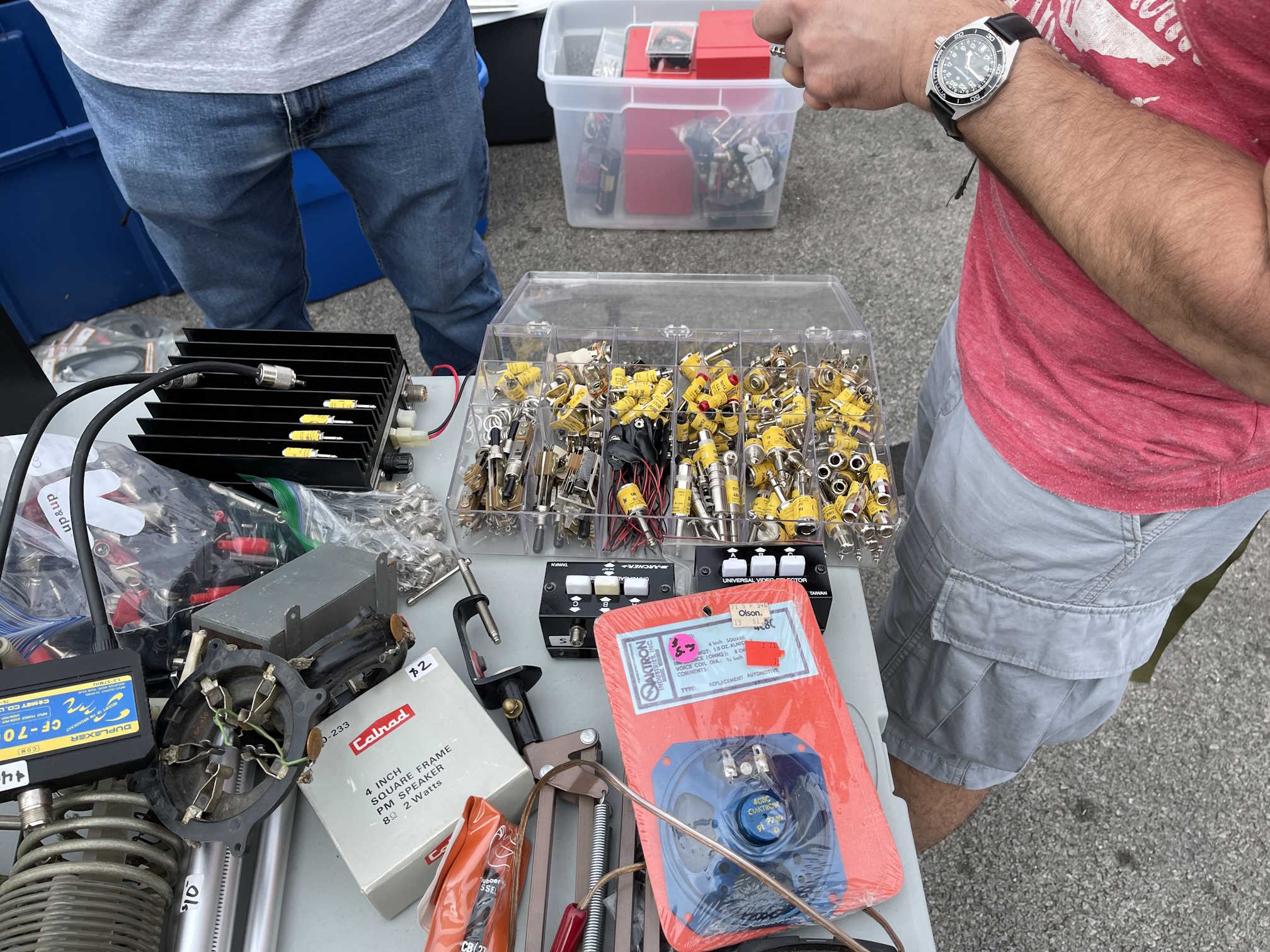
Parts is Parts.
Another Simpson meter and parts.
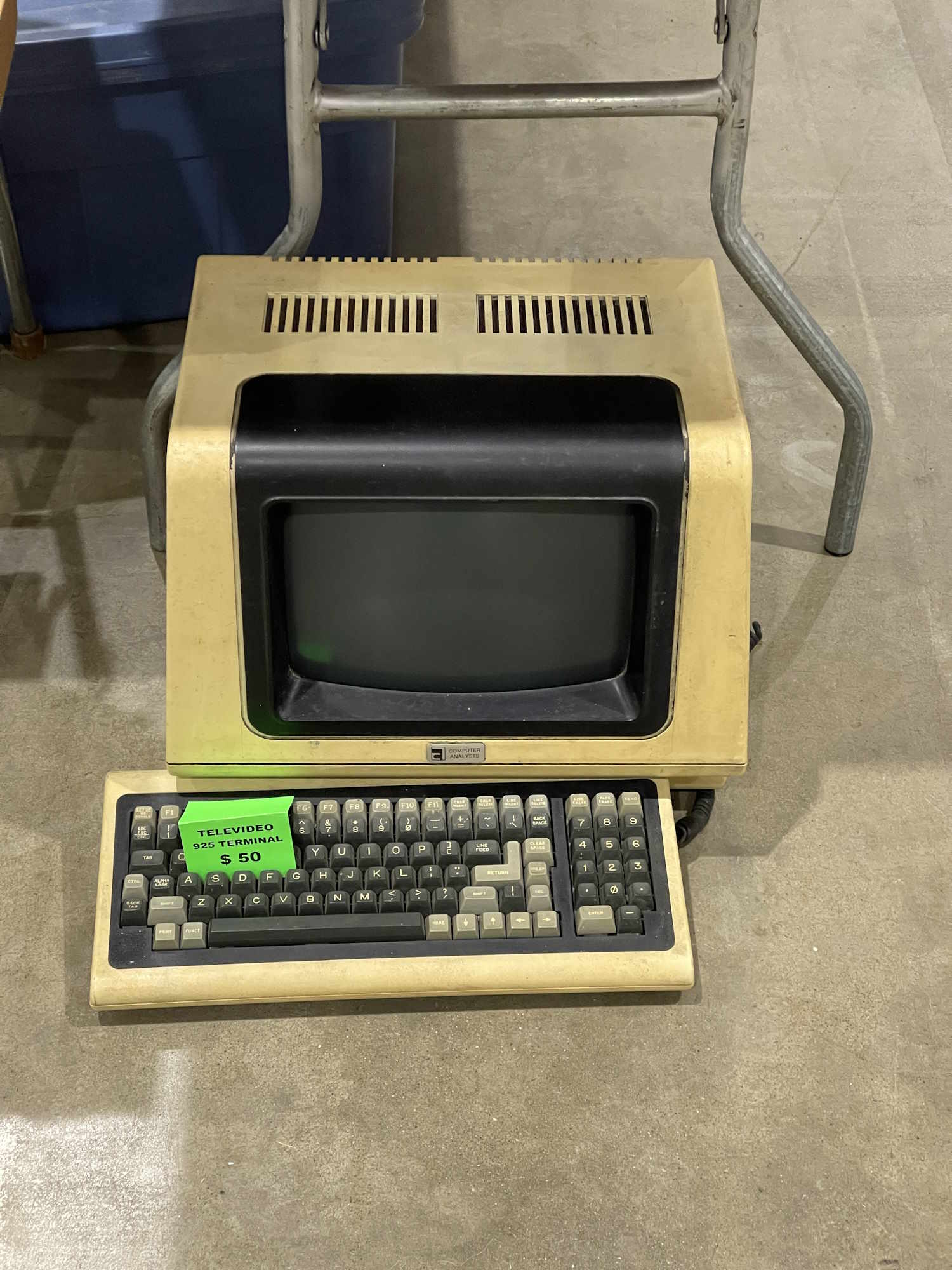
A Televideo terminal made to look like a DEC VT100.
A Shango Special.
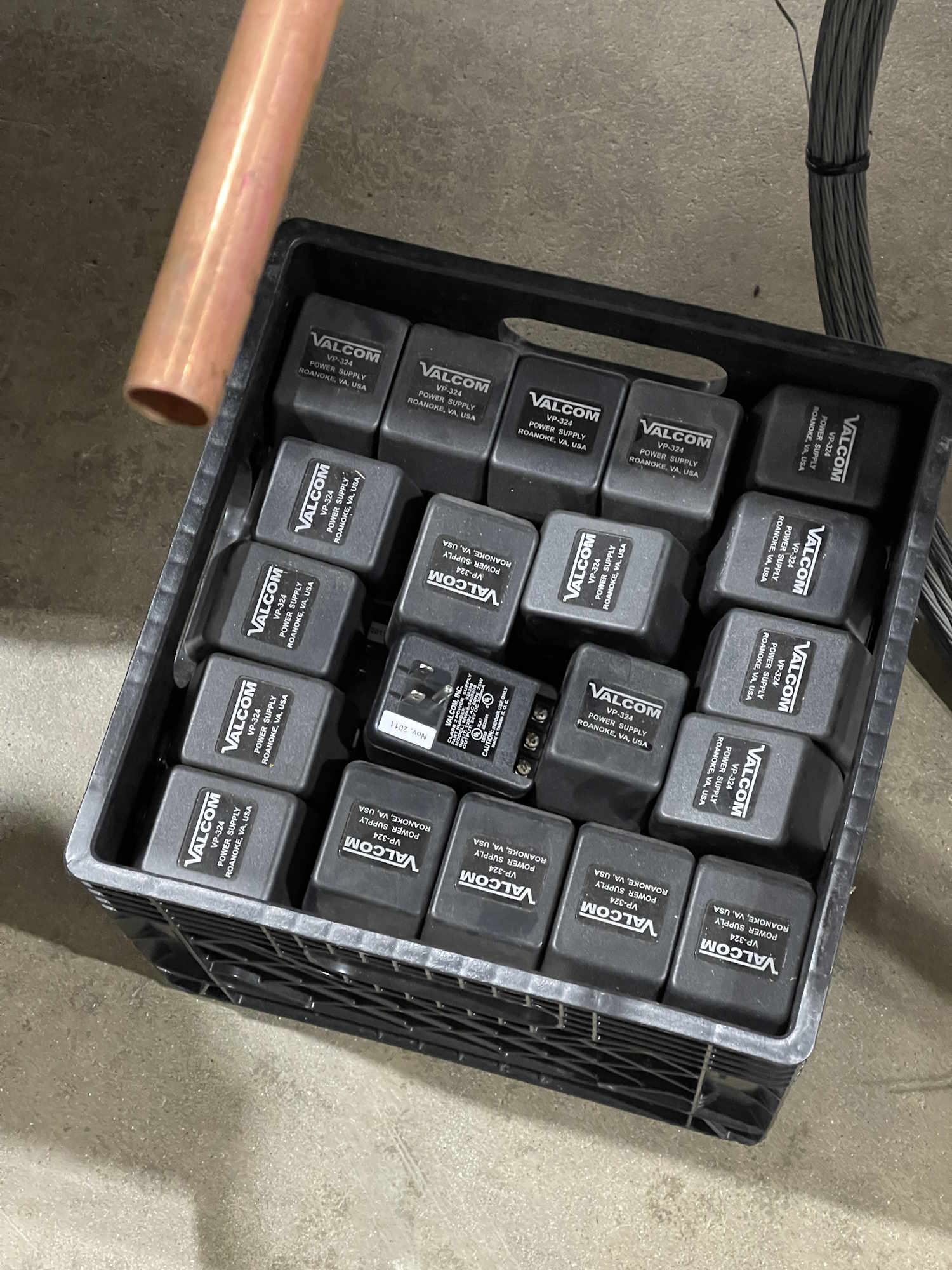
Power adapter, anyone?
A piece of equipment made by a (probably) now silent key.
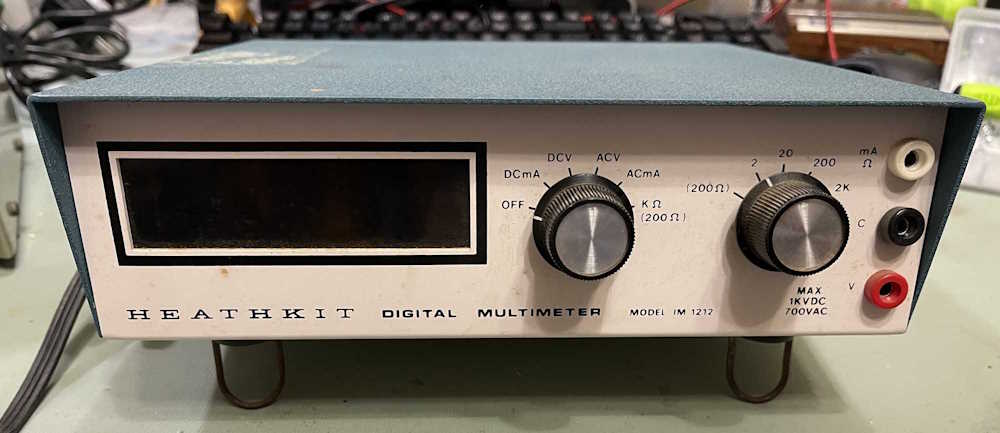
One of the things I picked up at the Fort Wayne hamfest was a Heathkit IM-1212 NIXIE DVM. This device was sold as a kit, and was also known as the Bell & Howell IMD 202-2, as well as a DeVry branded unit. They were all the same, with different branding on the front panel.
The device itself is a 2 1/2 digit meter, and uses discrete components - all ICs are common TTL stuff - to do it’s work. It’s not the most accurate thing in the world, but I imagine it was designed to help you learn about A/D conversion and other concepts while giving you a device that you could (mostly) use at the end.
This unit was sold as working, which I verified with a 120VAC inverter/battery pack from the tool company in the harbor. I offered the guy a $20 for it, which he accepted and I took my purchase home.
It’s not in bad shape for the age, a bit of discoloration on the front panel and the obligatory tape residue on the top of the device.
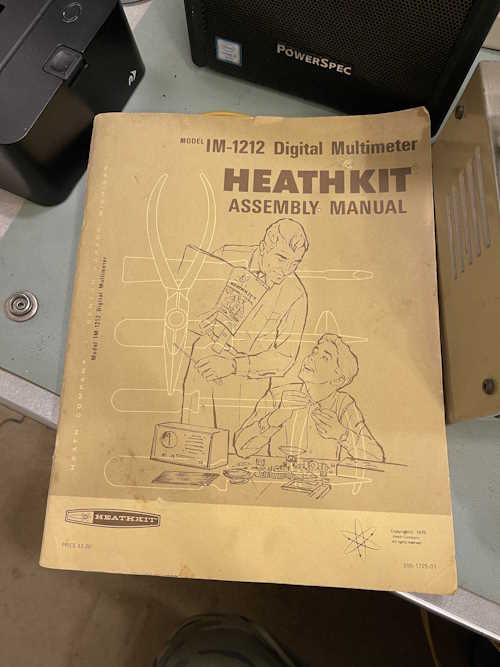
It came with the original instruction manual, which is useful for troubleshooting any issues.
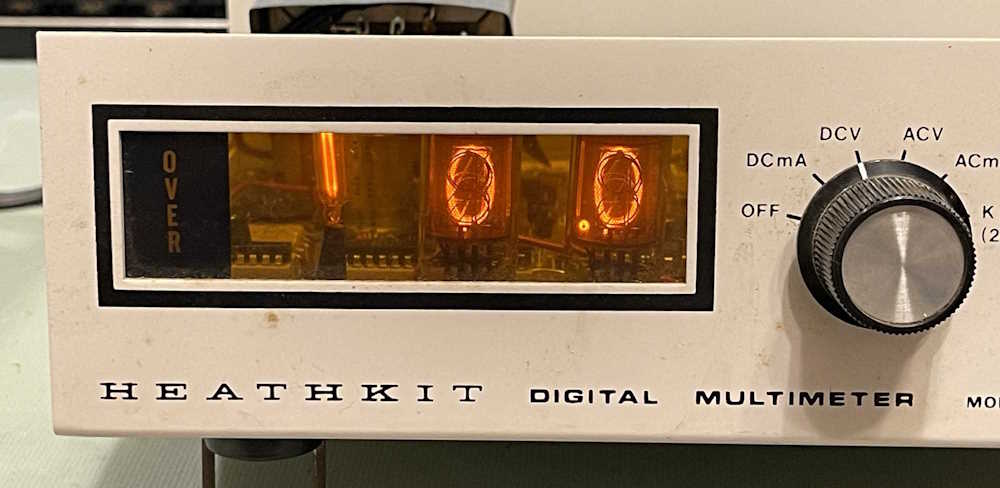
All of the tubes are nice and bright like it doesn’t have many hours on it. Even the NE-211 bulbs that are normally shot don’t exhibit any flickering or problems ionizing.
I did notice a few issues, there’s a rattle inside. Something is broken. The negative jack is also loose, which is probably just a nut come loose. The device also doesn’t respond to any input - something to do with the loose negative jack, perhaps?
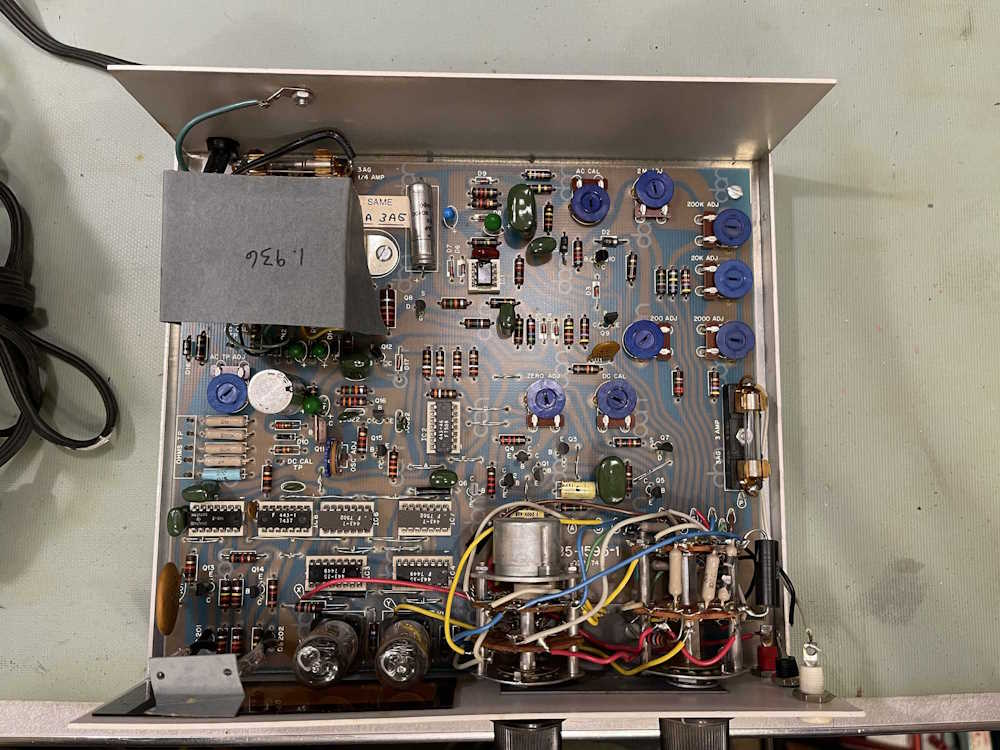
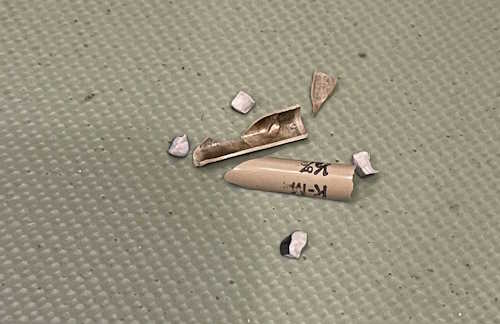
Time to open the top cover. Notice the line of big beige resistors on the left and the one blue specimen at the bottom? These are calibration resistors, and one had apparently broken at some point, as the rattle was the remains of an old part. The original owner hadn’t removed the debris for some reason.
You’ll also notice there’s a number written on the paper cover. This is the DC calibration voltage as provided by Heath. It’s wrong, so ignore it and get a good 3 2/3 digit meter and measure the DC cal point. Mine turned out to be 1.901, so I used that later during calibration.
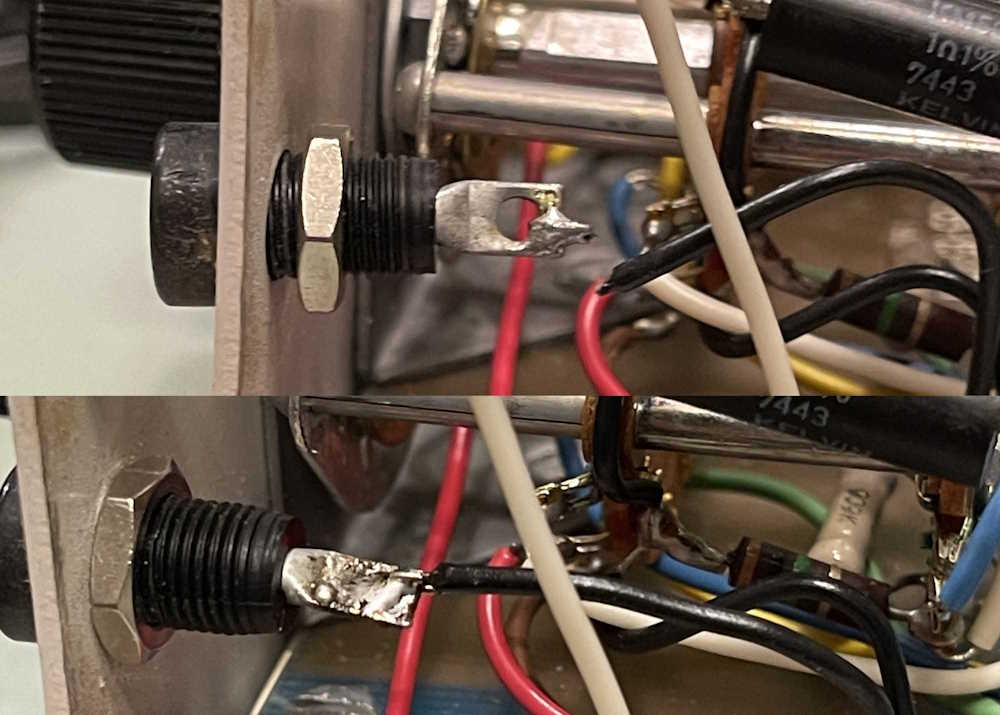
I discarded the broken pieces and looked at the negative jack. Sure enough, the nut was backed off, and that was because the cheap plastic threads on the jack were worn. While it tightened up, one more turn would knock it back. That will have to be replaced if I want to put this into service, but I think where it’s going it will be connected and let set as a monitor device.
The loose jack was also the cause of the no reading issue. The loose jack and solid wire insured the wire itself broke. That was an easy fix, just a quick re-solder and we’re back in business.
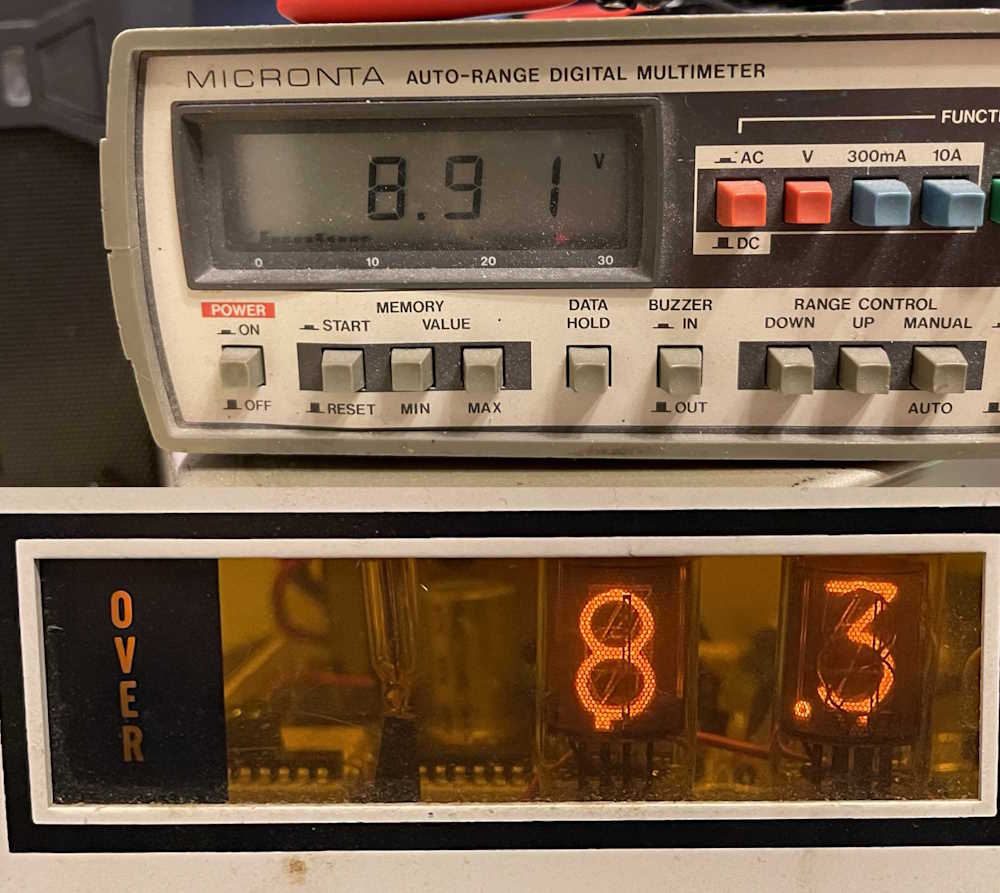
Time to hook it up to a power supply and see what it reads. It’s close, I guess for something of unknown quality it’s fine. As I stated earlier, these weren’t known for being the most accurate of devices, nor were they known for staying where you put them. Fortunately, the DC calibration is pretty easy, just requiring the device having been on for some time to temperature stabilize.
I don’t think there’s much more to say about this device that hasn’t been said already by many others. I’m planning on making a small board that switches between the different voltages in my network rack, so that may show up at some point. Until then, stay tuned for pictures from Fort Wayne and the Scott Antique Market at the Ohio Expo.
The Heathkit IM-1212 DVM is a 2 1/2 digit multimeter sold by Heathkit (obviously!) as well as under the Bell&Howell name as the IMD 202-2. They are the same unit with a different name on the front. I’ve also been told that DeVry had one marked with their name as well, but I’ve not seen one of those.
(Hi hobbyshoppin…will copy the actual relevant portions of the manual for you next week!)
These are not the most accurate meters, and are hard to keep in cal. DC calibration is fortunately, fairly easy.
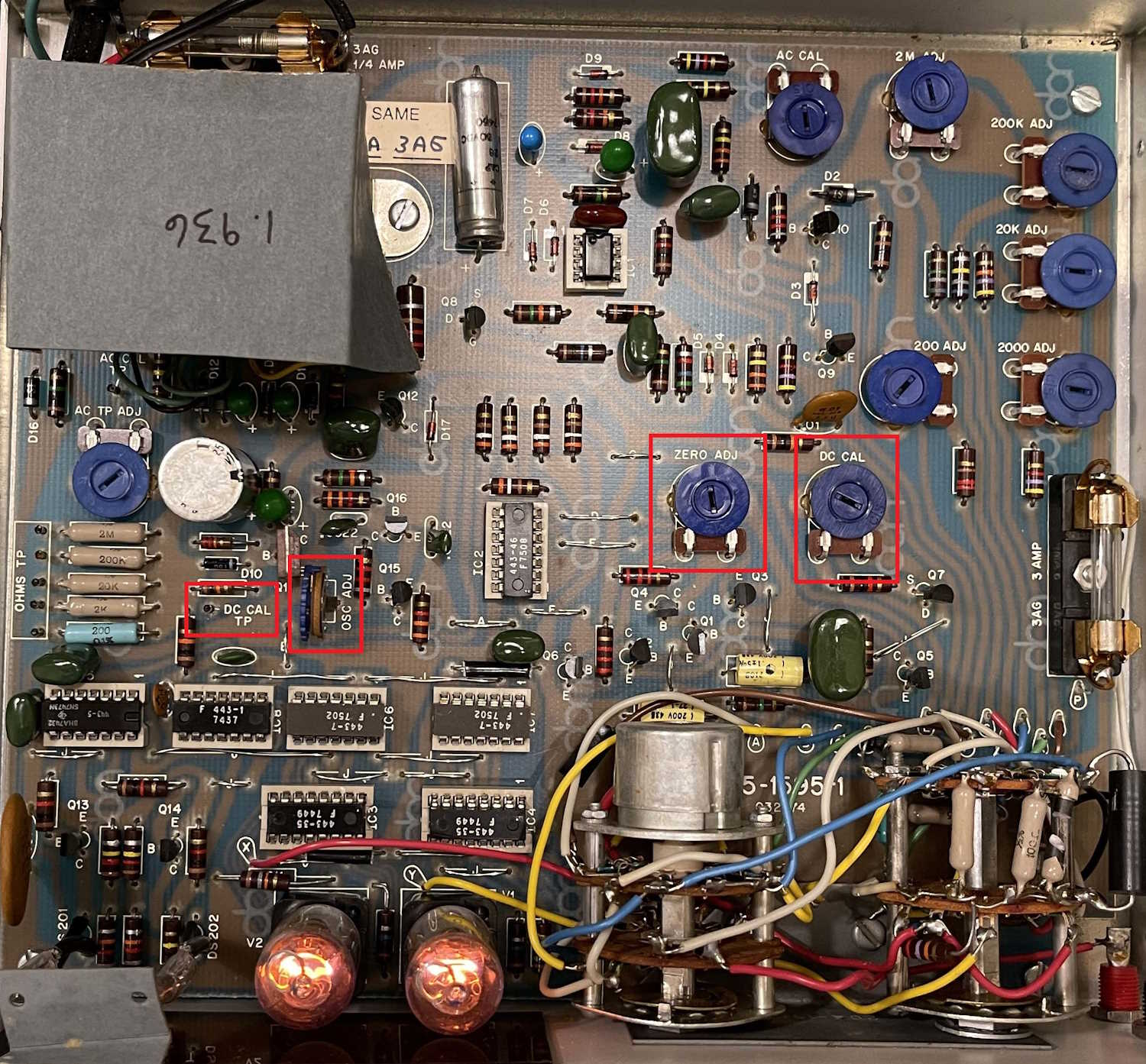
We’re interested in 4 spots in this meter, indicated by the red outlines in the image. They are, from left to right:
1: The DC CAL test point.
2: The OSC adjustment.
3: The ZERO adjustment.
4: The DC CAL adjustment.
(click on the image to enlarge)
What you’ll need:
A small flatblade screwdriver to turn pots. A plastic alignment tool will work best if you have it.
A meter with at least 3 1/2 digits of accuracy
A cliplead
Start by removing the screws for the cover. Look inside and make sure nothing looks burnt or damaged. If you’re good, put the cover back on, and apply power to the unit. Turn it on, and set it to DC Volts, “2” range.
Let it set with power on. The manual suggests 15-30 minutes warmup time, but I say give it a few days. You want this thing to be as warm as it’s going to get. Just let it set. It needs to be nice and temperature stable.
When it’s warmed up, remove the top cover. Start by looking at the paper on the transformer. There’s probably a number written there. Ignore it. That’s the DC CAL voltage as suggested by Heath. It’s wrong.
With your negative lead on the black jack on the front (all measurements are in reference to this jack) measure the DC voltage on the DC CAL test point. It should be 1.9xx-ish. It may be 2.xxx or 1.8xx, but note that to 3 digits. For example, mine states 1.936V, but the actual measurement was 1.901V. Note your voltage somewhere for later use.
Note: This voltage is generated by two crappy carbon comp resistors, so it’s going to drift as well. If you have something with a known voltage around 1.9V, then use it instead!
Jumper the red and black jacks. Using the ZERO adjustment, turn it until you get to 0.01, and then turn it until it JUST goes to 0.00. Heath suggests that at this point, the reading should flicker between 0.00 and 0.01. I usually just set it to 0.00 and don’t worry about it.
This part isn’t in the manual. I don’t know if it will help, but it may get you closer to the specified oscillator value…
Change to KOHMS and open the top. Let it set for a while open circuit so you’re getting the oscillator number. When it’s stopped changing, note it. Put the cover back on and observe the drift. When it’s stopped drifting, note this value as well. When you have the top off to adjust the oscillator, adjust it so that you’re accounting for the drift - i.e. if it drifts up, set it X counts lower, etc.
Or, just do what the manual says and…
Remove the jumper and change the input to KOHMS. The OVER lamp should be lit at this point, you want an open circuit. Using the OSC adjustment, adjust so the display reads .85.
Change back to DC Volts. Connect the red jack to the DC CAL test point. Adjust the DC CAL adjustment so the meter reads as close to your measured voltage as possible. Round the number based on the last digit of your measured voltage. Round up for 6, down for 5.
At this point, you should be able to get a good DC measurement out of the device. Be aware that it’s not very accurate, and on the 20 range you’re going to have a +/- of 0.5V. You may want to go through and adjust things again later after the unit has warmed up more, but you’re never going to get a super accurate reading out of this device.
That’s it for DC. If you want to do the rest of the calibration, I’ve copied the relevant portions of the manual and placed them here:
Fort Wayne was pretty good this year, and I have a lot of pictures to process and upload.
In the meantime here’s a bit on a device I picked up. It’s a 2 1/3 digit DVM made by … I don’t know. I’ve seen it sold as Heathkit, Bell&Howell, and others. It’s not the most accurate thing in the world, but it was easy to put together and looks to be a good tool for teaching basic A/D concepts. It’s very drift-y, and from what I can tell was known to be such even when it was new. It’s still cool, however.
It required some minor work and adjustments to get it up and running, which I’ve documented and will post later - but in the meantime, here’s the device doing integrations on a low speed sine wave. It counts as fast as the TTL silicon will allow it.
The Findlay Radio Club 2023 Hamfest was just a bit muted this year - the skies threatened rain but none appeared, so there were quite a few vendors. This year, a lot of late-model Hallicrafters SW radios showed up, I assume because people who purchased them in the 1960s are finally letting them go for various reasons. Unfortunately, with nothing to listen to on shortwave except Radio Havana, these radios aren’t of much use other than as a curiosity. The proliferation of SDR boxes hasn’t helped, considering you can get a direct entry radio that sounds good and runs on a common LiIon prismatic cell for a bill.
There was plenty of good stuff to look at regardless, and some good things to take home. Here’s my memories of the show, some of which were of unique pieces where the photo ended up on other sites.
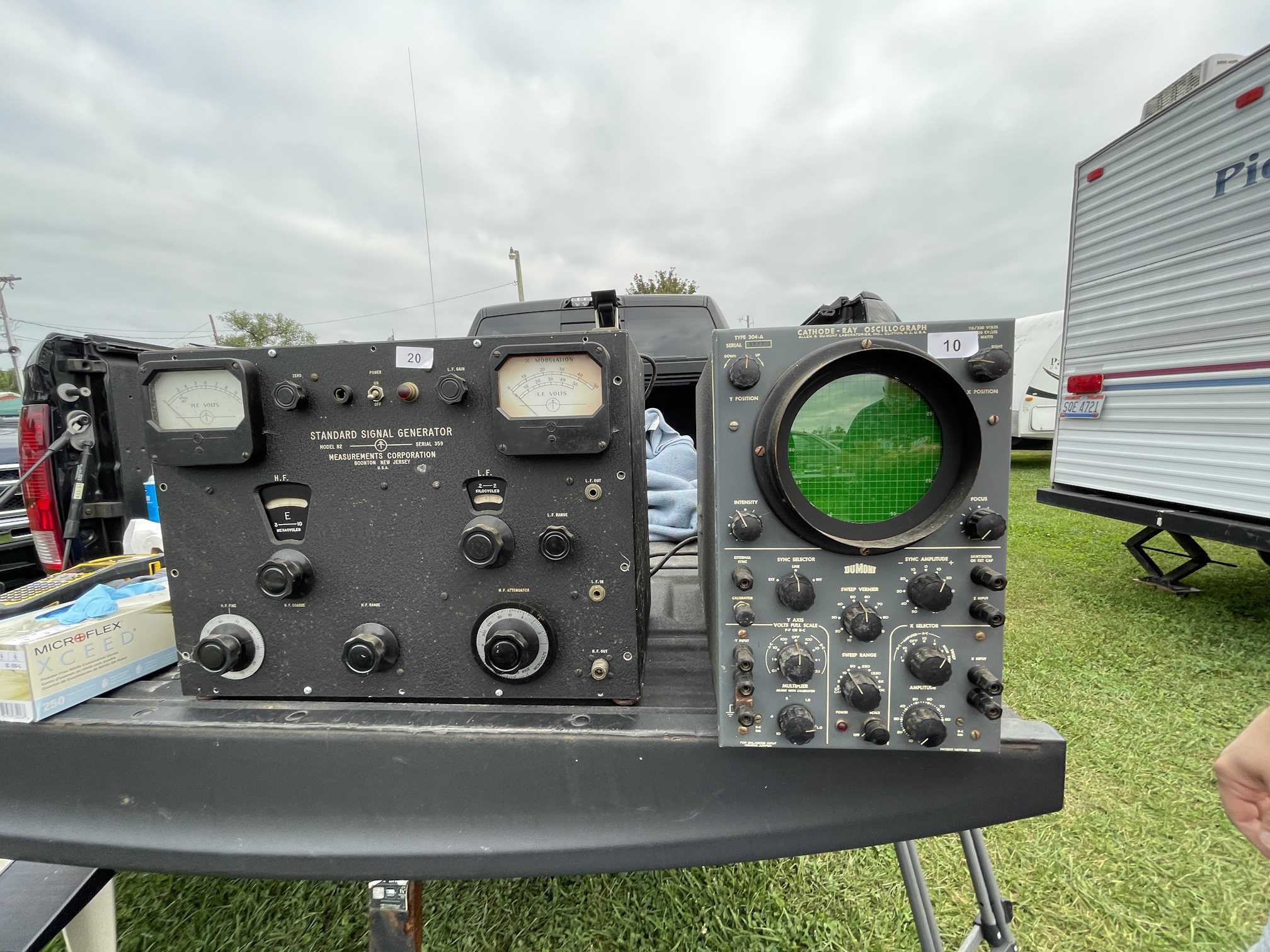
One of those shots was a relatively rare signal generator from a long-dead company, Measurements Corporation of Boonton, NJ. According to the site admins, this was the only in-the-flesh image they’ve seen. I was happy to contribute to the community’s knowledge base. Check that entry out here: https://www.radiomus … rd_generator_82.html
Now, on to the good stuff!
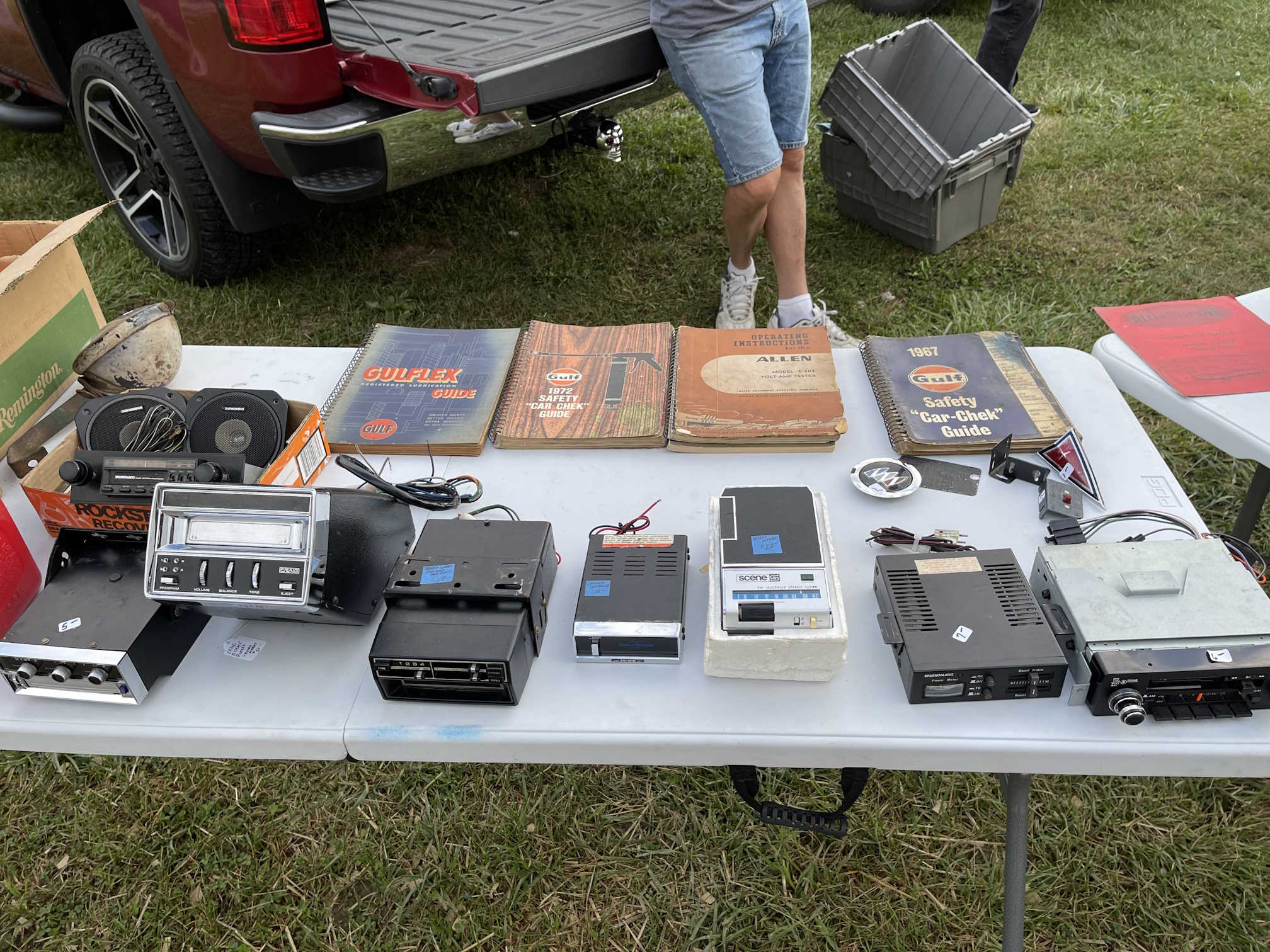
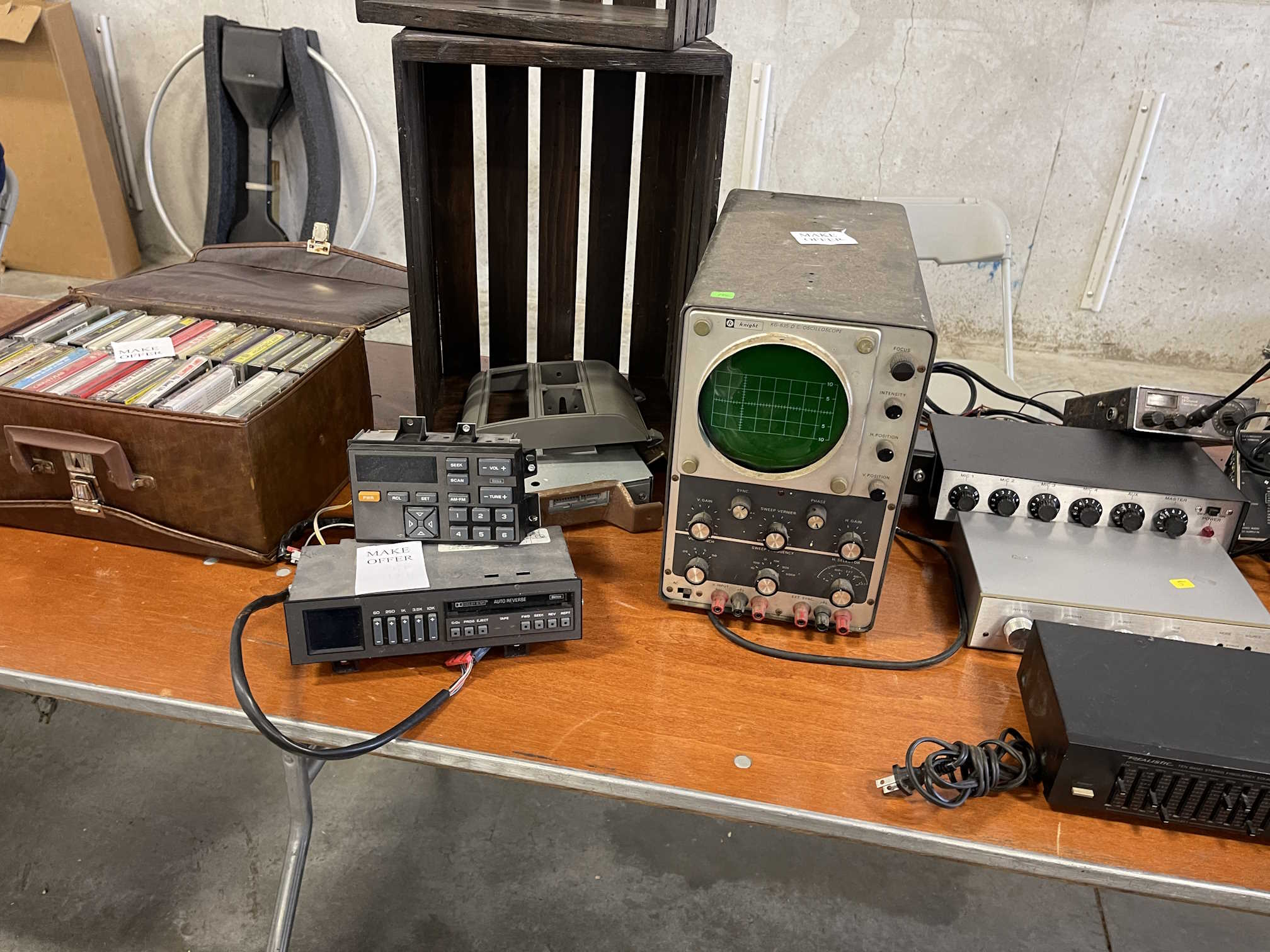
A lot of old car audio devices.
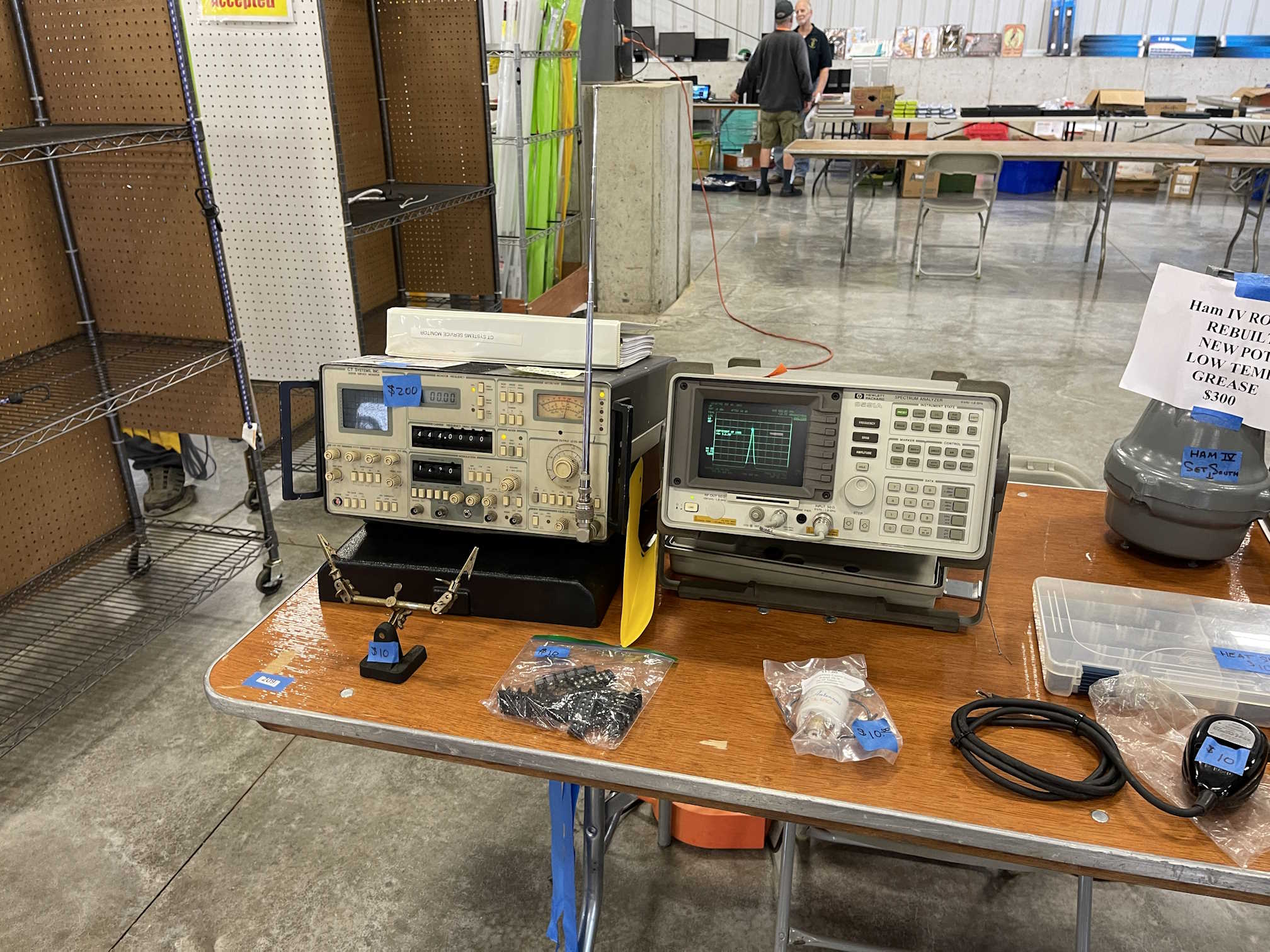
An old HP 1.8GHz SpecAn. Nice display, but the $100 cheapies do the same thing nowadays.
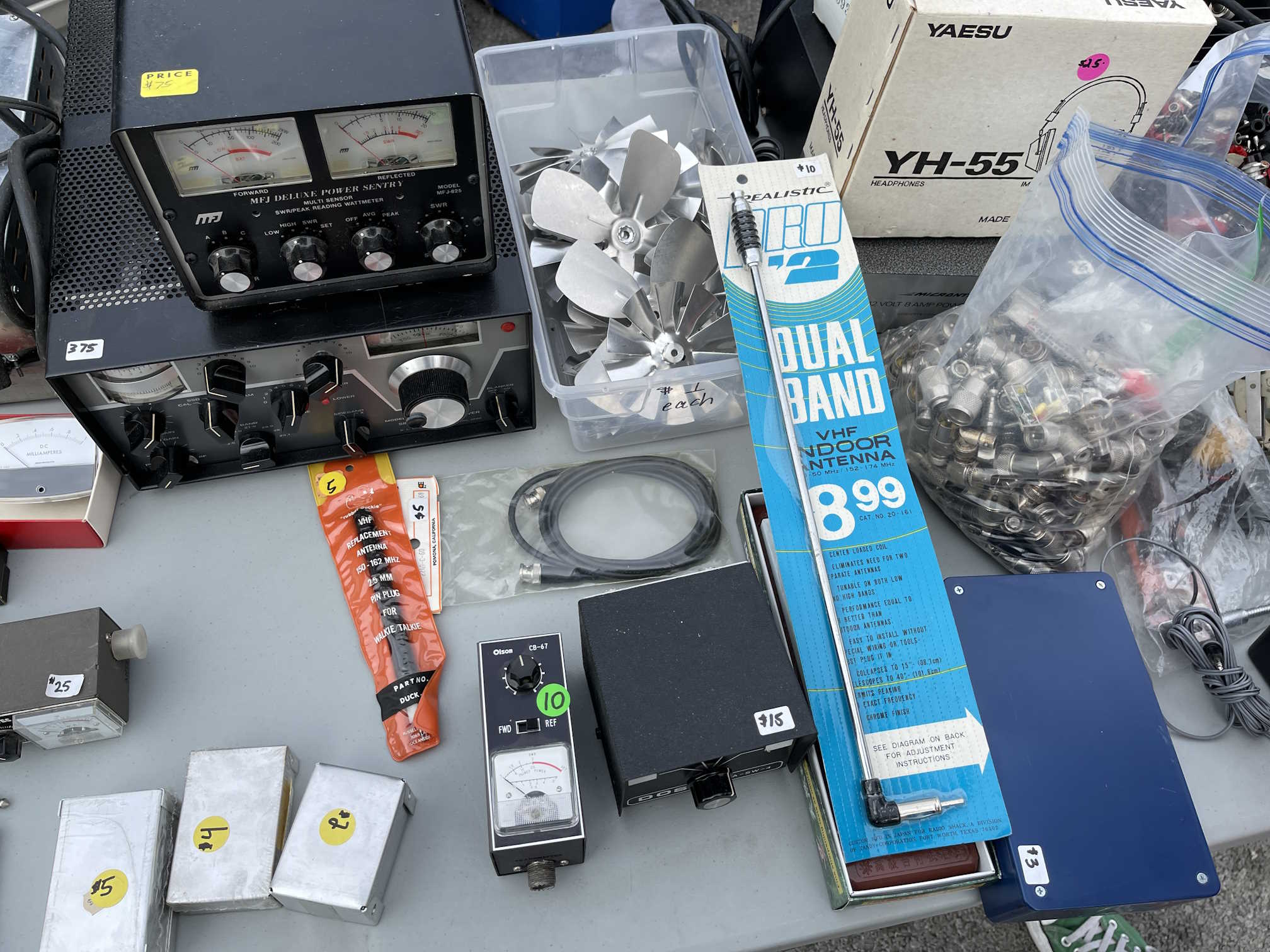
An old Motorola plug scanner antenna. Took it home, so old the plastic was stuck to the metal.
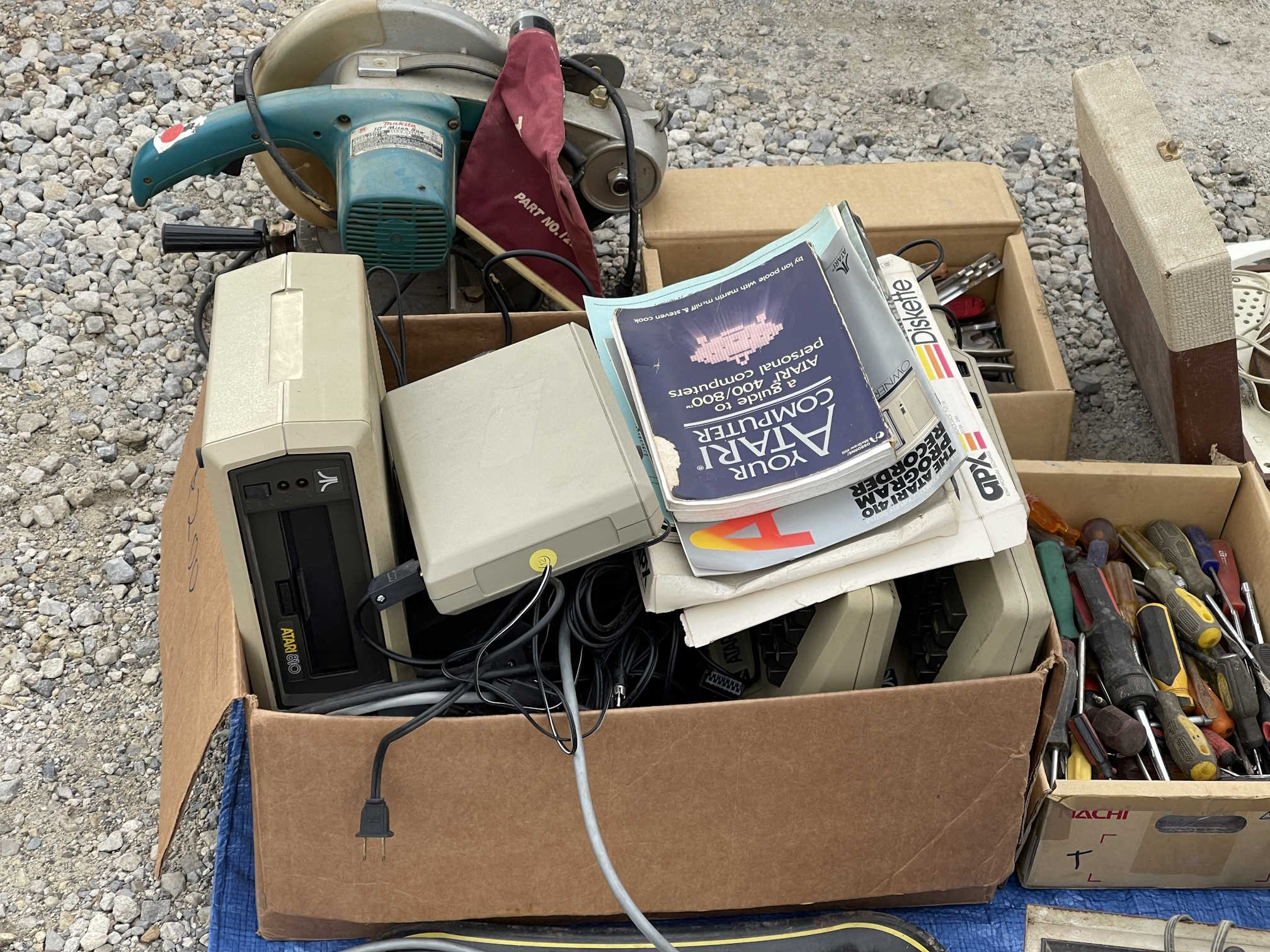
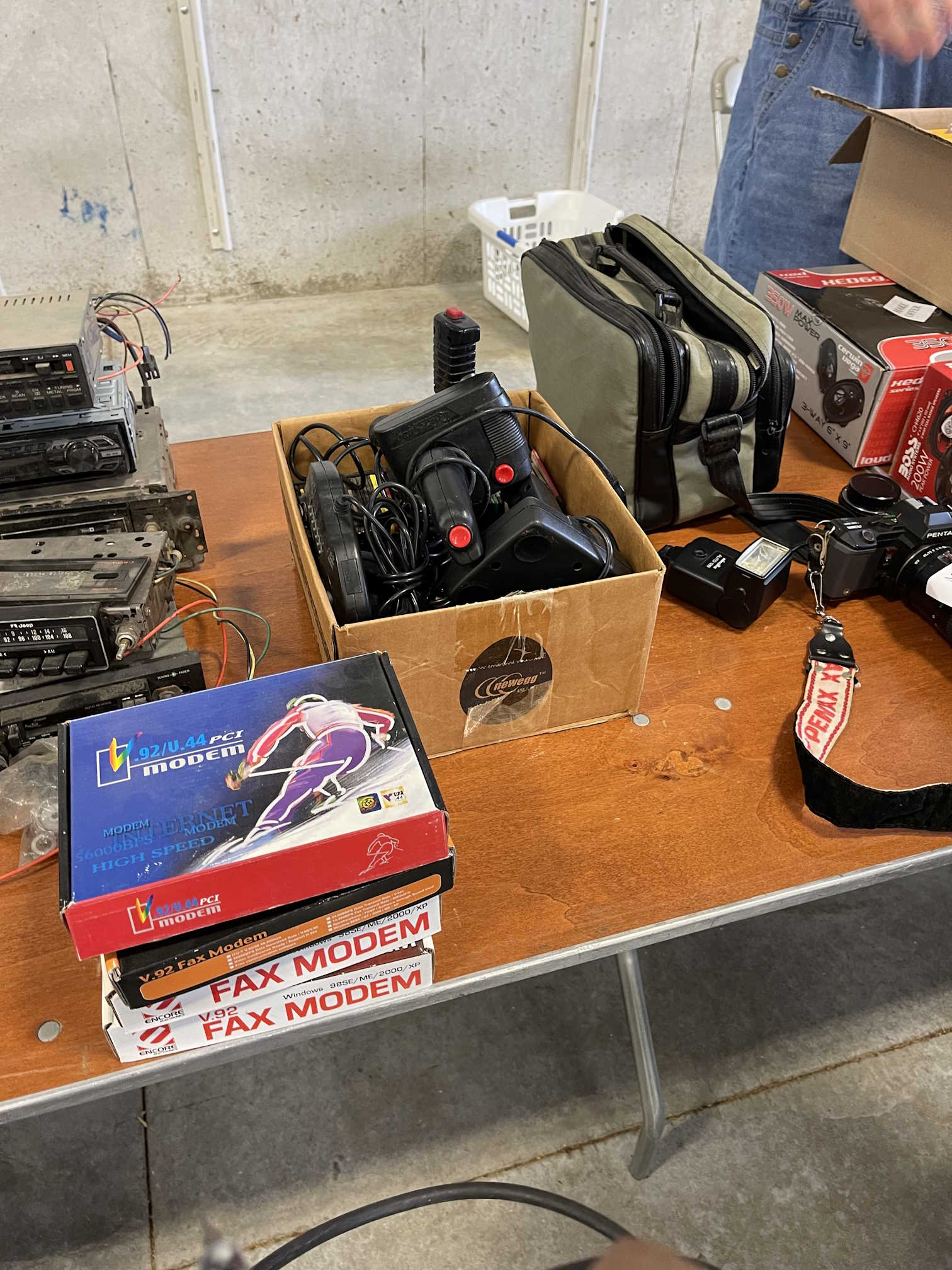
A box of Atari 800XL computers, a drive, modem and etc.
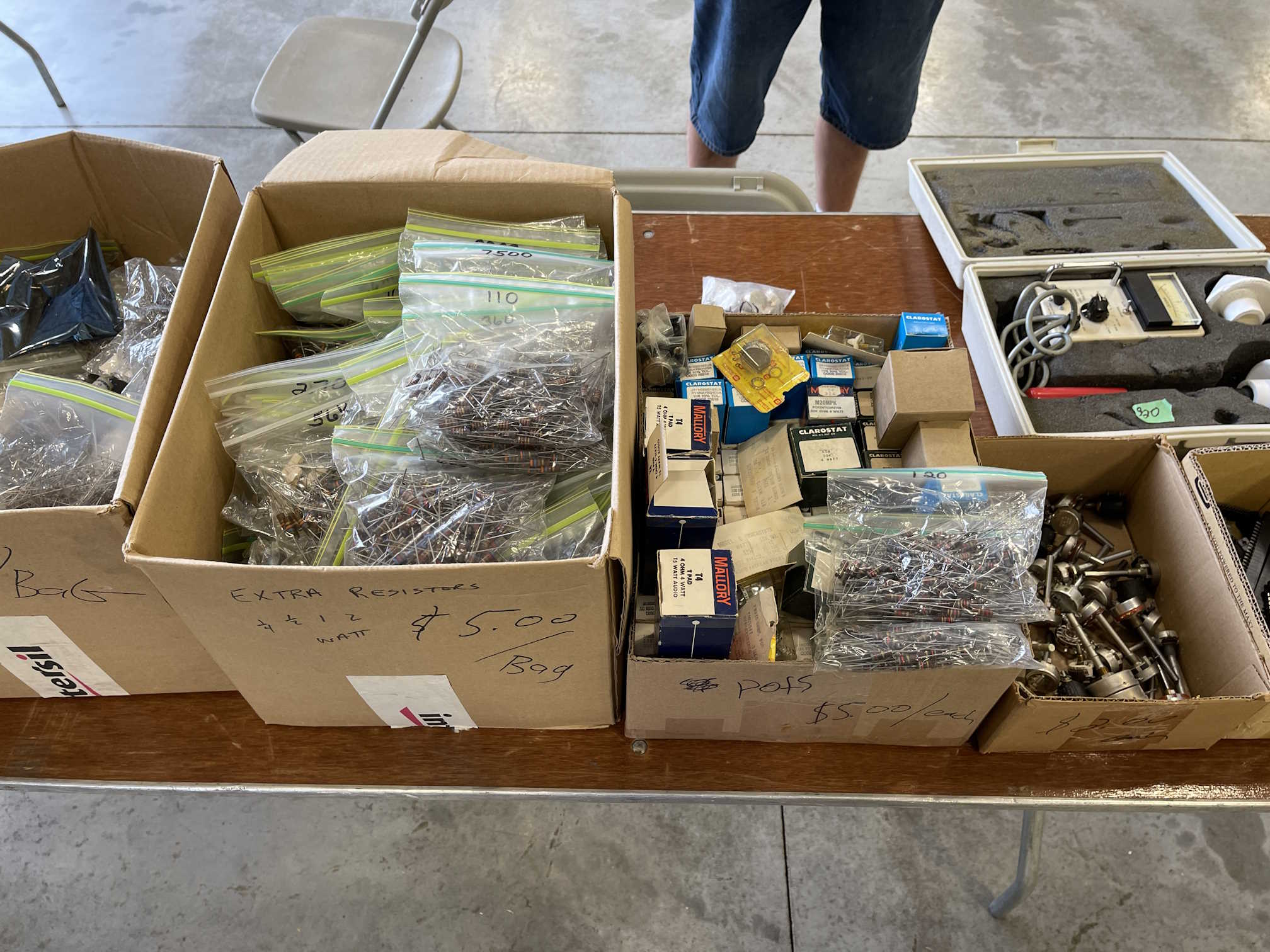
Carbon Comp resistors. Great for resistive fuses, some went home with me.
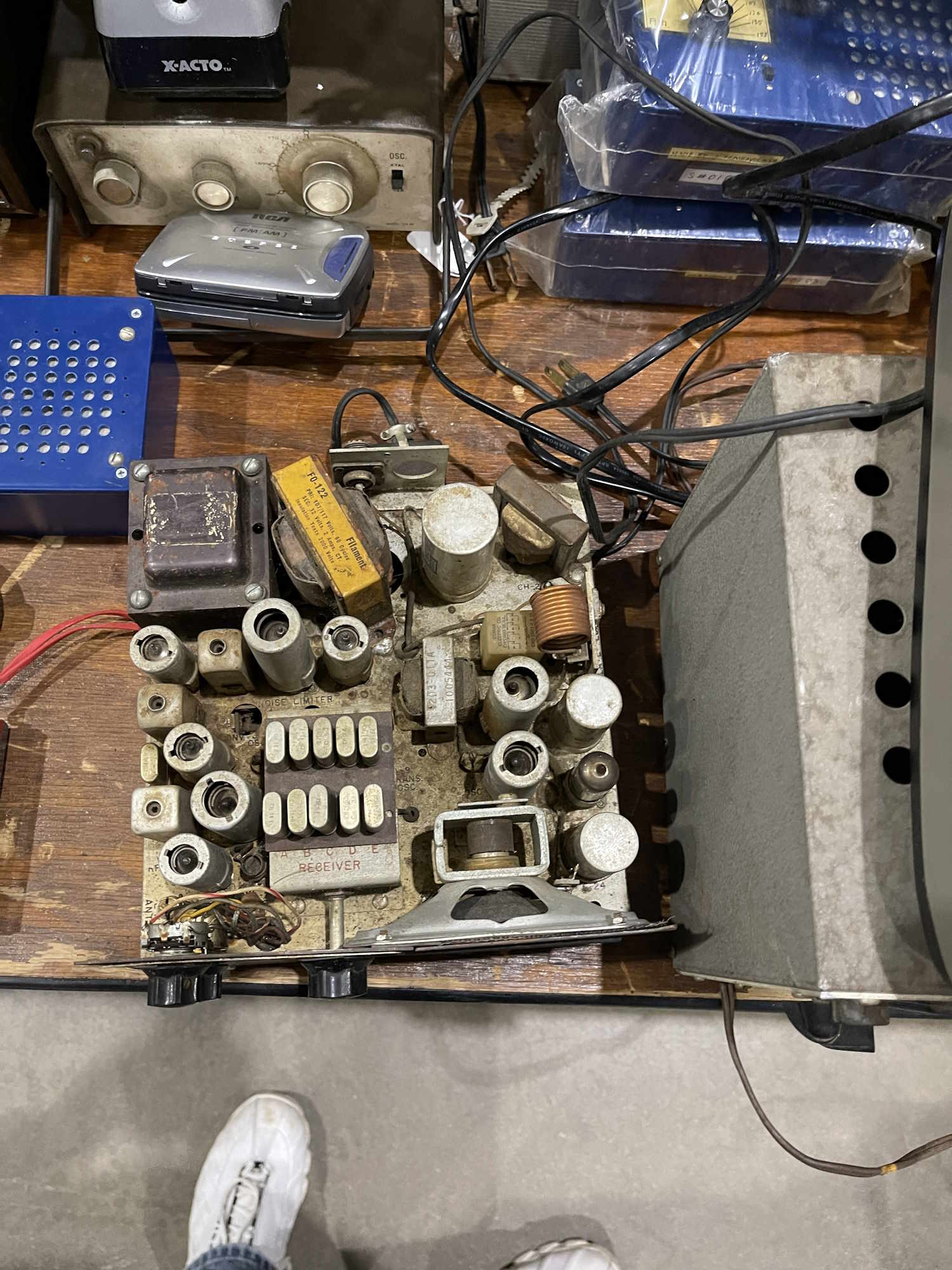
One of GM's oddball radios, and some misc goodies.
A Radiola 24, or as a friend said “It's a DIY Television!”
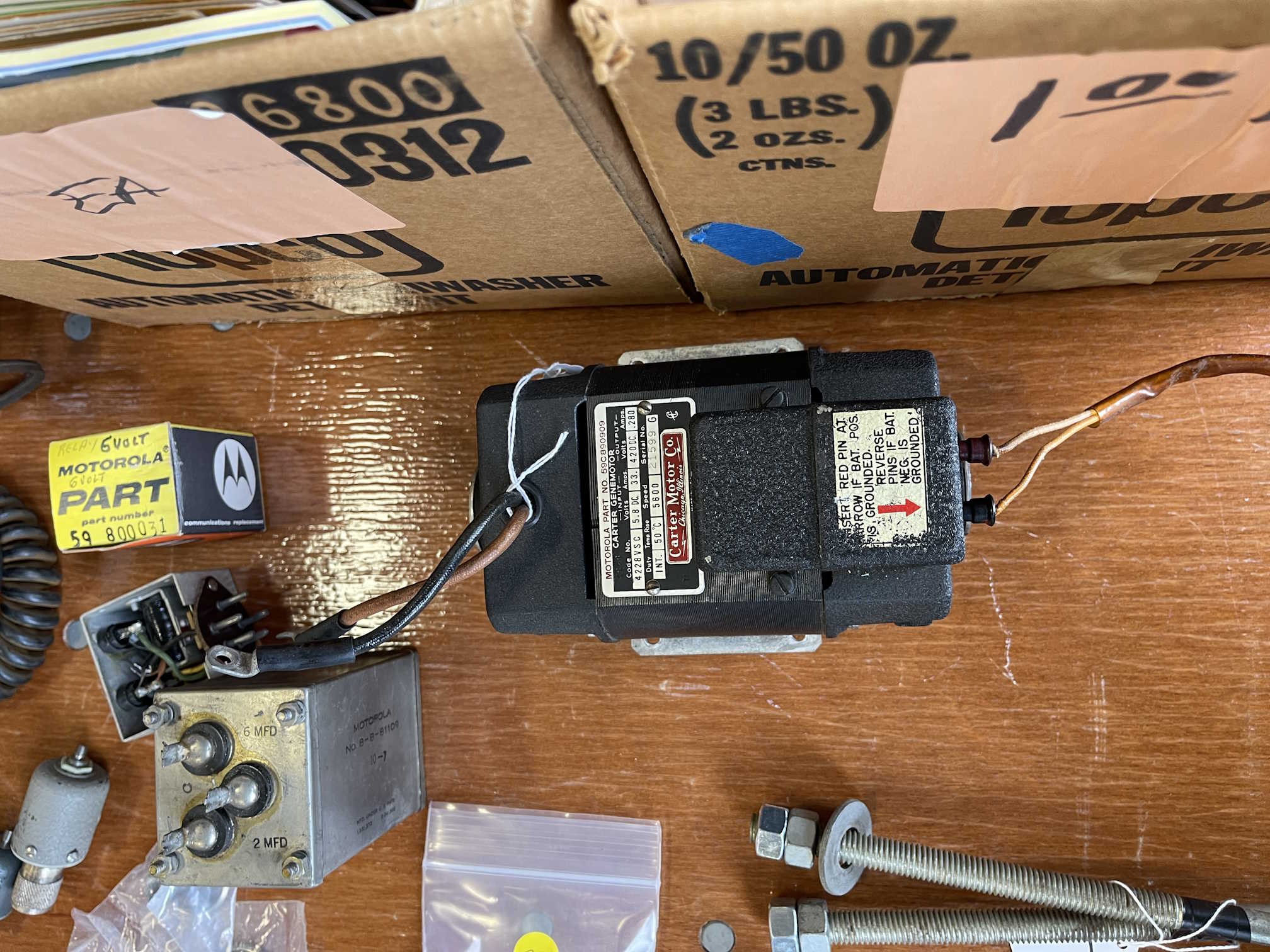
A dynamotor for a radio device. Yeah, that's 33A input current!
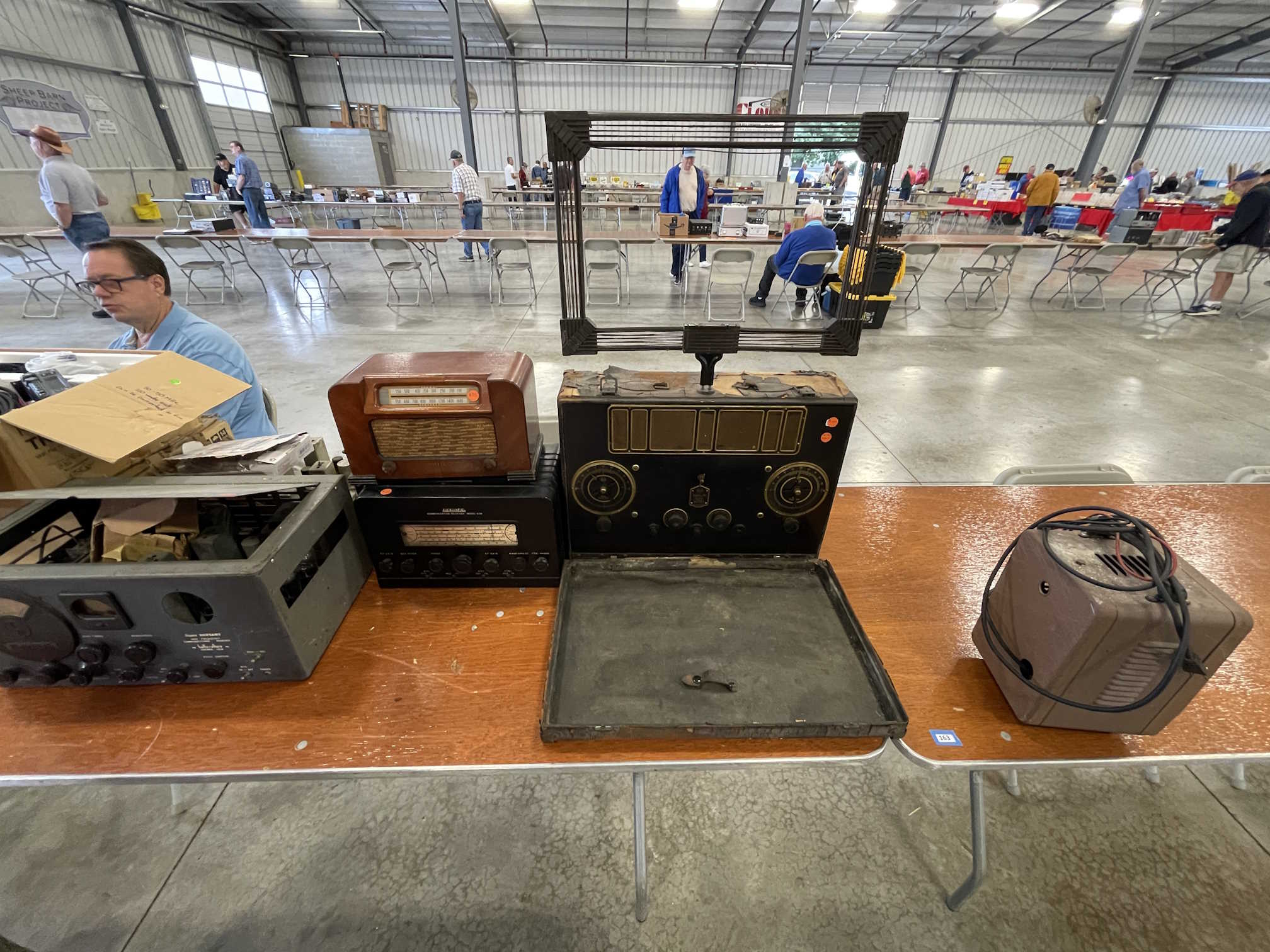
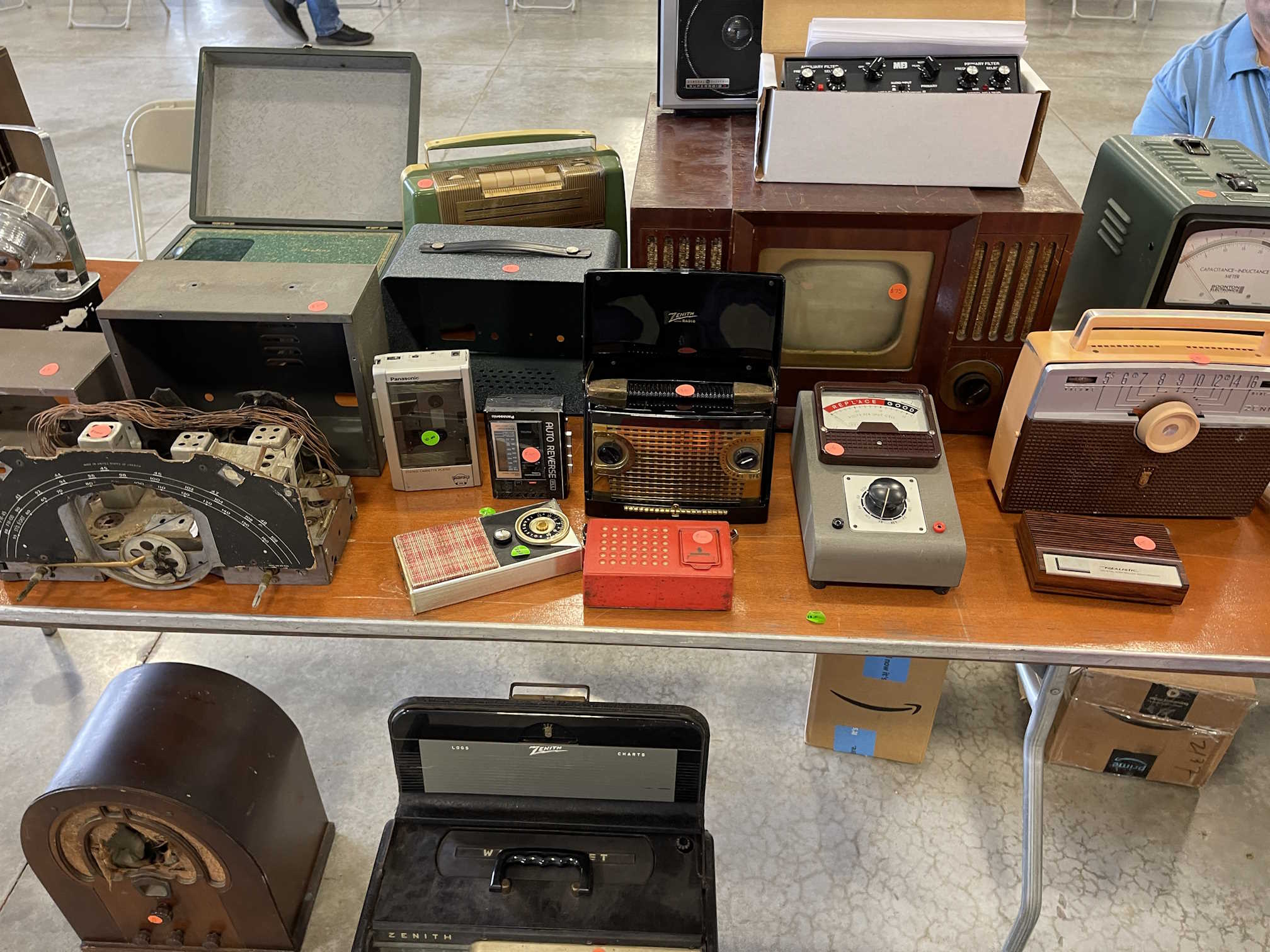
An electrostatic television and some radios.
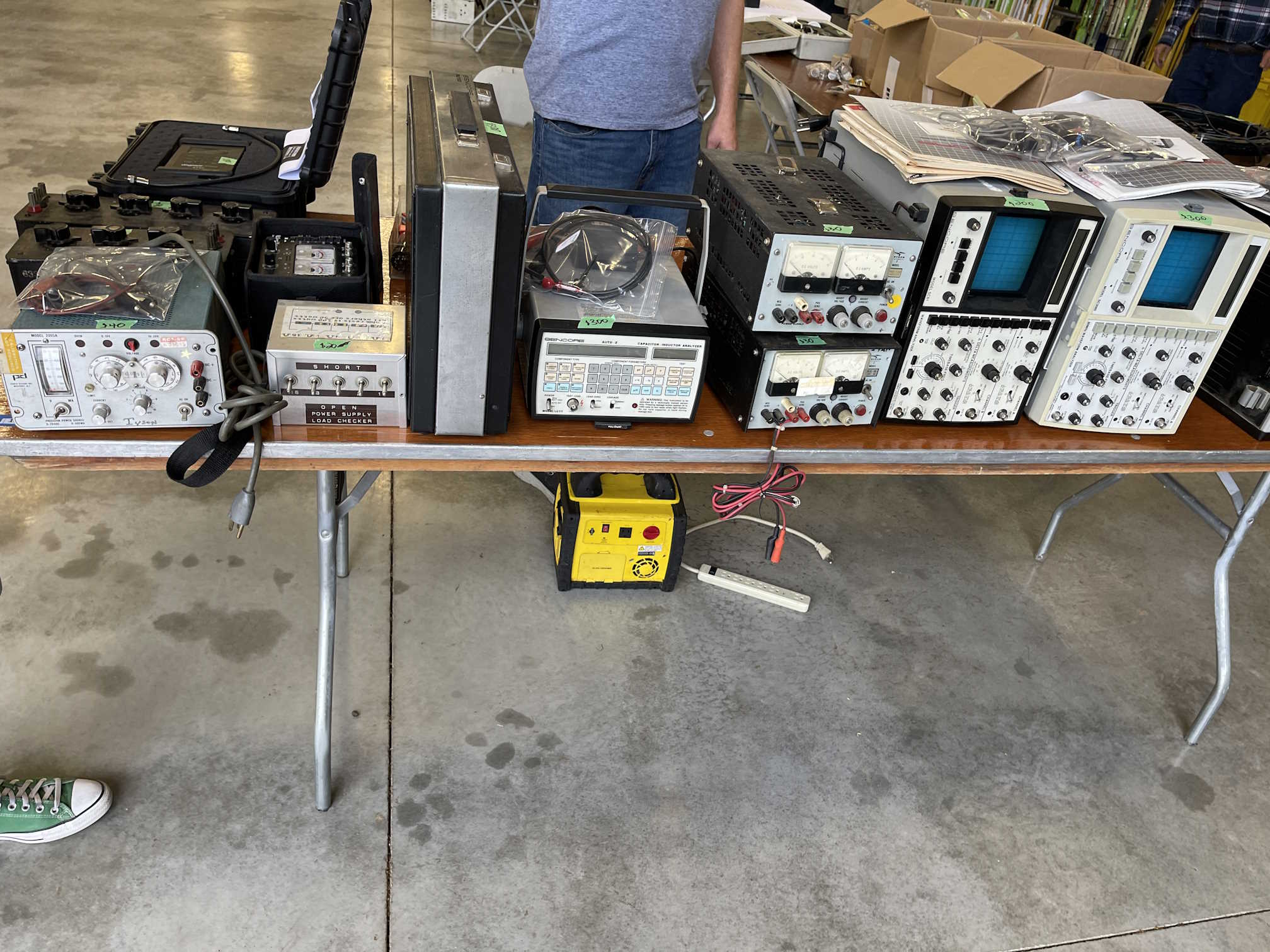
Some old, but expensive (for it's time) equipment.
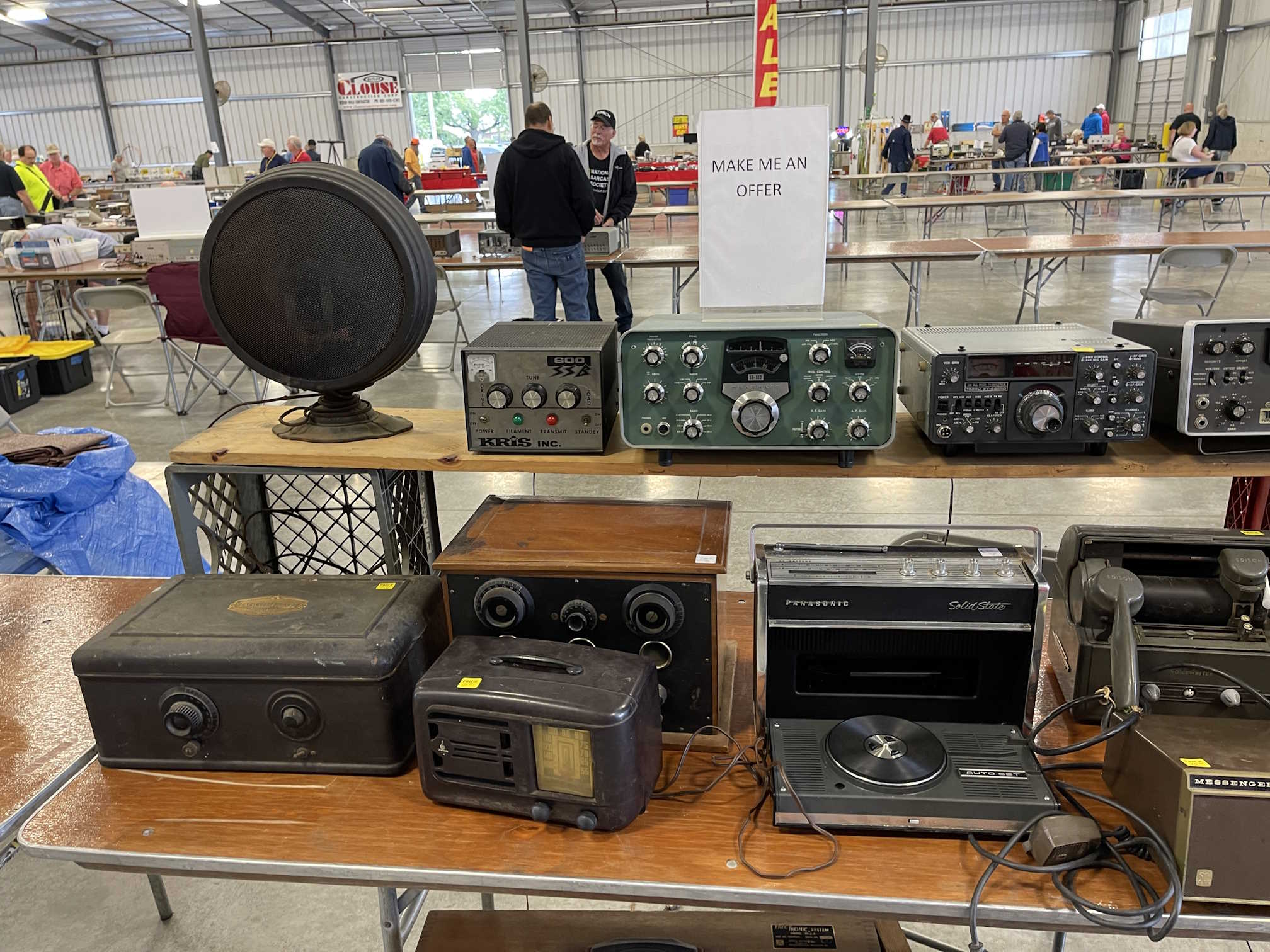
One of the many radios of this type that showed up this year.
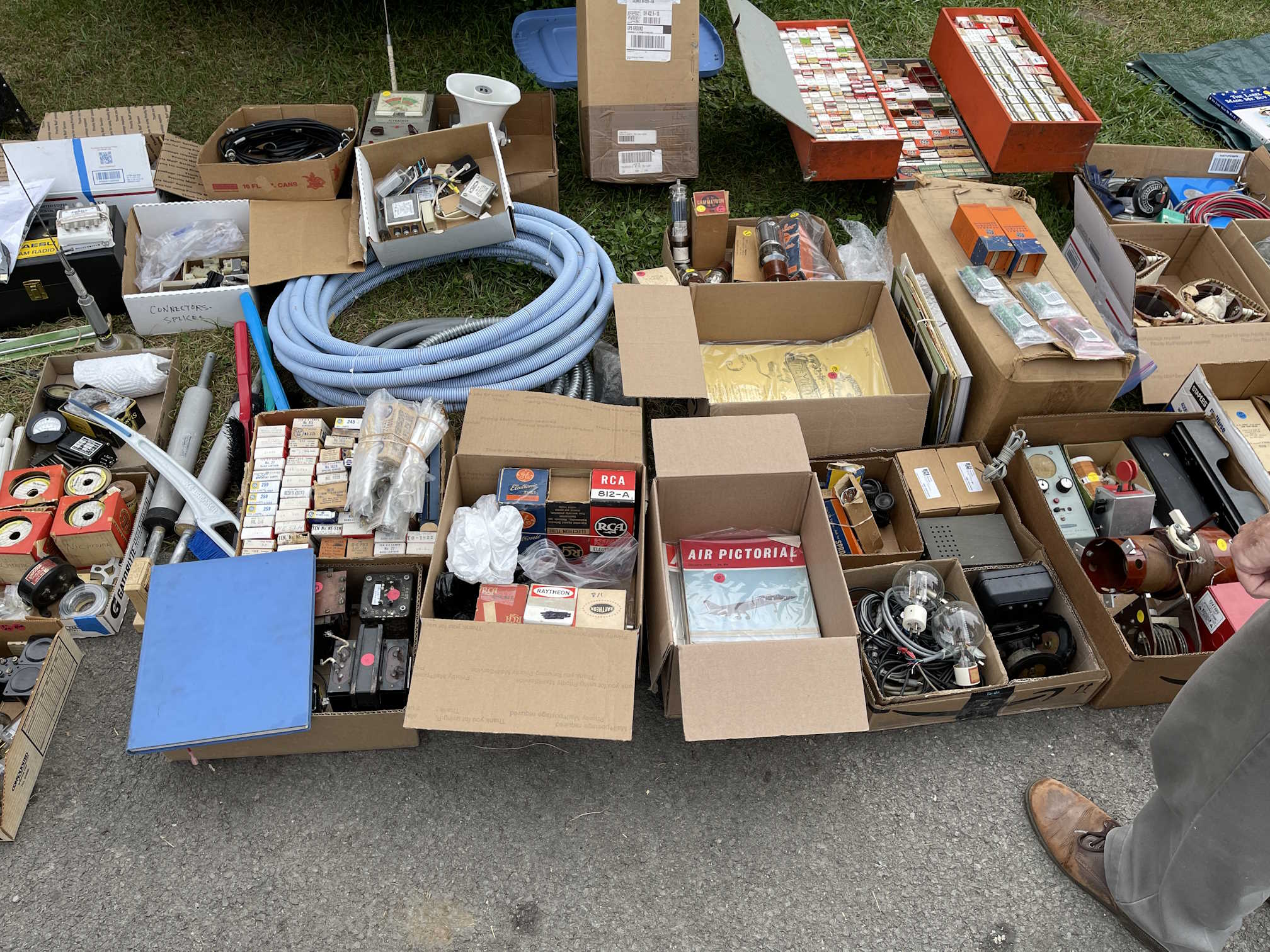
The “just lay it on the ground” goodies vendor.
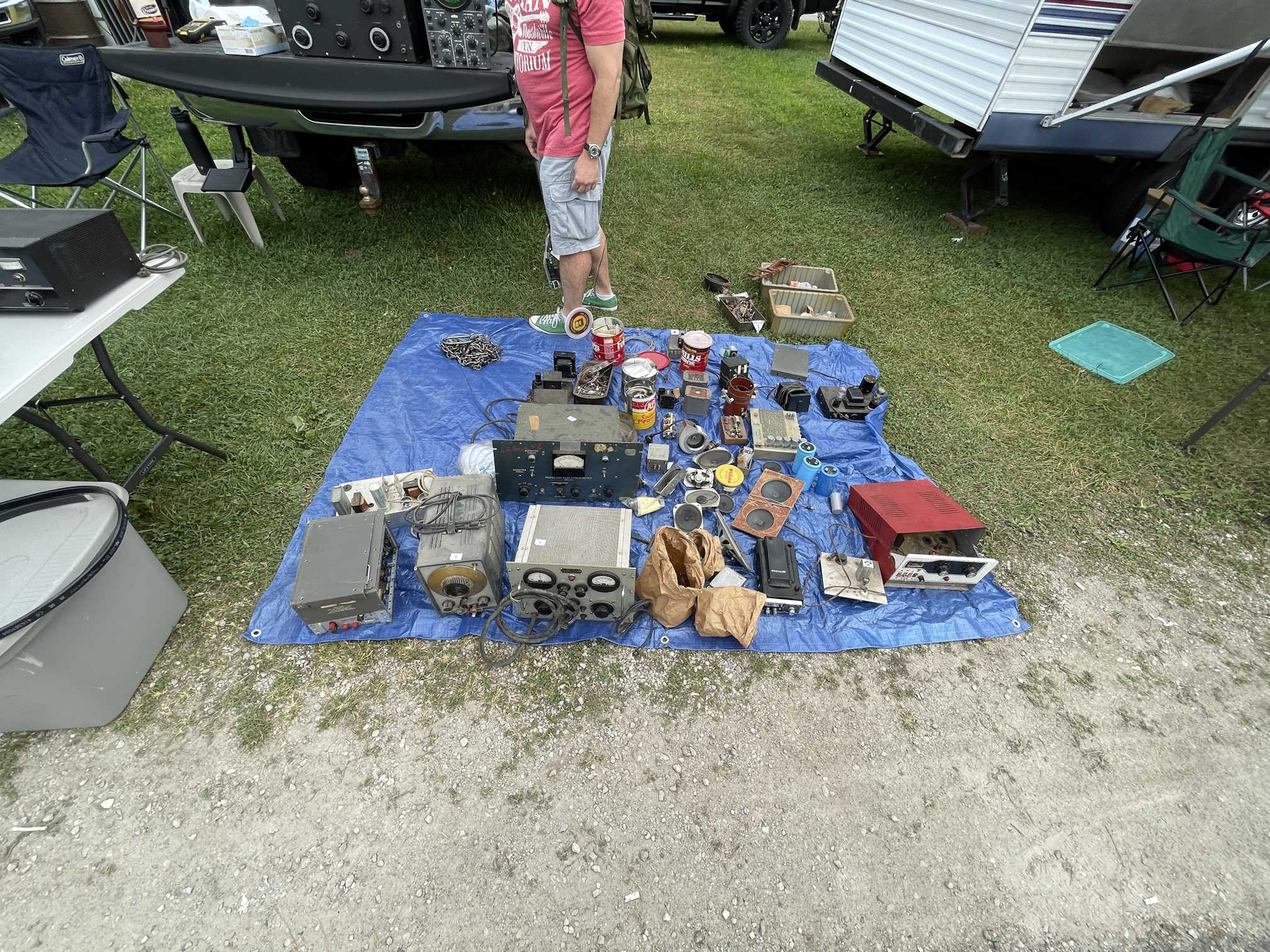
More ground goodies.
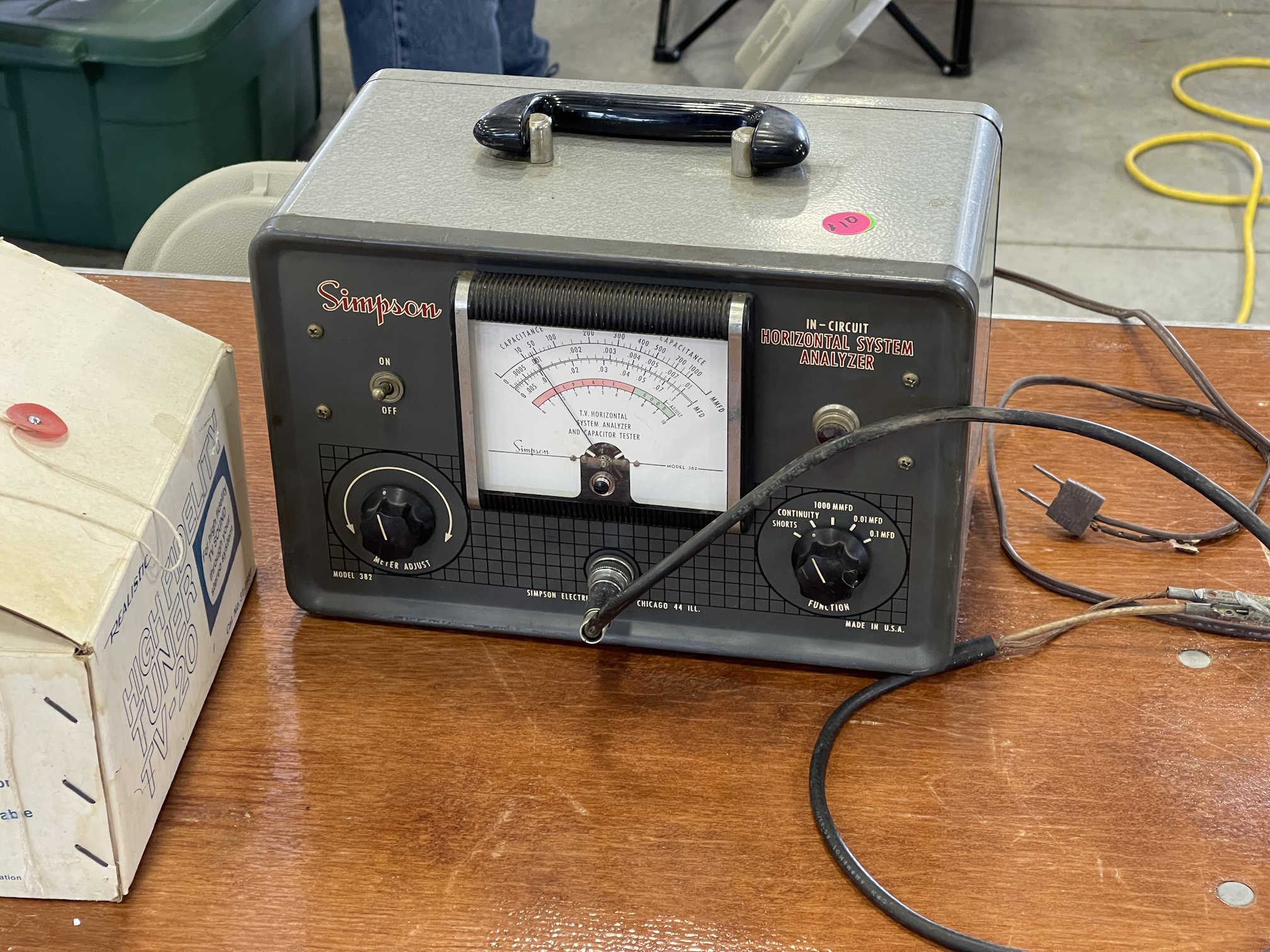
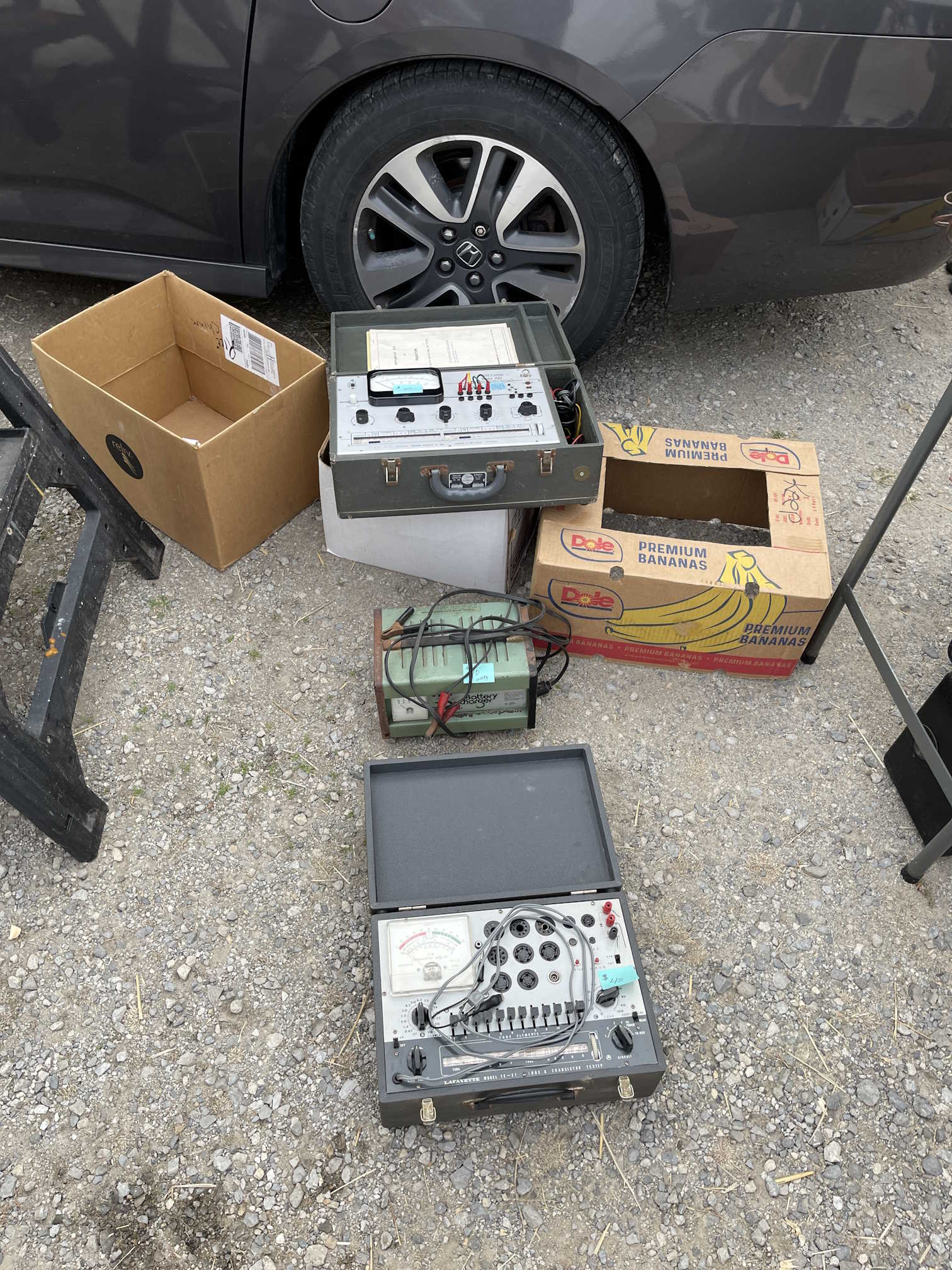
A meter that's dedicated to testing the particular items in a horizontal circuit.
A box of old Atari-style joysticks.
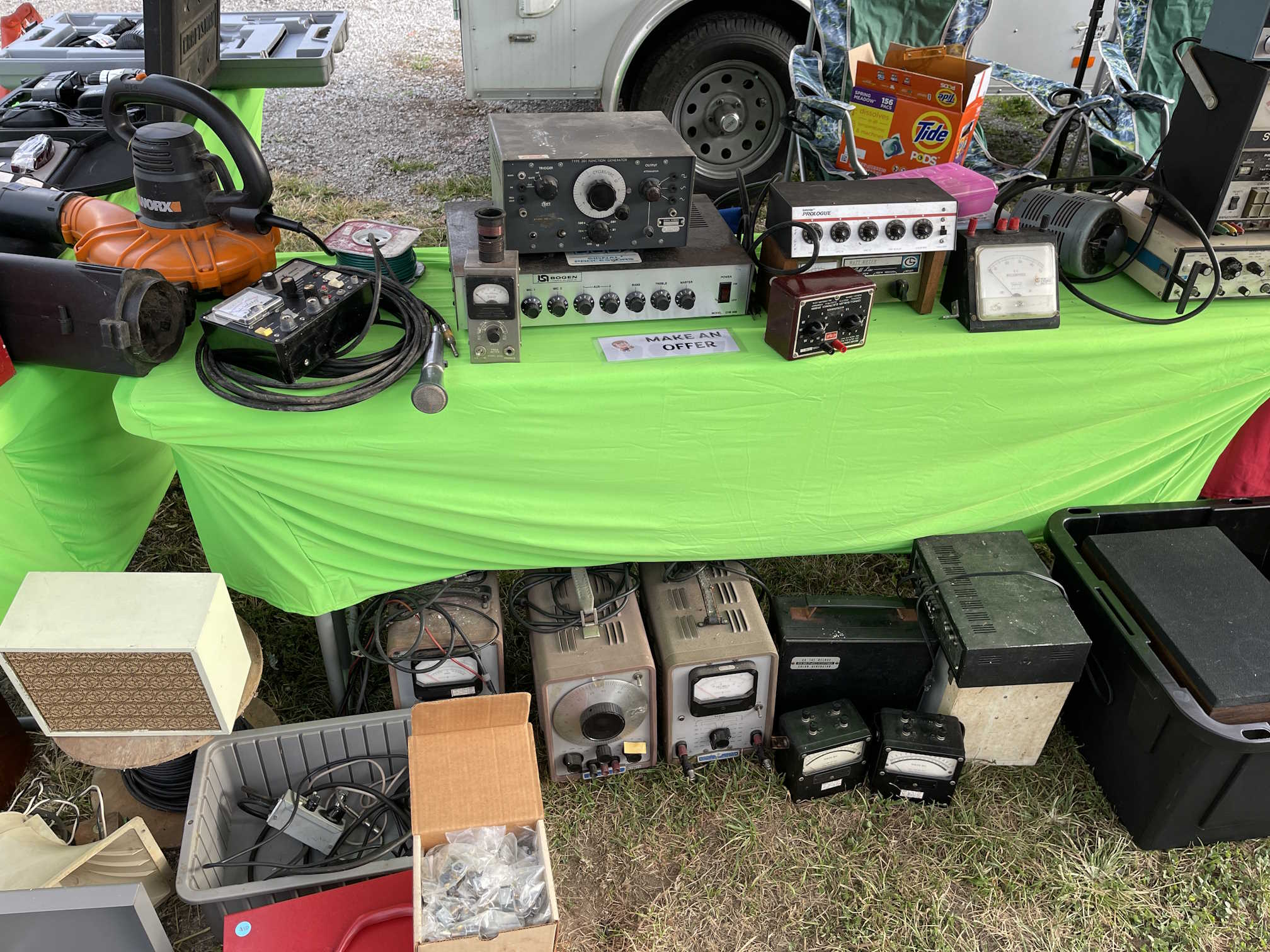
Meters. Meters everwhere!
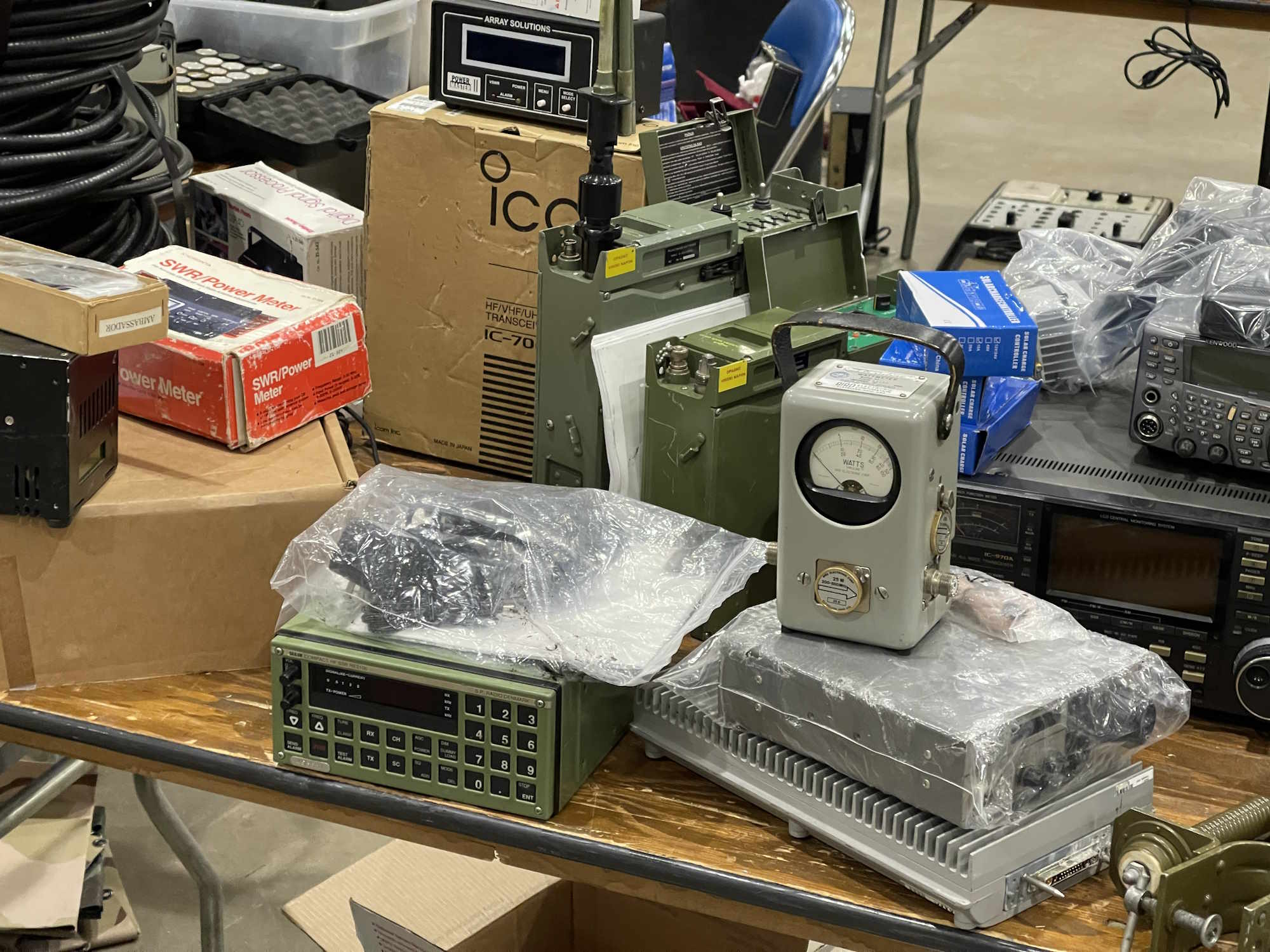
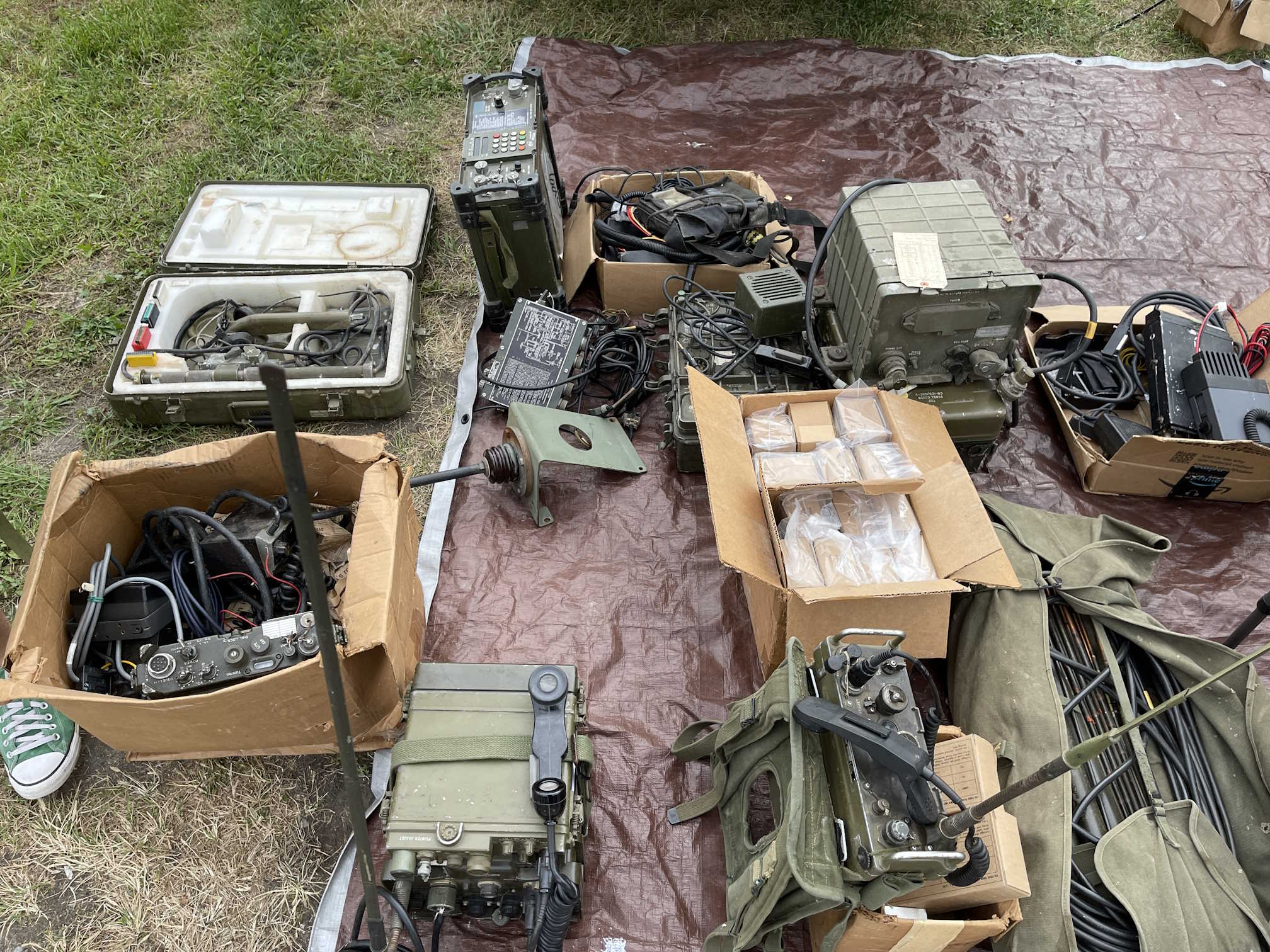
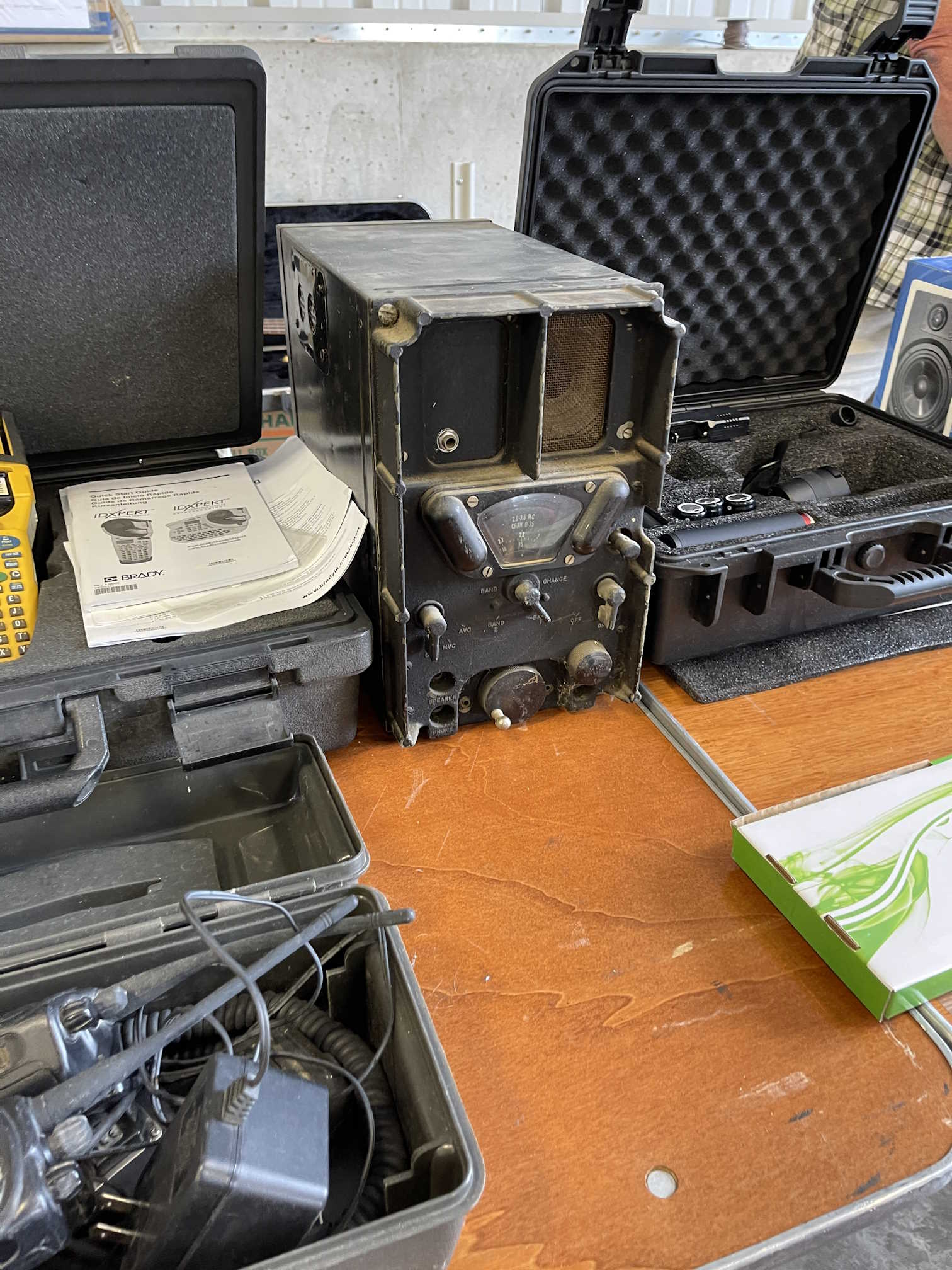
This vendor had a wide range of military radios and accessories.
No reasonable offer is refused!
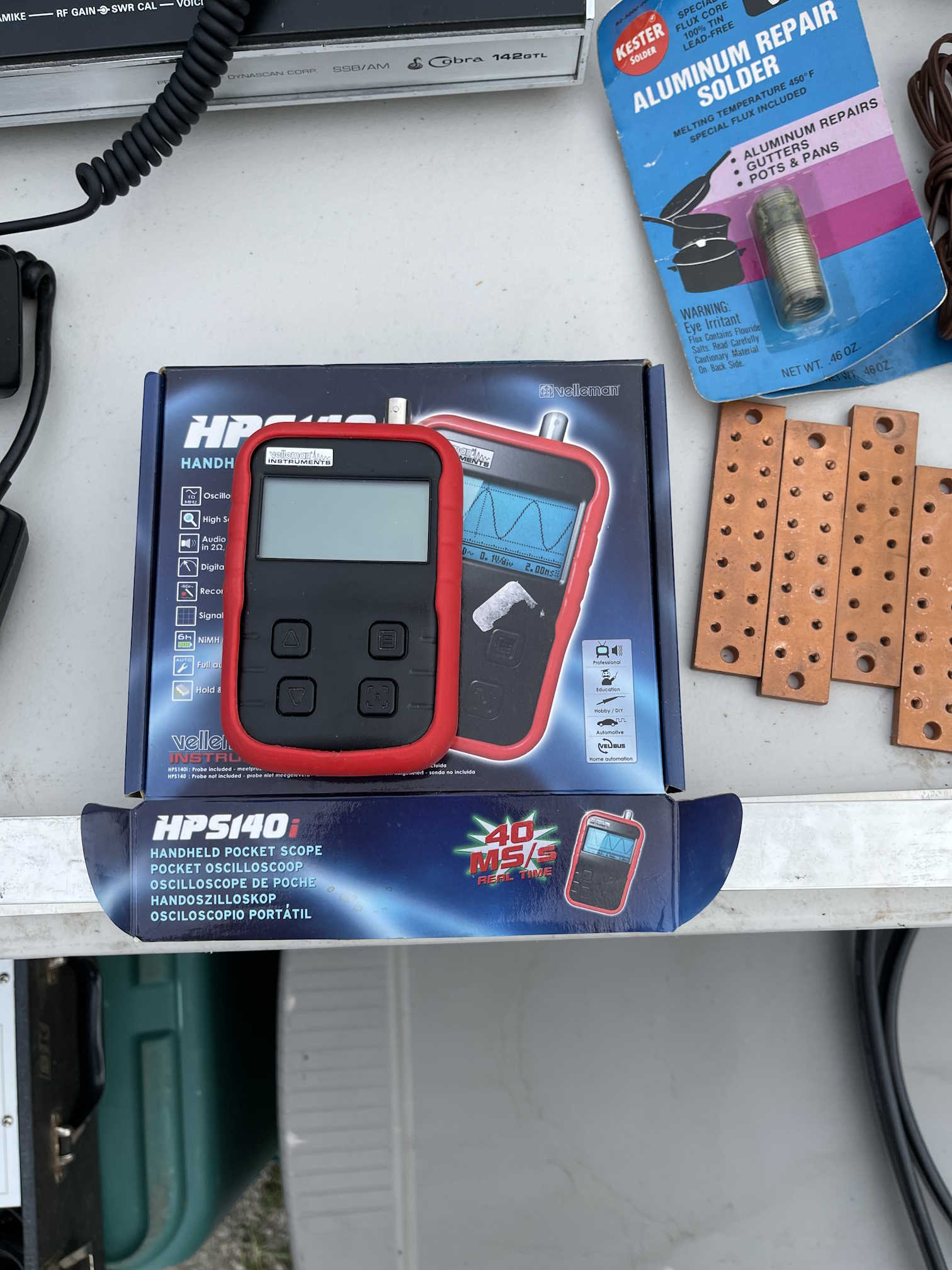
A neat old Velleman scope, but these like to blow their inputs. No power, no see, no buy.
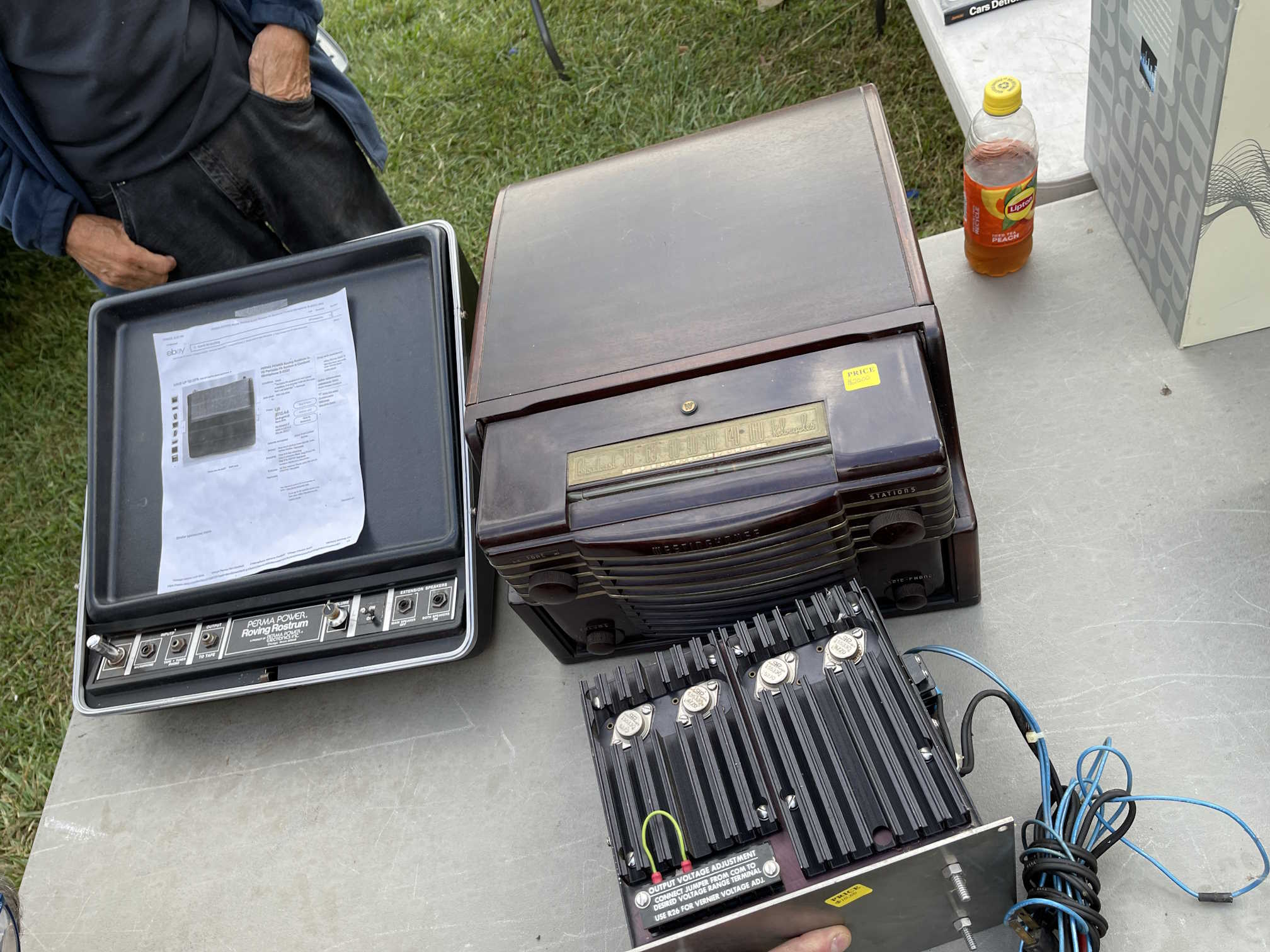
A portable podium with amplifier. I remember these from high school.
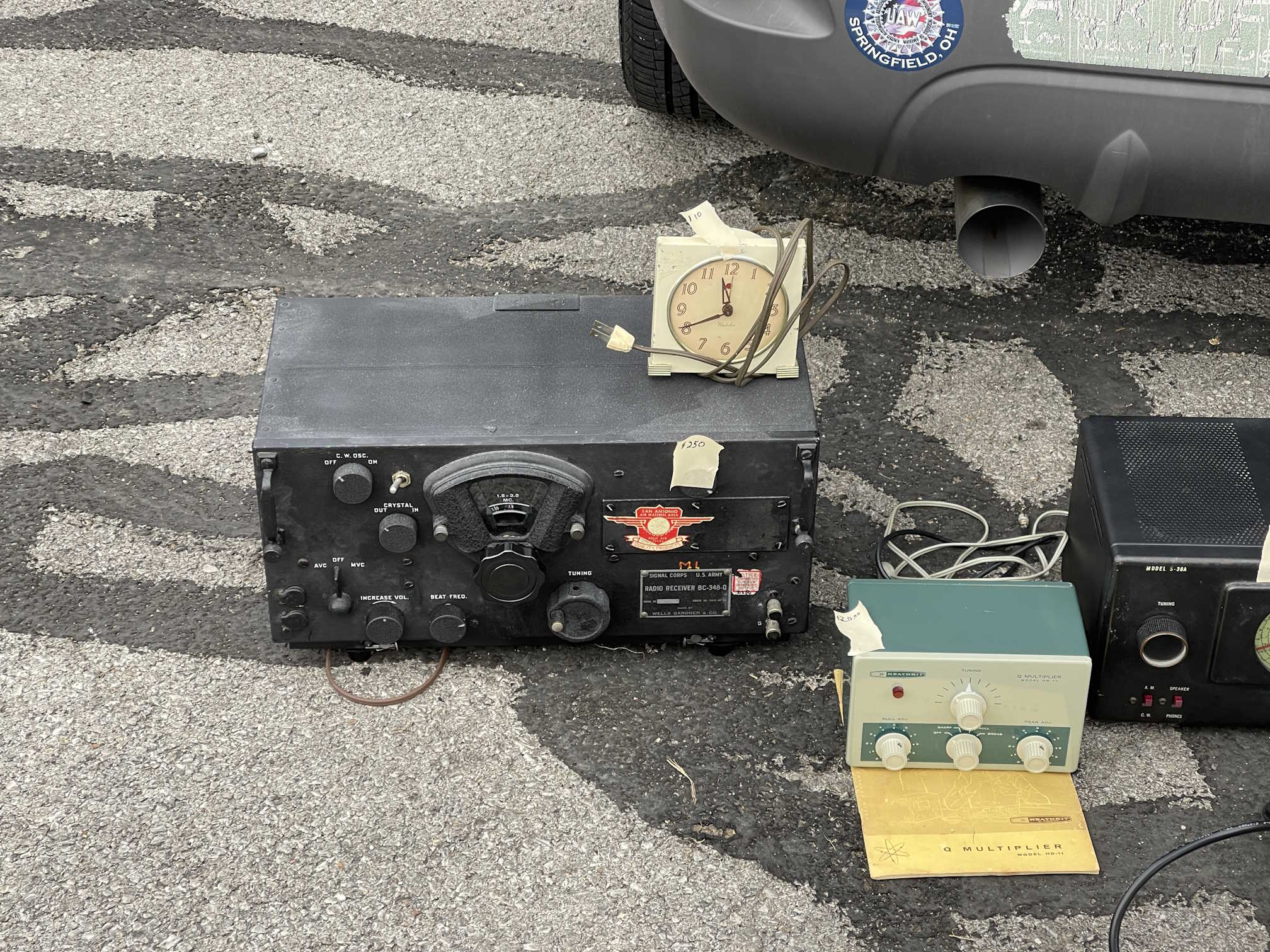
A neat old radio with a just-as-old clock on top.
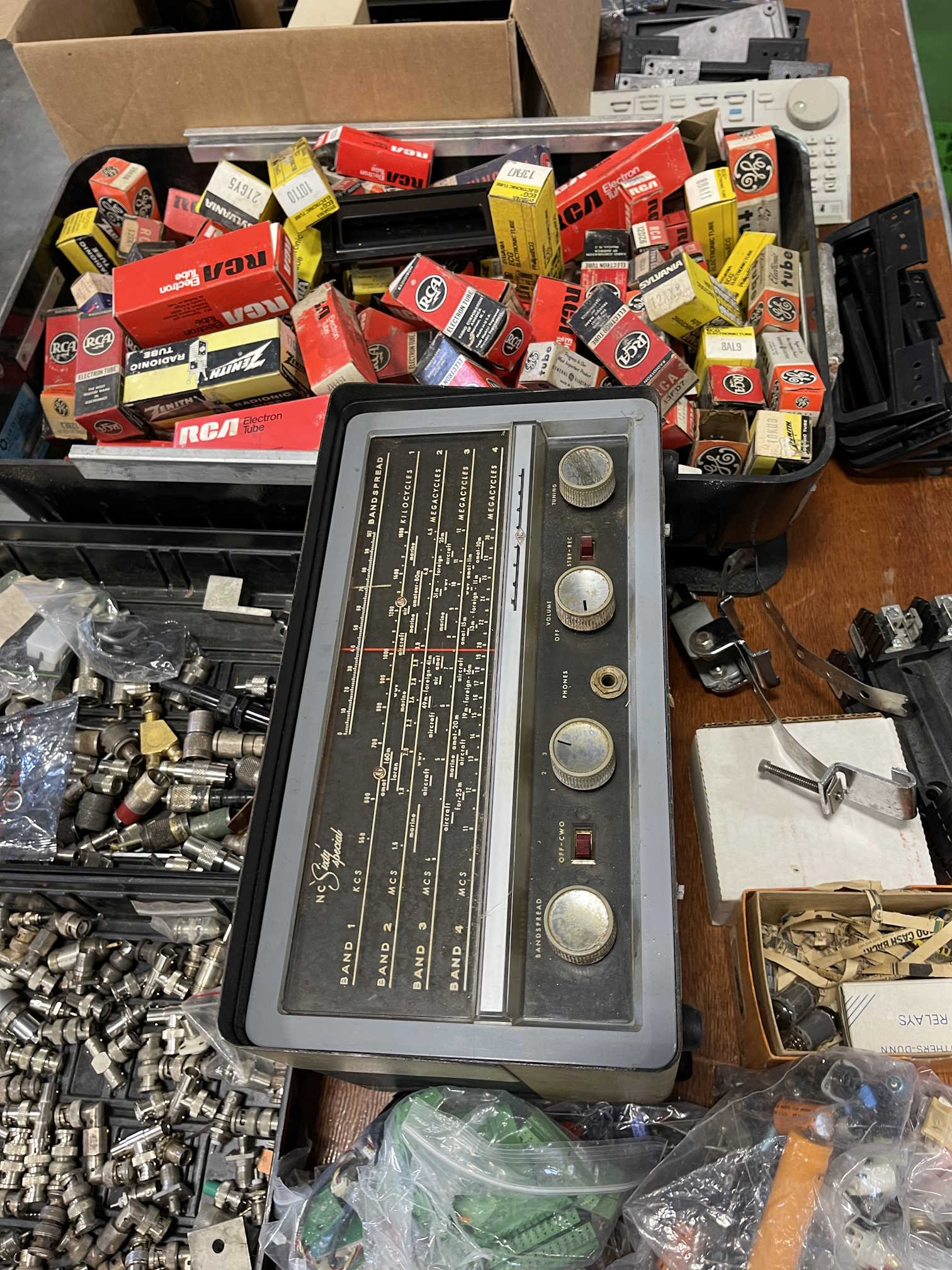
A random radio back down on a table of tubes.
My fellow show-goer checks out a record player.
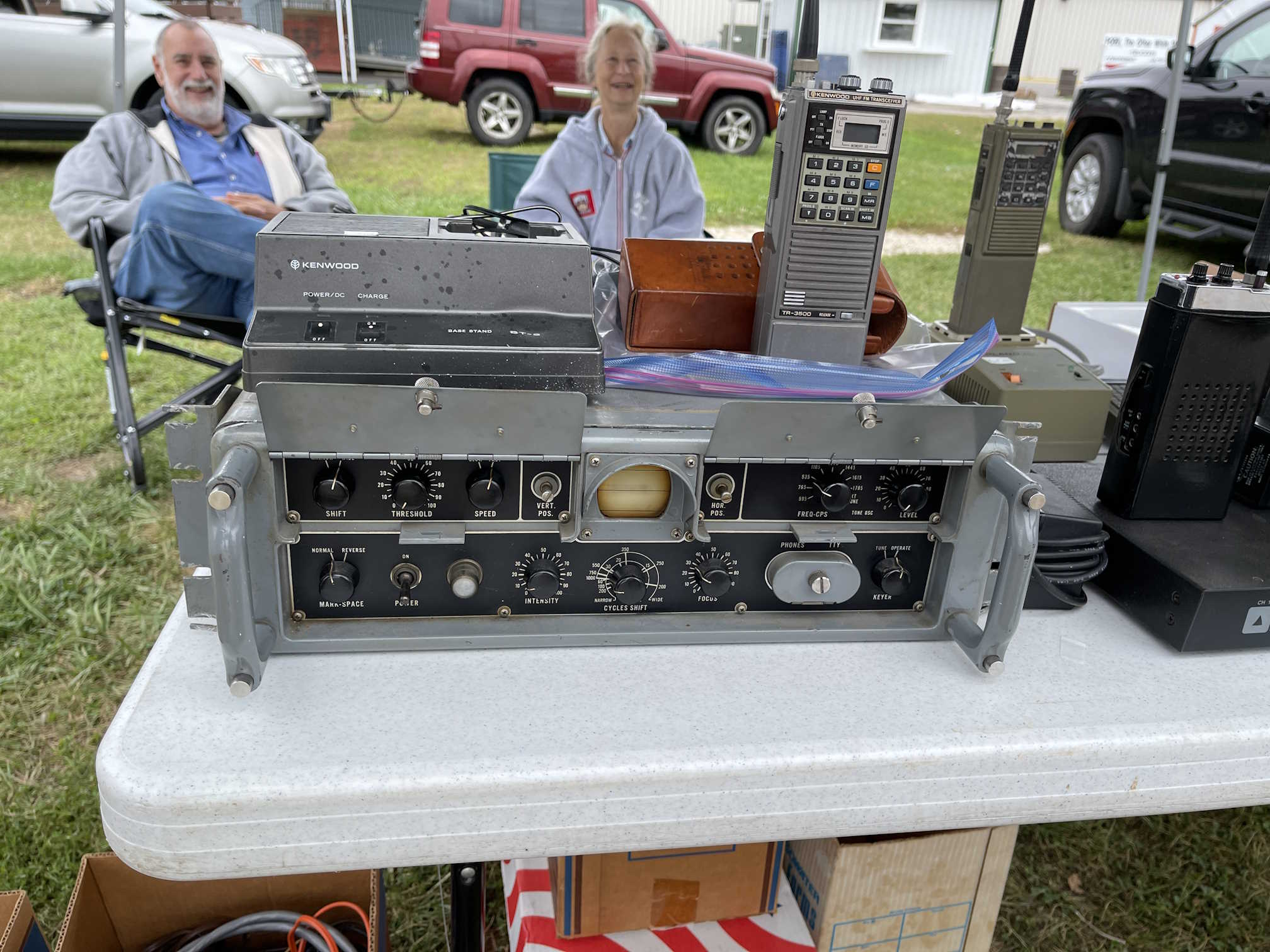
A piece of gear designed for RTTY service.
An old DuMont scope and a unique signal generator.
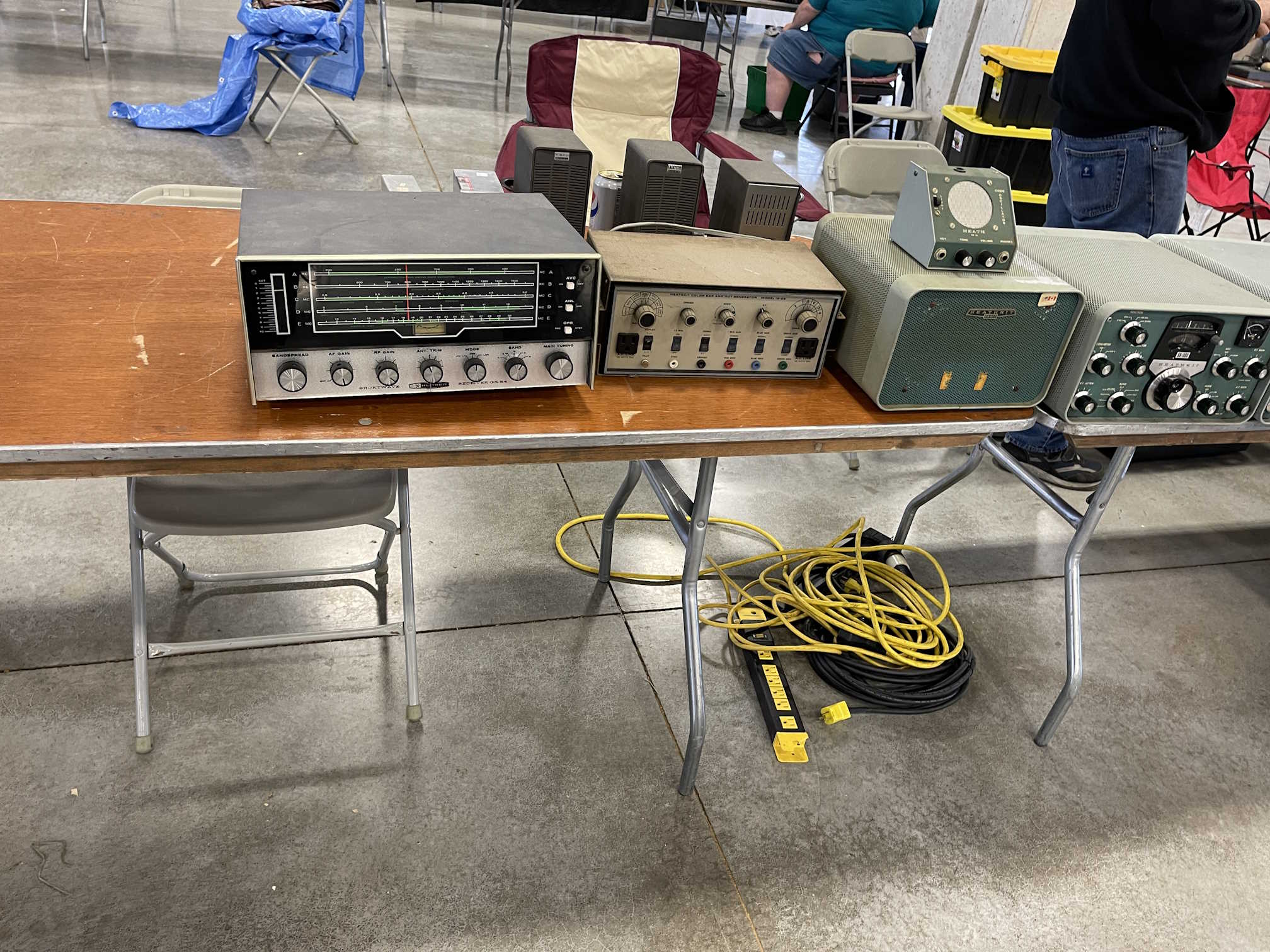
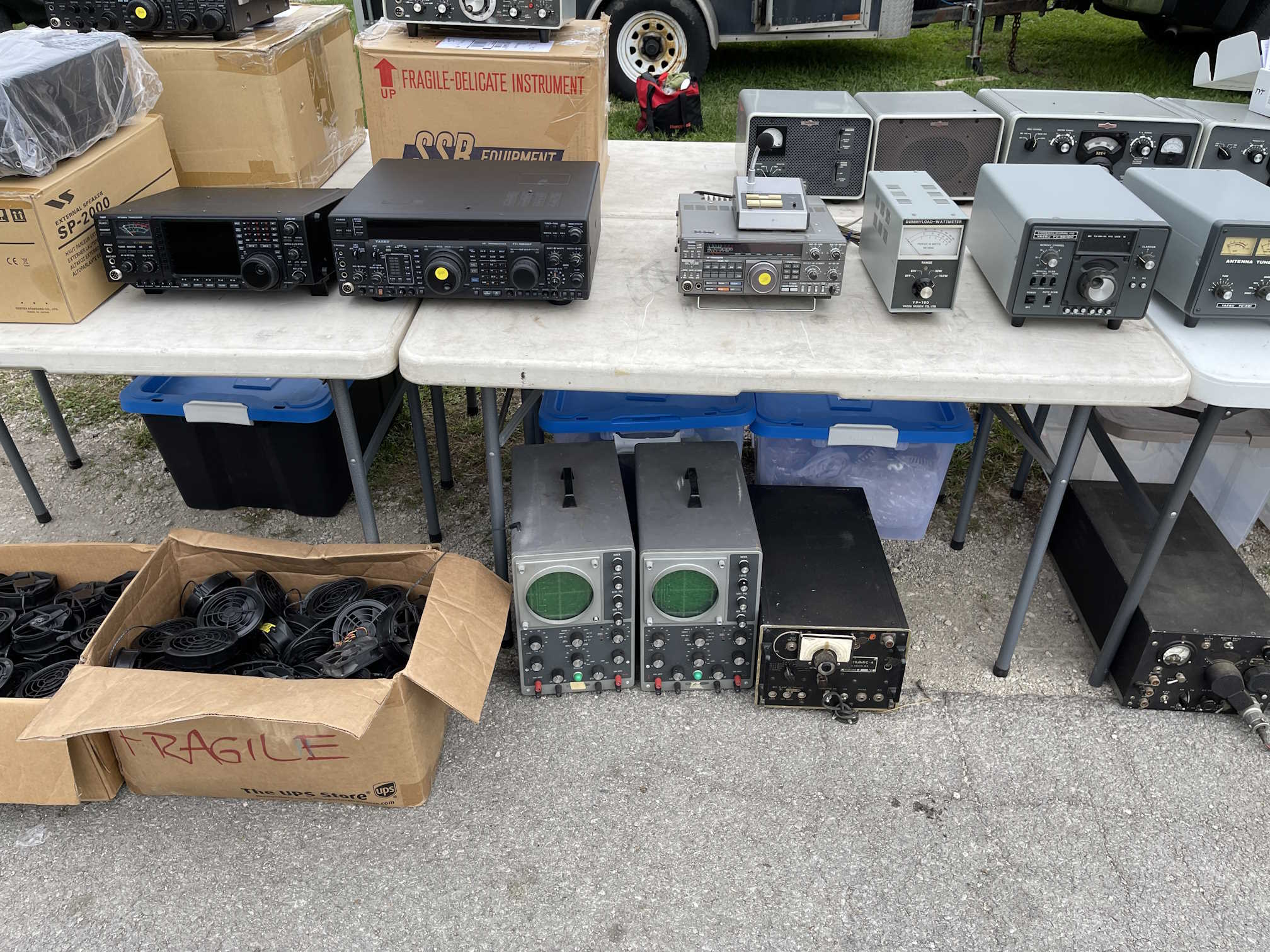
Heathkit scopes and 80s radios.
More shortwave radios.
Lots of genuine switchcraft plugs.
This vendor was keeping the show grounds from blowing away.
Rain threatened but didn’t invade this year, so there was a decent number of vendors and some good stuff to see. Pictures from the show are coming soon, I’m processing them and hope to have them up next week.
I find myself bringing home less and less each year, as I’ve already accumulated as many boat anchors as I can handle, and I didn’t see the few I’d like to acquire at the show. I limited myself to some meters, some oddball parts, and a few collectible items that looked interesting. Nothing really special, just neat.
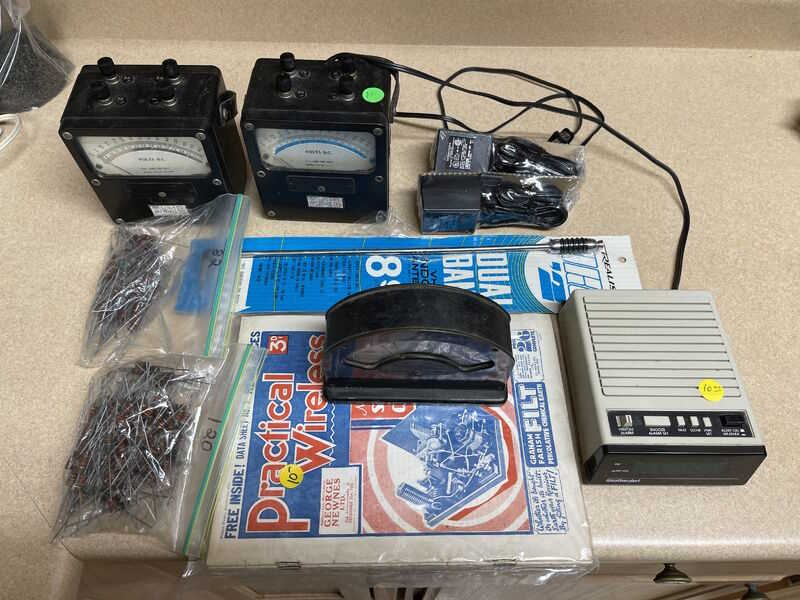
A couple of Weston meters, an antenna for a scanner, some carbon resistors, a weather radio clock, some wall warts that were 50 cents each, and a couple of old UK radio magazines. I’ll probably go back for more magazines, since that guy was local to my home area.