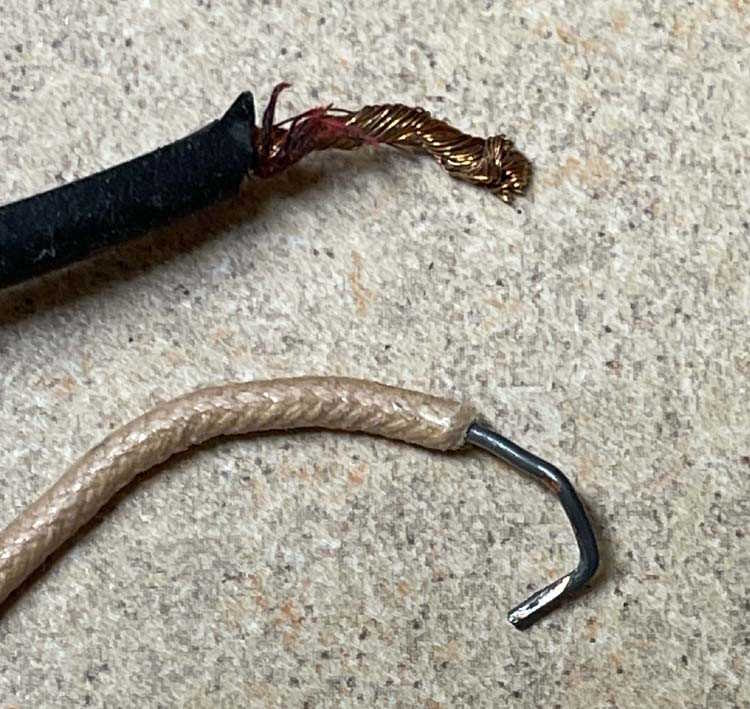
Here’s some wire from the appliance test box I posted about a few days ago. One piece is the line cord, the other some of the internal wiring.
I should mention that this box was rated for 15 amps AC.
The black one is the power cord. It’s nice, heavy, stranded red copper. The closth-covered one? Nah, bro. That’s 18GA and is rated for 14A. Other wire in the box was 18GA PVC coated, and certainly would have started smelling a little funny had you ran this device at max capacity - indeed, that metal toggle on the front had a terminal where the solder had melted away and it was just hanging on by a thread. Something in there had been hot for a long time.
I had made a joke about self-fused wire and a portable house fire in waiting on LinkedIn, but it didn’t go over well. People were getting very upset over it and I decided that was something not appropriate for the audience there. I guess my sense of humor is just strange.
Regardless, this thing wasn’t anywhere near rated for it’s nameplate capacity. I’m really surprised there wasn’t more heat damage evidence on the various connections. All of that old stuff has been removed and discarded, the only thing that will be in use is one of the ceramic sockets and a new meter that I’ll install before use.
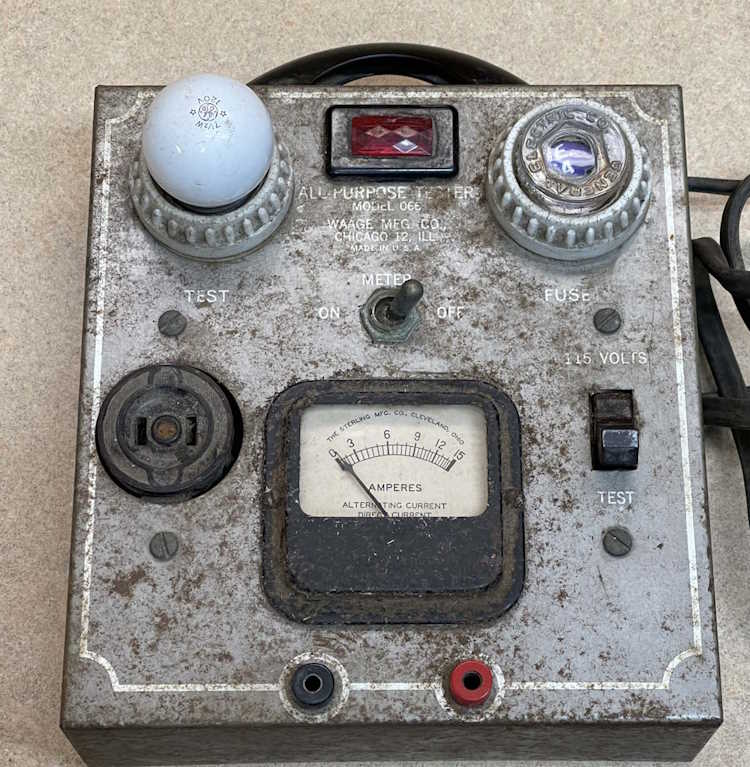
Some time ago I posted about this device that I picked up at the Butler Hamfest. It’s a dim-bulb tester designed for appliance service - Waage made (and still makes) resistive heating element devices, so something like this would be right in line with their products - assuming you didn’t burn the small gauge wire inside the thing up!
(Dim bulb testing means having a lightbulb in series with the device you’re working on - if the device is shorted, the lamp will absorb the voltage, preventing damage to your device, It’s a common tactic in working with old radio and television devices where you could destroy an unobtainable part if something is shorted.)
Since it’s not really of much use to anyone as-is, I think I’m going to try and repurpose this into some sort of display piece. I’ll try and find a voltmeter that will fit the hole, fix the pilot lamp, and place a low-wattage bulb in the one socket. Make it into an accent lamp of sorts.
I think that’s probably the best use for this, as I hate to see it scrapped. Stay tuned, hamfests are starting up for the year and I’ll be on the lookout for a meter.
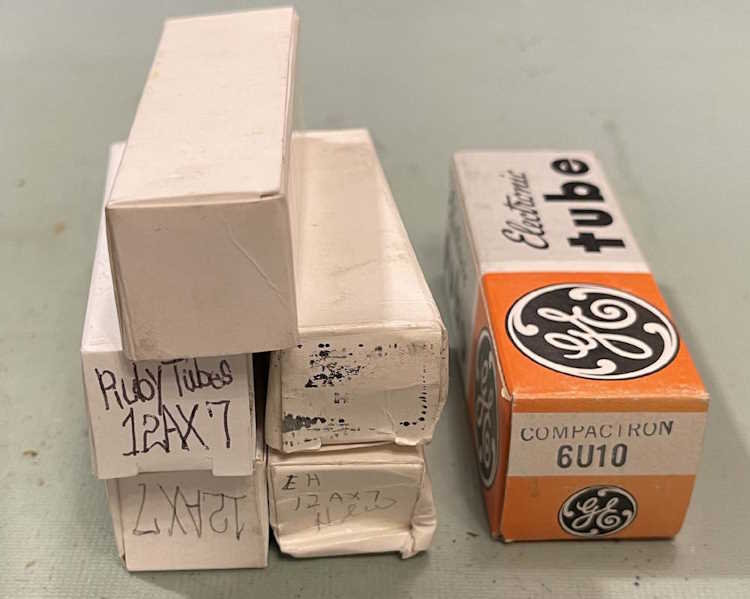
I picked this device up at the MARC hamfest in North Canton. The seller stated “Someone removed all the tubes except one” and he was right. 4 12AX7 and 1 6U10 were required to fill all of the sockets again.
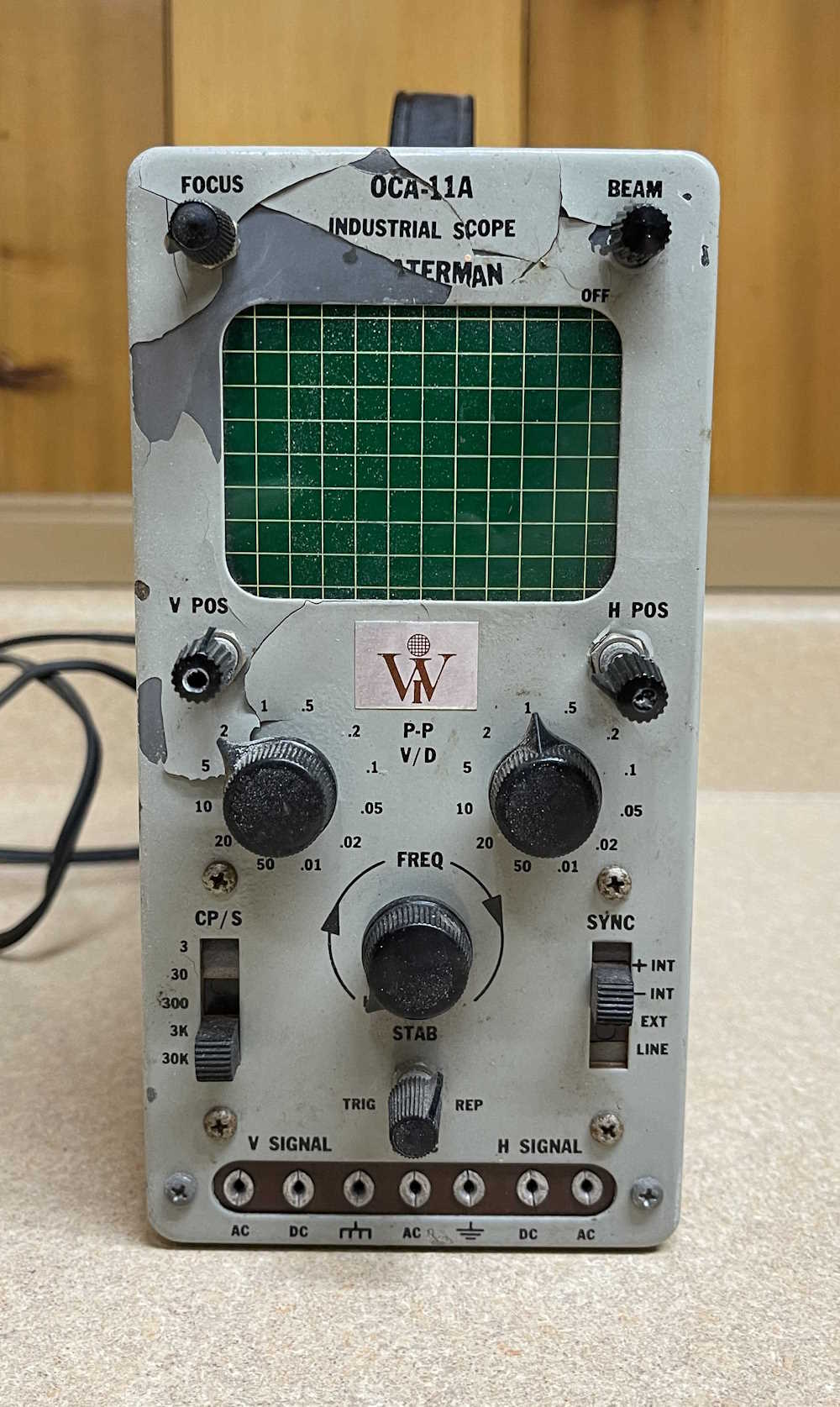
This is the device in question. It looks like it requires both a horizontal and vertical input, but I’m not sure.
Thanks to Bob @ hamtubes.com, I was able to acquire the necessary tubes. I’m not sure why they were removed, they aren’t really that much unless you want old RCA branded 12AX7. The 6U10 compactron isn’t expensive at all. I chose Russian and Chinese 12AX7 because this is an instrument, not an amplifier.
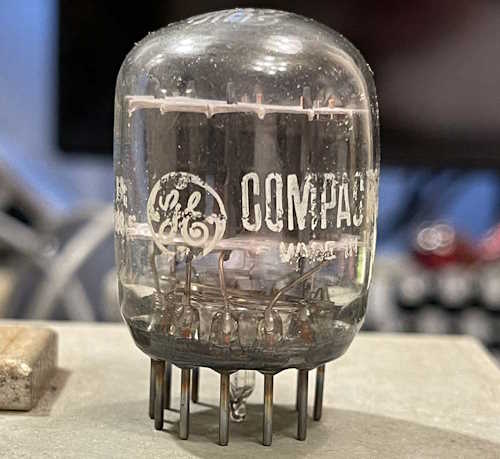
A little bit about one of these tubes: the 6U10 “”compactron” was the last gasp of the tube industry. Packing up to 4 devices in a single shell, this was an attempt by GE to reduce the number of tubes required for a television set. Had these come out before the transistor era started, we might have seen more elements in a single tube, but we didn’t, and the rest is history. This particular device contains 3 triodes - probably why it was removed by the previous owner.
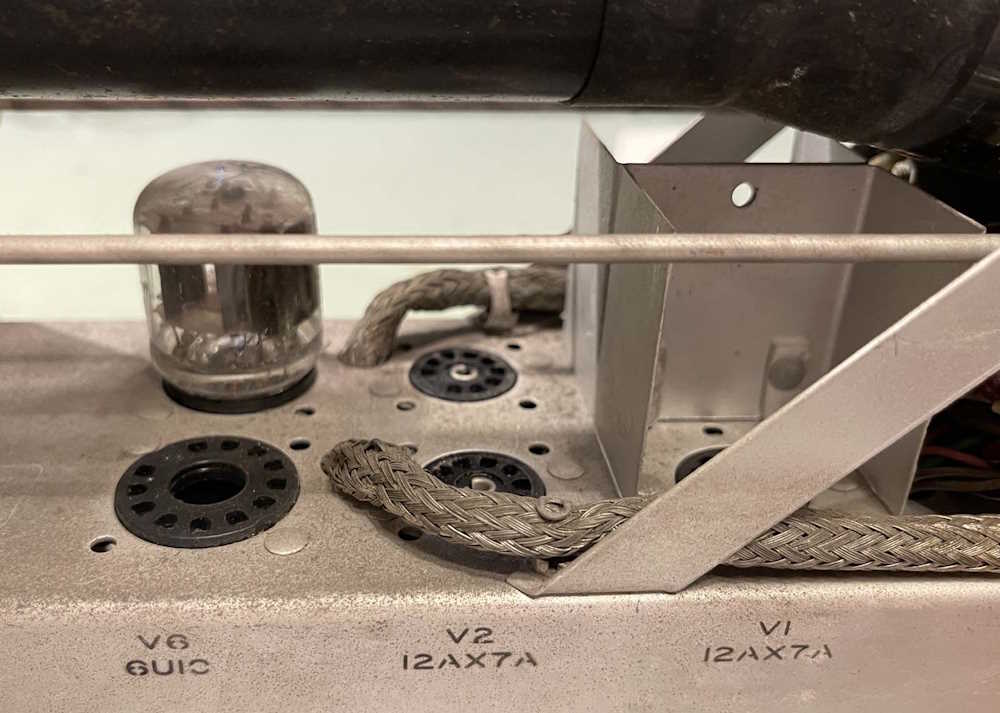
So let’s open it up and populate things. Indeed, it is empty in here:
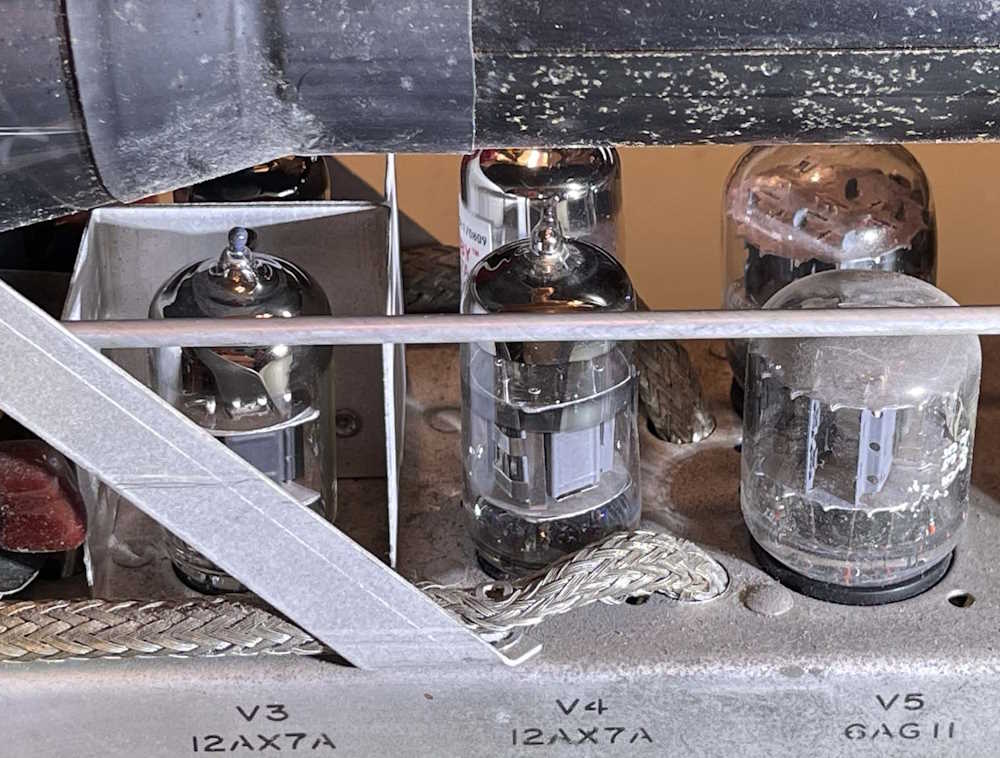
And now it’s full:
Some of these tubes were hard to get in to their respective sockets.
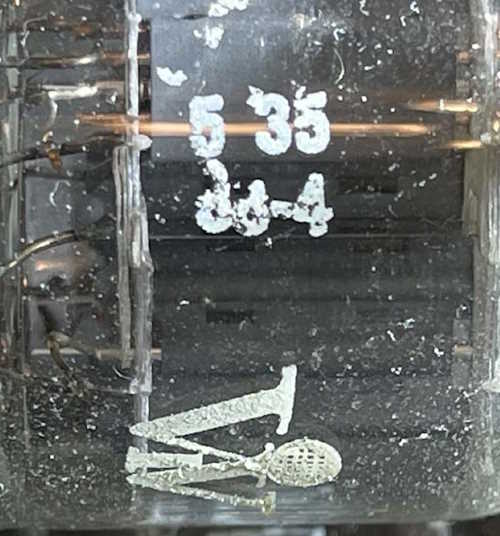
I did notice the one remaining tube was Waterman branded. That’s too bad, the others probably were too. I wonder who made these - maybe I’ll pull it out sometime and see if it has an EIA code on it.
Ok, so…let’s try it. Checking across the line cord I get…nothing. Mmmmm that’s not good. No external fuses, so what’s wrong here. Start with the line cord, it goes to the fuse, then to the switch, then to the ….nothing.
Power switch is bad. It’s pretty corroded, so no surprise. Well, I’m out of time for this particular device at the moment, so a note and set it aside. Stay tuned for the next part where we turn it on for reals!
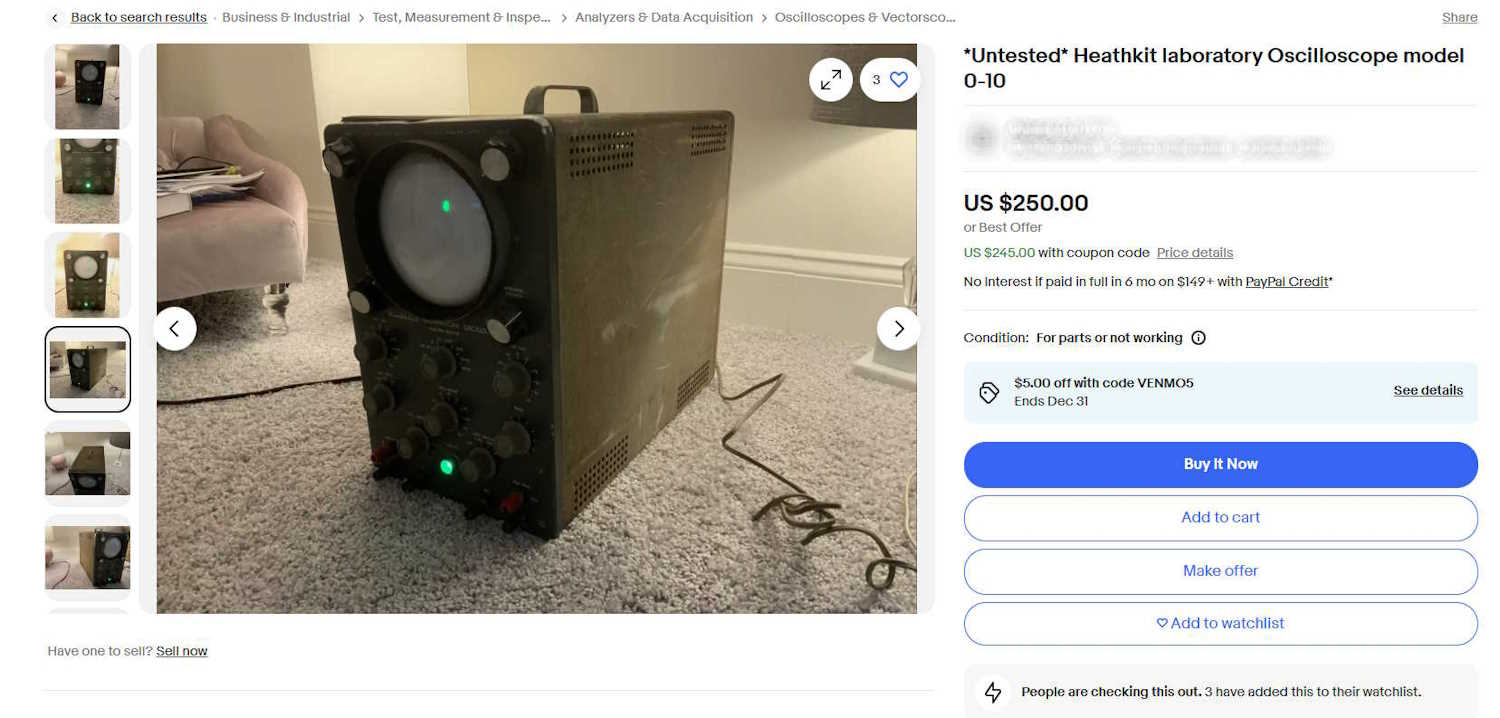
For the most part, the stuff I see on eBay that I like is reasonably priced. Some is excellent, some is “Let me offer you a little less”
There there’s this one. Maybe the person doesn’t know what they are offering, or maybe they think because it’s “old” that it’s valuable beyond compare. Who knows, but this thing looks like B.O.B. from the Black Hole. I can’t really tell what’s happened to it beyond it’s Seen Some Stuff. Bent cabinet, bent control shafts, but surprisingly it still works. This is a $5 hamfest “Please take me” sale.
$250? Maybe if it was still in the box, and the box wasn’t opened.
After digging in to this unit, I determined that it was a basket case. While the unit itself wasn’t baked, the builder most certainly was. Probably less than 1 out of 5 wires in this thing (that weren’t bare interconnects on switches) was soldered securely. The rest? Bad or no solders, wires pulling out of their terminal, no wetting, too much solder, blobs everywhere. Burnt wires, solder drips…you name it. This thing was a how to on how to not solder. I realized that if I wanted to see this thing work reliably, it was going to be a partial rewire.
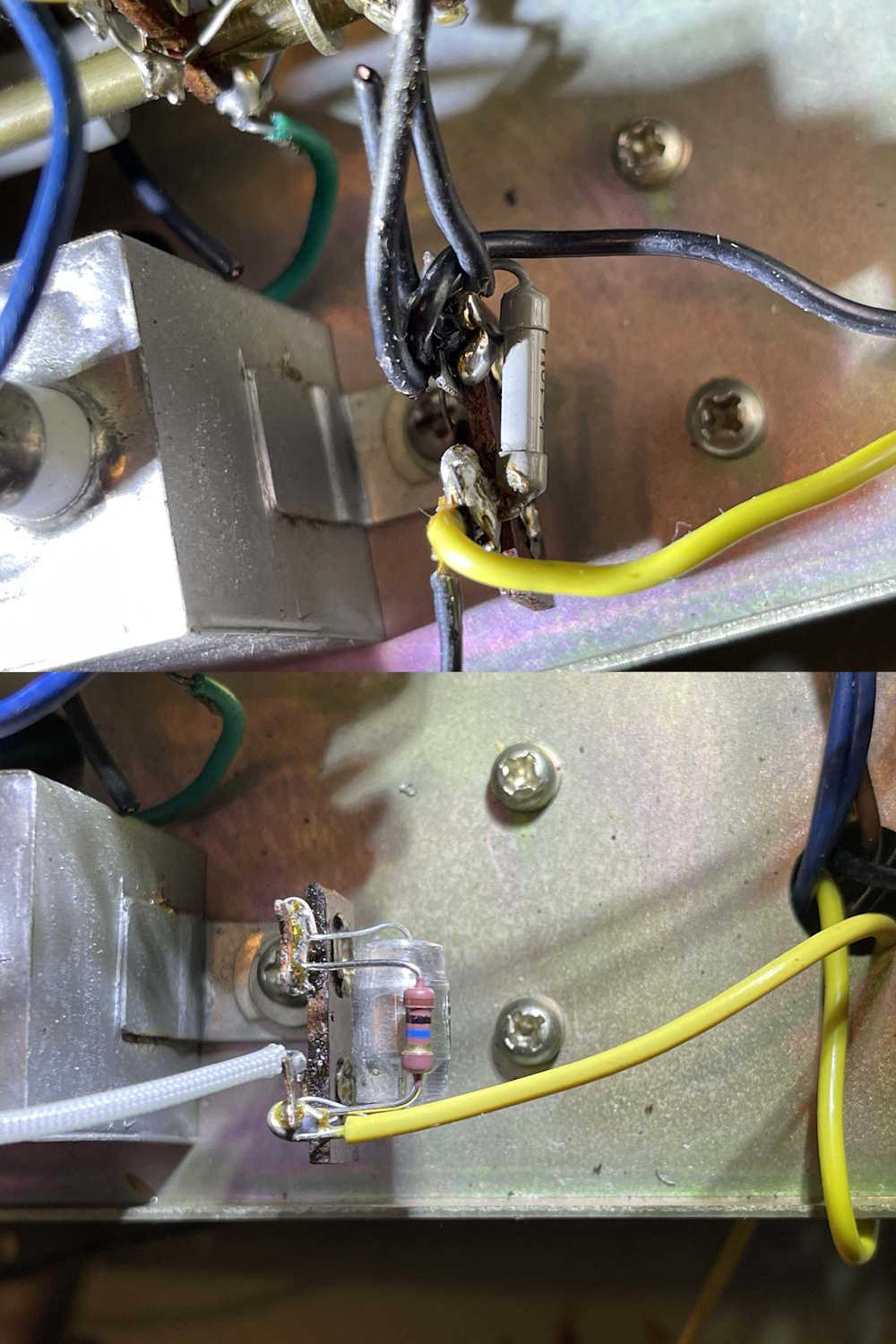
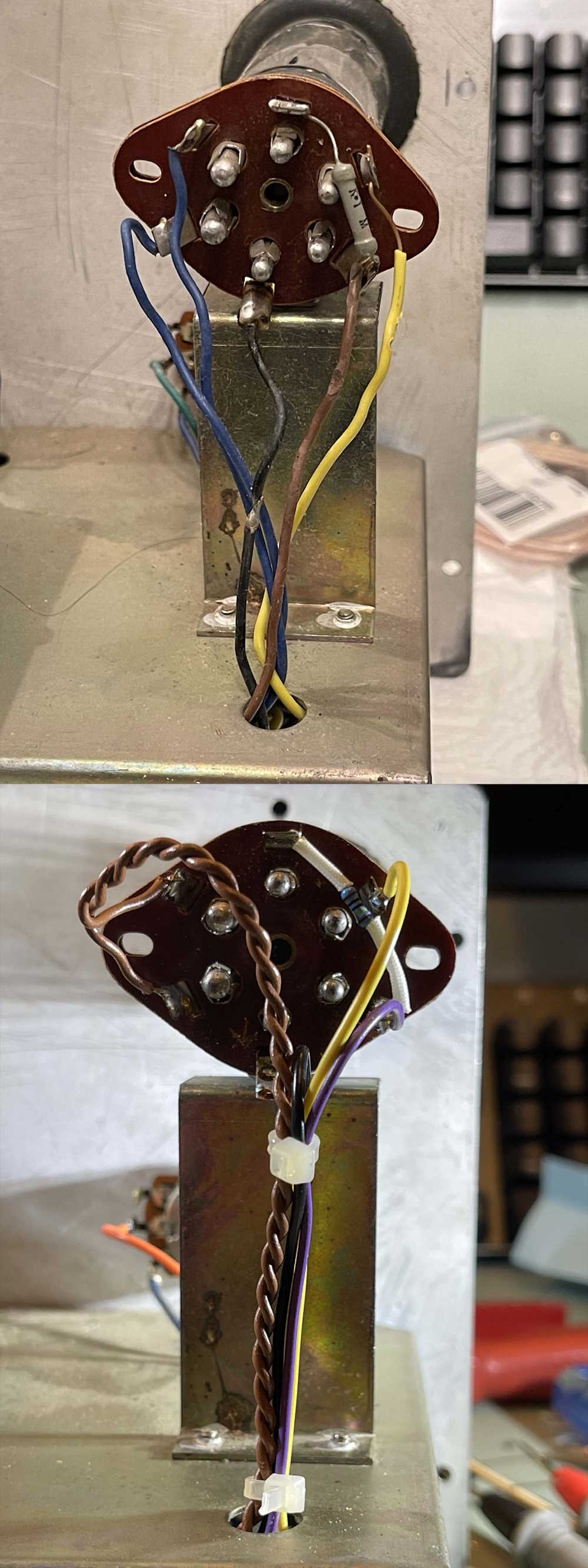
Here are some before and after shots of the cleanup crew’s work:
First is part of the drive for the eye tube. This consists of a capacitor coming in from the terminals on the front, a 1500pF capacitor, and a 10MΩ resistor on a terminal strip…with lots and lots of grounds attempting to terminate here as well.
All of the grounds were removed and single-pointed back to the other side of the chassis. The old parts were replaced with new, high quality parts - the input capacitor went from one of those leaky metal can Japanese parts to a new film cap, the 1500pF ceramic disk (with half it’s coating missing) is now a 600V polystyrene, and the resistor is just a good metal film part. The terminal is now clean with a single wire leading to it. Unfortunately, since the screw for this also holds the 4μF capacitor, I couldn’t solder it down, but it’s tight and clean.
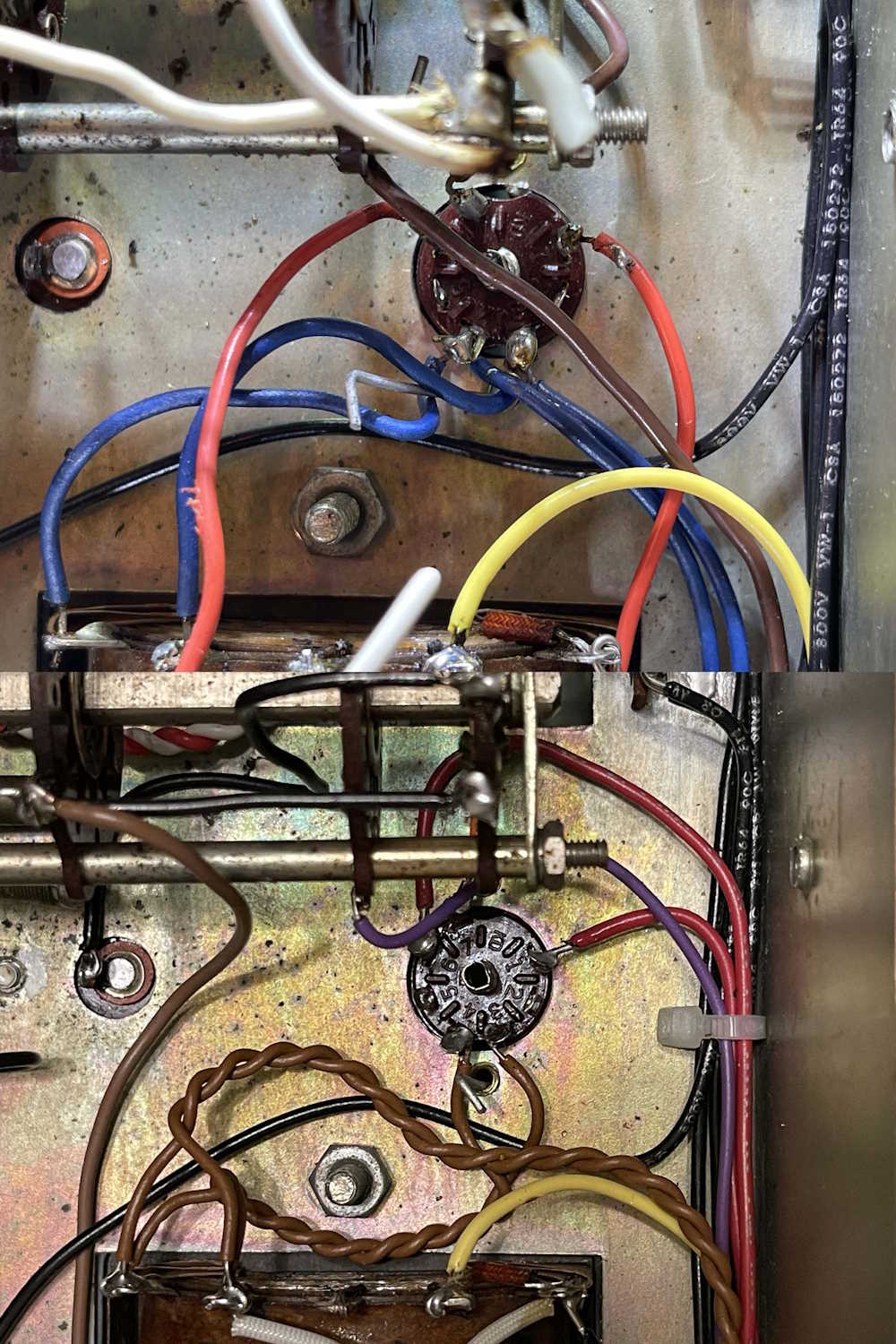
Next is the socket for the eye tube. Almost every wire is burnt in some place, be it here or below the chassis. The black wire is j-hooked together, and the yellow wire has far more exposed copper than is safe. Even the 1MΩ resistor is poorly placed, having too much lead on one side and a “Oops, I cut it too short” lead on the other. Here it was just rewiring everything with fresh wire and properly twisting the filament leads. The resistor now lays in the socket with the proper spaghetti coating.
Last is the tube socket for the power supply. This has quite a bit of voltage on it, so it needed cleaned up. Twisted filaments, and fresh wire leading directly out of the socket fixed this one. I admit that the copper is a bit too much, but I’m happy with the results overall. The previous build had some solder balls here, and the fialments were all terminating to this point. I’ll brush this down to get the flux off before final inspection.
Prety much everything except for a couple pieces of coated wire and a couple of capacitors that are still good have been or are being replaced, including the big 500Ω balancing resistor that was flopping around the transformer. Even the AC has been moved off to it’s own isolated terminal strip for ease of disconnect in case of trouble.
I’m waiting on some Blue wire for the measurement section of the device (I’ve tried to keep the original color scheme as much as possible) so hopefully this will be done in a week or so. Stay tuned for the final part of the build, coming soon!
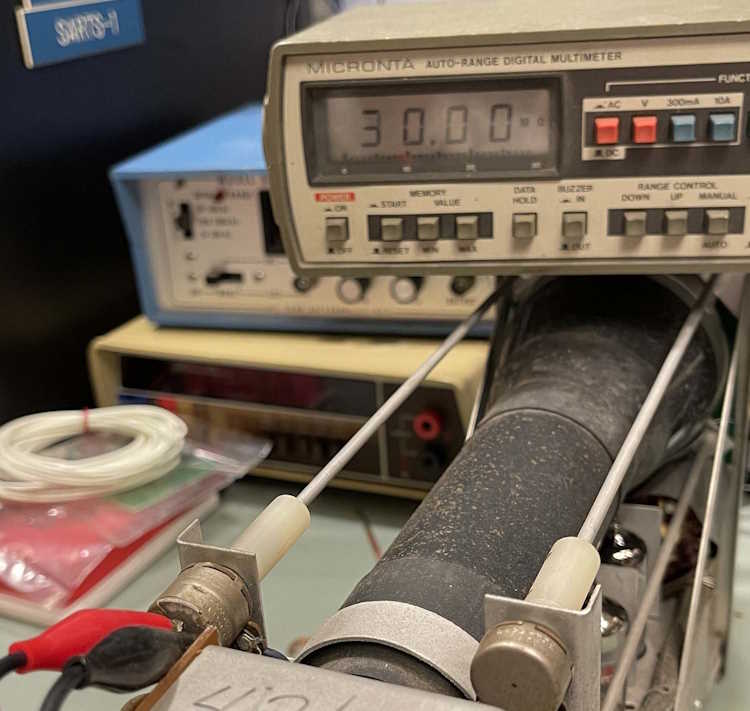
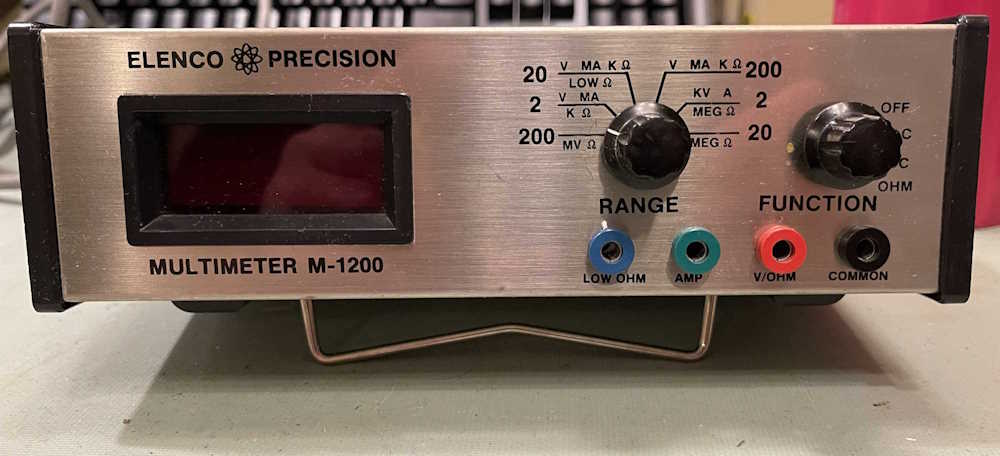
I didn’t need this device, but it came home with me as part of my “Can’t leave the hamfest without a voltmeter” program…It came from Fort Wayne and was a couple of bucks.
The real reason I picked this up is because of the design. This is so 1970s it hurts, although it probably was made in the 1980s. It’s a simple DMM and offers all of the things you’d need in a meter.
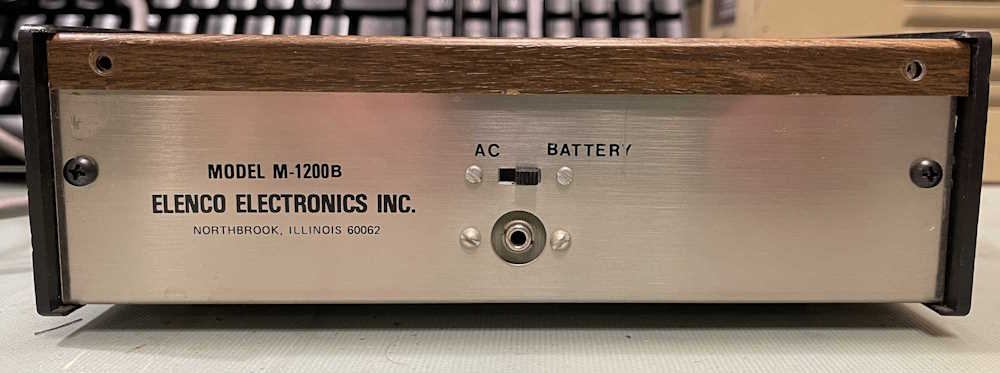
The device can run on batteries or external DC, as evidenced by the back. No mention of the required voltage, however, and the device is old enough that a headphone jack is used instead of coaxial for the power input. Since the device has 4x “C” cell as it’s internal supply, I’d assume the external power should also be 6V.
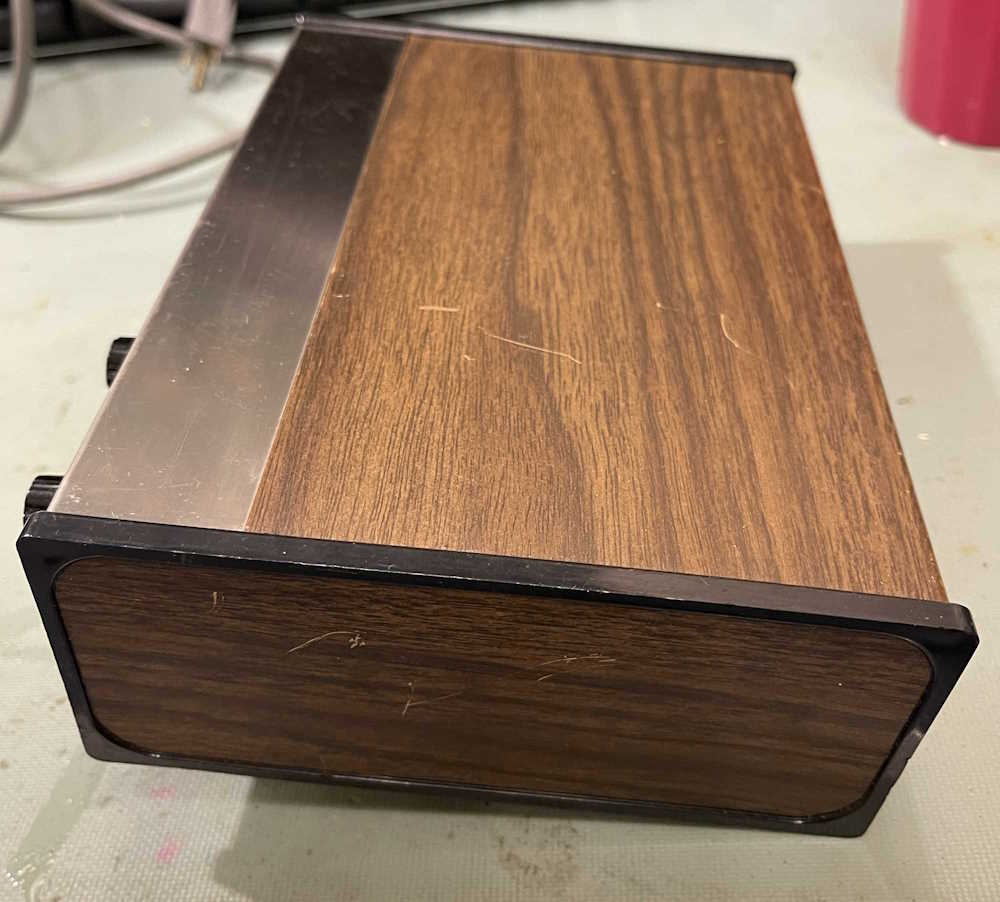
It’s woodgrain all around.
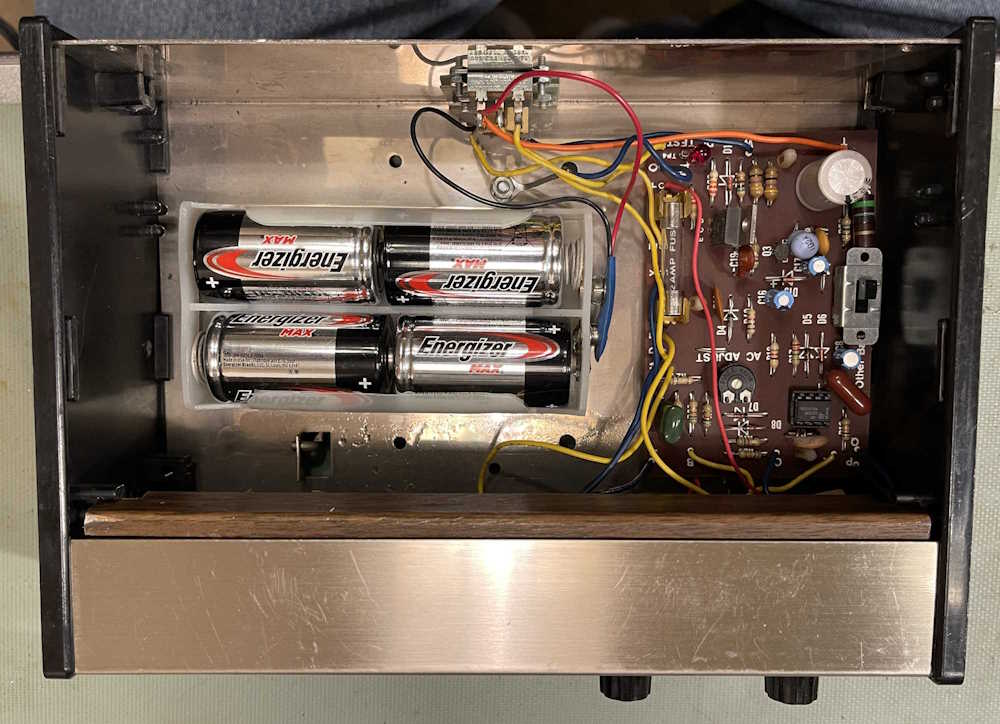
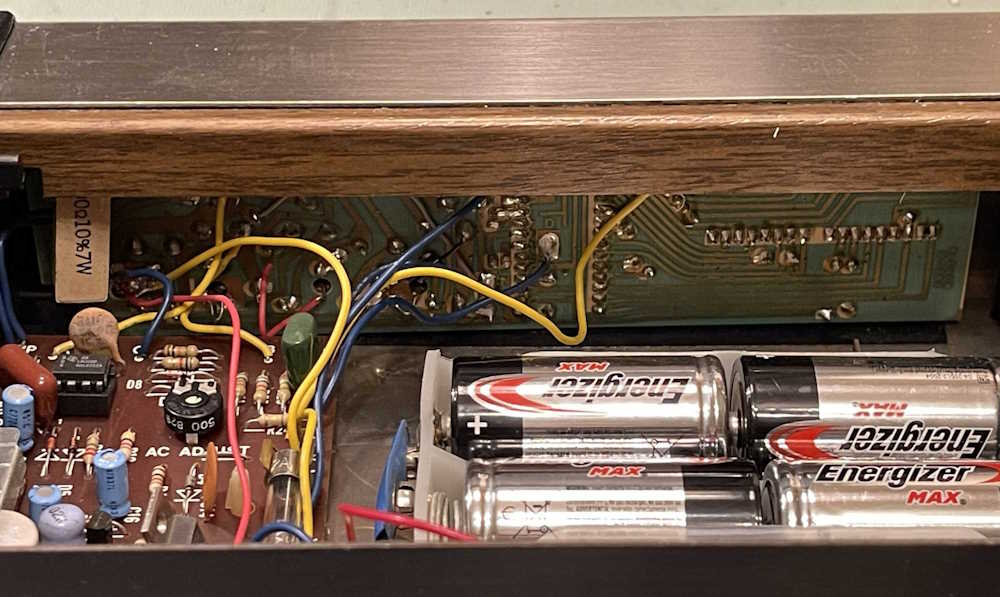
Inside, there’s not much. A power supply board with some circuitry for the meter, batteries, and the business end of the device (under the front panel.) Without the batteries, this thing would be quite light.
Here’s the main board. It’s most certainly an ICL7117 based device, as evidenced by the big DIP in the middle.
But does it work? I hooked it up to a nearby USB charger device, and it did read - although the decimal point was flaky. I had to wiggle the switch a little to get it to show up. (The 7117 is a simple 3 1/2 count ADC with 7 segment output. It’s up to the user to scale it and provide decimal points.) I didn’t check the unit for accuracy, just operation. I did notice a segment seems to come and go as well, so maybe some solder joints are cracked. Who knows.
What’s going to happen to this? If it’s accurate, it will probably go in my rack as a rail monitor. Otherwise, it’s just a cool piece of old tech.
I have a giant pile of crap that needs to go - probably to Hamvention - but I’ve been giving it away as I find people who are interested. A co-worker had a fake NIXIE clock on his desk, so I asked if he wanted some real stuff. He said yes, and here it is:
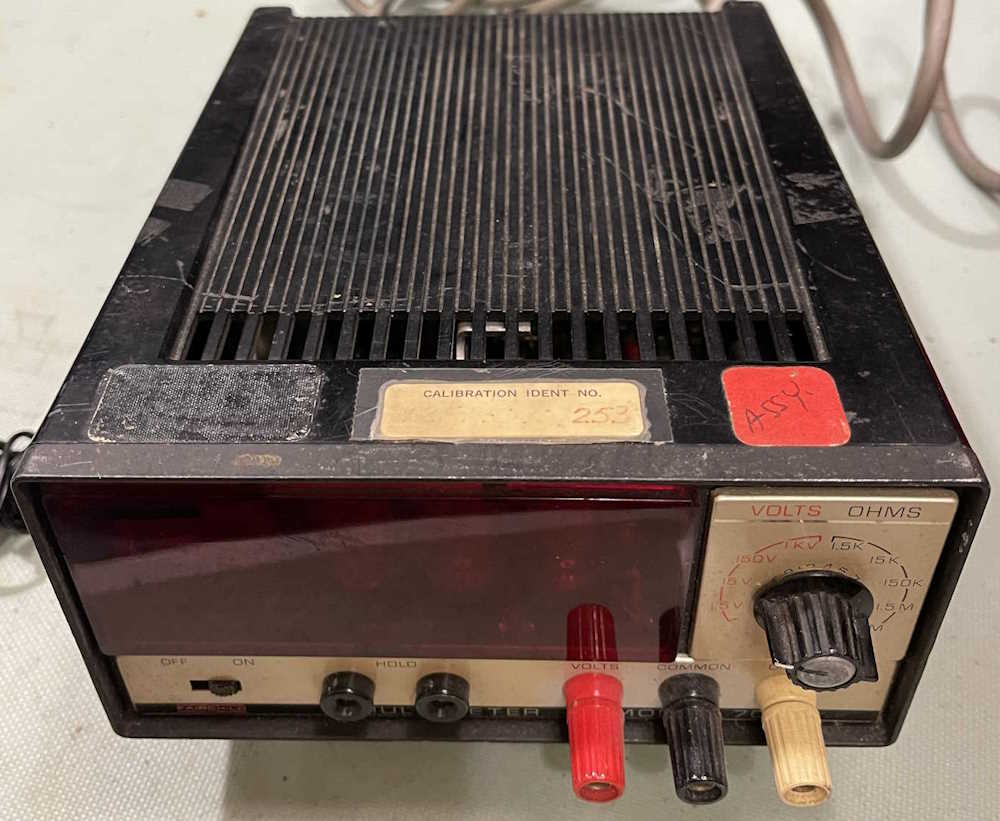
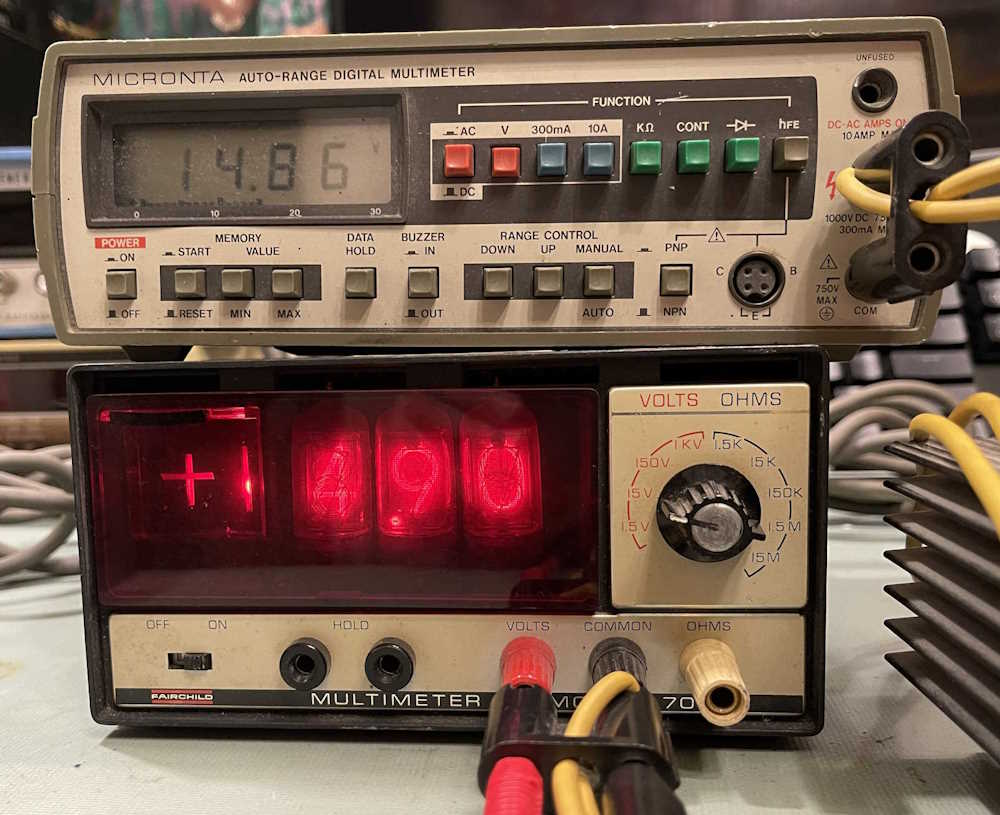
The first is a Fairchild Volt/Ohm meter. It does DC and Ohms. That’s all. It’s intact but rough, and looks like it may have had a handle at one time. Yes, it’s THAT Fairchild.
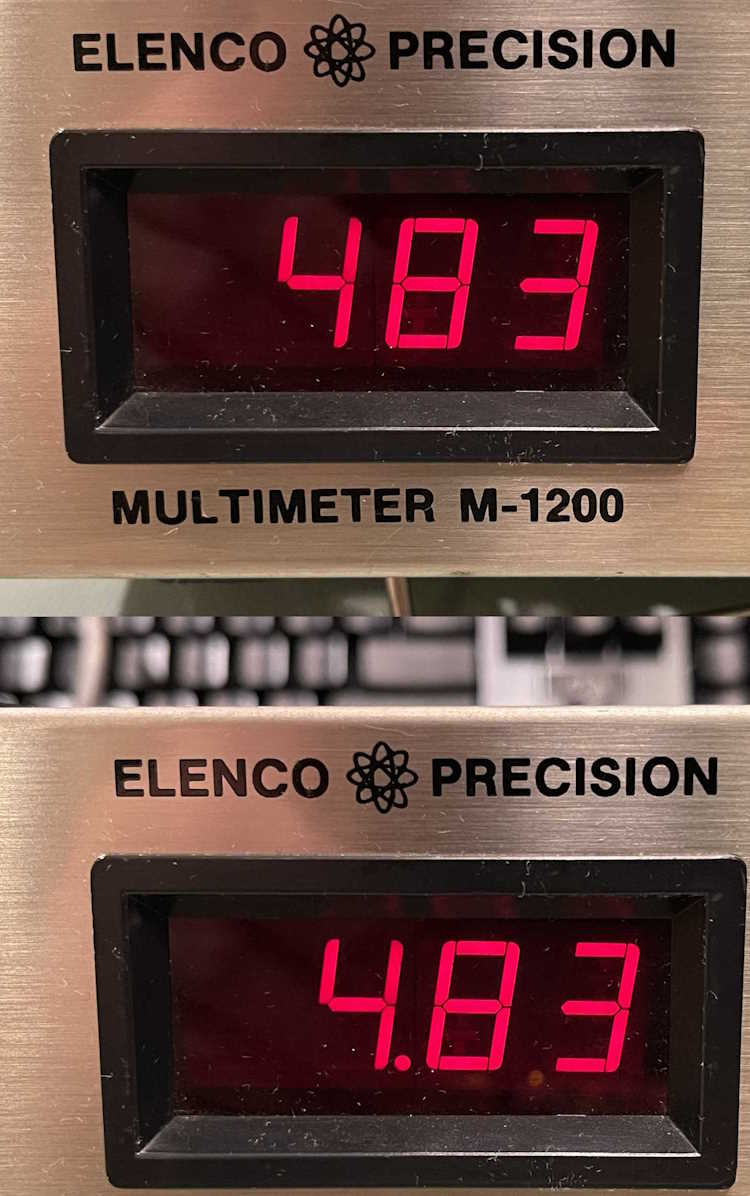
The tubes in this guy are nice and bright, surprising for as poor of condition it’s in. It seems to work, but could use a calibration:
A disagreement of 0.04VDC. Not bad!
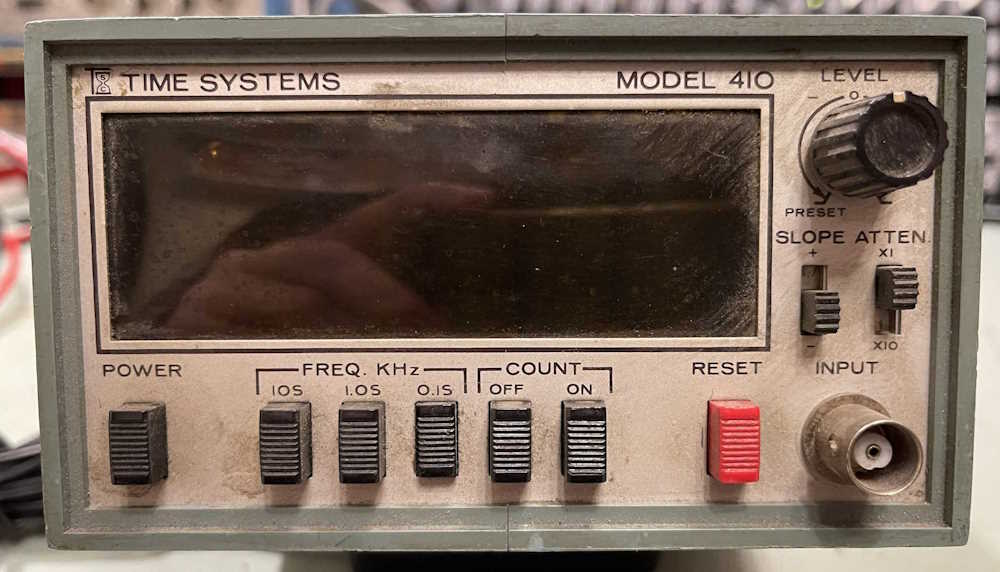
The second piece is a Time Systems counter. This is most certainly a piece of space race equipment put together by a company that sprung up to support the frenzy of the time. It’s a counter/timer with three ranges of measurement.
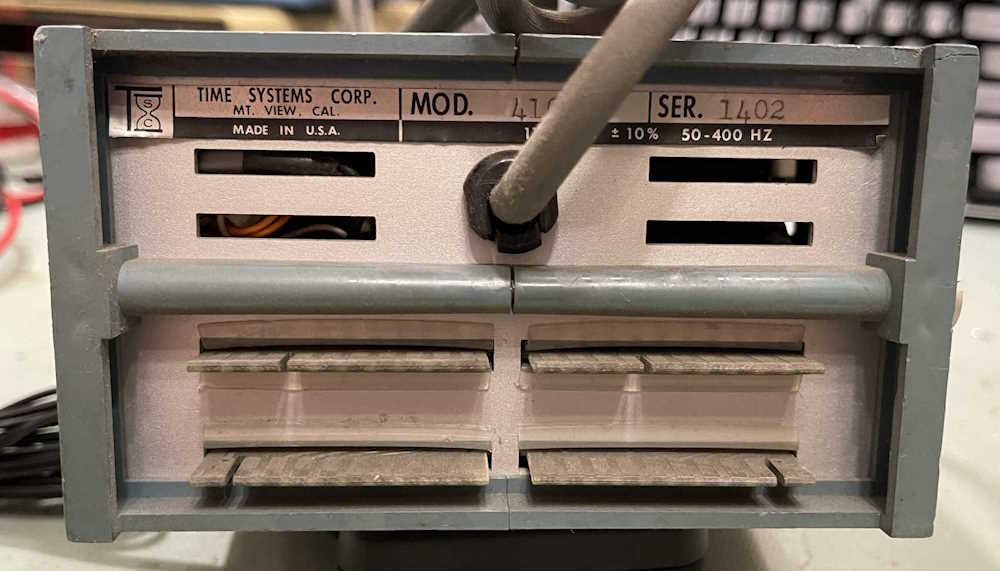
The back has a bunch of card edges on it. Probably brings out all of the data from the timer, but in what format - who knows.
There’s very little information about this company, and too many businesses today named “Time Systems.” I have to assume they’re like all these little companies from the period - appeared and made some equipment, 10 years later when technology made things cheaper they just kind of faded away.
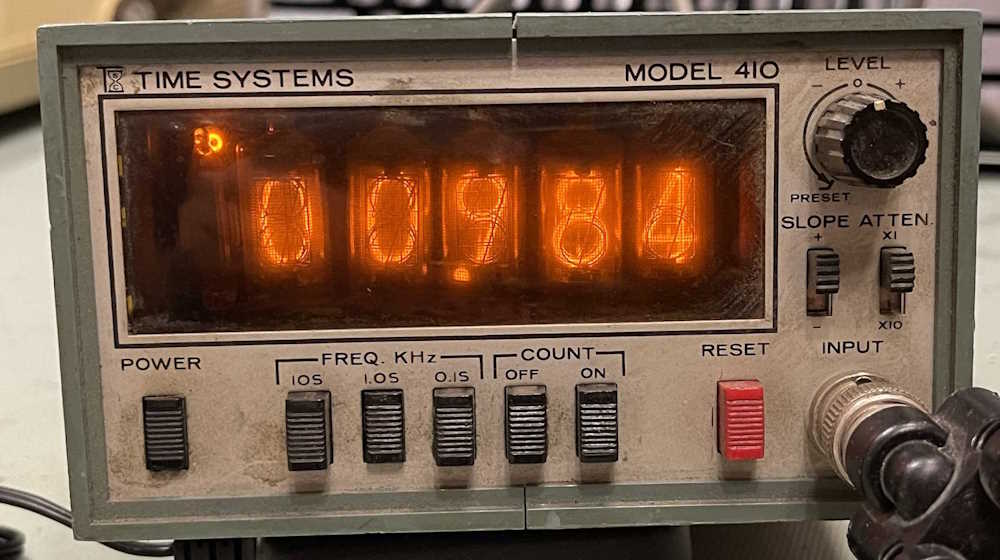
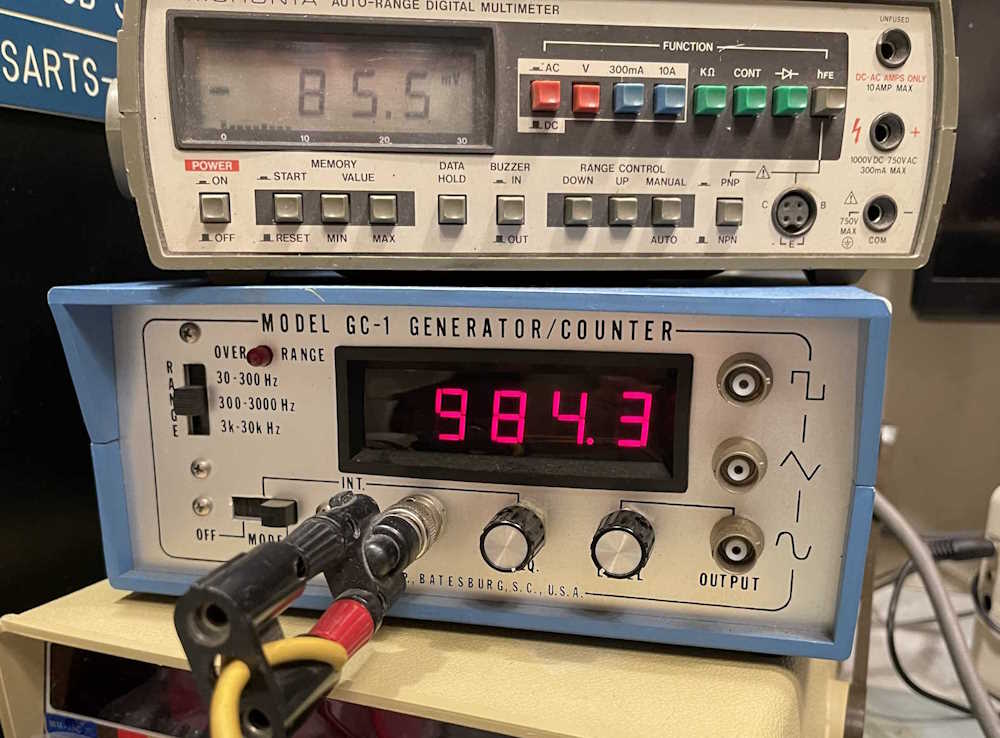
Let’s set the generator to 1kHz and see what this thing does. The switches need a good cleaning, as they need to be wiggled to get the clock to run. The measured value is what I know my signal generator outputs at the given selection, so we’re good.
Testing against my “known” device:
These are off to their new home. Stay tuned for more Junk from the Hamvention Pile, I mean “Projects from the Bottom Drawer!”
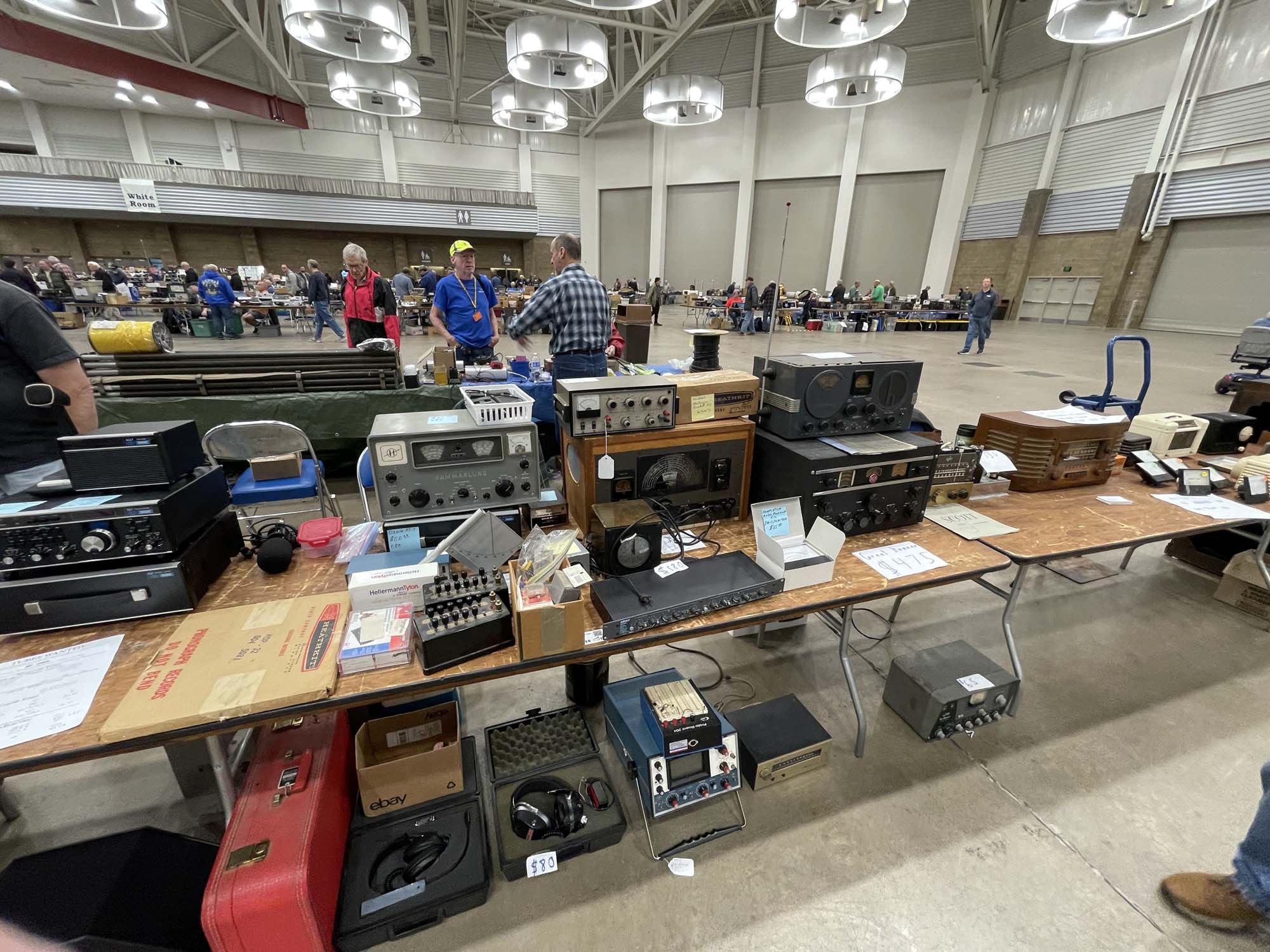
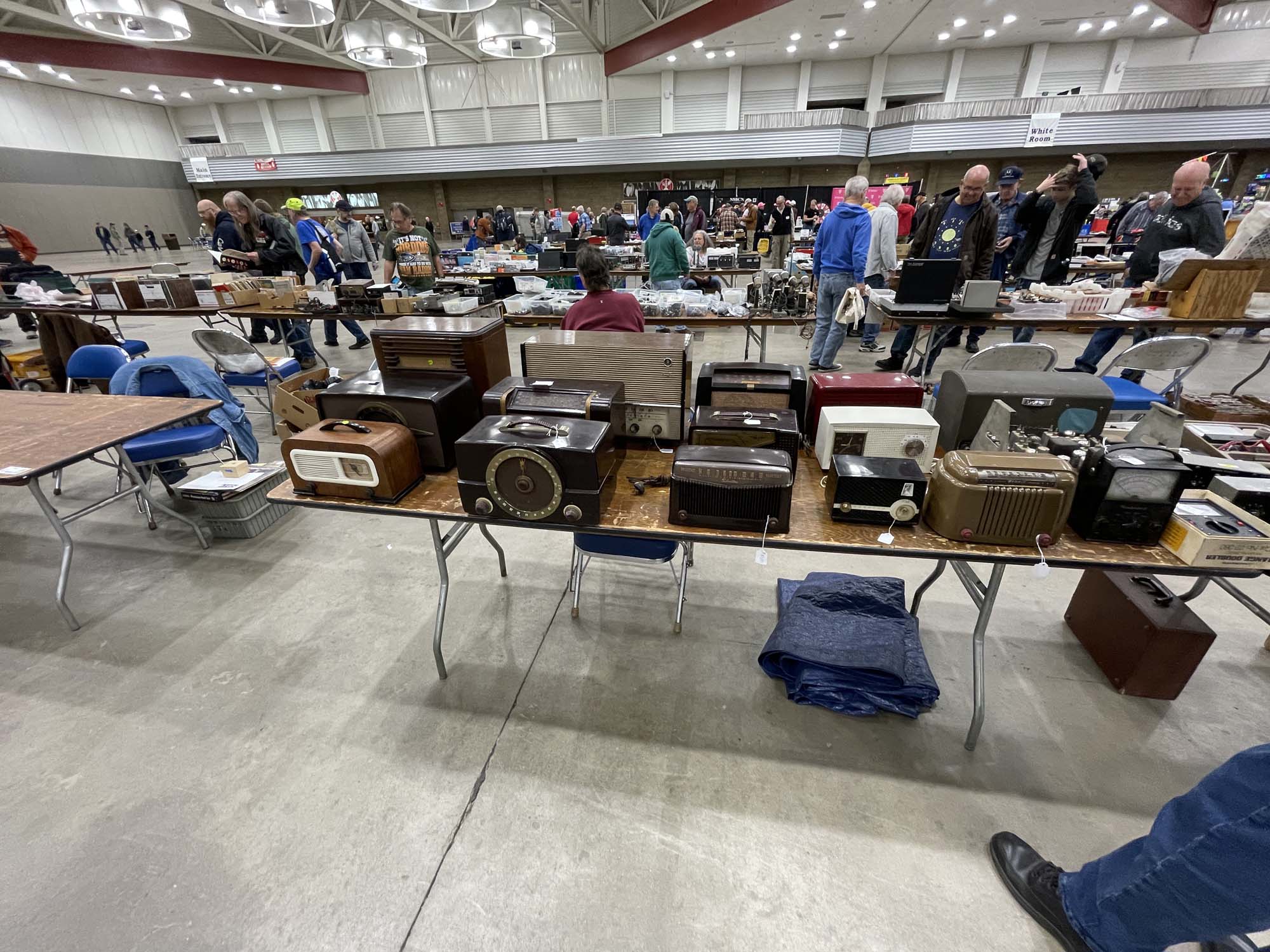
The show this year was smaller than usual, occupying maybe 3/5 to 3/4 of the normal space, with a large section left empty. Prices at this show ranged from ok to stupid, which is kind of unusual as this show usually features pretty good values. There were a couple that simply were smoking crack and asking prices that would have been appropriate years ago when the equipment was newer.
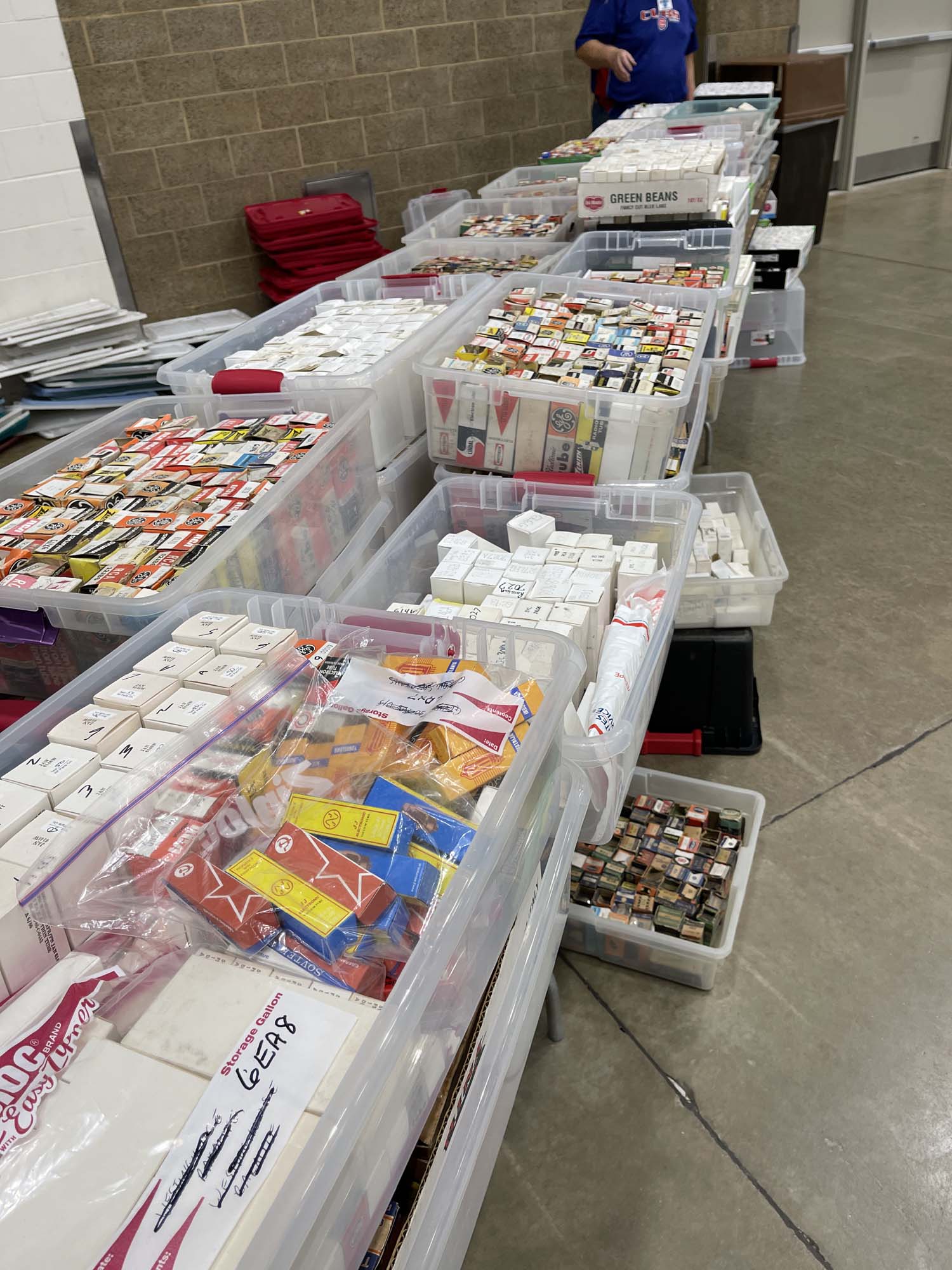
I primarily went to get a bunch of tubes from Bob at hamtubes.com - he always has really good prices on tubes both rare and common, so that’s where I spent the bulk of my purchase money. A few other things came home with me, including a couple that will get featured here as soon as I can get to them.
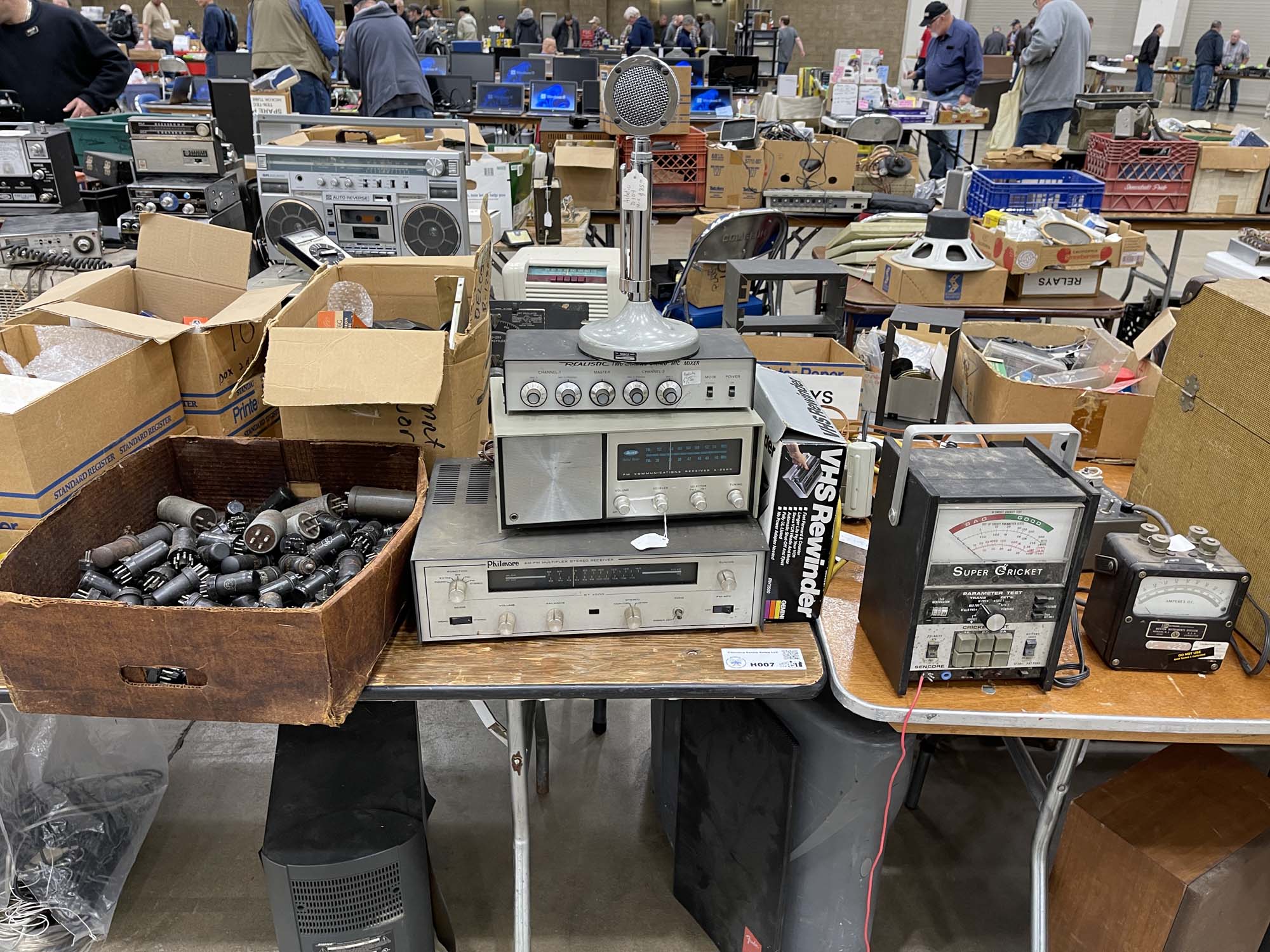
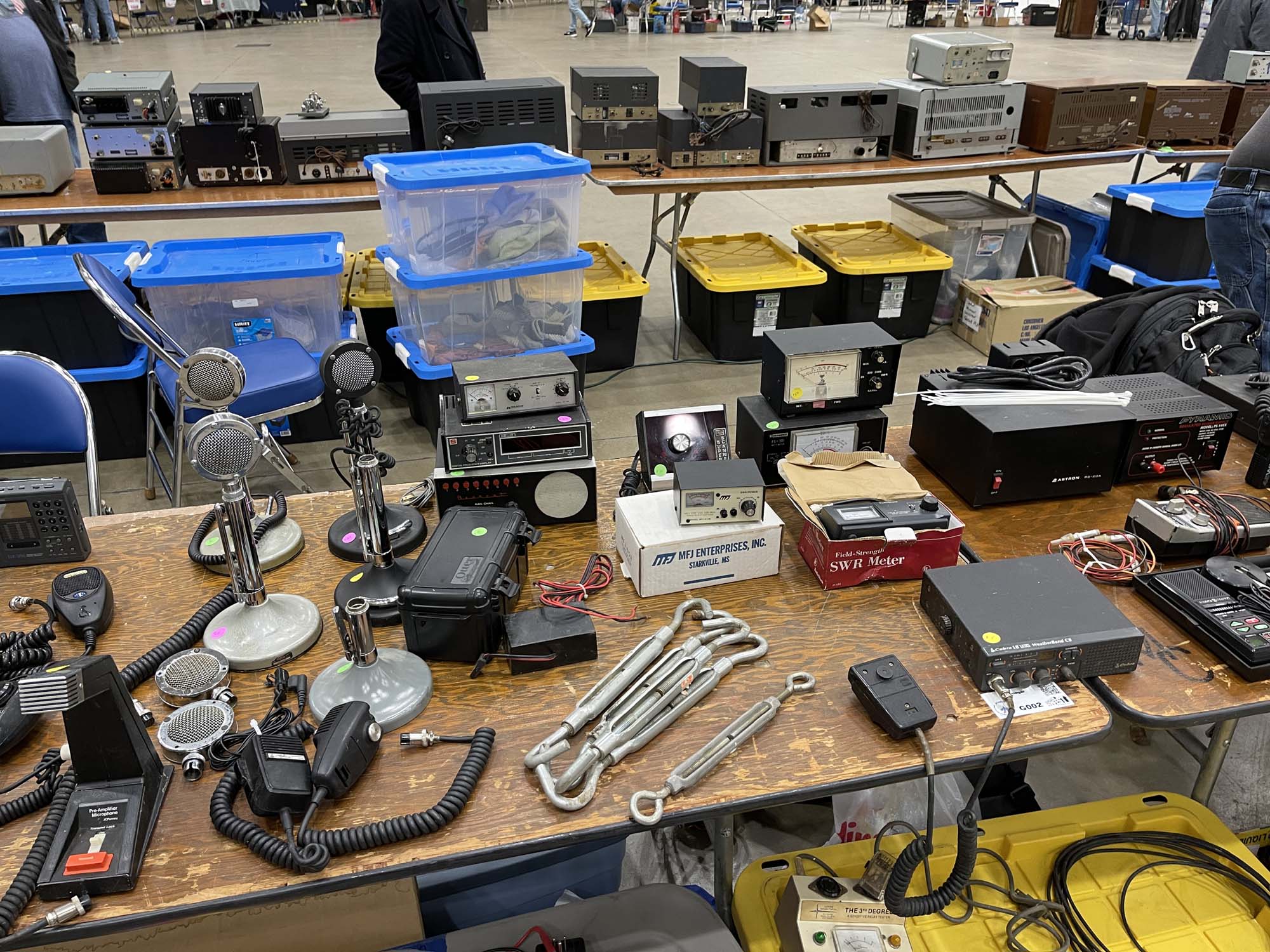
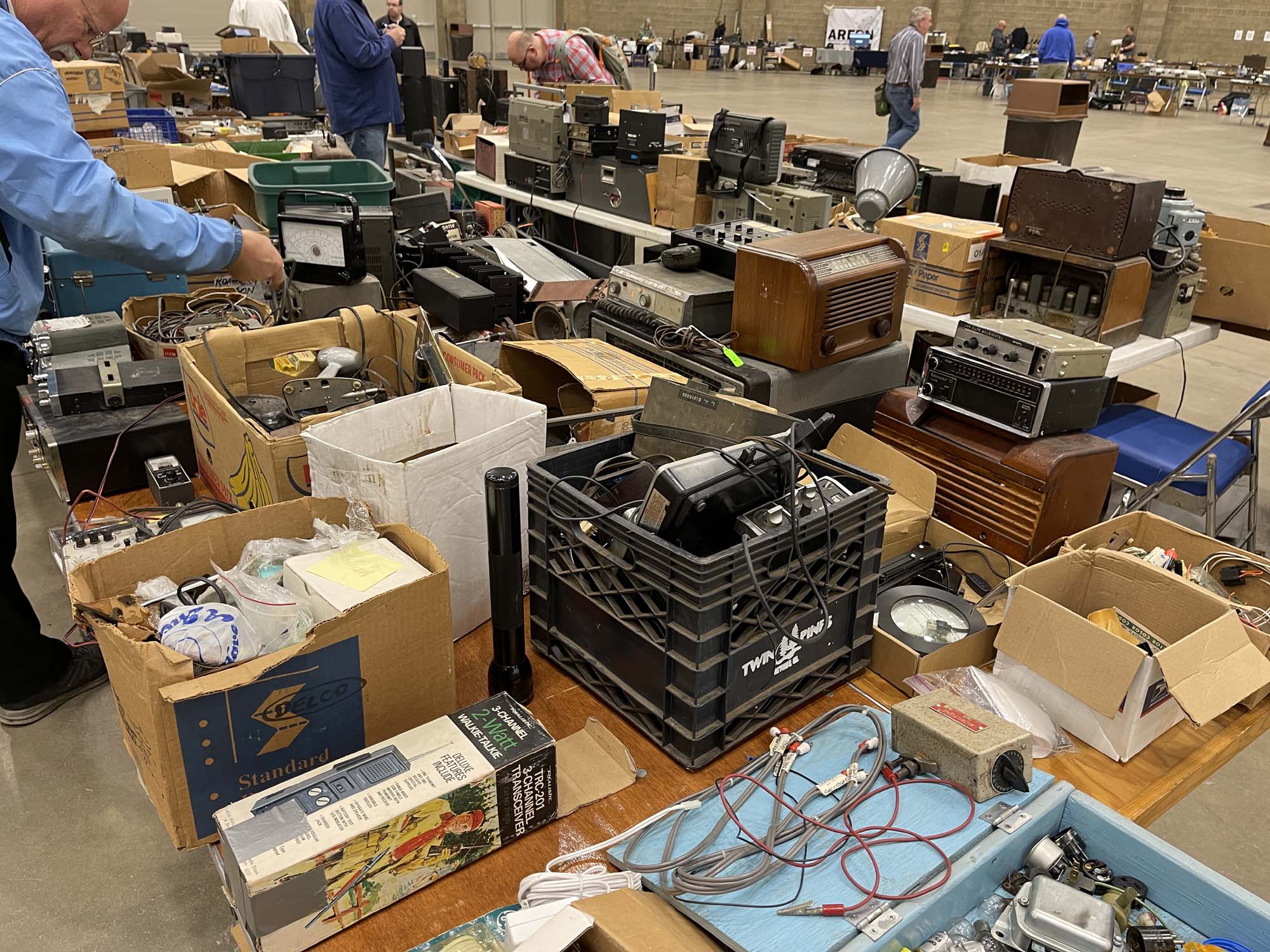
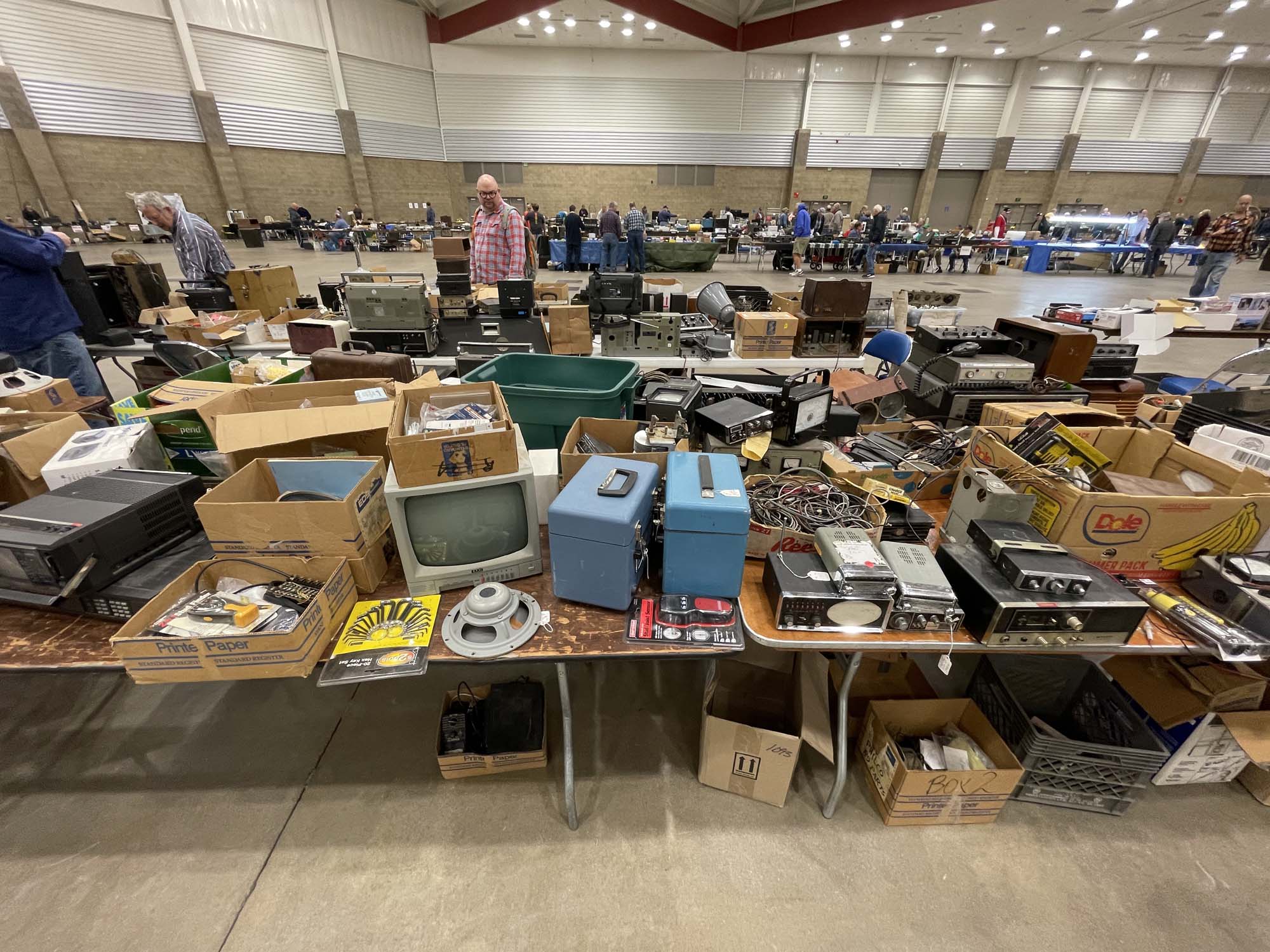
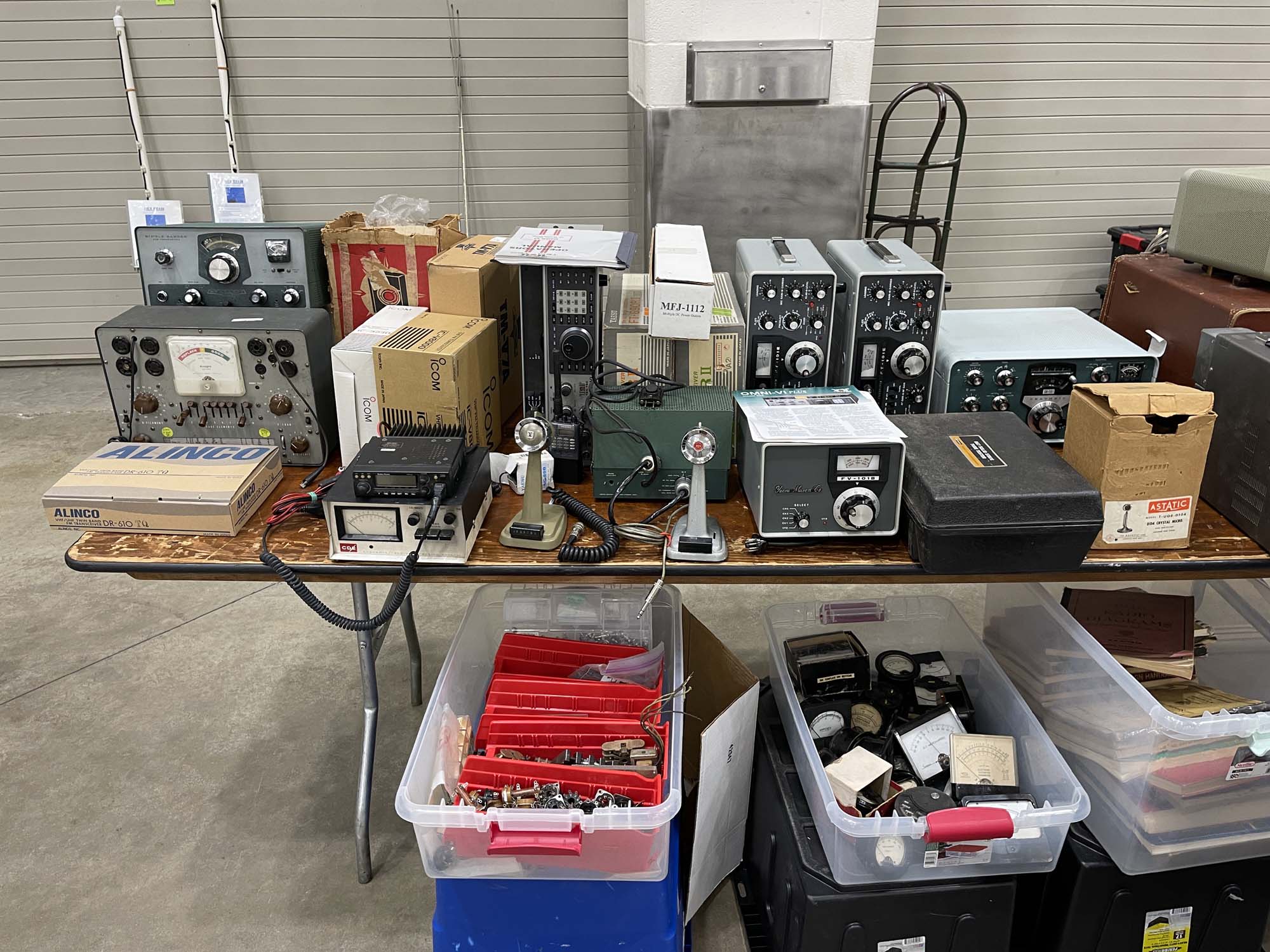
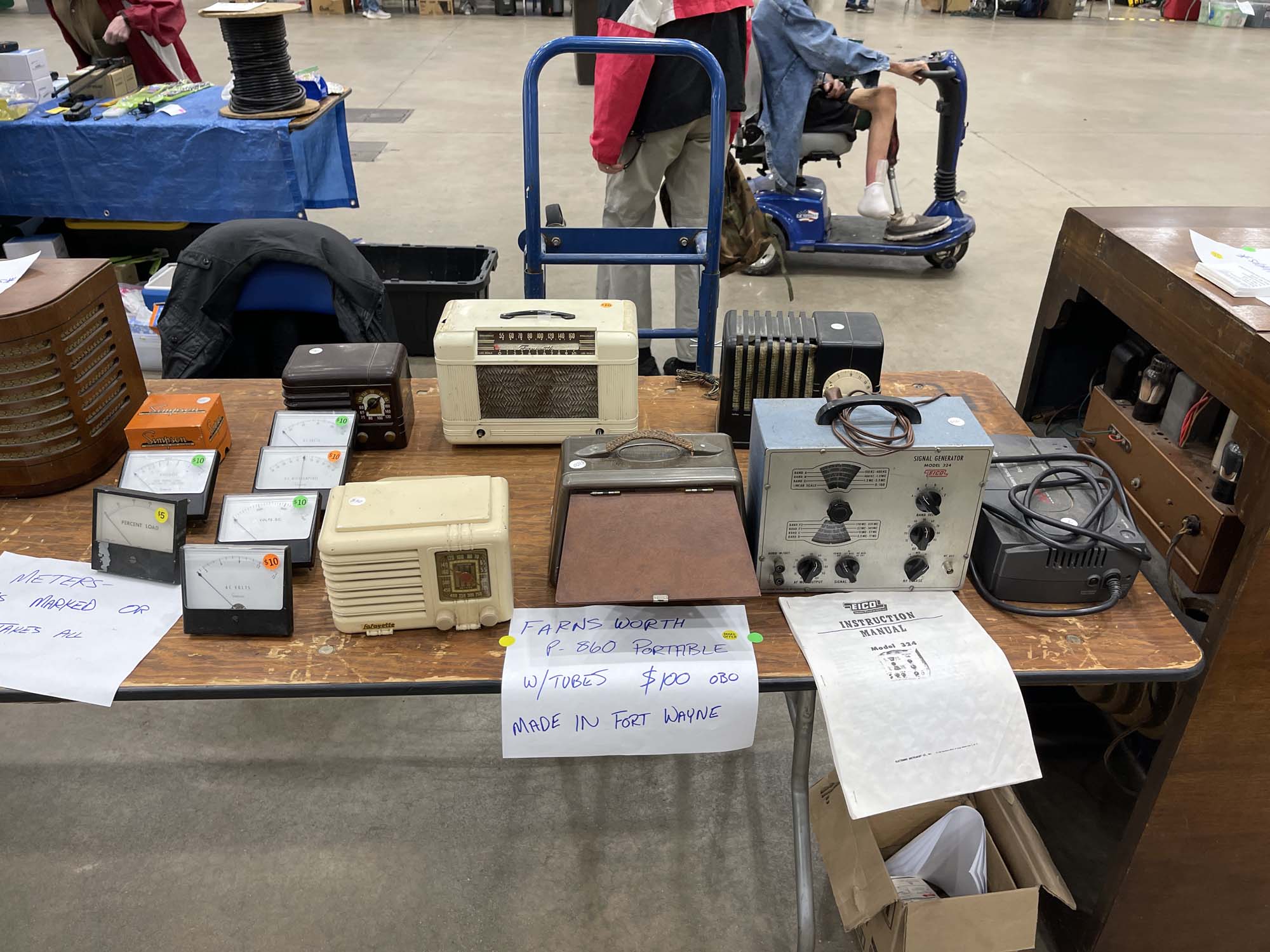
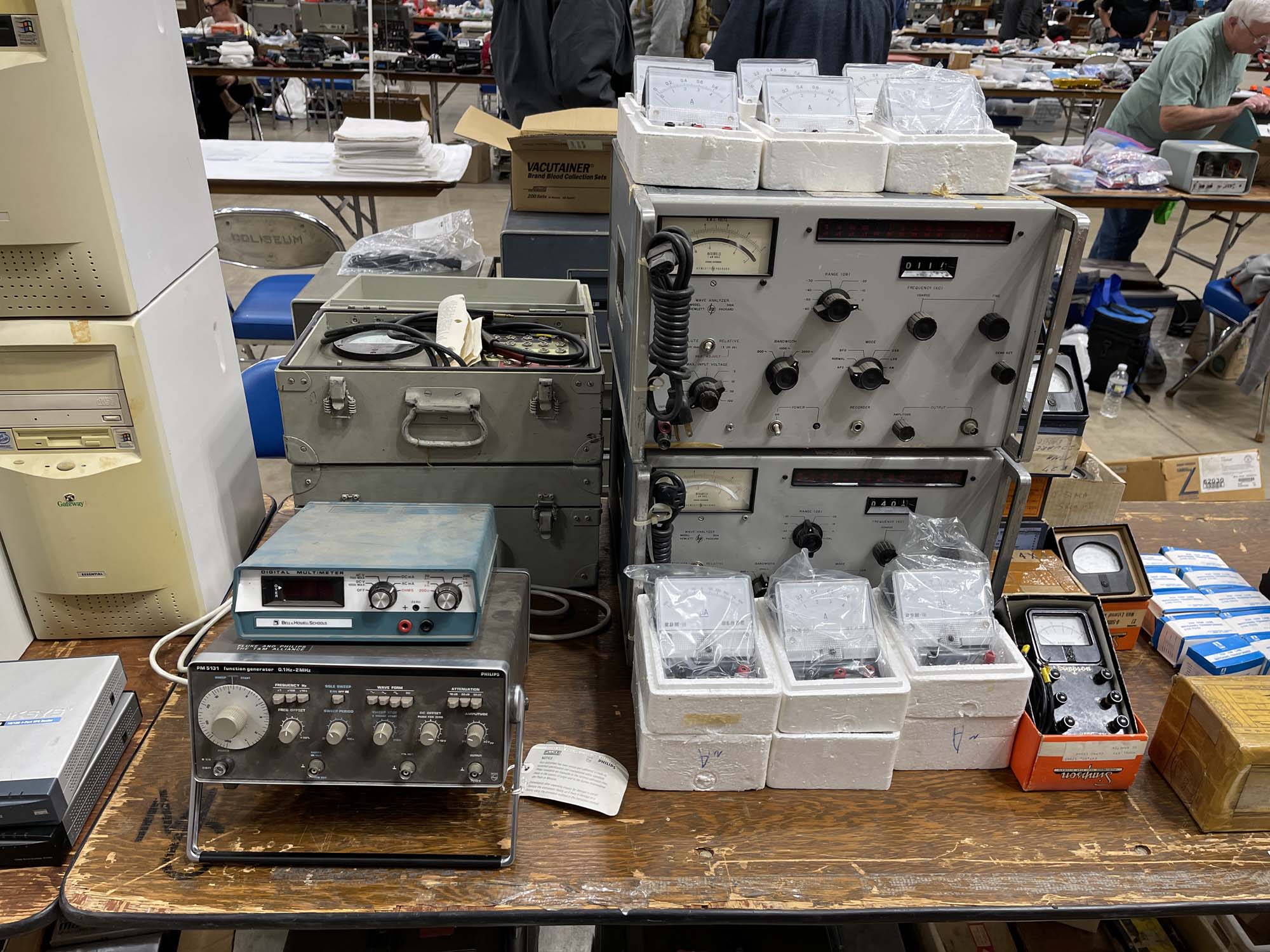
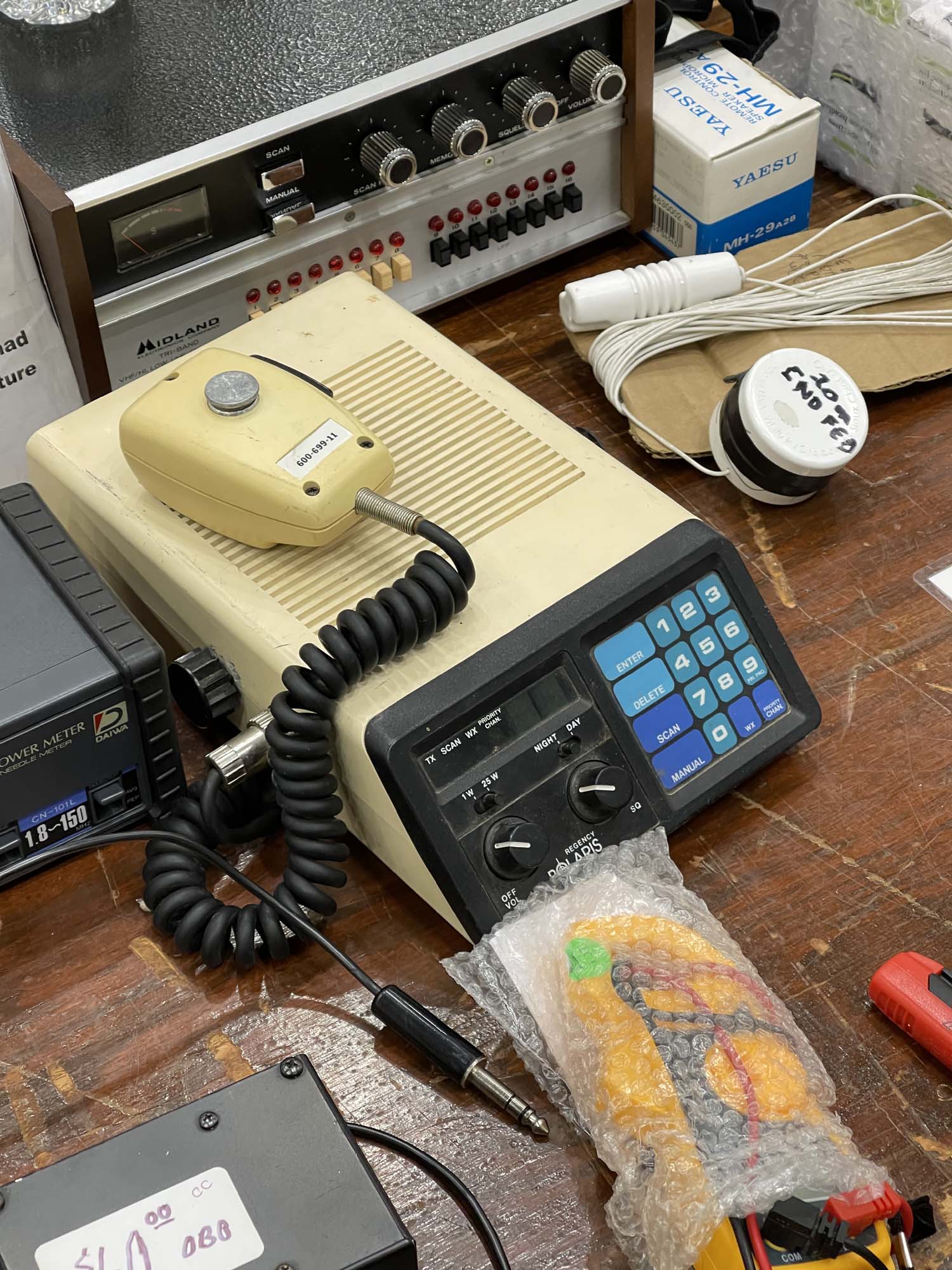
There were still good things to see, and here they are:
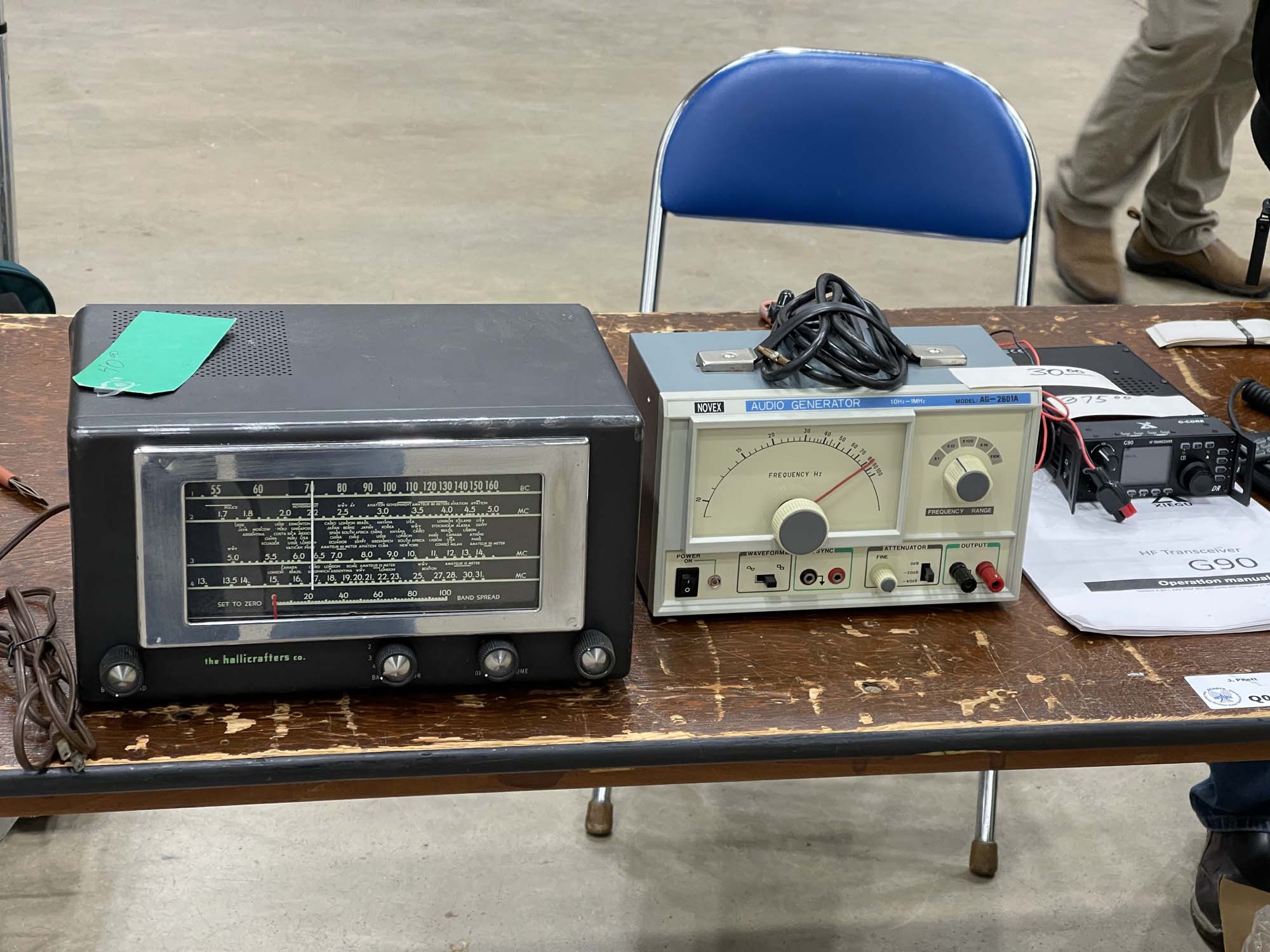
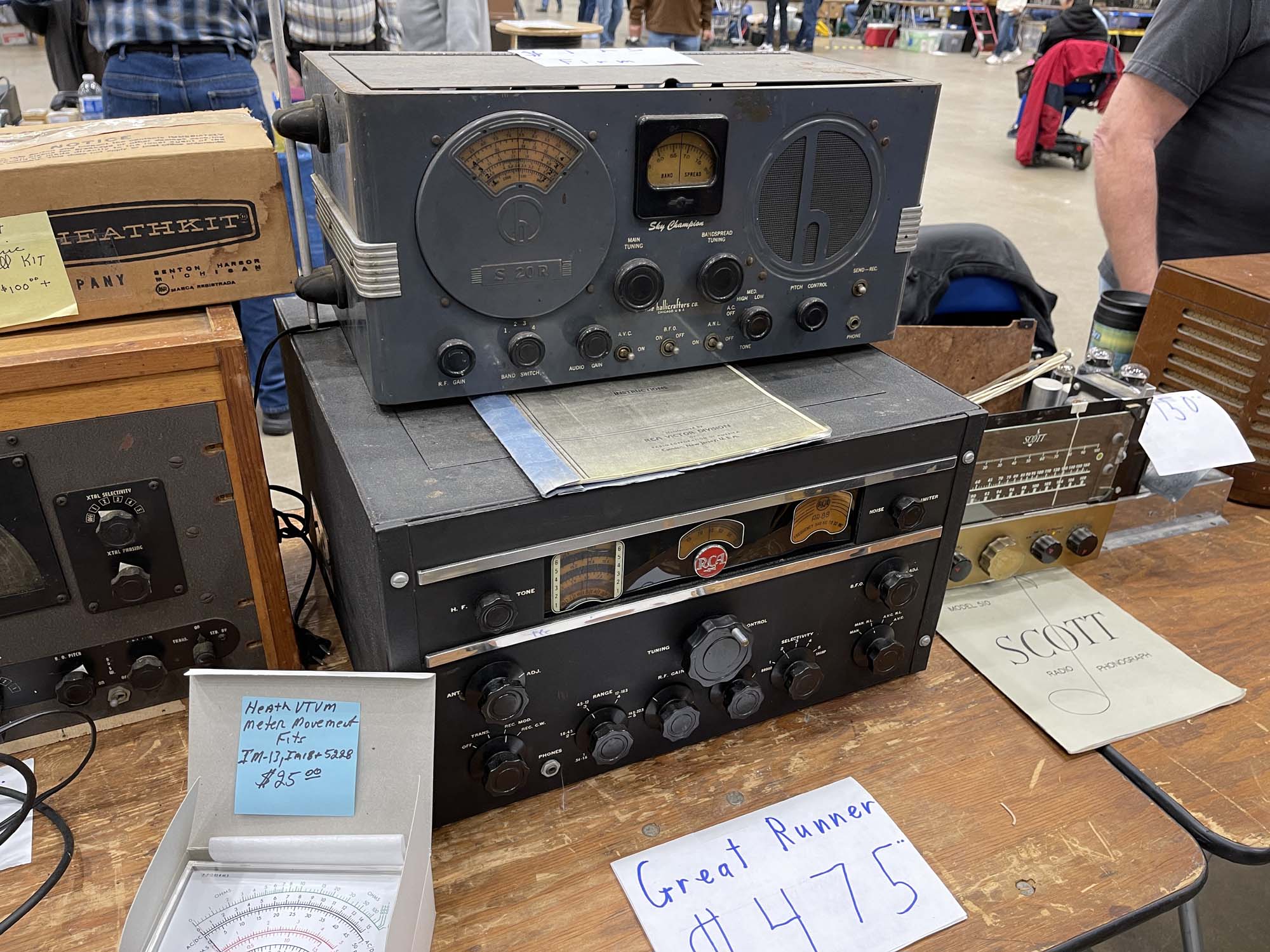
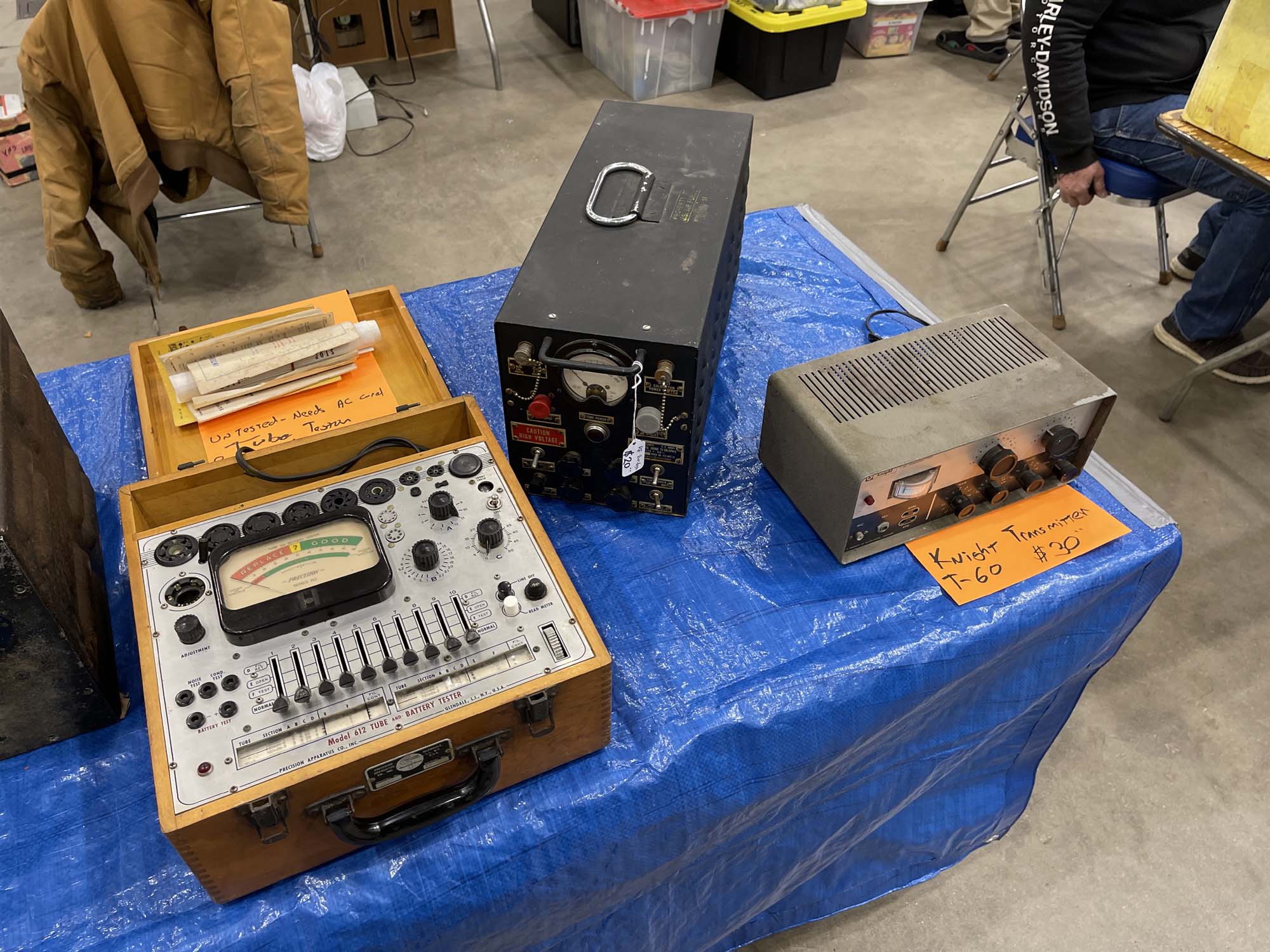
A Hallicrafters radio and a junk-tier audio generator.
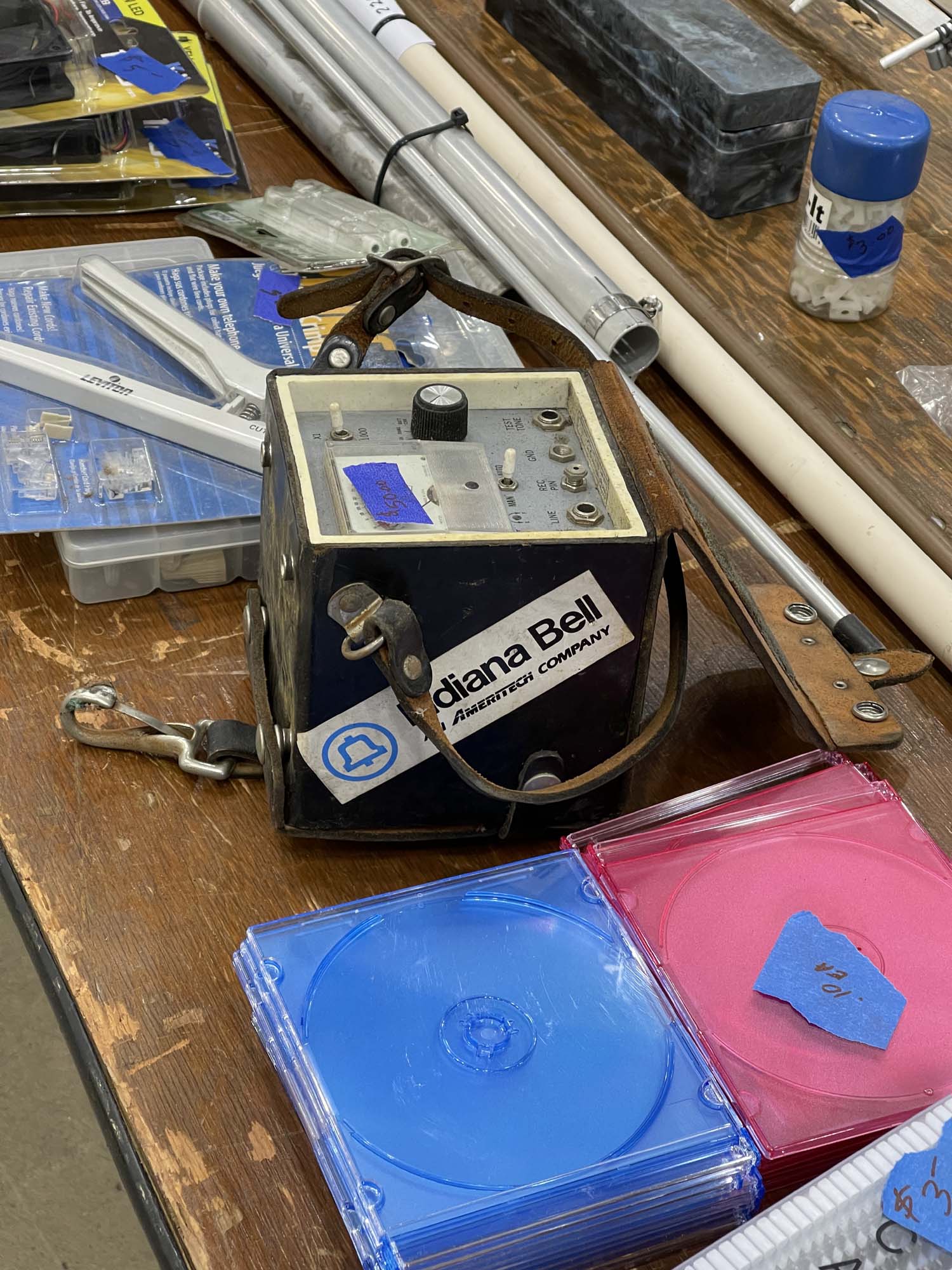
Indiana Bell with the old logo.
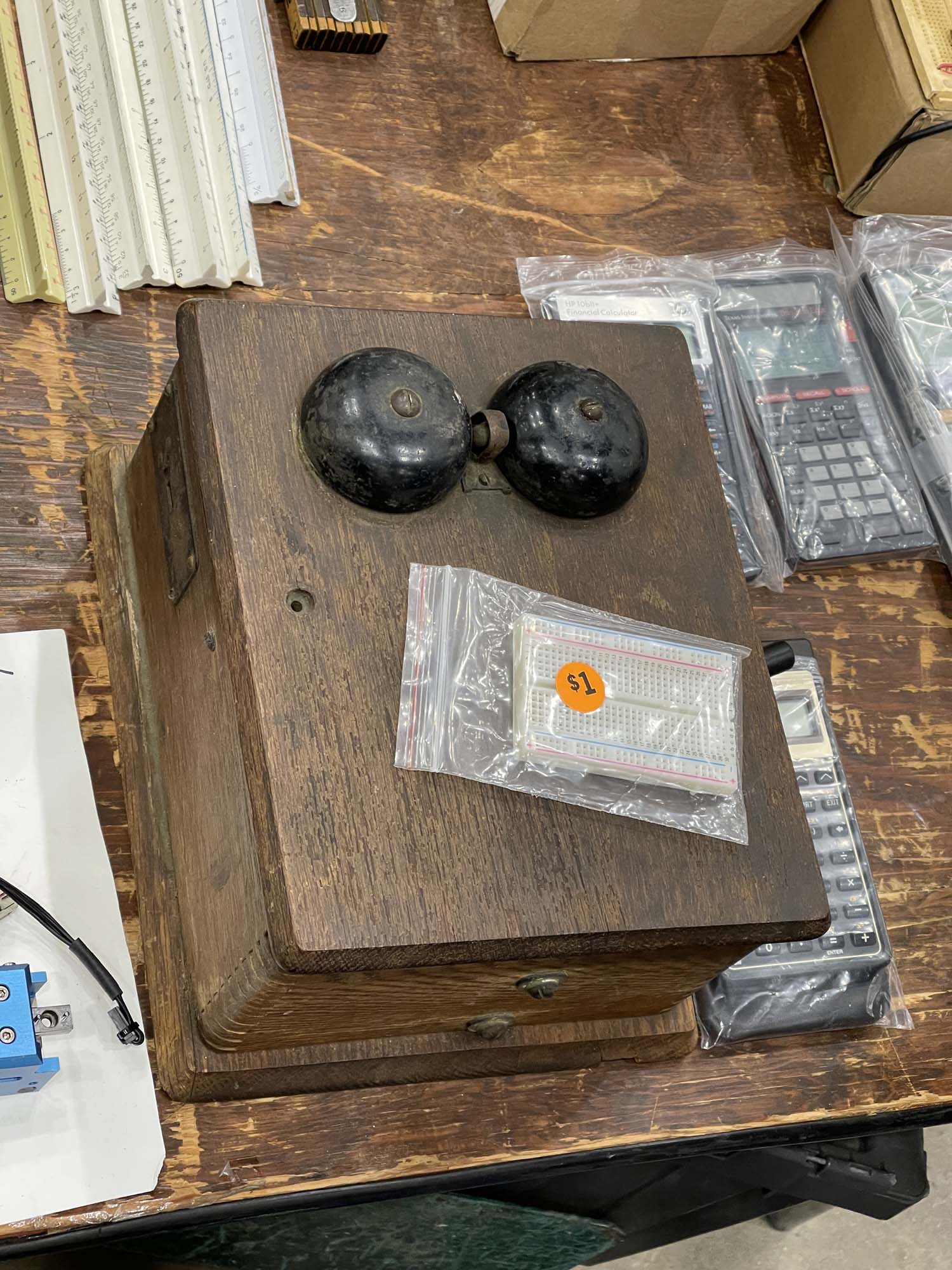
The magneto crank is still there.
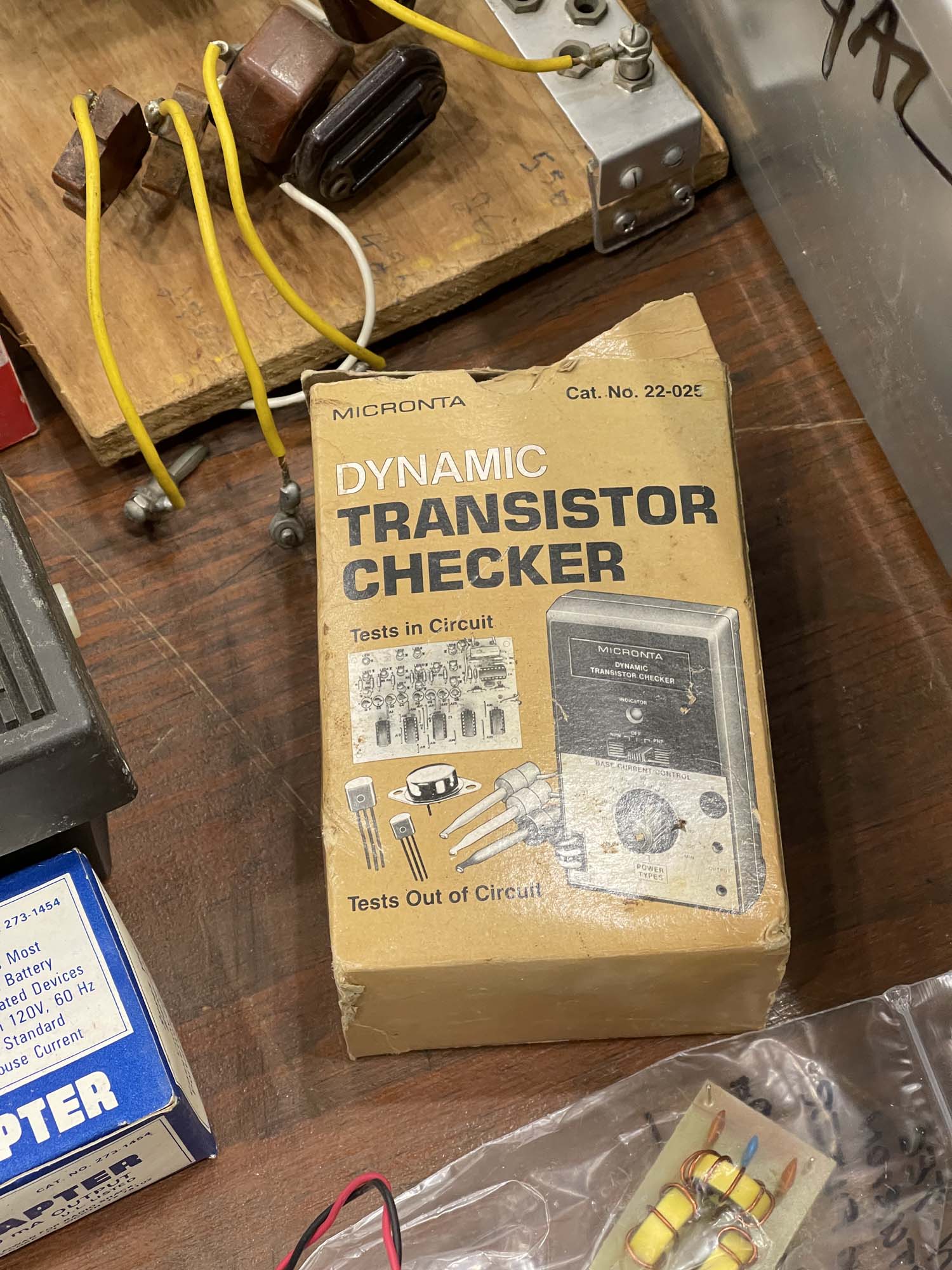
An old school transistor checker.
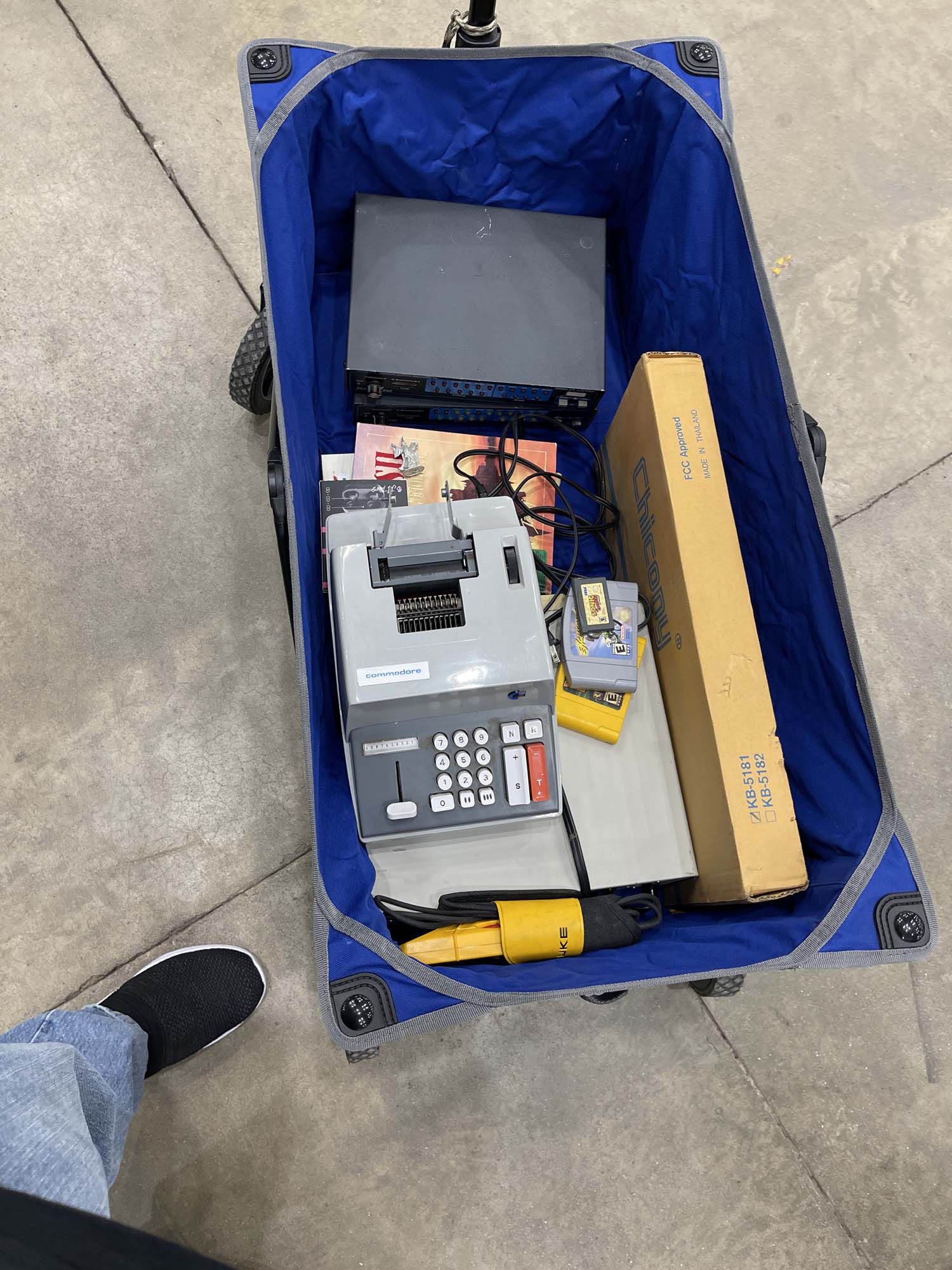
An old CBM desk calculator.
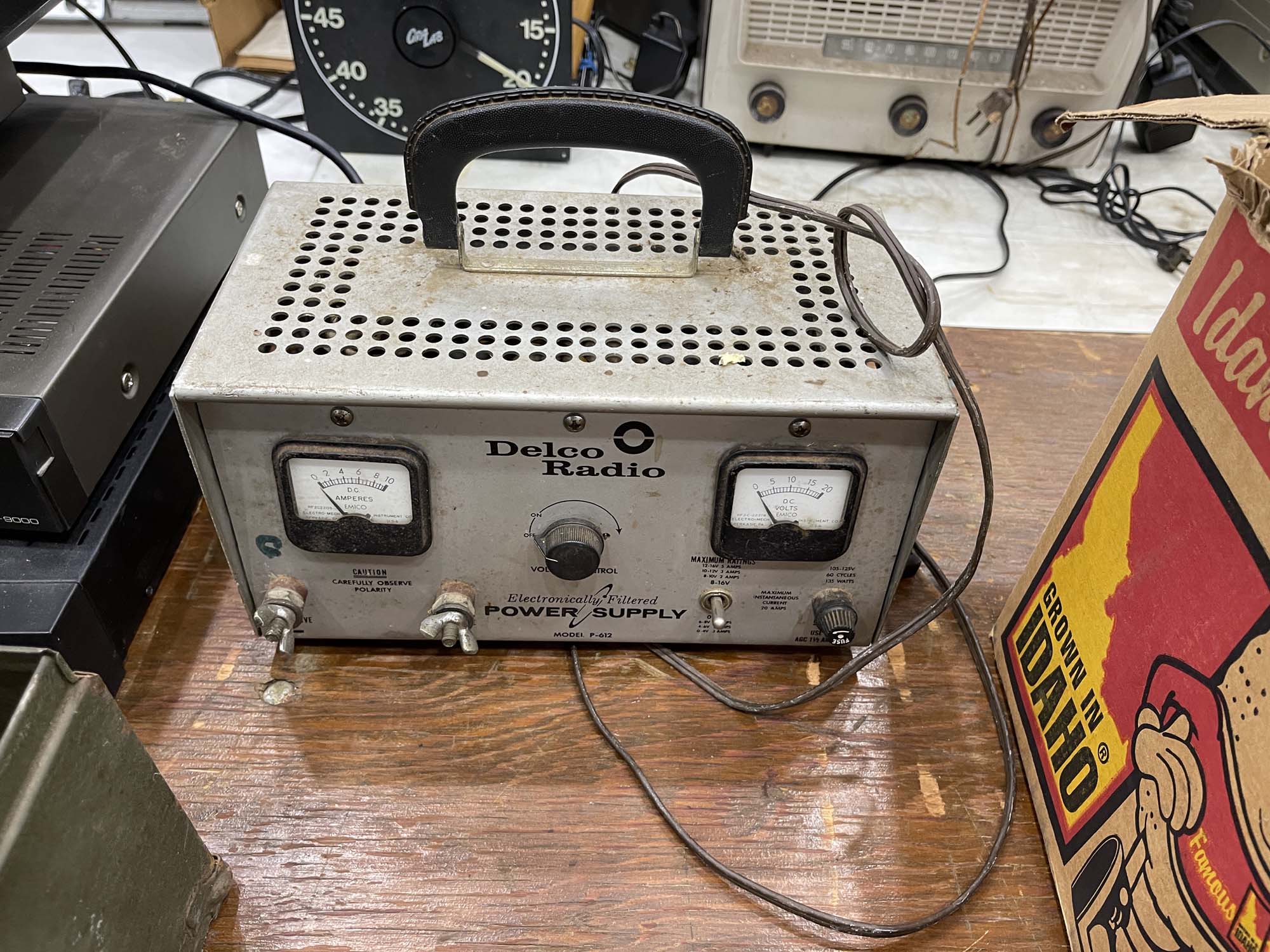
delco.jpg
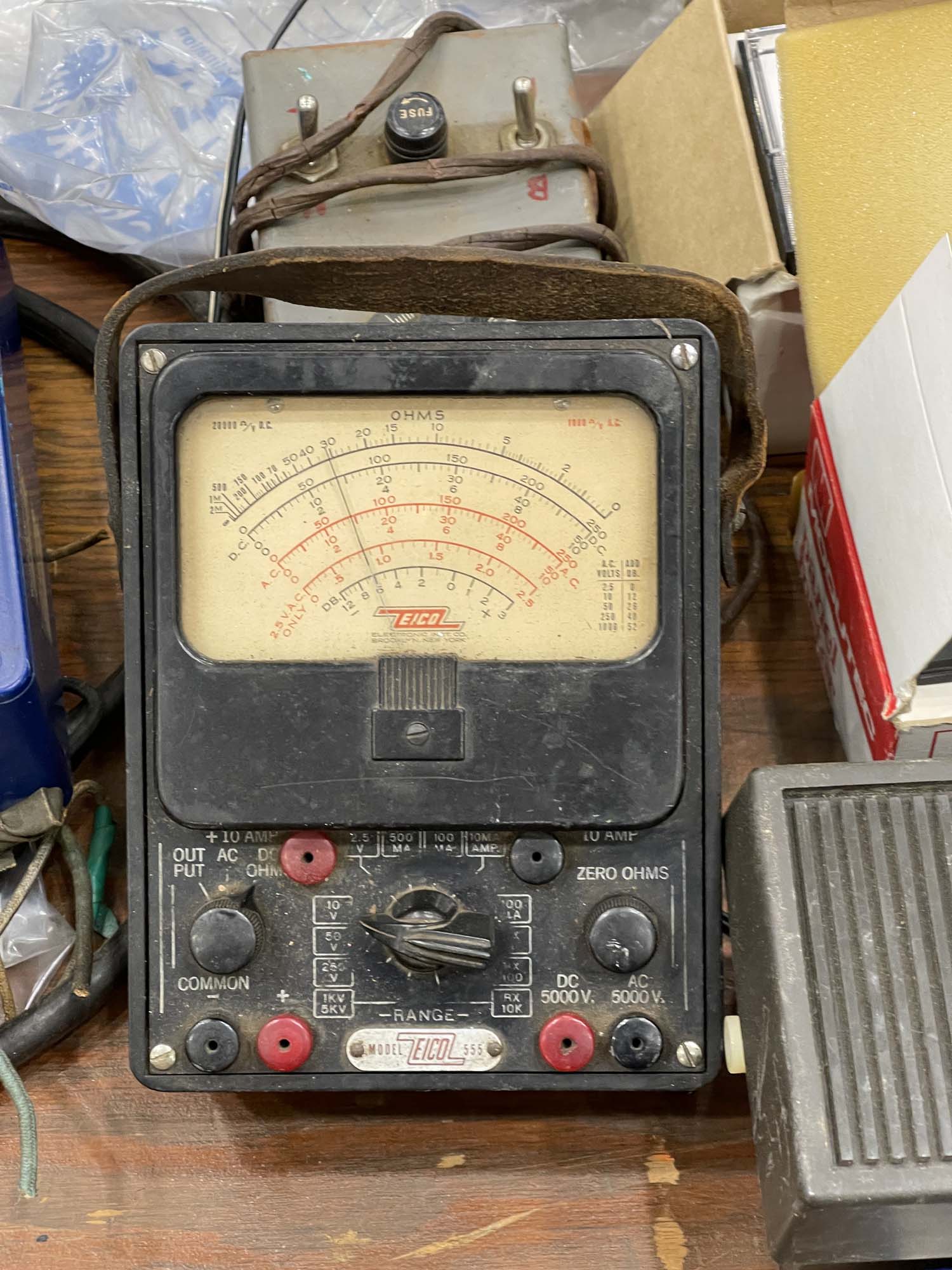
An Eico meter that's well loved.
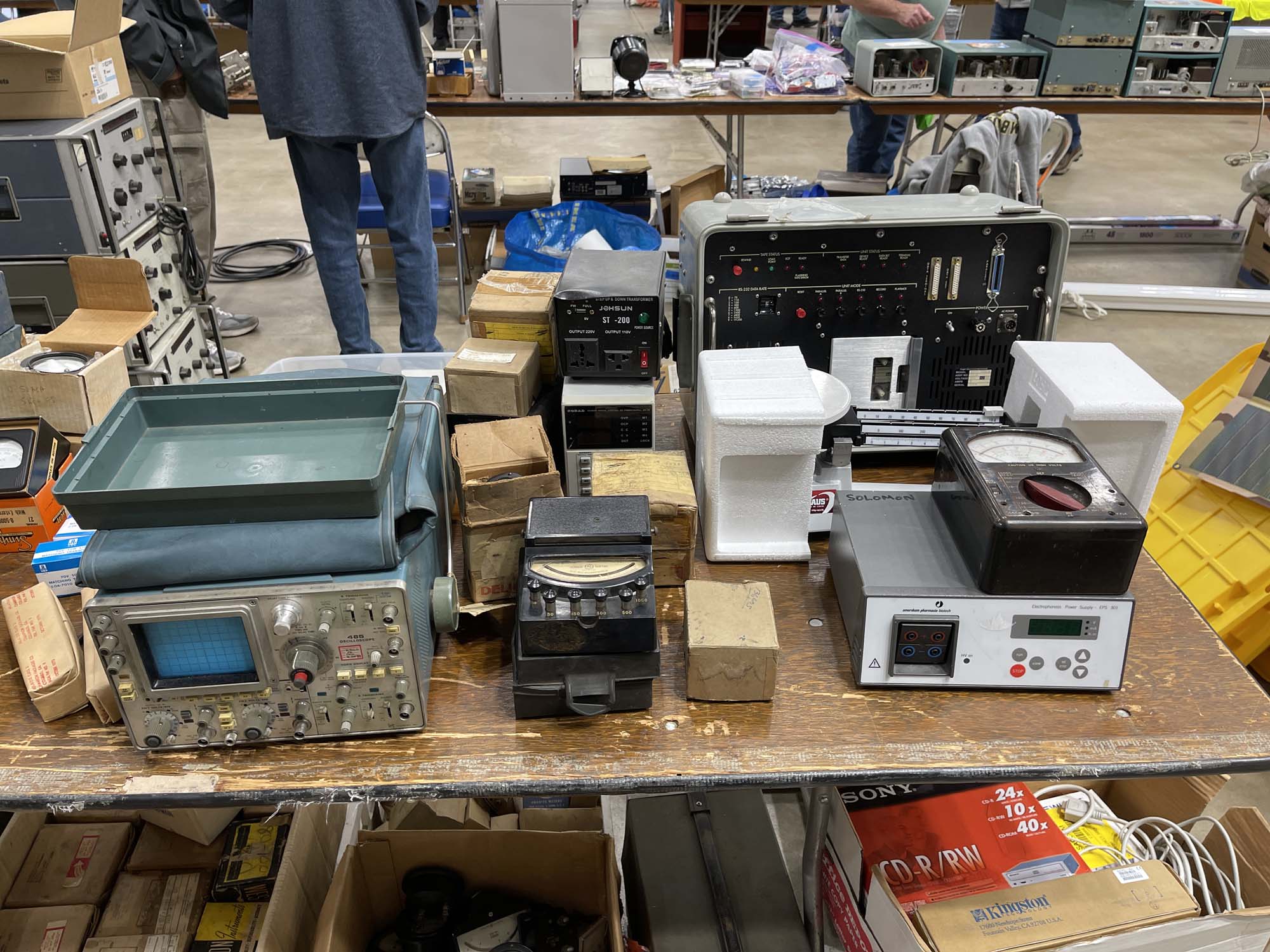
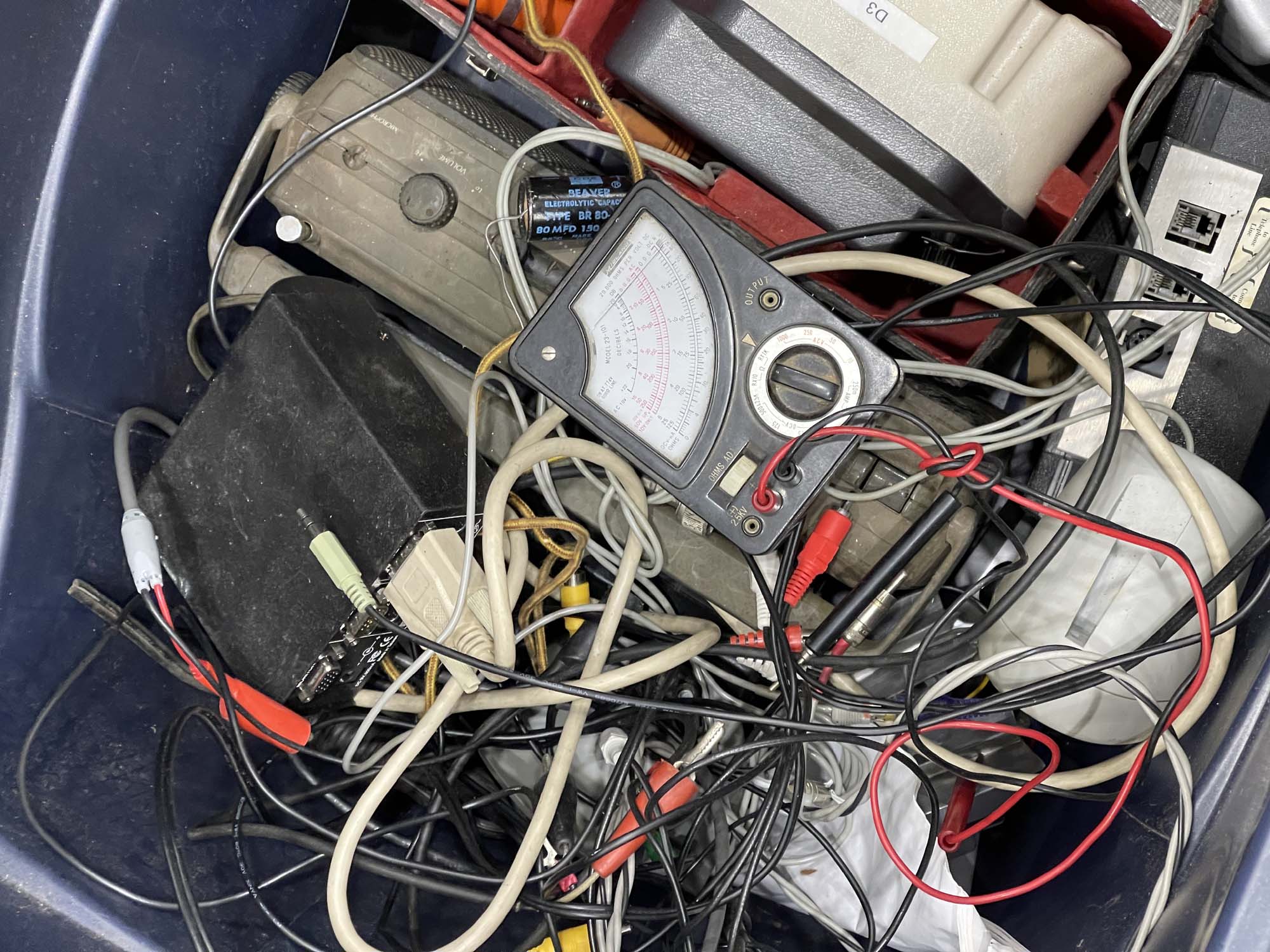
Just a bunch of equipment.
More test equipment.
The main floor.
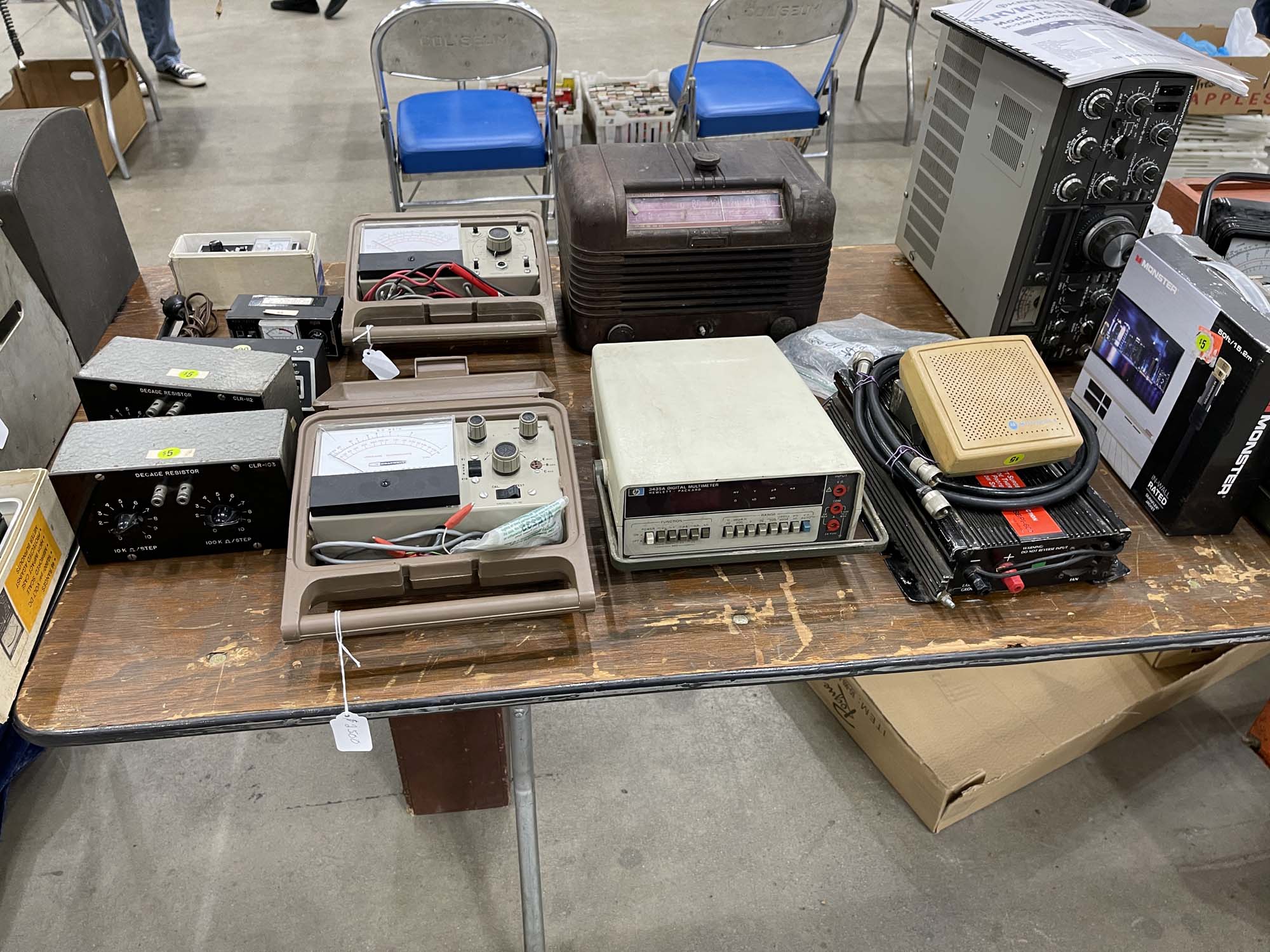
Voltmeters n things.
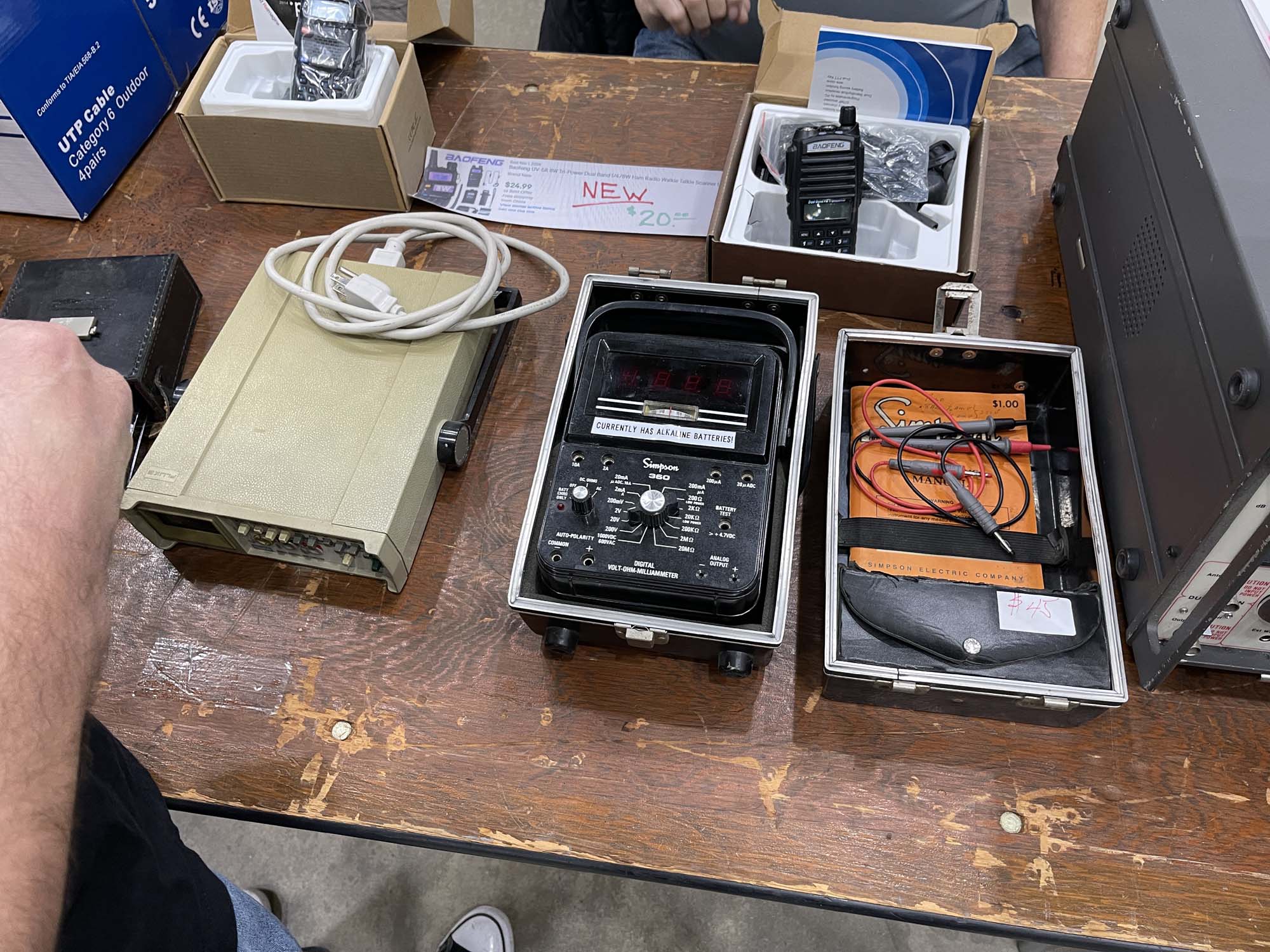
More voltmeters including a rare Simpson.
oddmeter.jpg
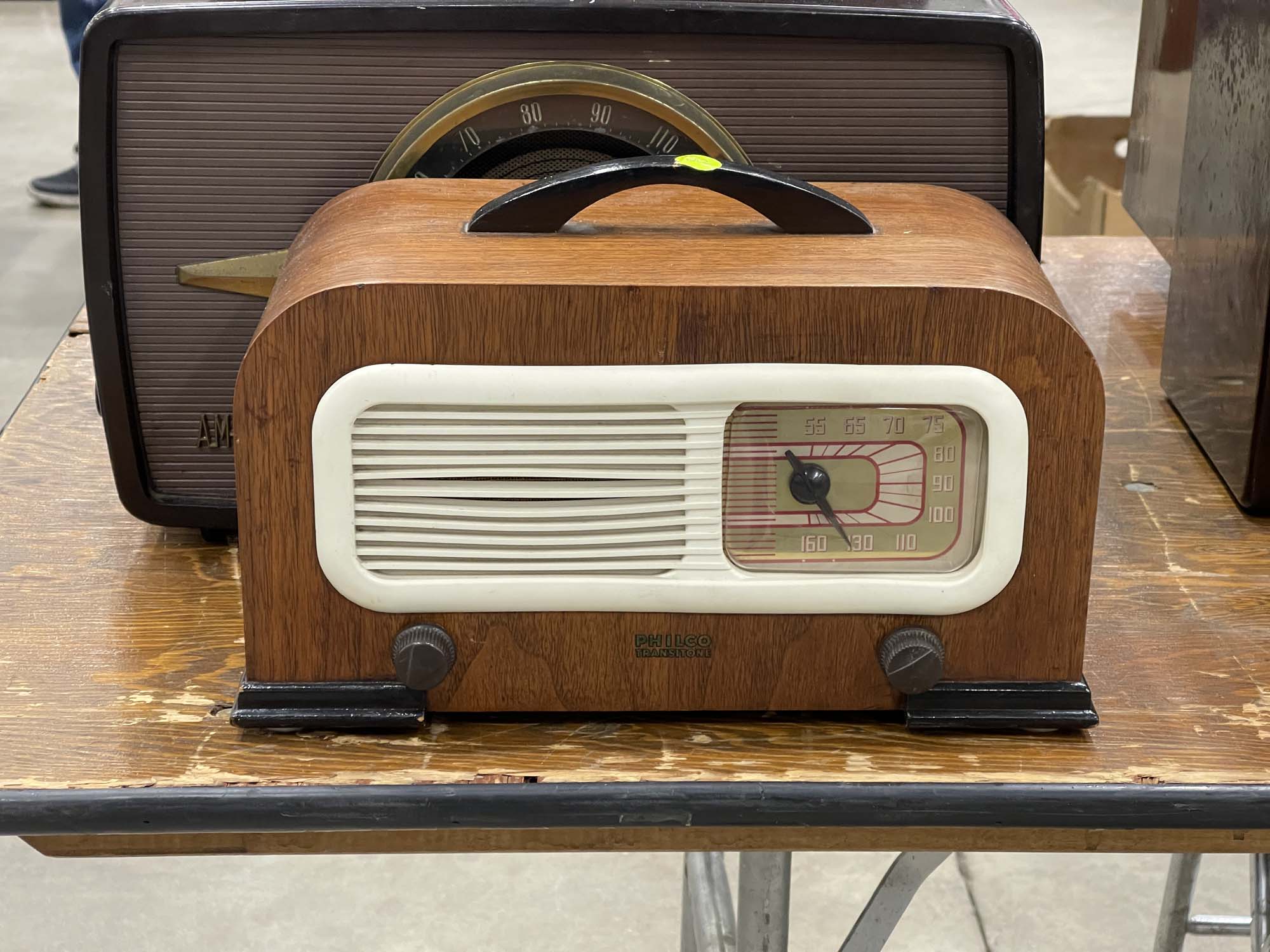
A nice old Philco radio.
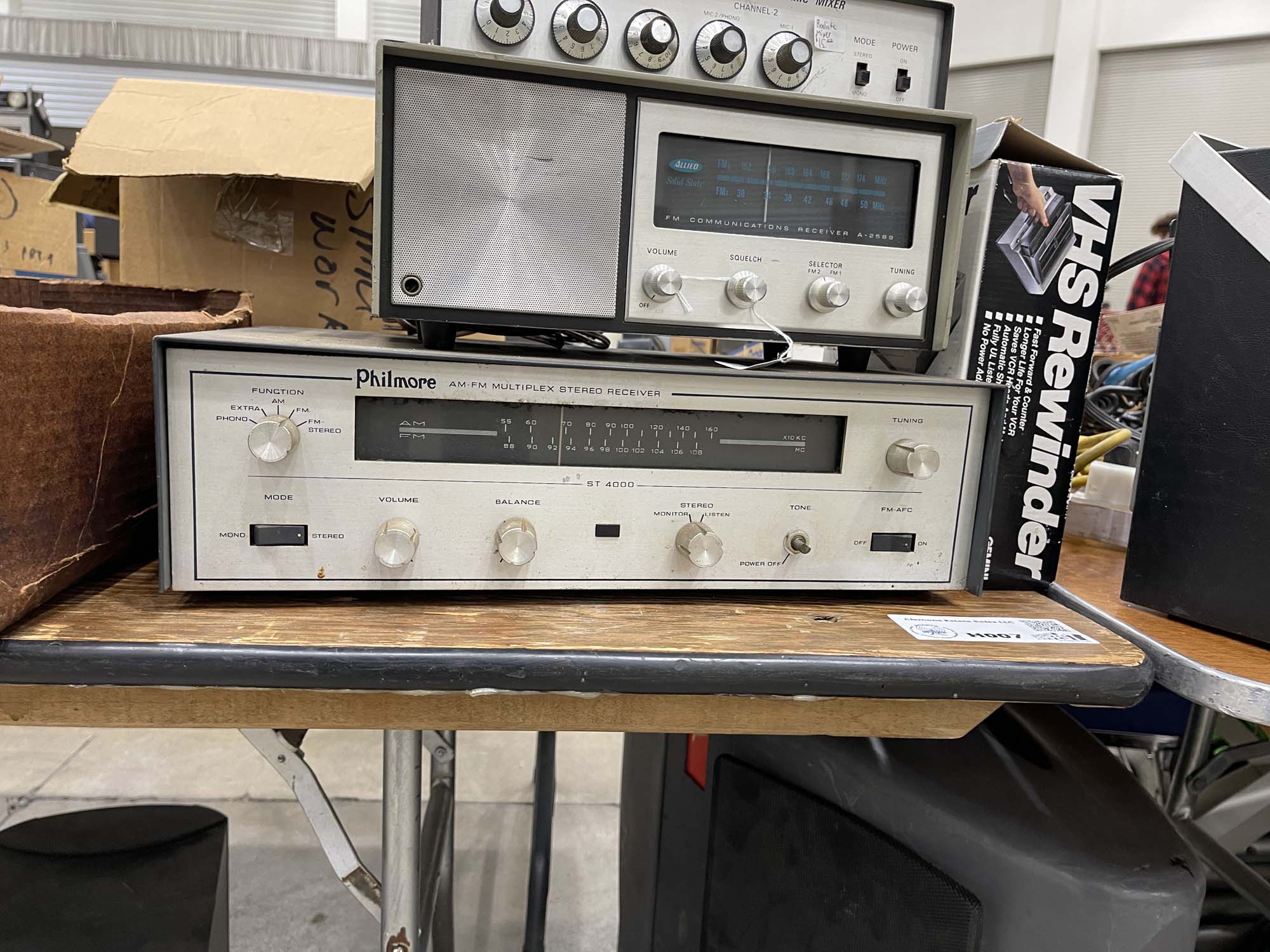
An unusual name on a stereo.
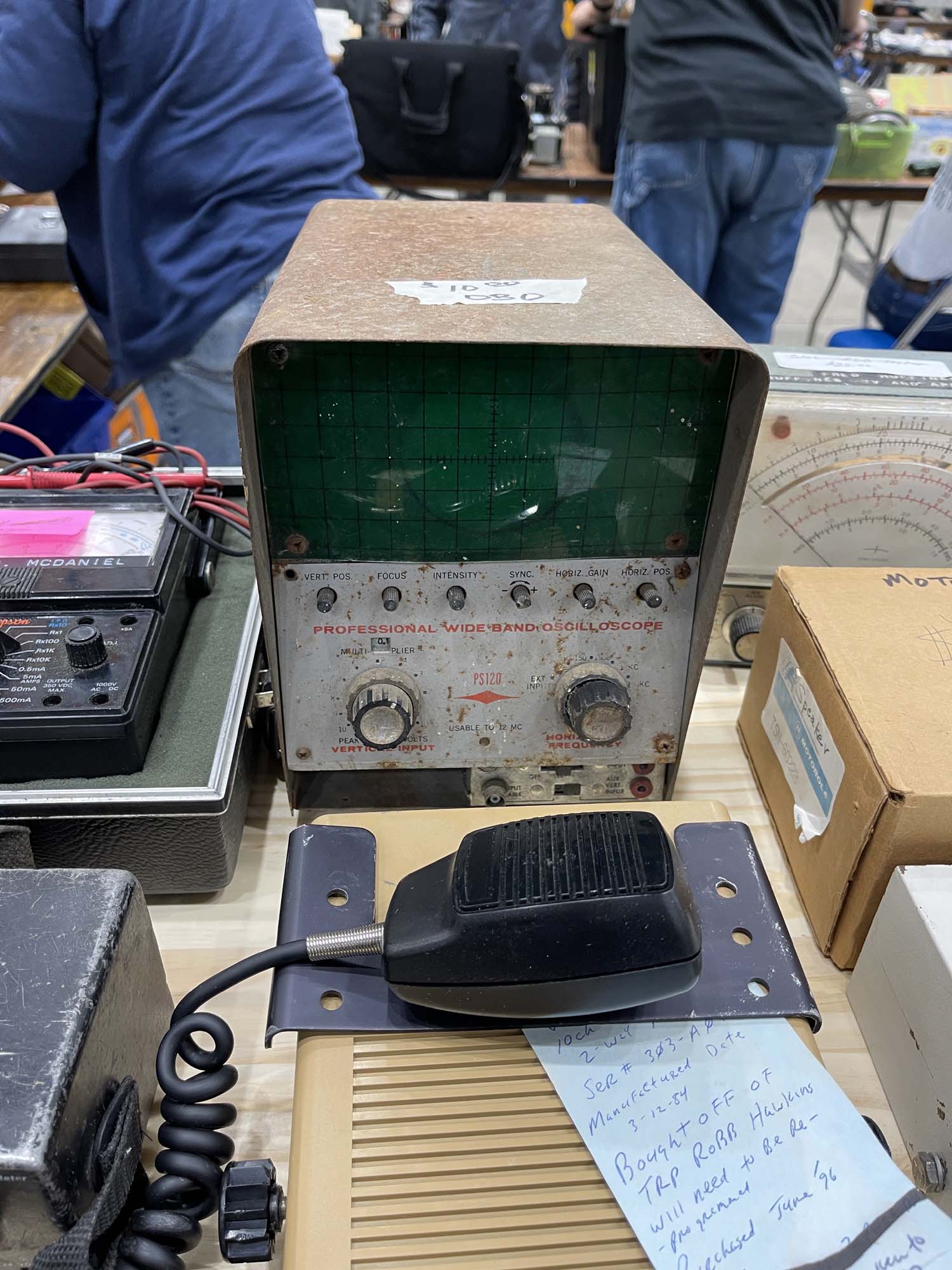
This rusty artifact went home with me.
This guy had a bunch of good radios.
Lots of this kind of radio this year.
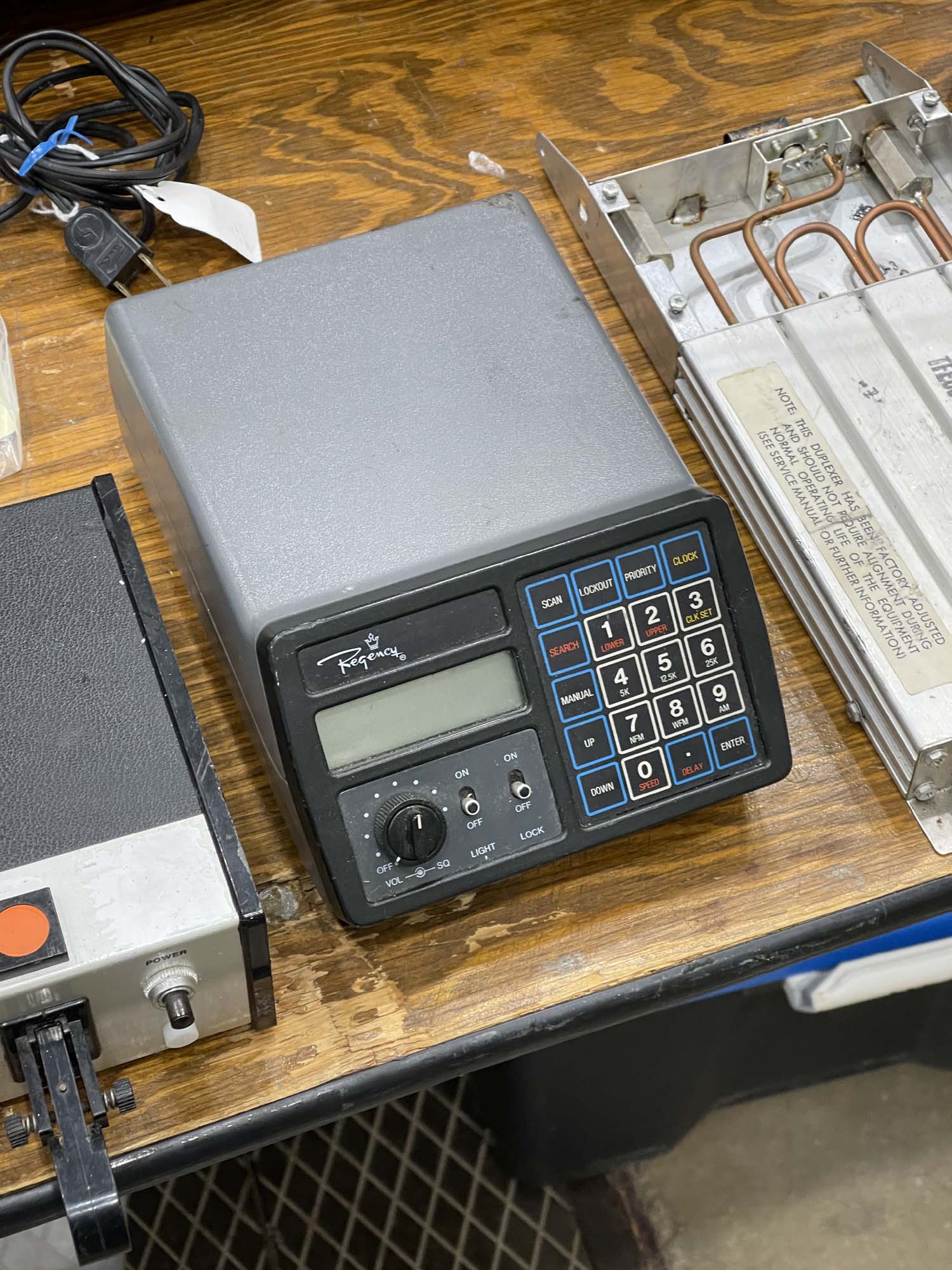
One of those press-panel scanners.
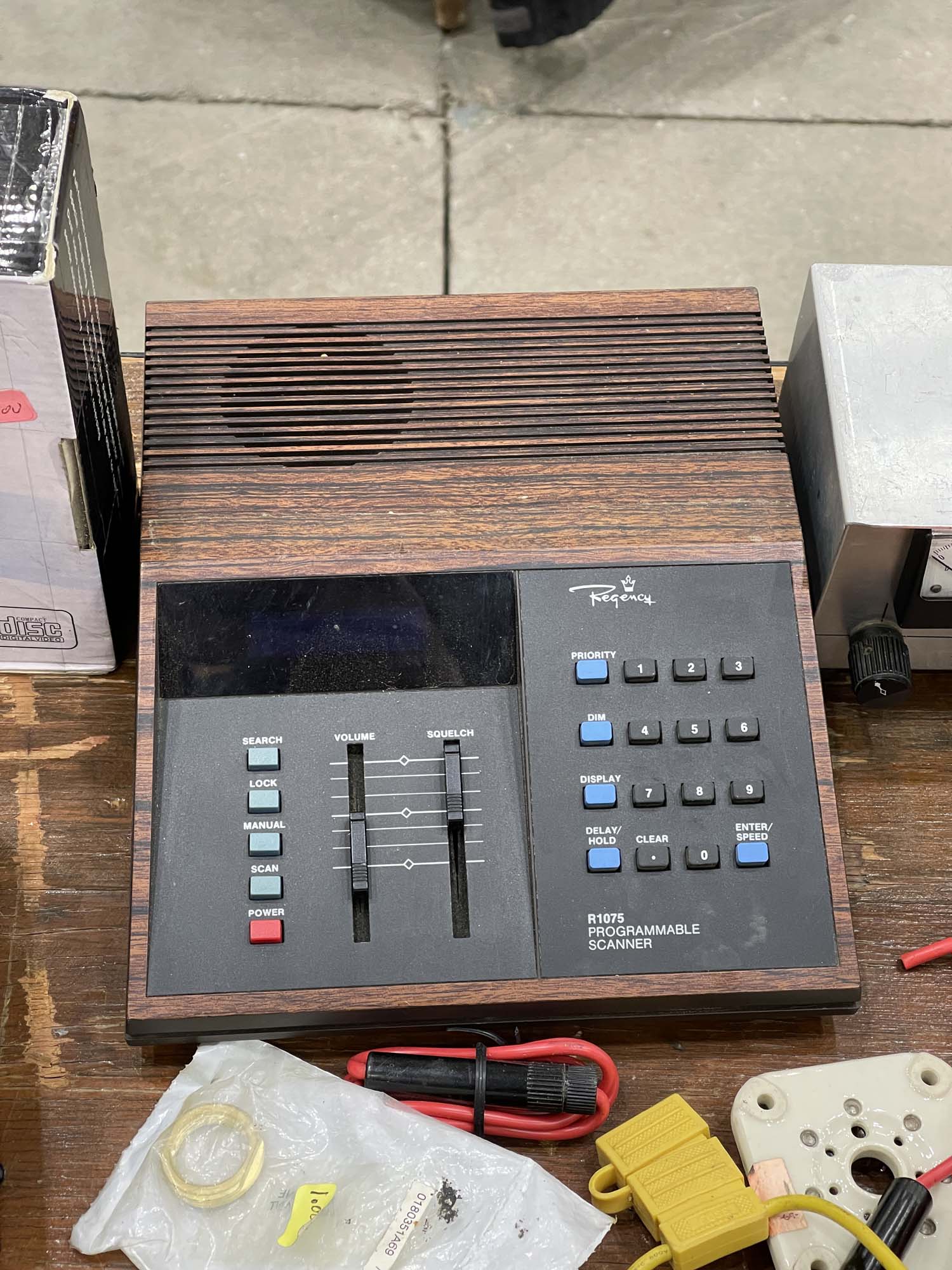
The 1970s are calling.
Just stuff.
More stuff.
This is what we go to shows for.
Lots of junk, er, goodies.
Even more things.
Radios n more things.
Big old equipment.
trasnmit.jpg
I went to this show mostly for this vendor.
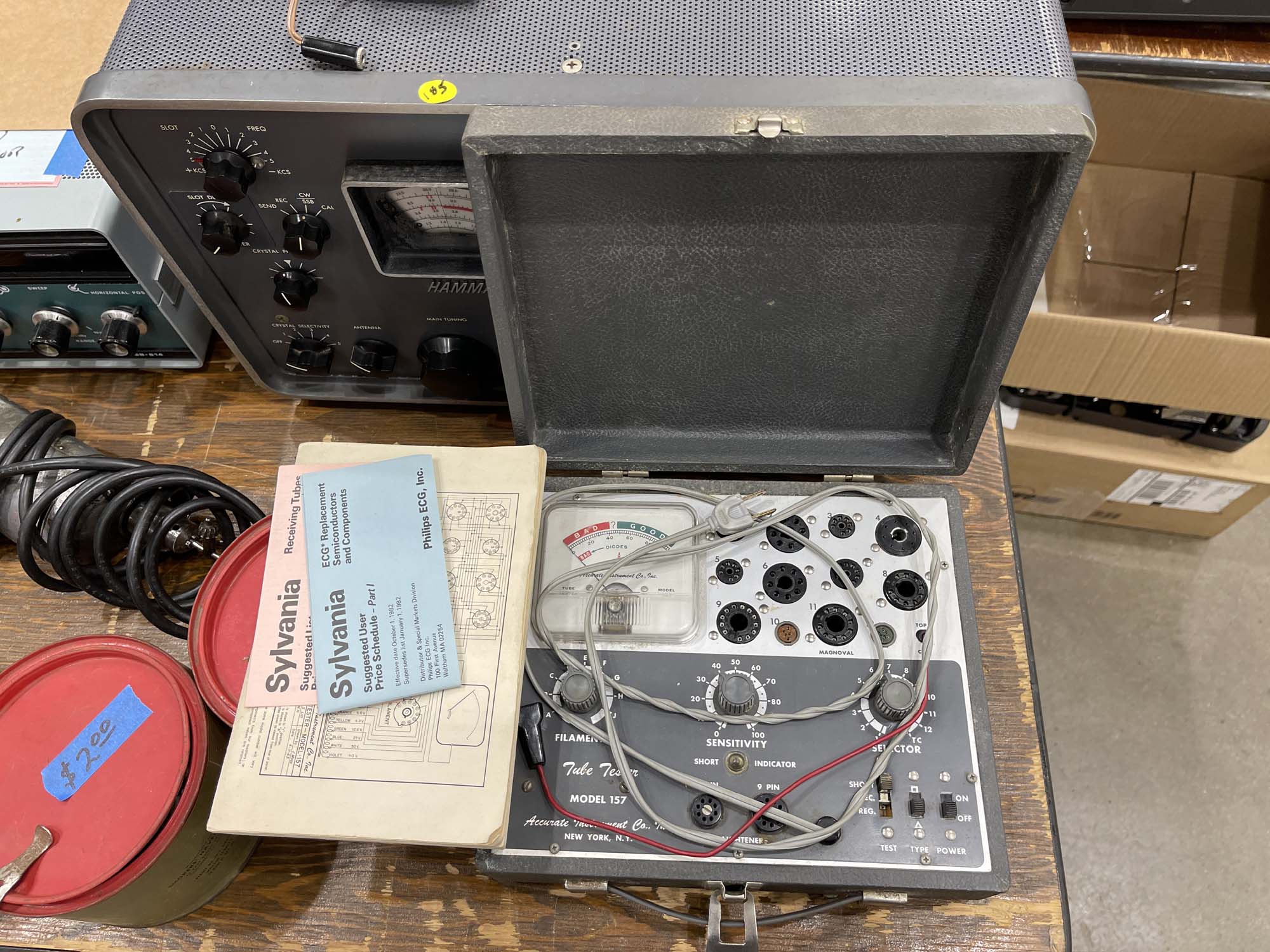
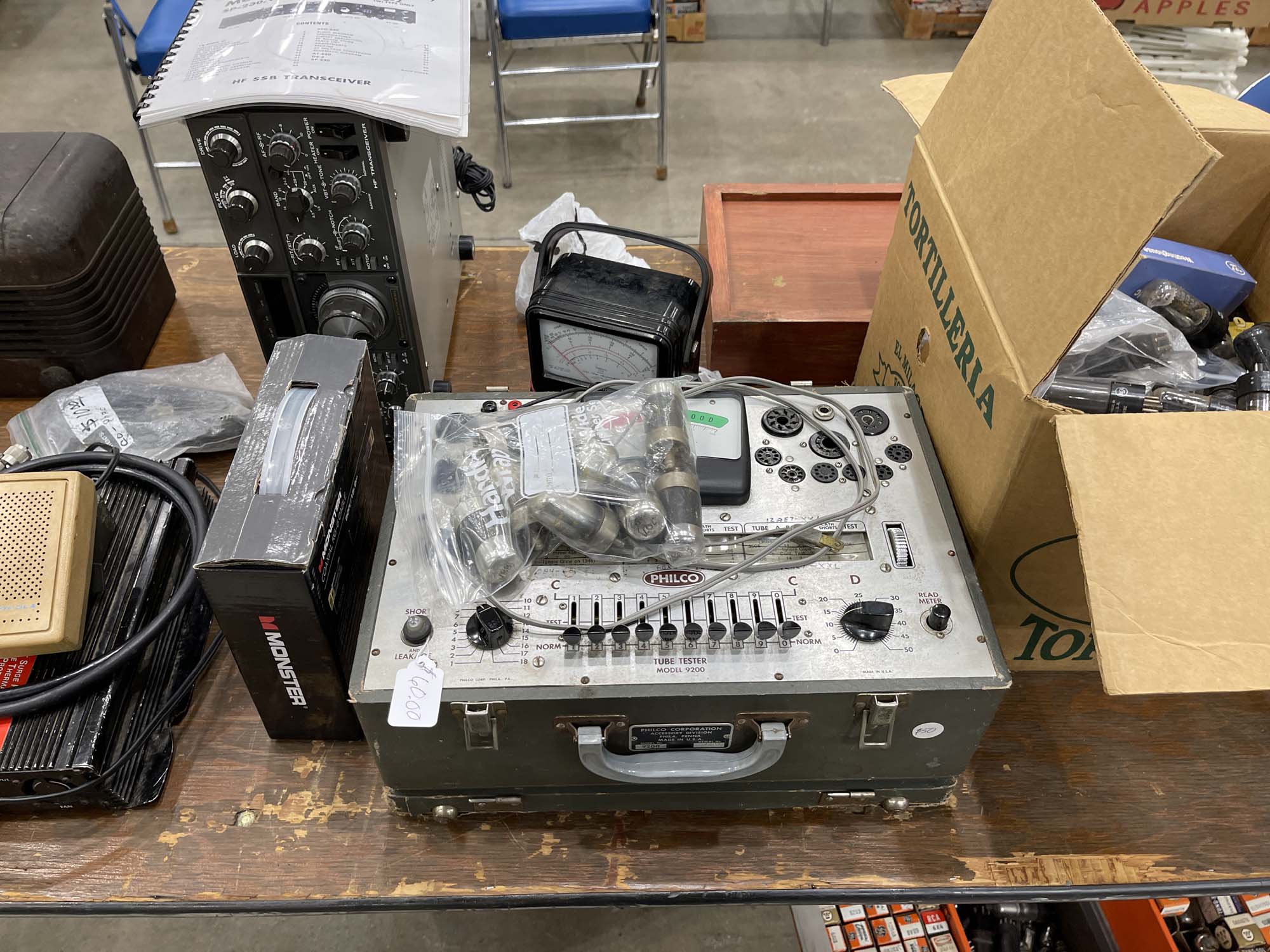
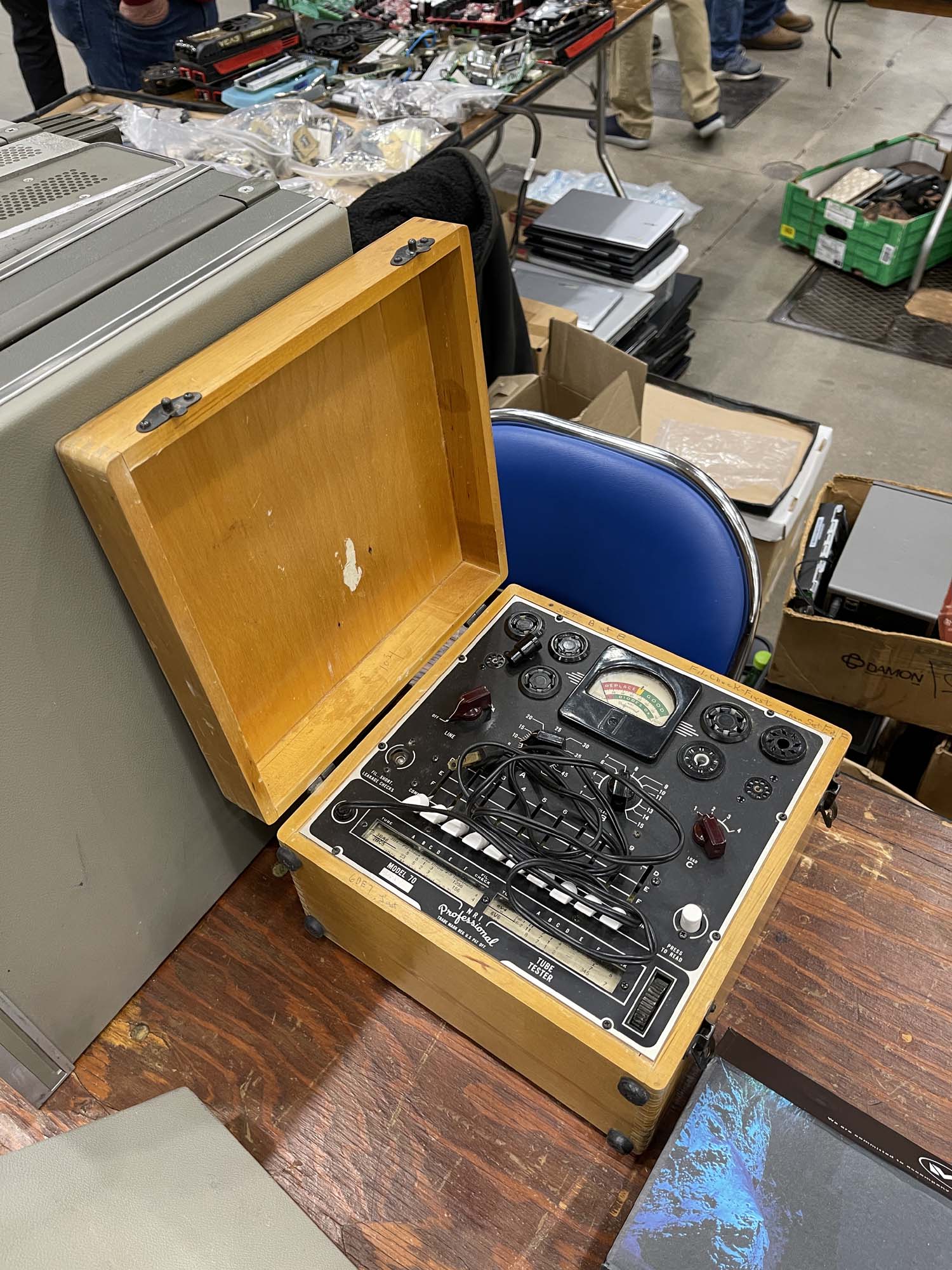
One of many tube testers.
More tube testers.
Test those tubes!
And more tests!
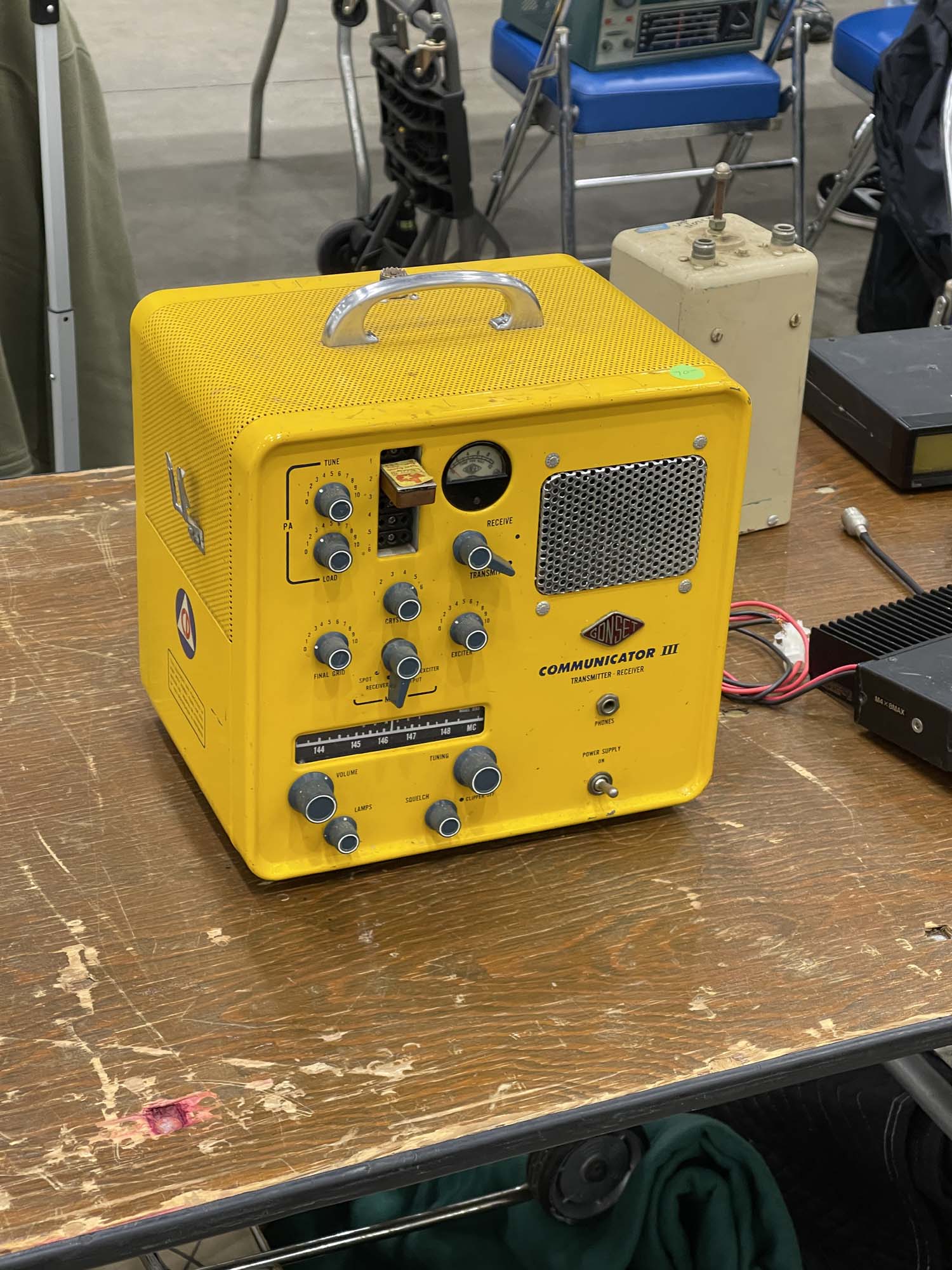
A friend said “It's…um…yellow!”
.
That’s it as far as hamfests for 2024 - the next two shows will be the Scott Antique Market events this coming (after Thanksgiving) weekend, and right before Christmas. I may combine those two into one post, depending on what I see.
The Fort Wayne hamfest happened today. The show was kind of mildy disappointing, with somewhat less vendors showing up this year - and some that were simply smoking crack when it came to prices. One in particular made eBay prices look low, and reminded me of the vendor that had those big stainless steel racks of test equipment at Hamvention with astronomical prices on them, rain or shine. I wish them luck in selling, but you’re going to be hard pressed to unload some of that stuff - especially when you can get new equivalents (from the same manufacturer!) for less.
Regardless, there was still some good stuff to see and take home. Stay tuned, pictures are on the way!
Back in part 5 of my Heathkit IG-72 series, I was getting ready to button things up when the socket for the rectifier tube started arcing. I assumed there as carbon tracking inside the socket and moved on with replacing it.
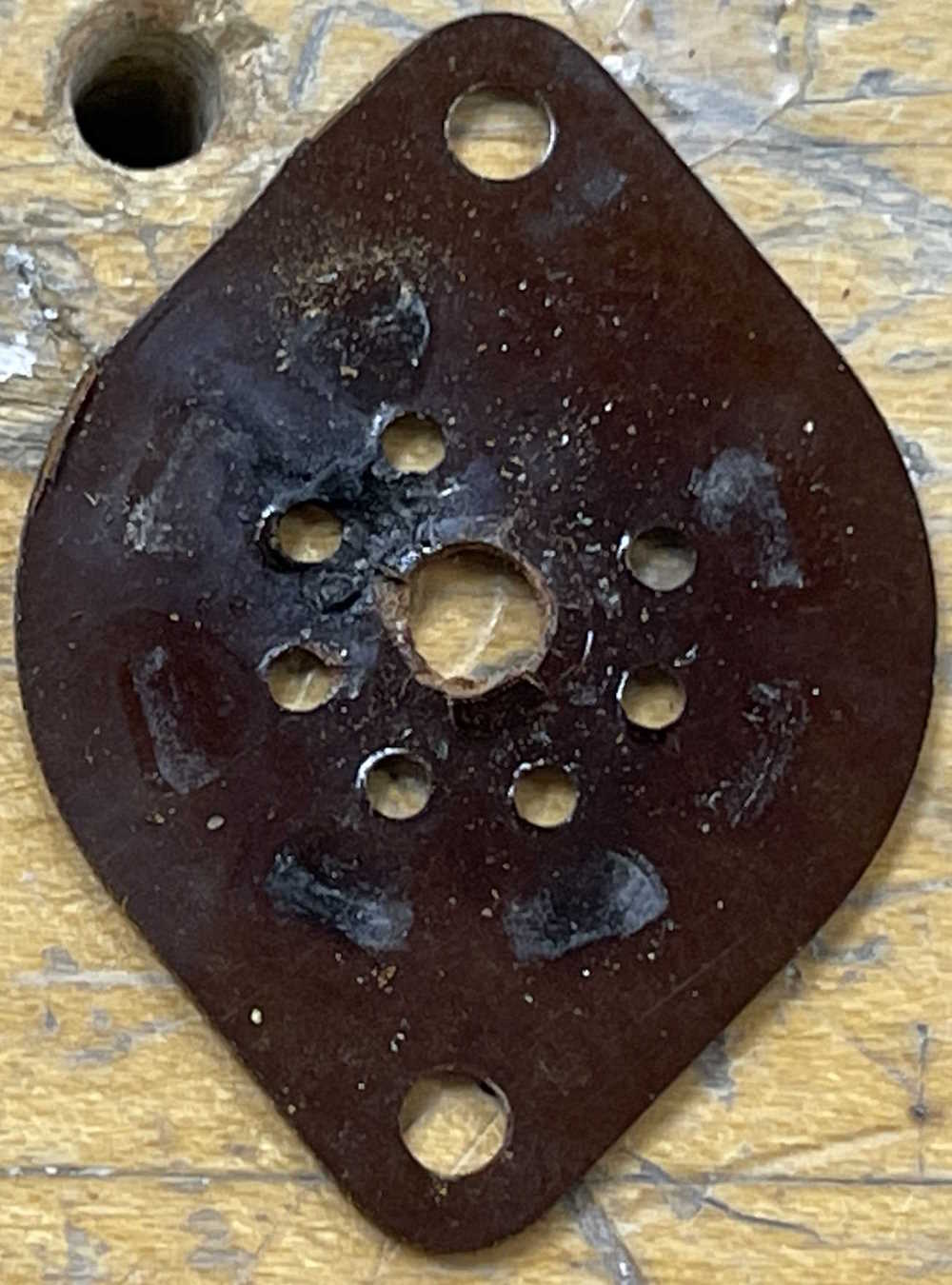
That assumption was correct. Here’s the top wafer:
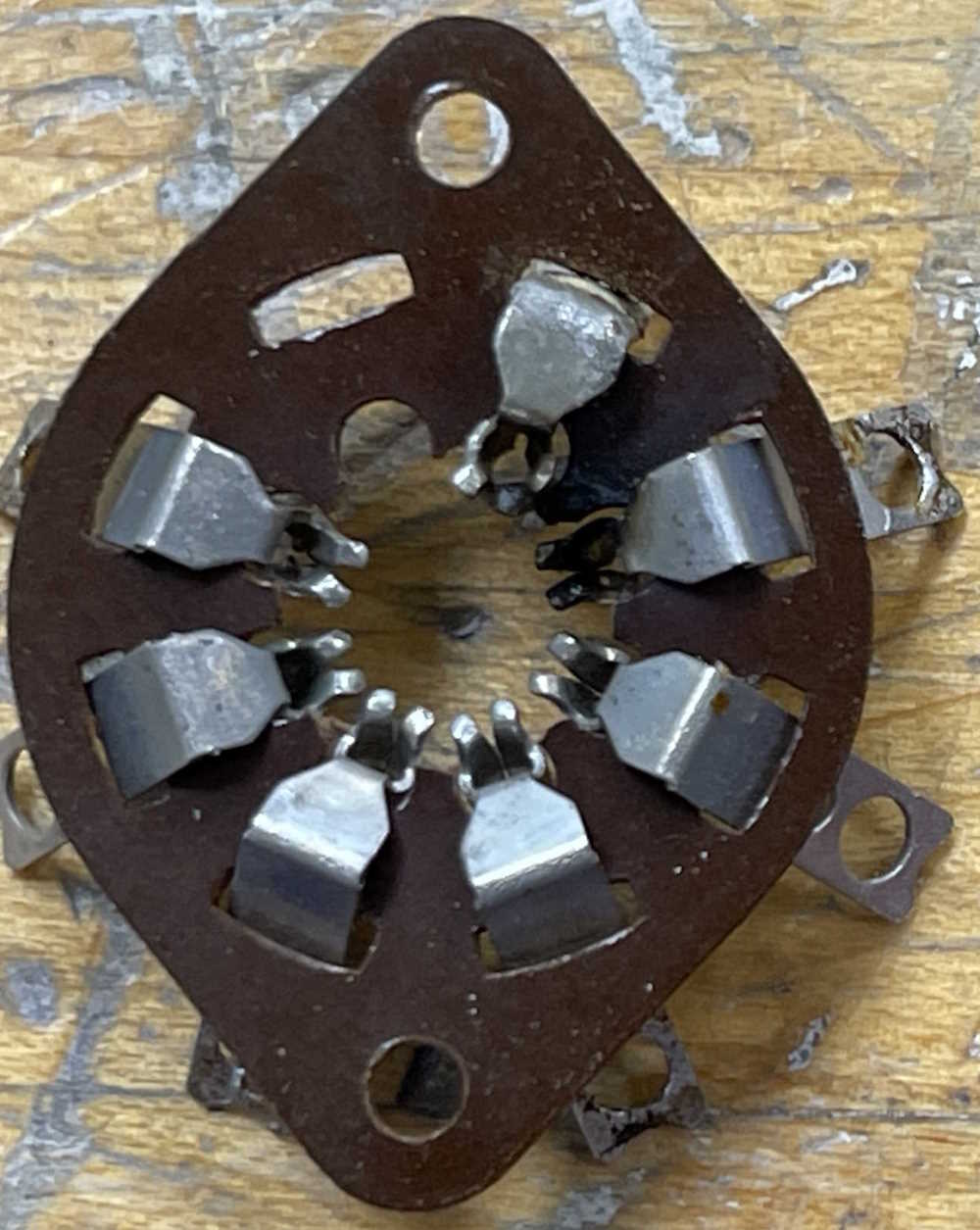
You can clearly see the arc has eaten away the portion between pins 6 and 7, while depositing a lot of carbon and other debris on the phenolic wafer. The bottom wafer is similar:
It’s not the easiest thing to see, but there’s a lot of soot on the same two pins, and part of the socket crumbled away as the rivet was being drilled out. I’m surprised this thing didn’t arc as soon as it was turned on - but perhaps this is why the device was retired. Who knows, really.
Regardless, there’s a new socket in it’s place that shouldn’t have this issue, and this one goes in the bin - although I may save a few of the better pins for some later purpose.