LinkedIn has been around for a long time, When it first started, it was a place to put your resume and a way for you to talk a little bit about your doings in the working world. That was fine…then Microsoft bought it and turned it into a social network with all of the baggage that involves. karens everywhere, political spammers, AI slop so bad they had to make a joke button about reporting AI slop (while here’s some tools we’ve made to help you make more AI slop!) and all of the OMFG bad words bad words! you can handle.
I can hear the comments now. I’ve been over LinkedIn for years. I don’t blame you.
Let’s set the stage for our performance:
In technology, there are terms that we need to use that karen doesn’t like, words that offend her. Words like:
Stopcock
Master-Slave
Crippleware
Dummy values
Male/Female
Various mnemonics for the color codes
And, of course, there’s television. You had the Indian Head logo, and a whole bunch of terms for early CRTs:
Suicide Tubes
Widomakers
Mankillers
Where did these come from? Well, the early CRTs used a metal shell (the “bell”) as the accelerating anode. That is, the entire tube had high voltage on it. You reach in when the set is on, you get 25kV, and you’re off to see the wizard. Some companies tried to mitigate this with a plastic coating, but the fact remained that you had a massive area of high voltage just inside the box waiting for unsuspecting fingers. There was also the technical problems of leaky glass-to-metal seals, but that’s a different story.
So why am I over LinkedIn? I think that last term did me in. Mankiller.
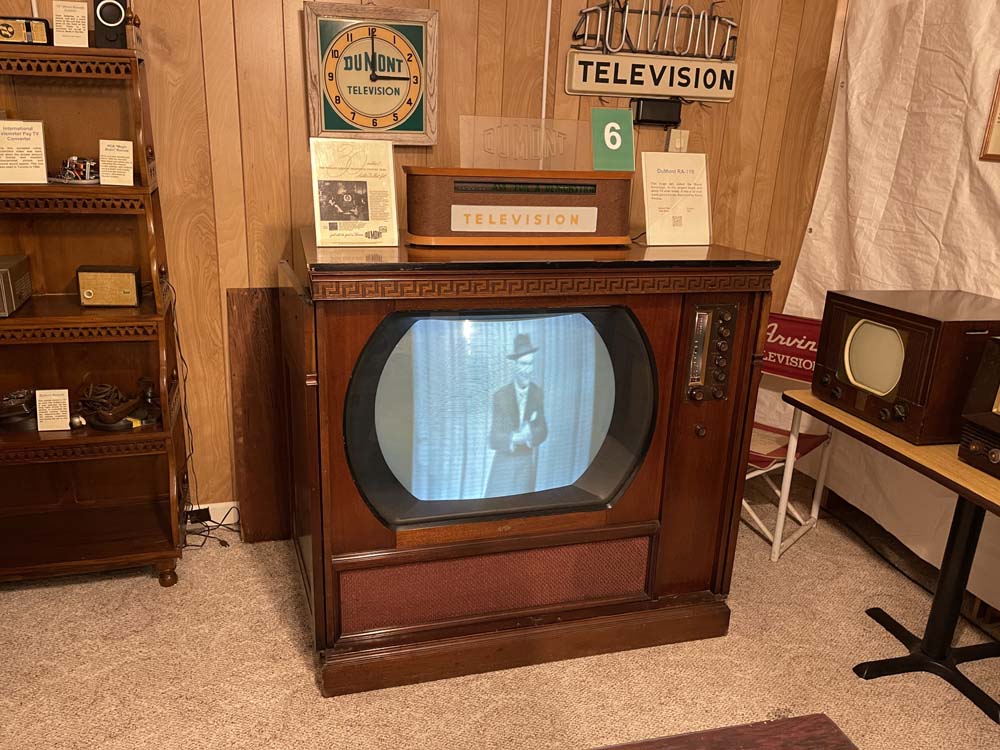
I recently posted a picture taken at the Early Television Museum in Hilliard, Ohio. That of a DuMont RA-119 television. It used a 30” B&W CRT, and was the largest B&W set ever made. And yes, it had a giant metal bell that was at the accelerating potential voltage. Big enough that you could hug it.
The image simply does not convey how big this thing is. You buy a house for your television with this one. It was expensive, and wasn’t really made for you and I. Let’s just say this thing is massive. Enormous. Giant. Is that enough adjectives?
In the discussion about that set, someone made a comment about obsolescence. I made the comment that the biggest fault with these was the mankiller CRTs that leaked and had high voltage on the shell.
I’m only guessing of course. I’ve receive no indication of account problems. Just logged out and forced to identity verify again. No appeal notice, no indication that I did something wrong, nothing. And that’s about the way modern platforms go - they hold all the power and refuse to tell you what you did wrong according to them.
So…what did I do? No idea. That’s my guess however. I submitted the required documents, but there’s no way for me to explain my case, or even see my case.
I’m over the site, because it doesn’t really do much anymore. I mean, I’ll probably open a new account if that one is locked, but it will simply be as it was put to me: my professional business card. Here’s my profile, here’s links to my portfolios, no posts, comments, feed views, nothing. It’s simply not worth the time to mess with it these days, especially if you’re going to get the karen-and-kumar-squad terminating you for using a valid tech term they thought was bad.
You have to log in to view that link!
Assuming I can get back in, I’ll grab the few contacts I need and remove all of the comments and posts, leaving nothing but the resume. Yes, I could just kill it right there and open a new one, but it’s more satisfying to me to delete everything and have people go “Why are you doing this?” Well, here is the reason. There’s also the crap with opening a new account, they require a lot more info these days that I’m simply not willing to give.
In conclusion or TL;DR, whatever, I don’t need facebook for business beyond just a place where some recruiter can lazily hit the inmail button with a junk local job that’s always hiring. And that’s all LinkedIn is these days - facebook for business.
I’ve been doing some YouTube stuff for a while now, most of that showing up on https://youtube.com/ … bottomdrawerprojects. I played around with a few concepts, including scheduled release dates, and a second channel that started to collect all of the build videos - https://youtube.com/@boaringboarbuilds - but I don’t know that it is working as well as I wanted.
This isn’t about numbers, what I’m running into is that videos I make on a device are quickly becoming scheduled for a long time after the device has finished up it’s repairs here at Projects, and by the time it finally does show up it’s forgotten. I want to try and make a “here’s the device, here’s a video” type system so you can see what’s going on. That, to me at least, seems like it would be more interesting than having a video show up a year from now and needing to dig around to find the accompanying information here at Projects.
What I’m going to do is start releasing videos @bottomdrawerprojects a handful at a time as not to overwhelm the connectors I have set up to odysee.com. When those are done, videos @boaringboarbuilds will be moved over. When everything is all released and moved, new videos will be posted as they happen.
Boaring Boar Builds will be moved to a kits and new stuff builds channel, and all of the old stuff will stay at Bottom Drawer Projects. There will still be some scheduled releases, shorts and holiday things, but for the most part everything will release in real time.
Thank you for all the views and visits here to projects, and I hope you’ve found something of interest.
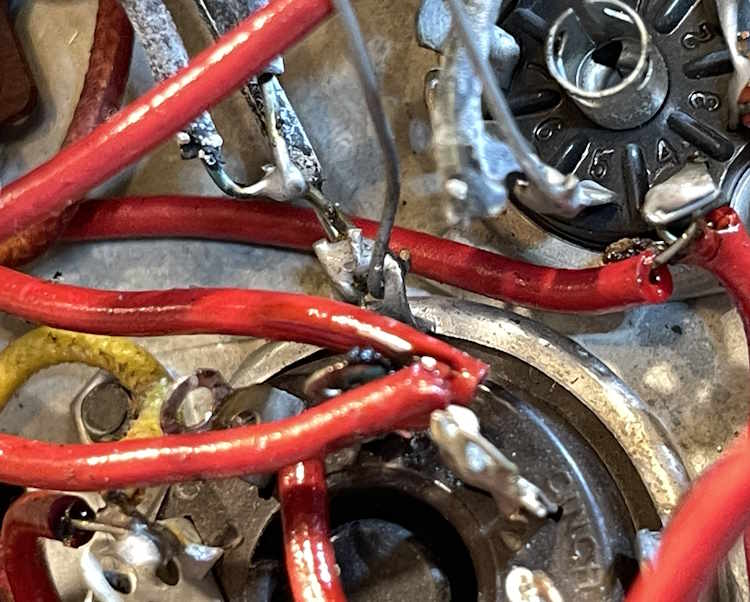
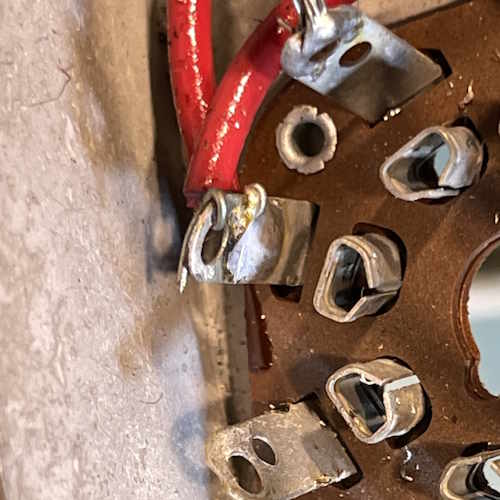
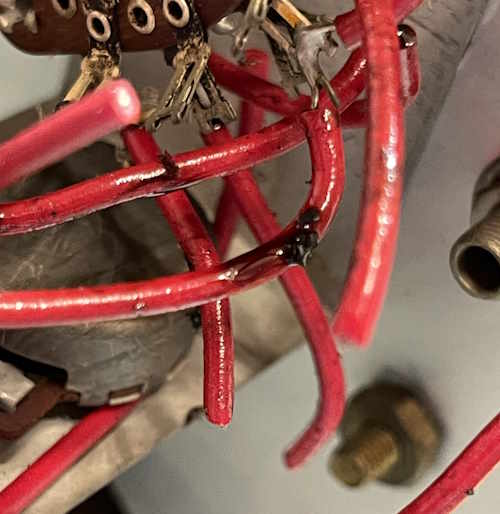
I’ve decided to start on the “second” Precise 9071 as the first teardown and rebuild candidate. While there’s not much to show about the actual teardown itself, I did find it interesting that this unit had a couple of no-solders.
I wonder how many issues this caused over the years.
The rest was just removing parts and doing cleanup. I was going to try and re-use the wire that was already there, but…it’s so sticky that I didn’t want to use it.
Some of the wires are literally coated with decayed plastic snot.
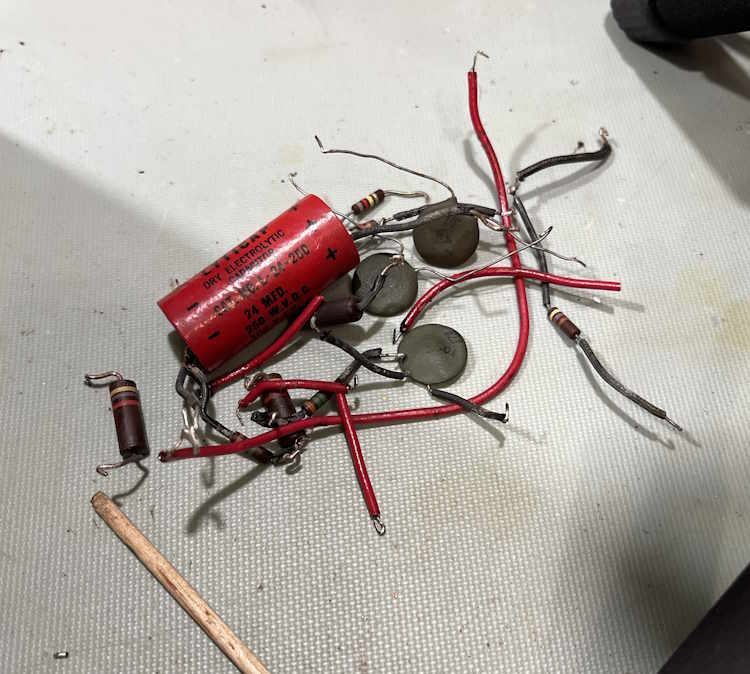
I ended up with a pile of parts removed:
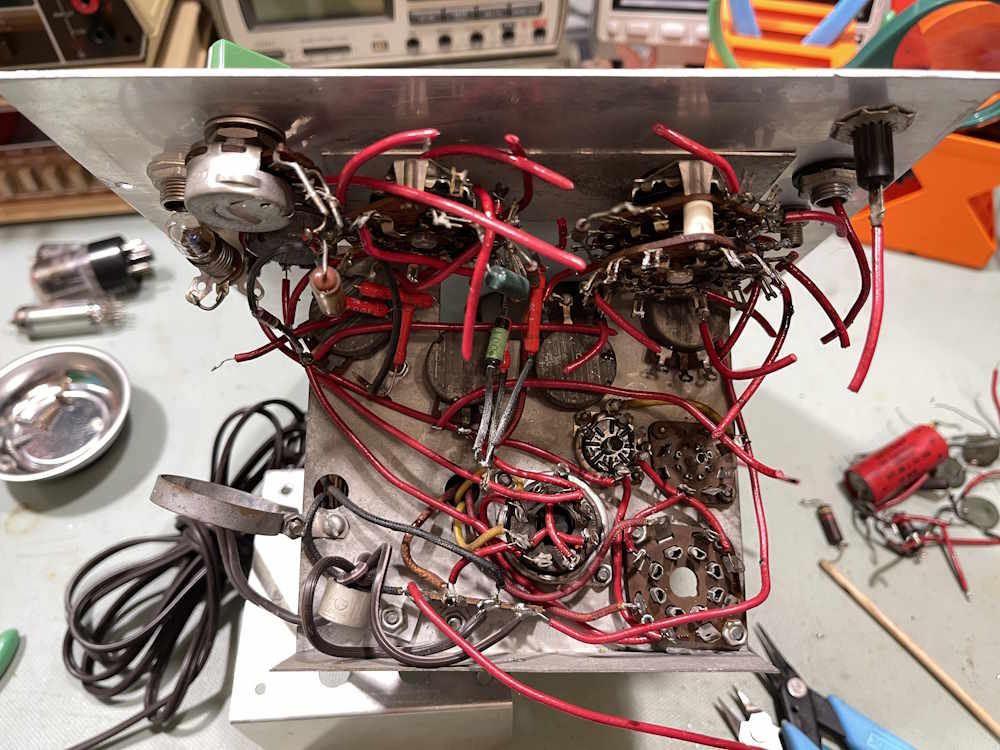
…and a chassis that looks just as bad as when I started.
Next up is removing the range switch and dropping it in the ultrasonic bath. Stay tuned!
I’ve had a couple of these devices sitting around for a while in various conditions, but all of them had meters that weren’t in the best of conditions. When I saw this one show up online for a reasonable price, I grabbed it. While I knew it had some minor case damage, the meter face itself was in great shape, and it seemed pretty clean. There was a reason for that…
This is a unit that offers everything audio. Load resistors, AC VTVM, I/M analyzer, etc. Kind of a test bench inna box thing.
Let’s check out the unit itself before digging into the chassis.
Here’s the front of the unit with the clear meter cover.
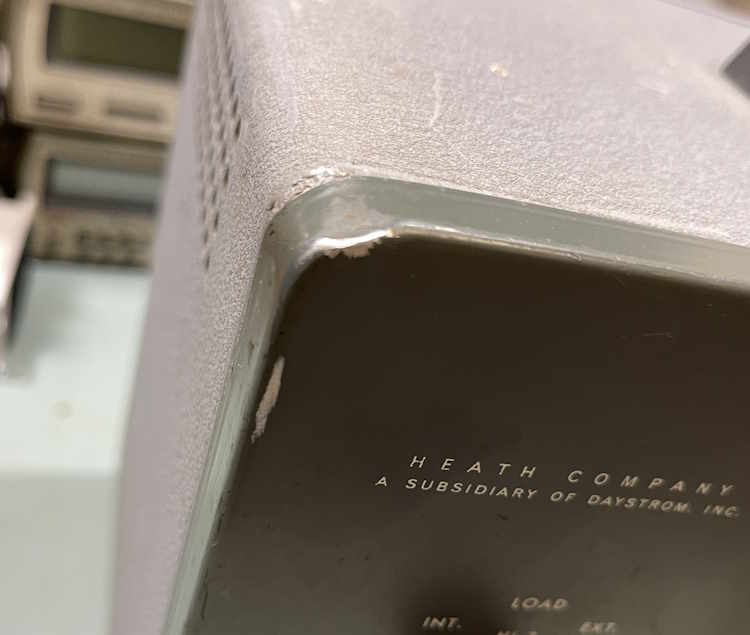
Here’s the smashed corner. It’s not terribly bad.
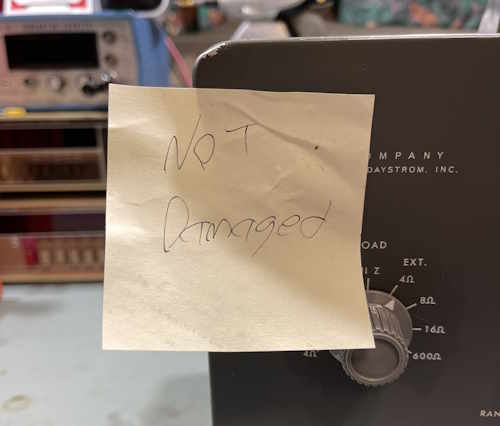
Of course, a friend of mine “fixed” it for me.
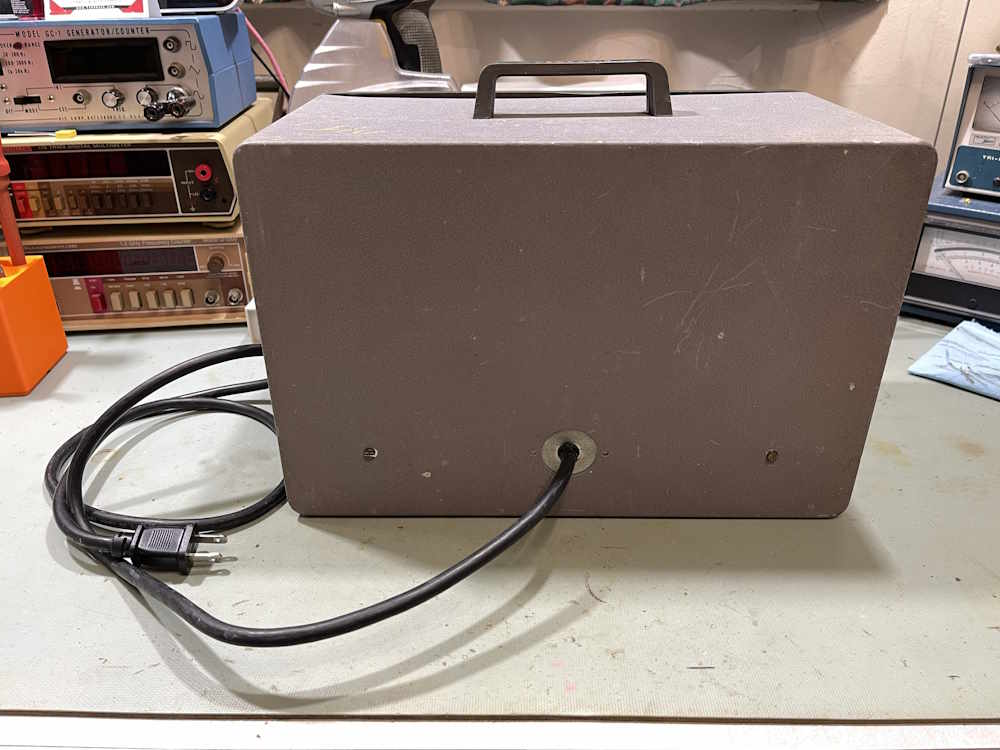
The back is nothing special, but it has a replacement cord. That’s nothing unusual for a device this old.
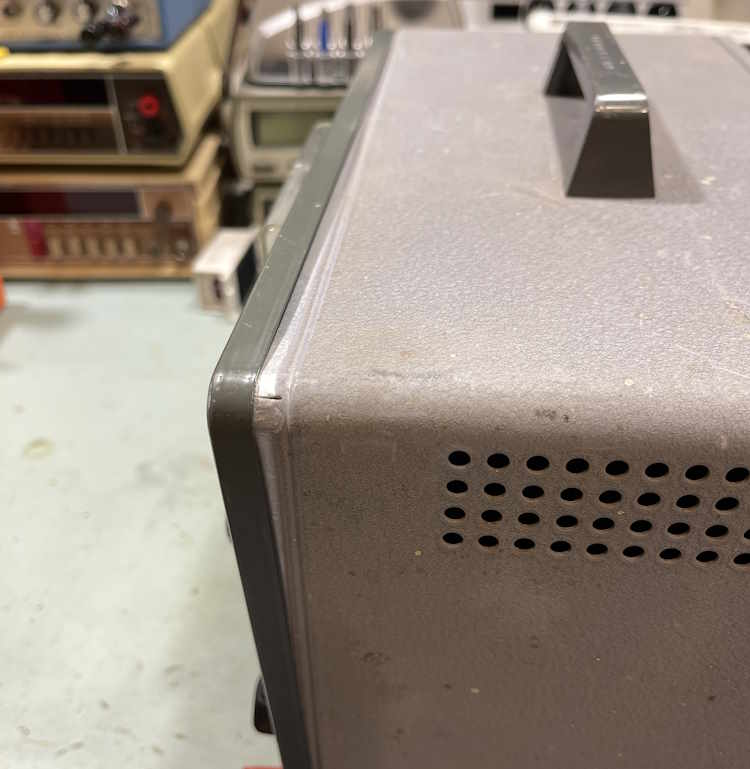
The top and side, of course, exhibit the standard Heathkit pull-apart that you get with these big boxes that have no screws near the top.
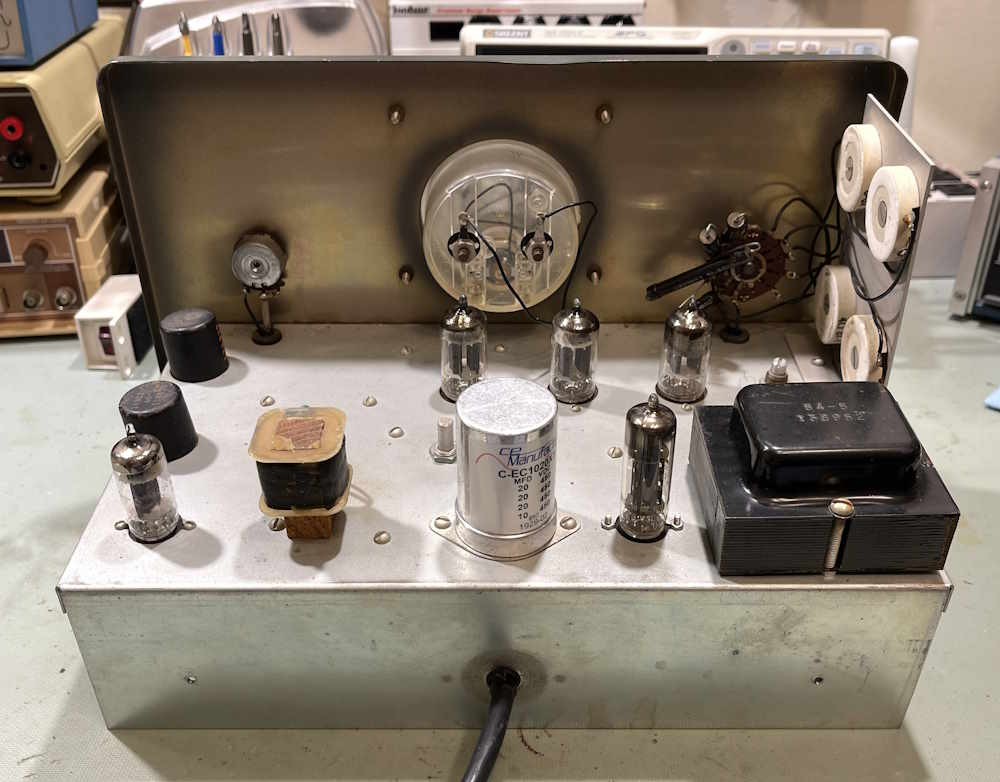
Let’s open the device. Here’s the inside. The screw that holds that coil down is loose, but we can fix that later.
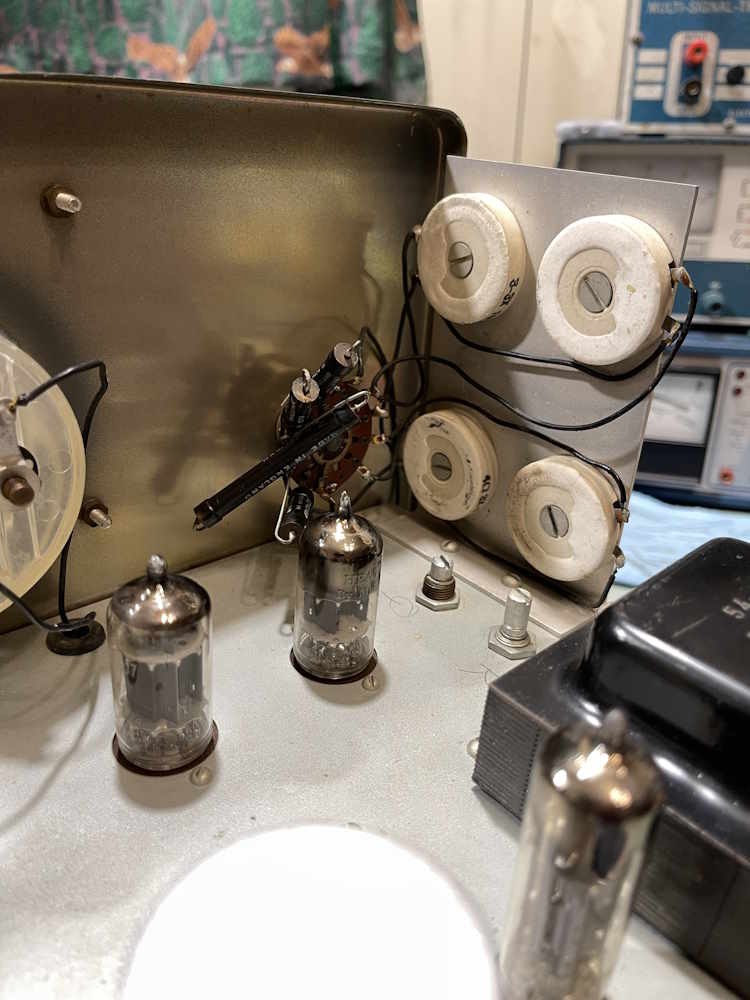
Here’s all the load resistors. They’re all intact and close to their values.
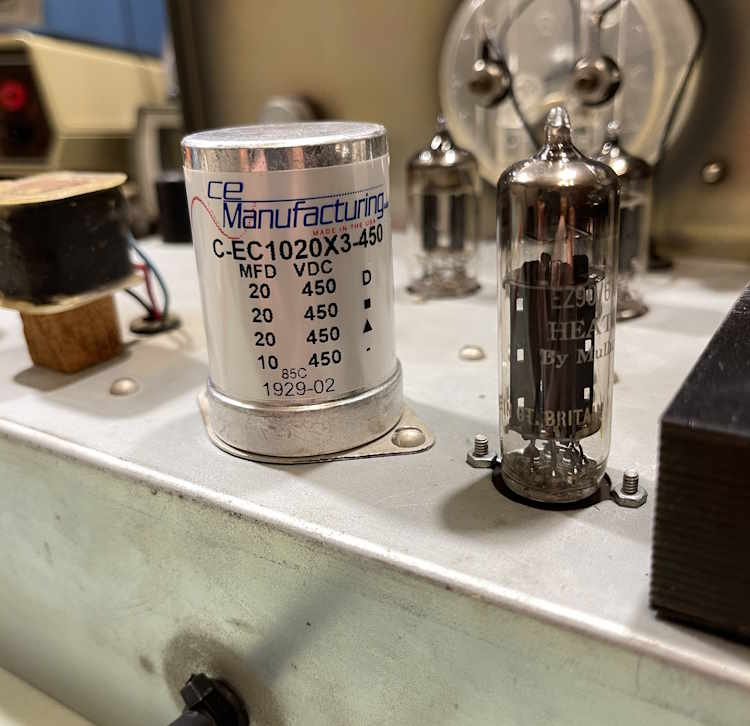
Here’s where things get interesting. This is a brand-spankin’ new capacitor…
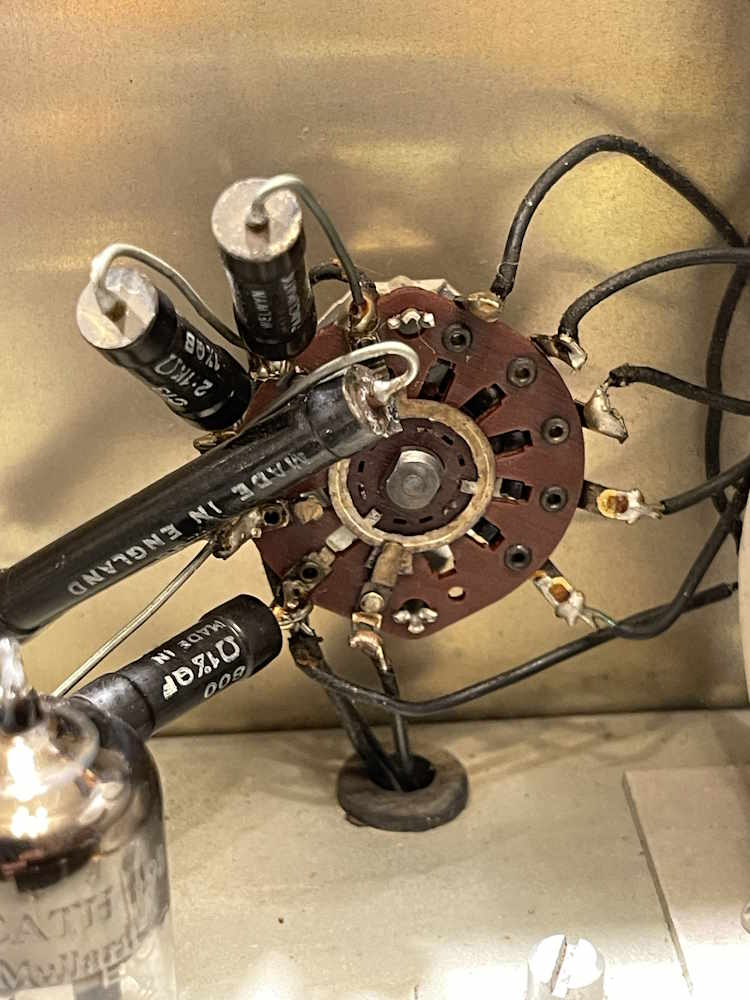
The switches have been cleaned…these are normally black with oxidation.
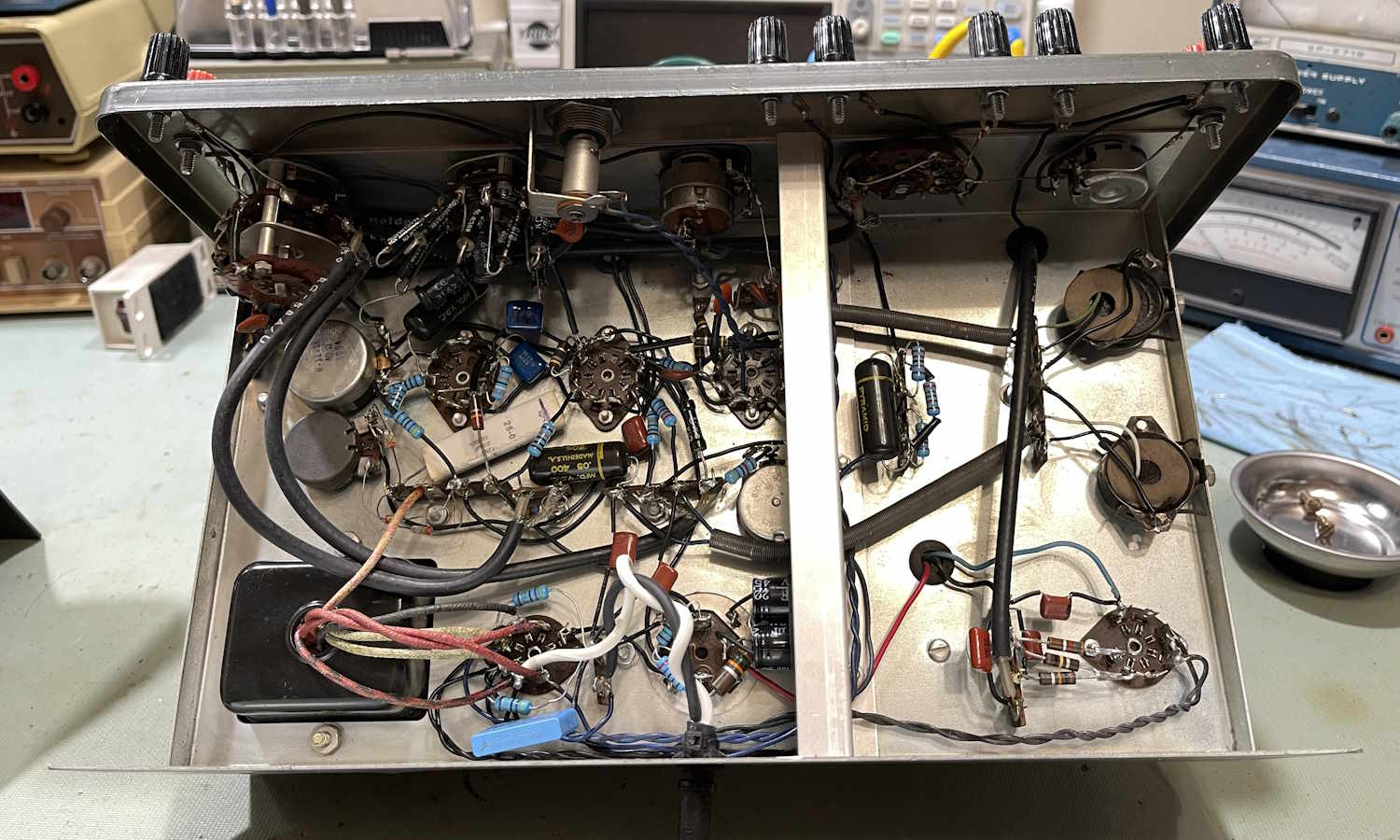
Let’s take a look at the underside of the chassis.
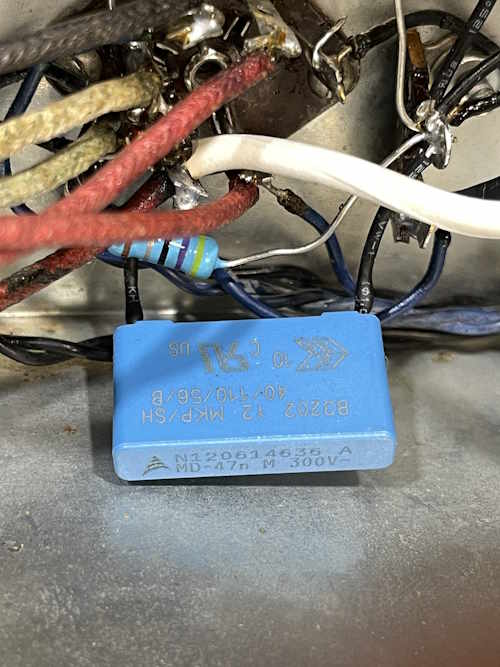
This thing has been almost completely reworked underneath, even to the safety capacitor, which is of the correct type.
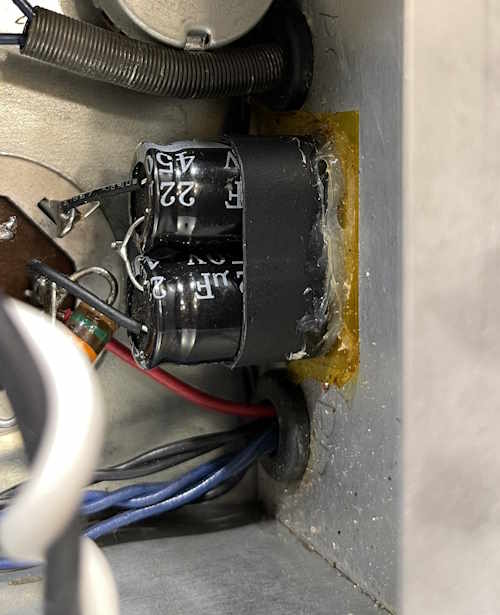
There’s some minor messes, like this set of capacitors. There’s nothing wrong with this, and it’s acceptable to get parts up to a higher voltage.
The only real issues I see here are minor.
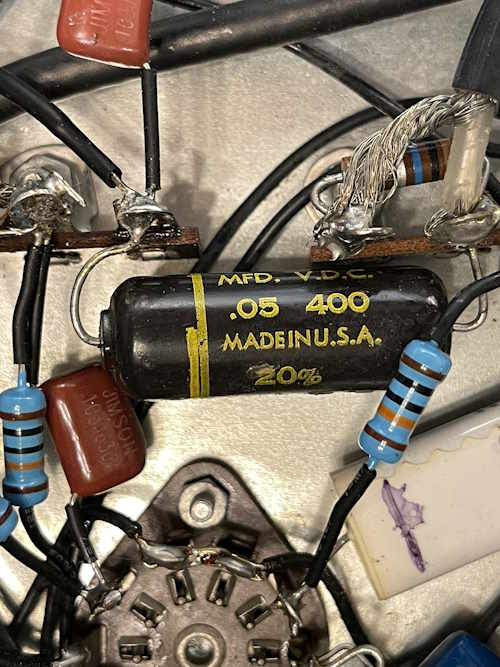
Those are old capacitors. They probably shouldn’t be in there, but depending on where they are in the circuit it may not have mattered. If they’re low voltage, then they’re probably fine…but there’s no need to leave them in when new stuff is so cheap. There’s a handful of these in the unit.
This one is an actual problem:
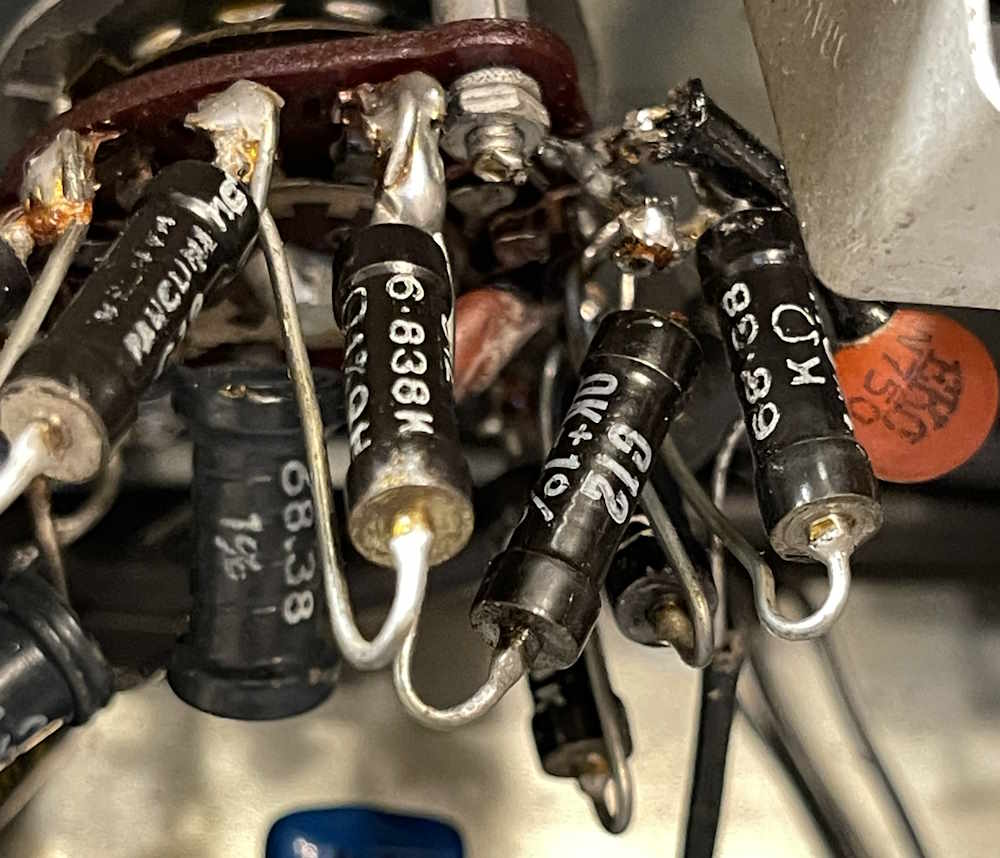
That resistor, one of the many precisions in the device, is broken. I can see where the previous owner tried to fix it, but it just popped off with a minor touch. I can understand why this was done, those are bespoke parts. You can make them from combining standard values, so that’s probably what I’ll do.
I did try it out briefly, the meter moves but it’s not zero’d, which means there’s still some leakers in there. That will be corrected during some rework. In the meantime, I have a second unit that has a good faceplate, so I’ll probably swap the chassis in that one out for this chassis, and go from there. Stay tuned!
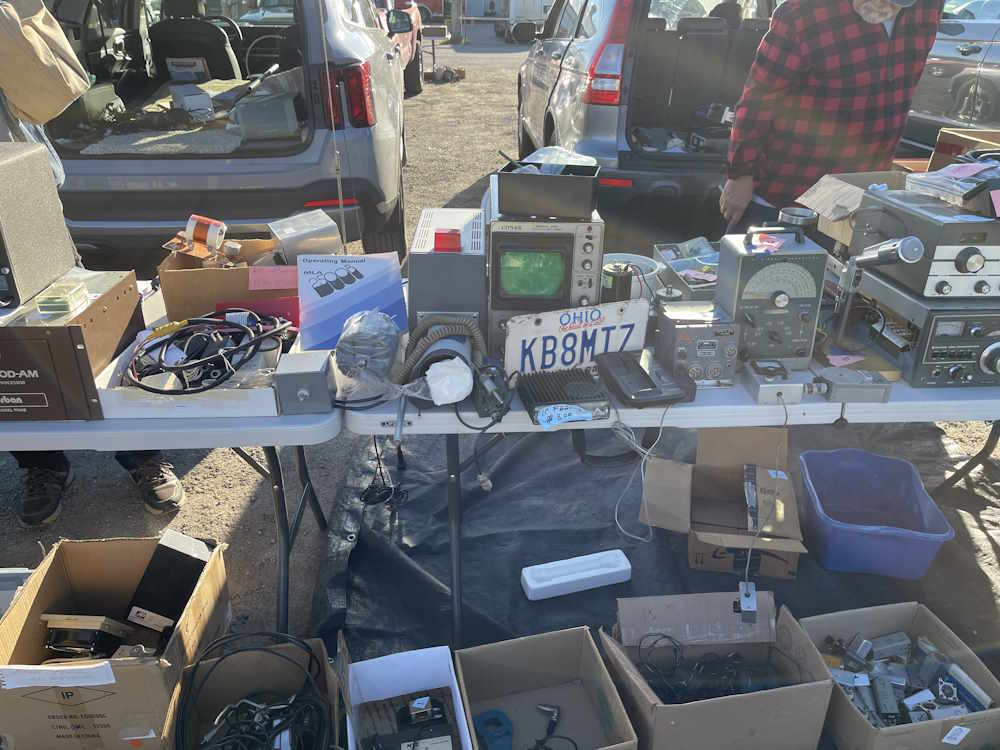
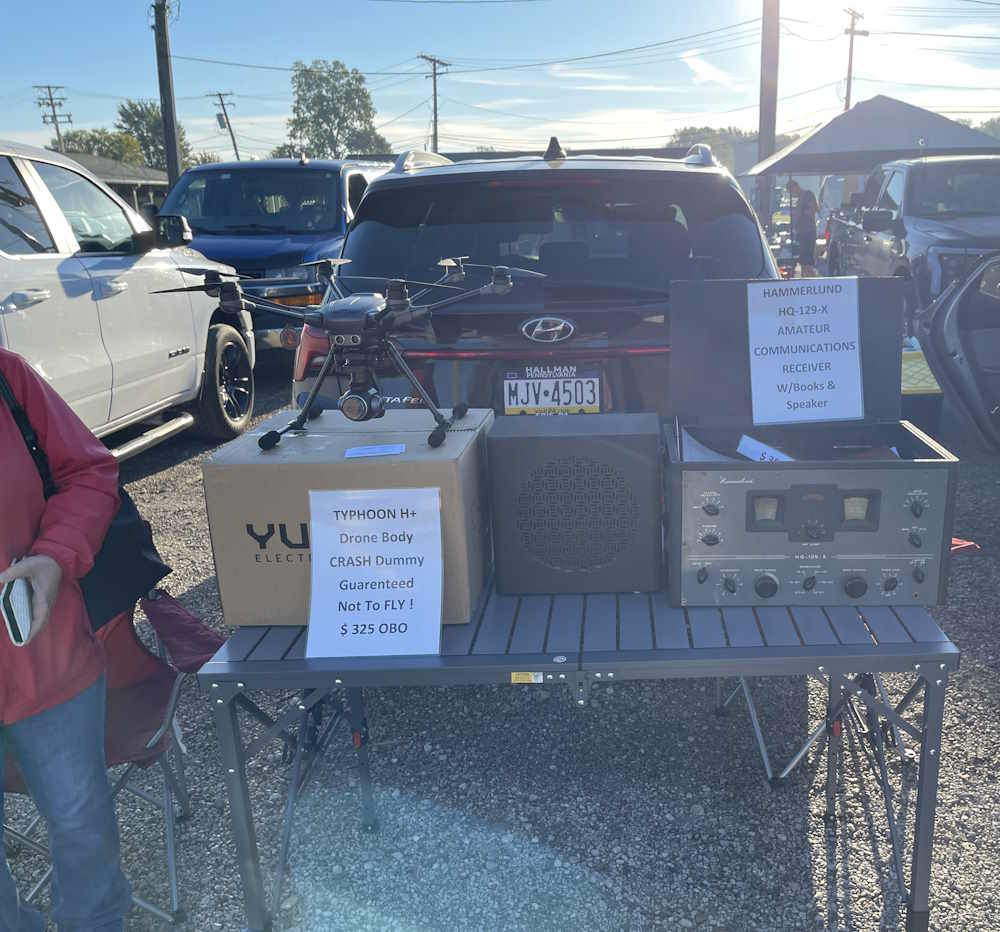
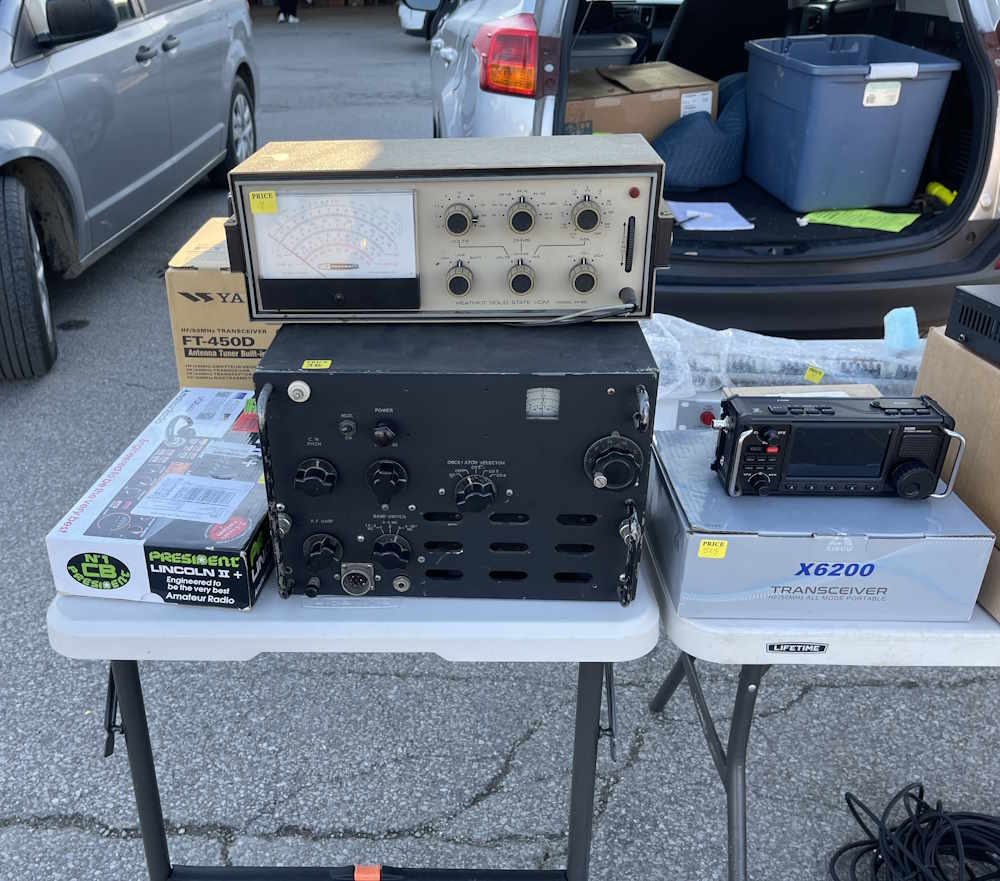
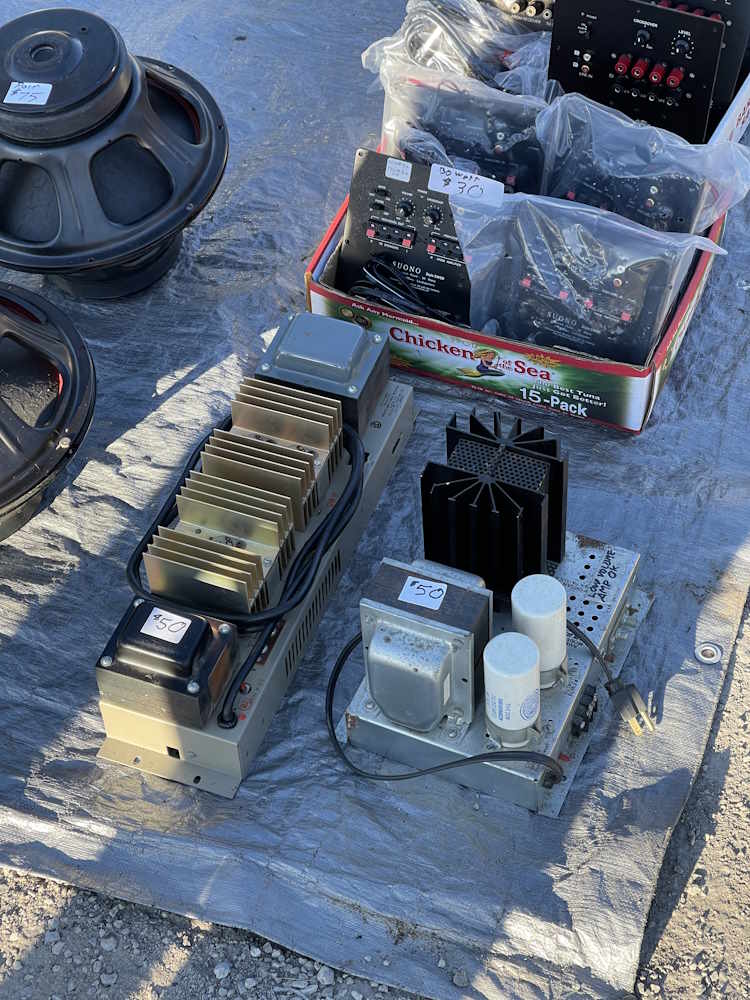
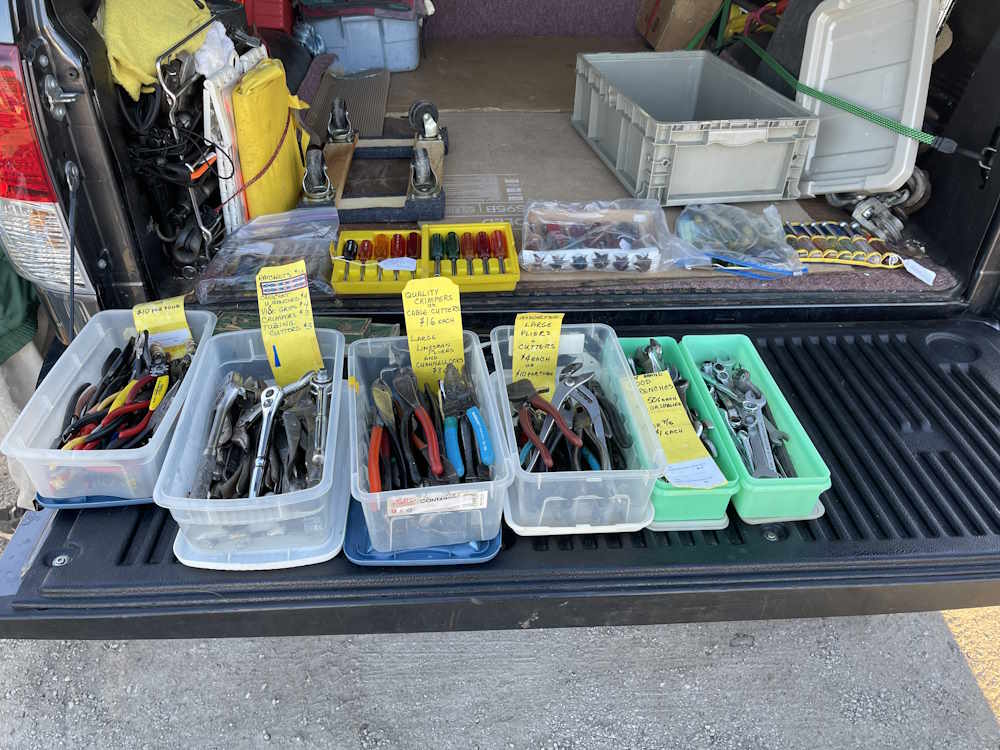
Cleveland has been a good show for me for as long as I’ve been going. While the inside building they have ebbs and flows with vendors, the outdoor flea market was well stocked with things we’d expect to see at shows. Tables of radios, piles of equipment - all the good stuff.
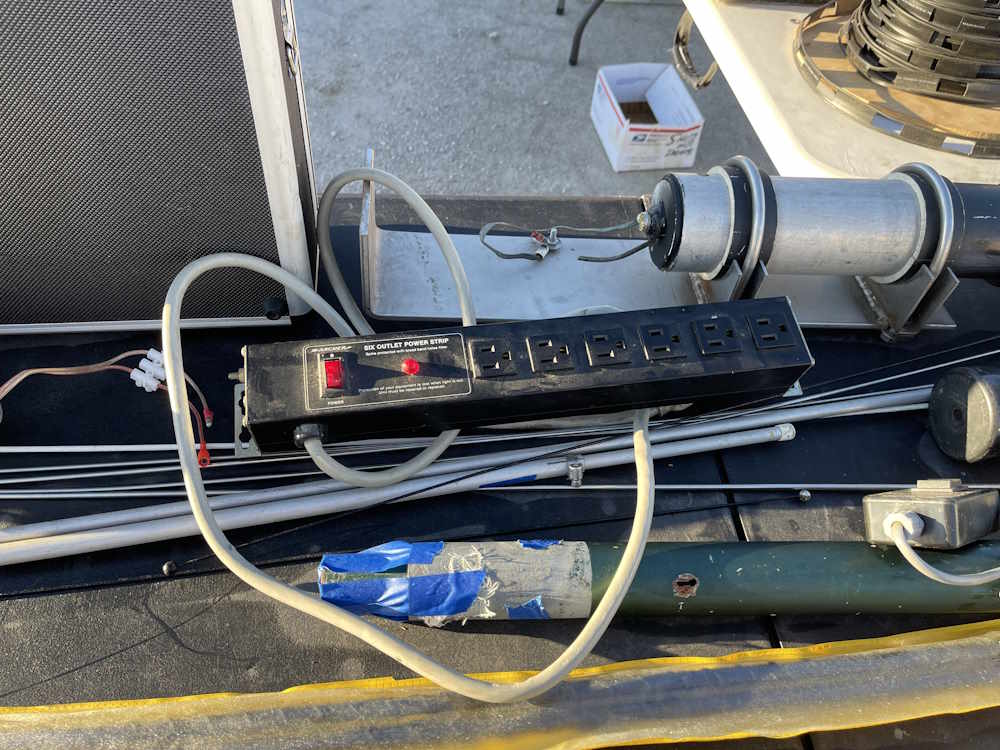
I didn’t take much home from this one, as I had to stop myself from buying yet more boat anchors. I went home with some tools, a power strip, and an old handheld game. I got away lucky!
I did see some other things I was interested in, but a few of the vendors here (and all shows, TBH,) seem to treat their prices as a state secret. I don’t want to have to flag you down and have you hmmmmm and hawww for a minute while you try and gauge how much I might pay you, mark your prices! I passed up a couple of interesting things for this reason.
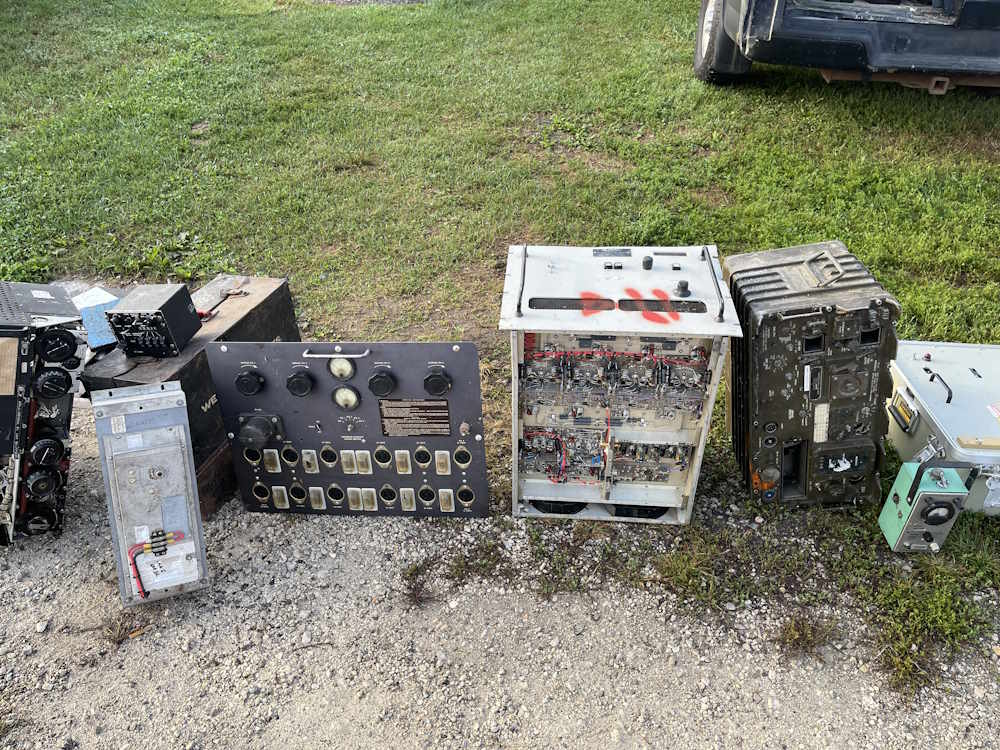
Other than that, here’s what I saw at the show:
Rat Shack will be with us forever.
Old consumer gear.
A 1970s WE butt set.
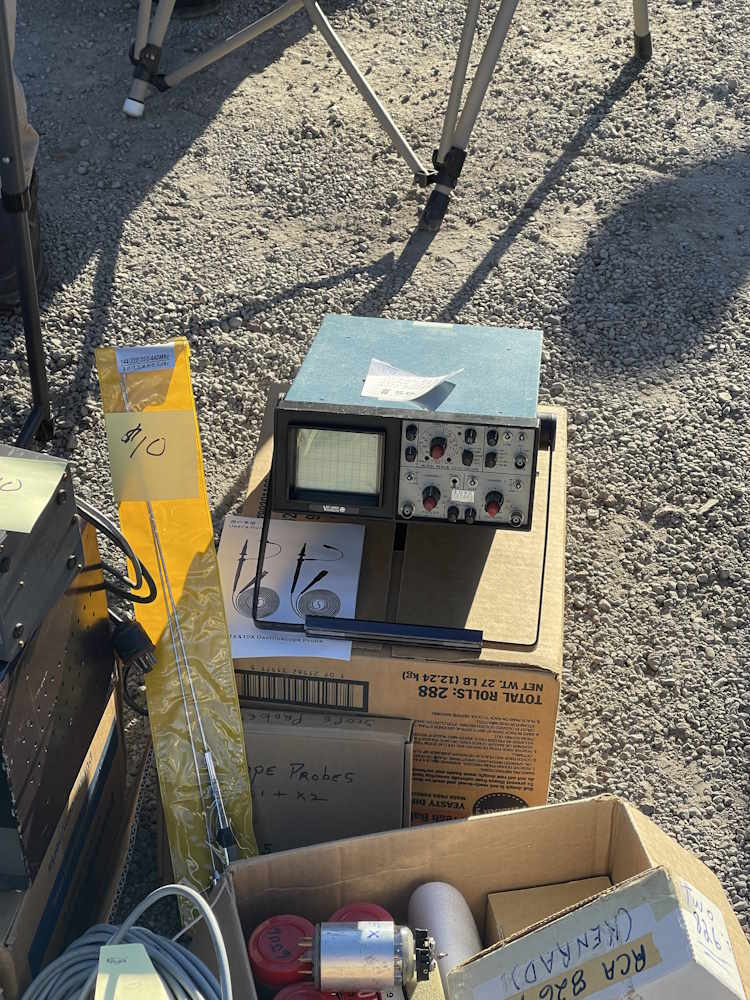
An unusual Conar (NRI) scope.
A Heathkit distortion analyzer.
Guaranteed defective.
I think this has eleven tubes.
A table full of unpriced equipment.
One of those old VFD card games. I took it home.
An excellent condition old HP signgen.
A Heathkit power inverter. 25A input!
I don't need another VOM.
This device is in it's home town.
This tube devices power supply.
Surprise, radios!
Some Heathkit meters.
There are at least 2.61 of these monitor scopes for every person on Earth.
You guessed it, radios!
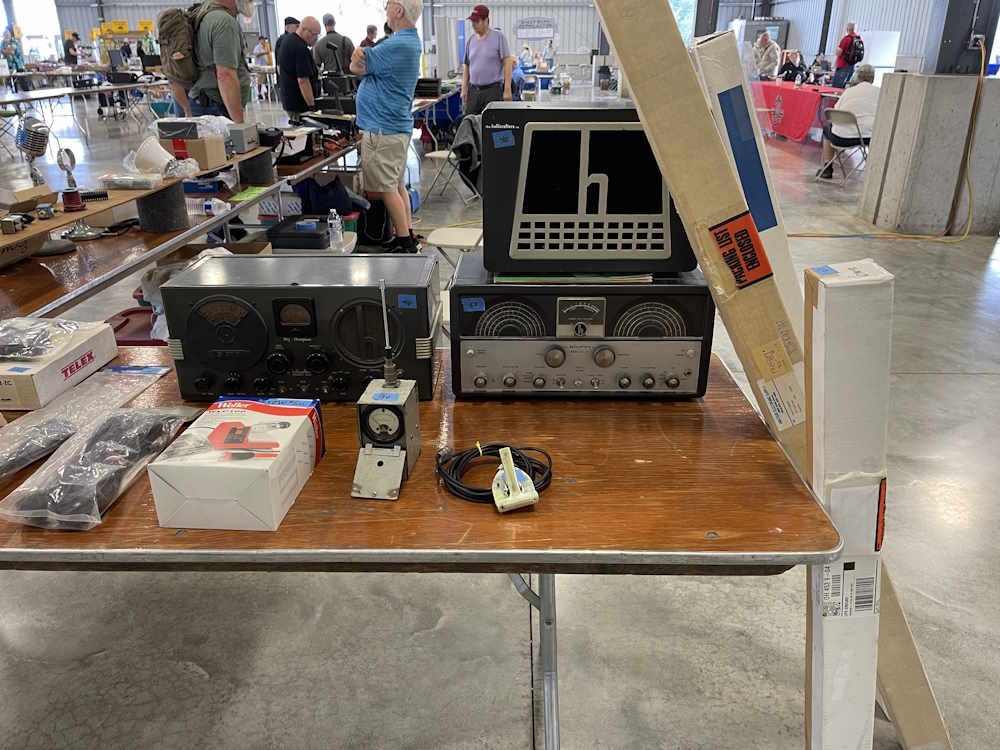
This is a nice-looking radio.
We come to shows for piles of junk.
We have the power!
Got a line voltage? Measure it here!
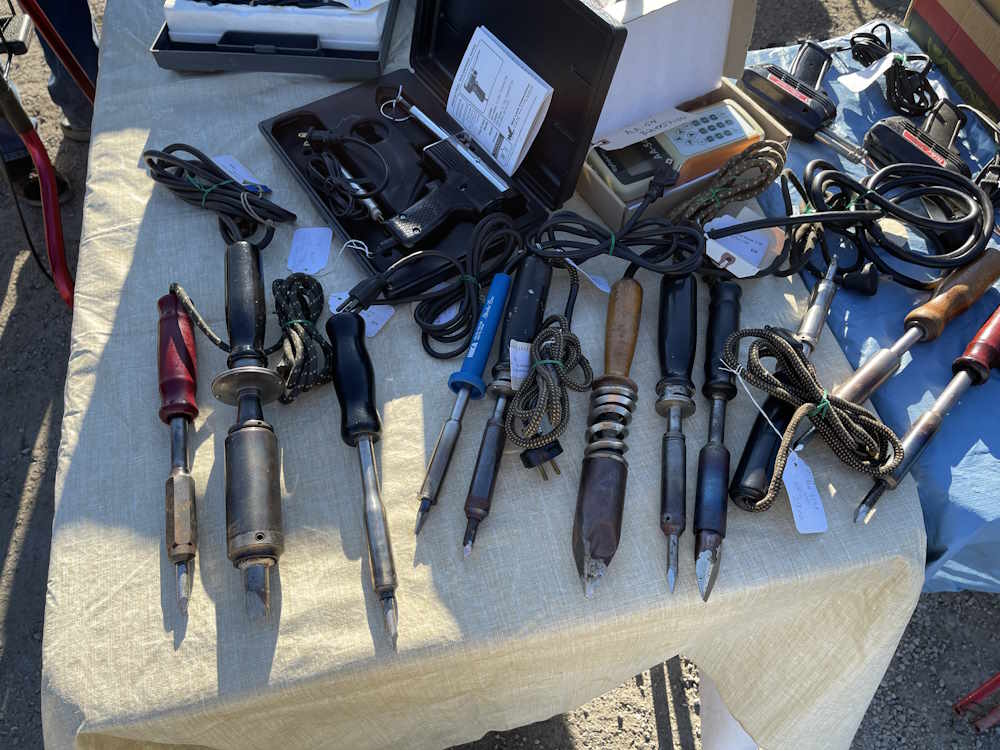
When it needs to be soldered.
Just stuff.
More stuff. We like stuff.
A Zenith Trans-Oceanic in decent enough shape.
I always pick up a few things from here.
This isn't far from home.
Vu-Data made scopes for data centers.
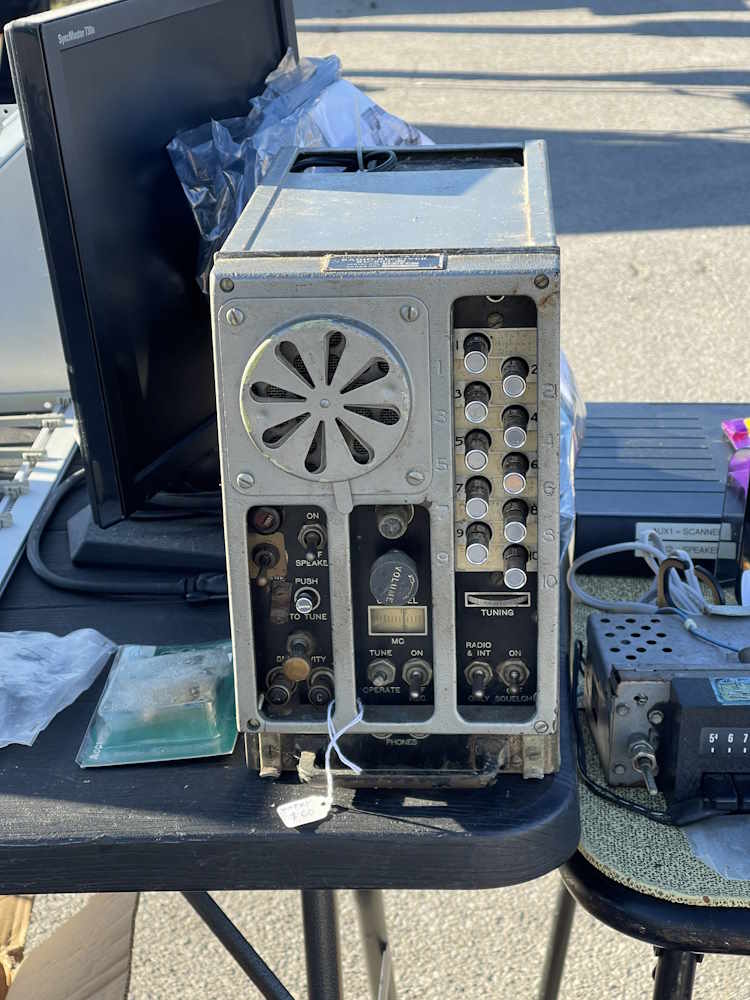
This interestingly strange radio.
Wire recorders are still fairly common.
Next show is the Early Television Museum’s fall swap, and the last one I’ll hit this year is probably MARC @ MAPS. See you there!
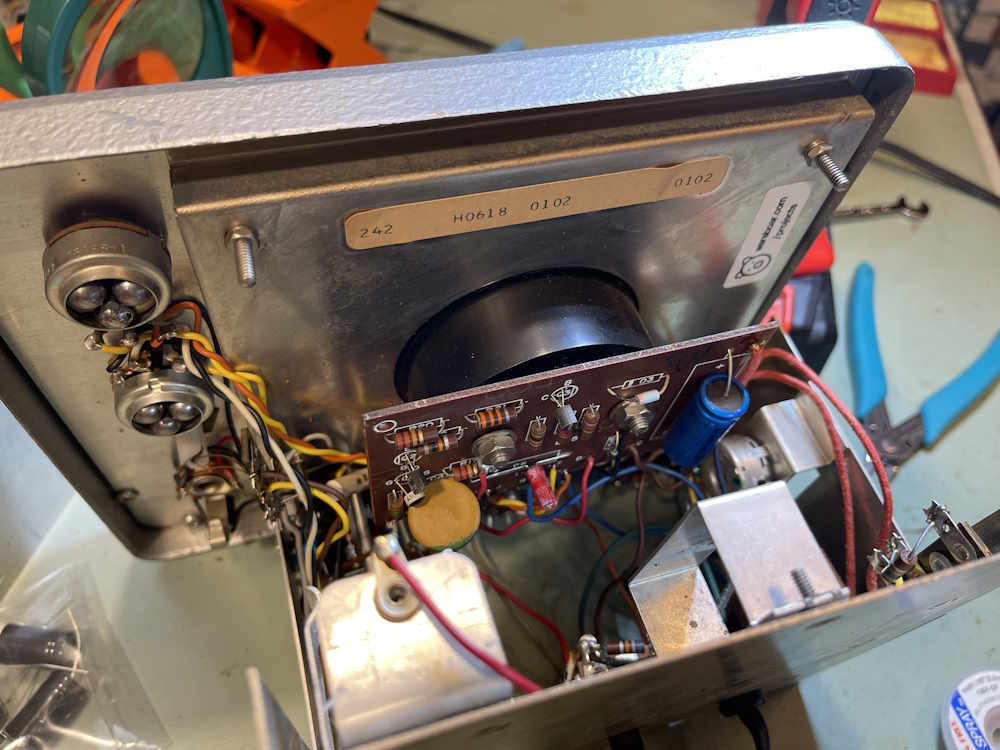
There are four more capacitors in the EICO 242 I’d like to replace before doing a calibration on it. Those are:
The main AC filter,
The two capacitors in the AC rectifier circuit,
The main AC input blocking capacitors.
There’s not much else to say, let’s get started.
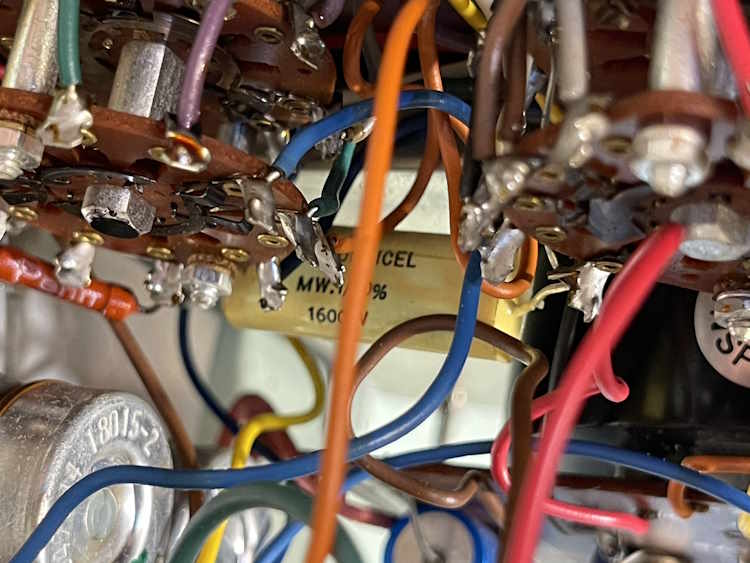
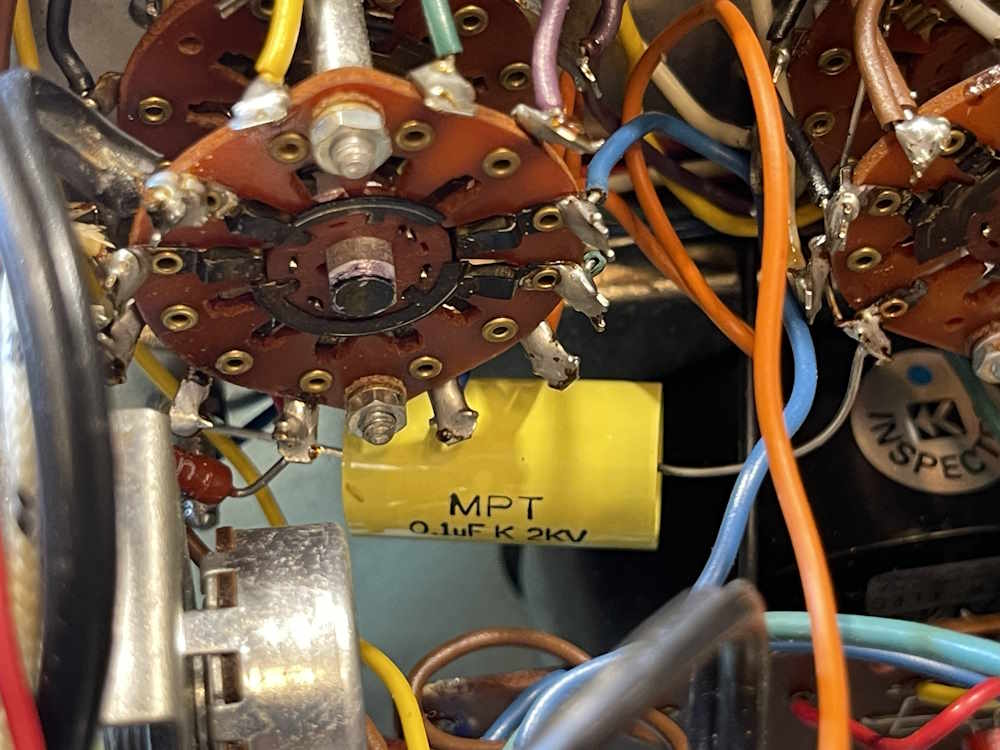
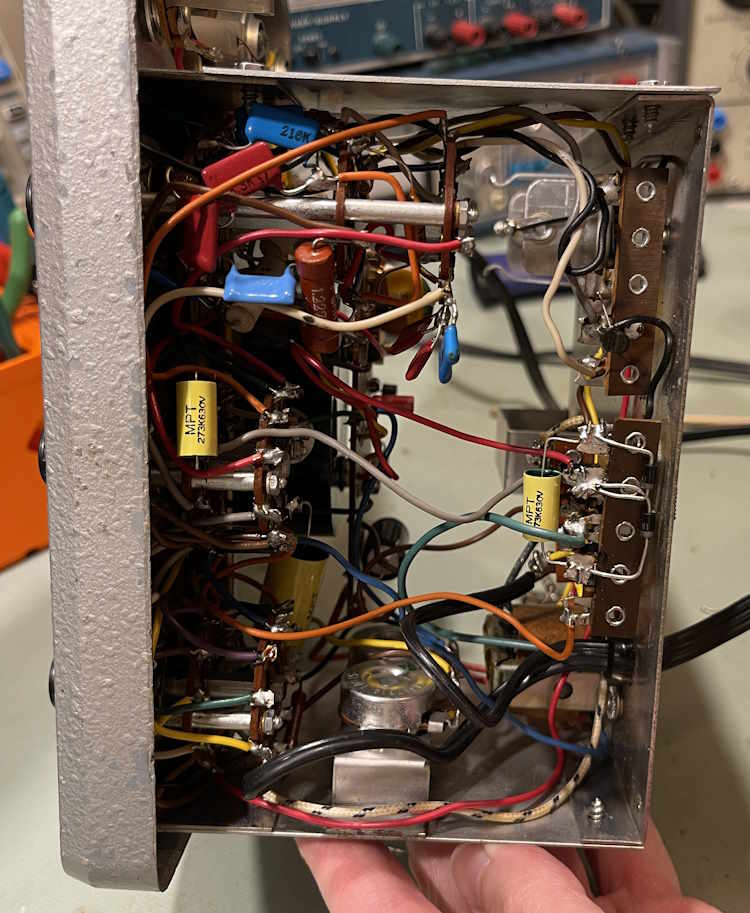
First is the AC blocking capacitor. It’s a hefty part, 0.1 @ 1600VDC. I have some new 2KV parts for this.
This one was kind of a pain in the butt to get out without messing up other wires.
Next is the main filter. This was a matter of unbolting the board, unsoldering the capacitor, and replacing it. Not really that bad. It’s not defective, but it’s 50. Let’s get it out of there.
The old part is a 300μF @ 30V. I have 470μF at 50V. Now, this device has that as well. The old part was closer to 400μF, so we’re not far off from the new one at 460μF measured.
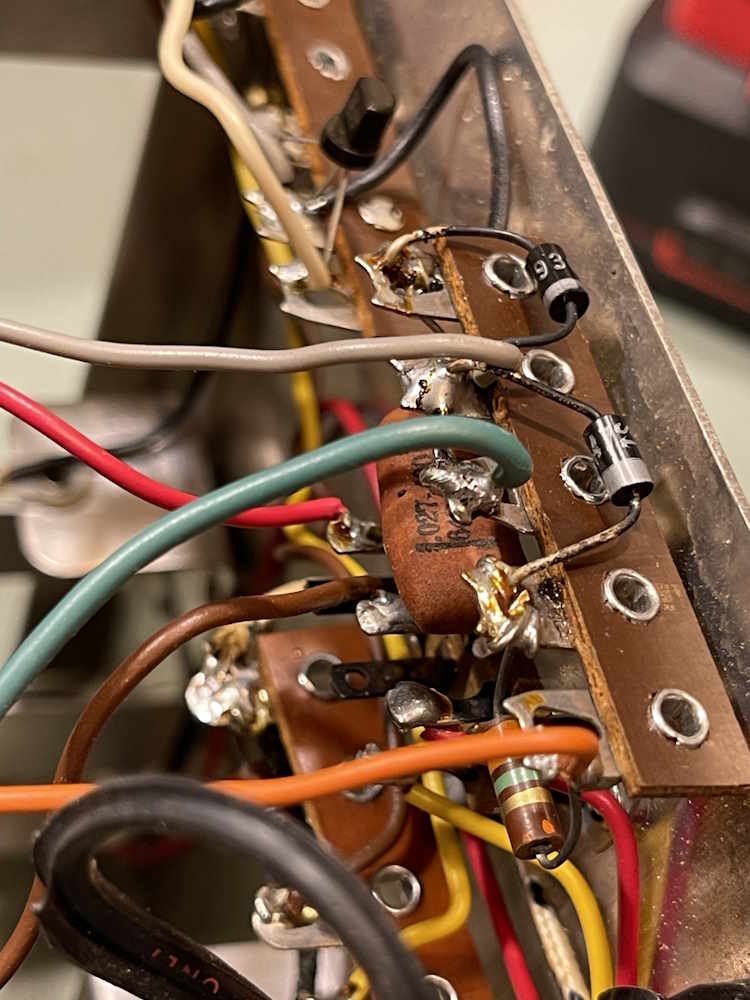
The last part(s) are the capacitors in the AC rectifier circuit. There are two, both 0.027μF ceramics. There’s also some diodes that I had to heat up to remove the capacitor.
Those diodes look like crap. I’ll re-do those at a later date.
Next up is the calibration. There are a few resistors in there that are off, so it’s not going to be 100% across all ranges. We’ll get to that at a later date. Stay tuned!
One of the things I’ve noticed over the years is that you can really tell something about the economy by what turns up at hamfests and what the prices are.
During better times, more stuff shows up at higher prices, obviously. More vendors are travelling because they know they can sell stuff at shows for a good price. Things like the Hallicrafters S-38 series show up in volume and at high prices because they can sell them. Those of us that know about the stuff want to see it first, and if we can poke at it we’re often willing to give a bit more if it’s what we want. We also get the experience of talking to the vendor who might be the one that actually owned the unit and can tell us about it.
During leaner years, less shows up but it’s cheaper, and you get more sold online because they can usually get wider exposure and a price closer to what a show would have offered during good times. Things like the Hallicrafters S-38 series don’t show up (yes, those are a good indicator because there were so many of them made) or if they do they cost next to nothing.
2020-2024 was the lean times, but stuff was cheap and if you were willing to go to a lot of shows, you could get some good stuff for literally a few dollars. That’s where I picked up most of the equipment I’m working with now. In 2025, prices started to rise - but they fell back pretty quickly and it started to be more like the lean years.
These last shows? They’ve been miserable. Fewer vendors, less new stuff (I assume companies are less willing to travel to smaller shows because there’s no crowd) and there’s a lot more not worth the money asked items. The big piles of junk vendors don’t show up. The tube guys don’t show up. The size of the shows have been shrinking drastically. People with certain items are asking more than a new comparable device would cost you because they bought them during good years and need to recover money.
The biggest tell for me this last show that said the economy is really in the toilet and is just a thin coat of varnish over rot is the guys that buy up everything else before all the rest of us can get there. For example, there’s one guy that I see at a lot of shows. He goes around before general opening and will buy up a lot of cherry items for his own table. Maybe do a little cleanup to them, but often just sit them on the table at a higher price. This guy had nothing other than just some normal hamfest tat and maybe one piece of oddball stuff. I’ve never seen his table that thin…there’s simply no cherries on the crap sundae right now, even for the insiders. The fact that this guy that goes to every local show, buys up things beforehand, and then resells them had nothing - that’s probably the biggest red flag I’ve seen.
The markets may be good, but the people in the trenches are dead. You all knew that already, however…
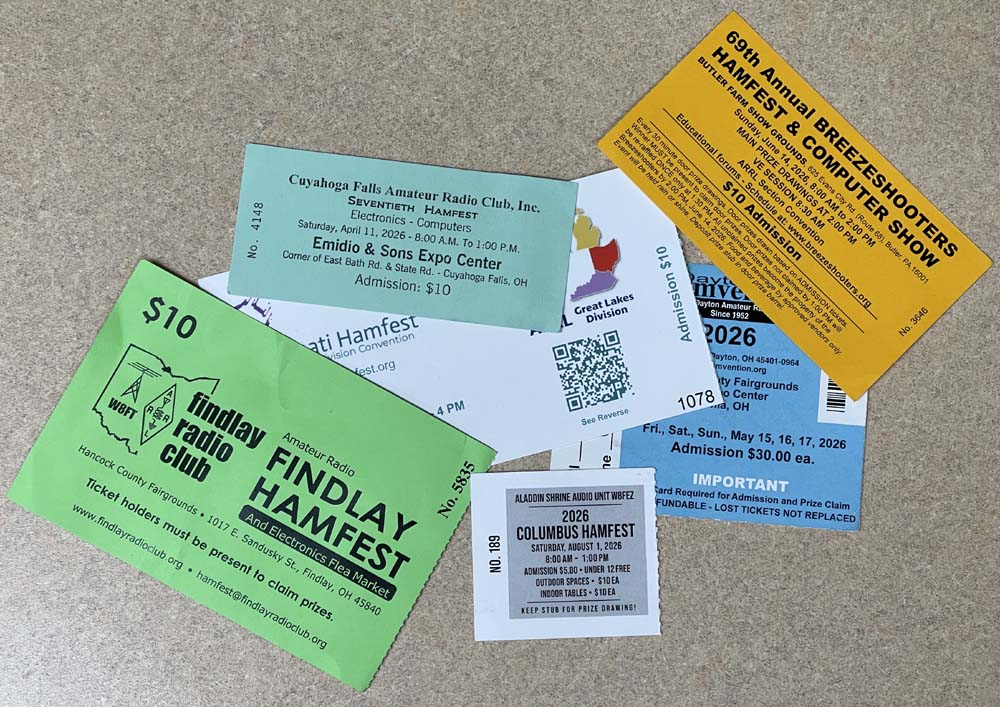
I went to the Findlay hamfest this past weekend instead of the Clearfield hamfest - I wanted to go to the latter, but something got in the way and I went local instead.
Unfortunately, Findlay has shrank substantially over the years. Last year was probably 1/3 of the year before, and this year maybe 1/2 of last year. I’m sad to see that happen, and it makes me wonder if it’s because the club is aging out, because there are more shows, or simply the changing fortunes of time. Probably a some of each, but it was quite small this year with a lot of open space. We used to shut the show down at 1PM, but headed out at about 9:30 for this one.
There was a bit to look at, but I had to struggle to find interesting things to photograph. Here’s a few things for you, some of these I know have showed up in the past.
Keeping the ground from blowing away.
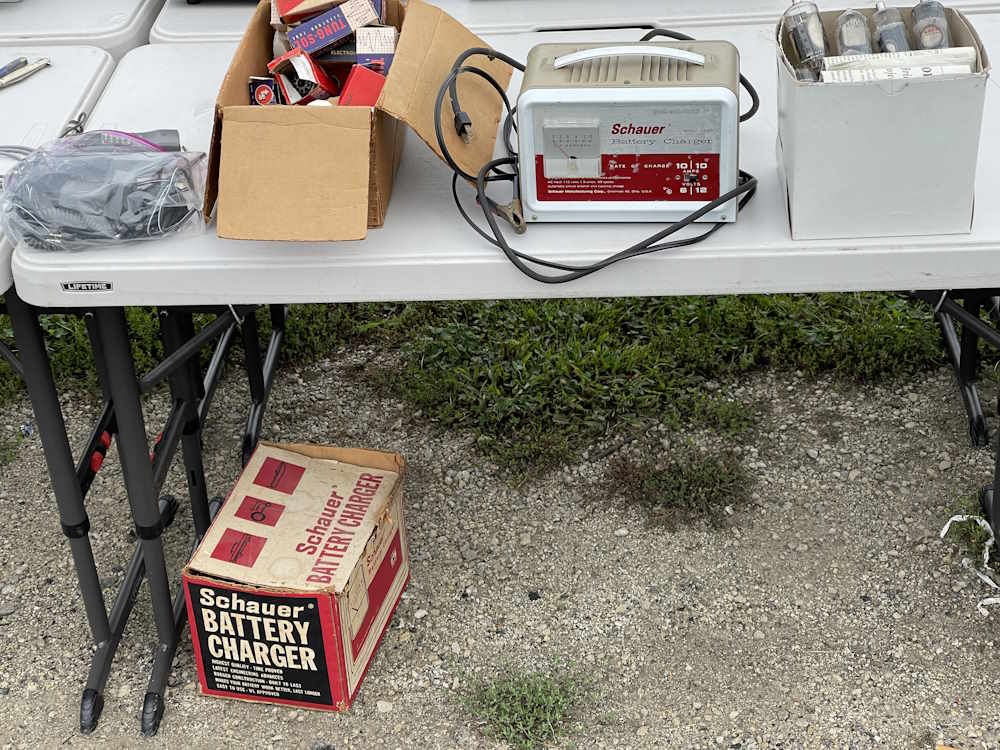
A nice old Schauer battery charger.
These are getting rarer
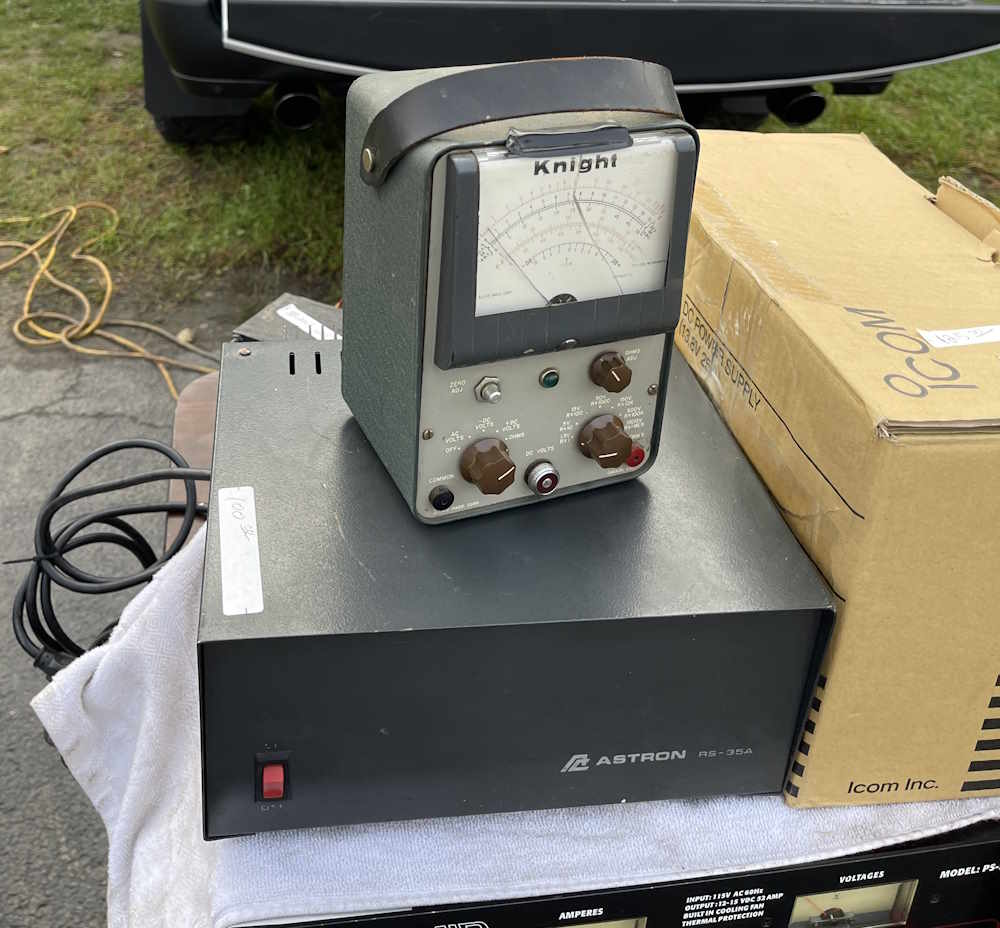
An interesting VTVM.
Meters. All kinds.
Piles of junk. Hamfest gold.
I see these here quite often.
All the bearcats you need.
Next show is Cleveland, which has been pretty good so far, after that the Early Television Museum’s swap meet and I’ll probably close the year out with MARC @ MAPS and the antique show at the fairgrounds. Stay tuned!
I picked this guy up from an online sales site for next to nothing - I assume because it’s not a desirable Heathkit unit and people don’t seem to care much for these late-model EICO devices. Everyone wants the stuff with eye tubes…but I was just looking at another siggen because you can’t ever have enough of those.
This guy was probably made in 1968, because of the late ‘67 date on the meter.
The underside is decently laid out, but there’s some chaos here.
Of note is the mix of old and new carbon resistors, and the old and new style electrolytics. Those old brown carbons probably need to go, but we’ll check them in a later post.
Here’s the money shot:
I don’t necessarily like lamp being lit like that…but it’s not flickering. Usually when these go bad, you’ll get that circuit trying to balance itself and it will go up and down as the lamp gains resistance from heating up and then falls back when the resistance gets too high. However, the output is rock solid…so maybe this one is supposed to operate like this? Others of this type I have do not do this. It could be a symptom of wildly out of tolerance resistors, so…back to checking those in a later post!
And finally, here is the output. Nice clean signal.
It looks like this won’t need a whole lot, other than some of the potential failures being replaced before they fail. Being 60 instead of 80 years old probably helps there.
Stay tuned for the next part of this series. We’ll dig into the components and see what’s what!