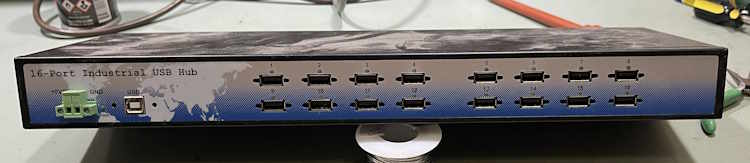
I’ve had this big USB hub in my rack for some years. It’s mostly provided power for USB devices, but had a few actual USB devices that needed data plugged into it.
I came home last Friday to a “BEEP” - something rebooted. As I was putting things away from work, “BEEP.” Ok, something’s wrong. The hub was power cycling continually…well, the switching supply inside probably decided to go to lunch and not come back.
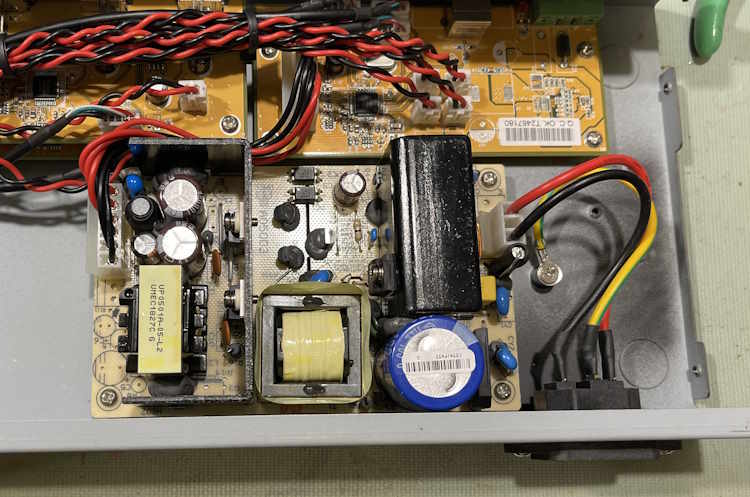
There’s not really that much inside of the thing - a power supply and some USB hub boards. Here’s the supply, it’s a fairly beefy 5V, 14A unit.
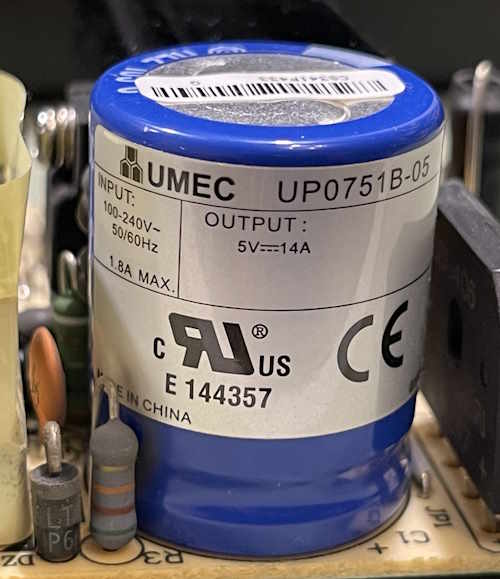
It claims to be made by UMEC:
The supply itself doesn’t look damaged, so it probably just finally popped. Maybe something died on one of the USB stacks…I don’t know.
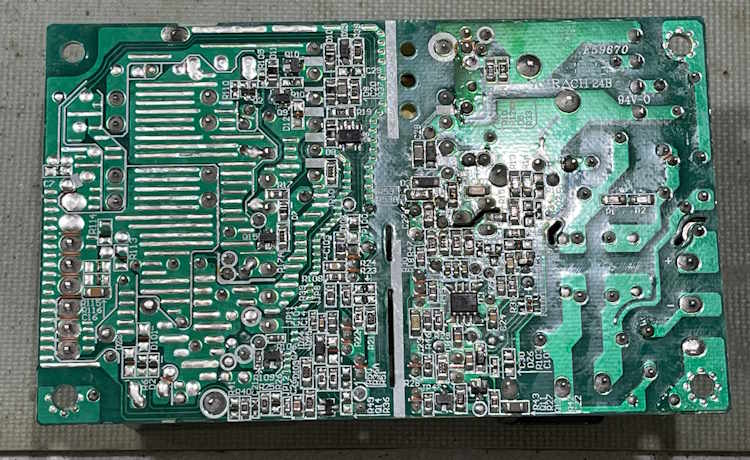
I looked up the part number. It’s referenced - in China. I suppose I could put a different supply in there, or even an external brick…but do I really want to? Not really, I can just tap off the 5V line that’s on the system already running the few RPi units I have left. This will probably wind up put back together, in the “to go” pile.
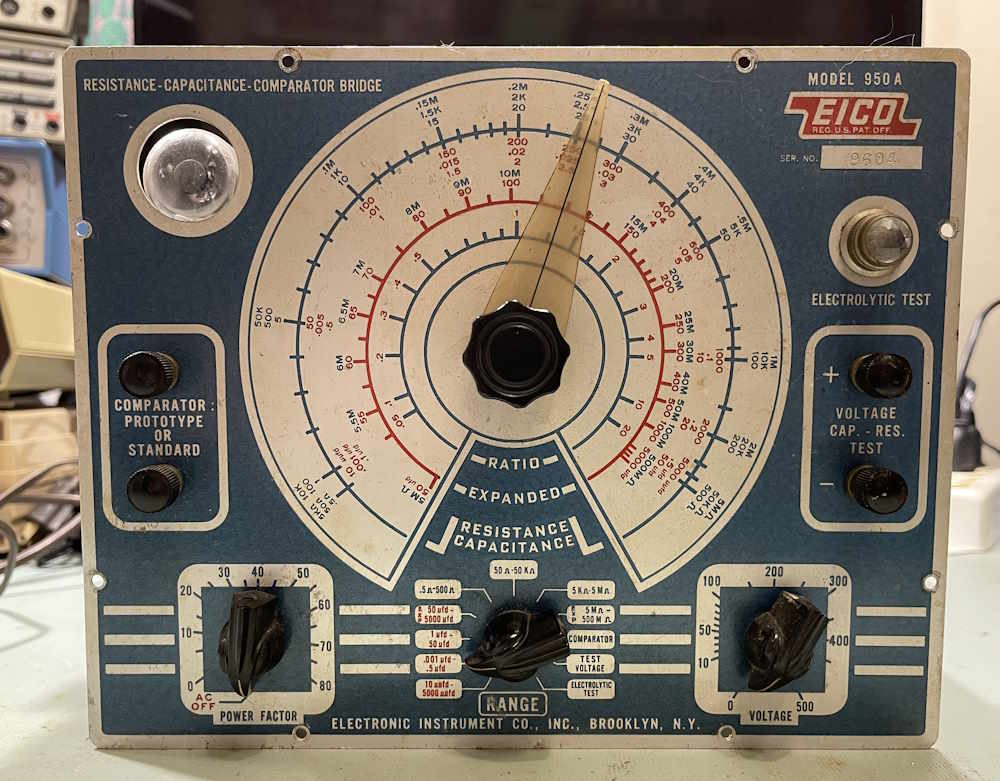
This is an EICO 950A Resistor-Capacitor Bridge. It offers the things you’d expect from such a device. It’s odd in that it slots in-between the 950 and 950B, which were traditional EICO silver-face units. Not this one:
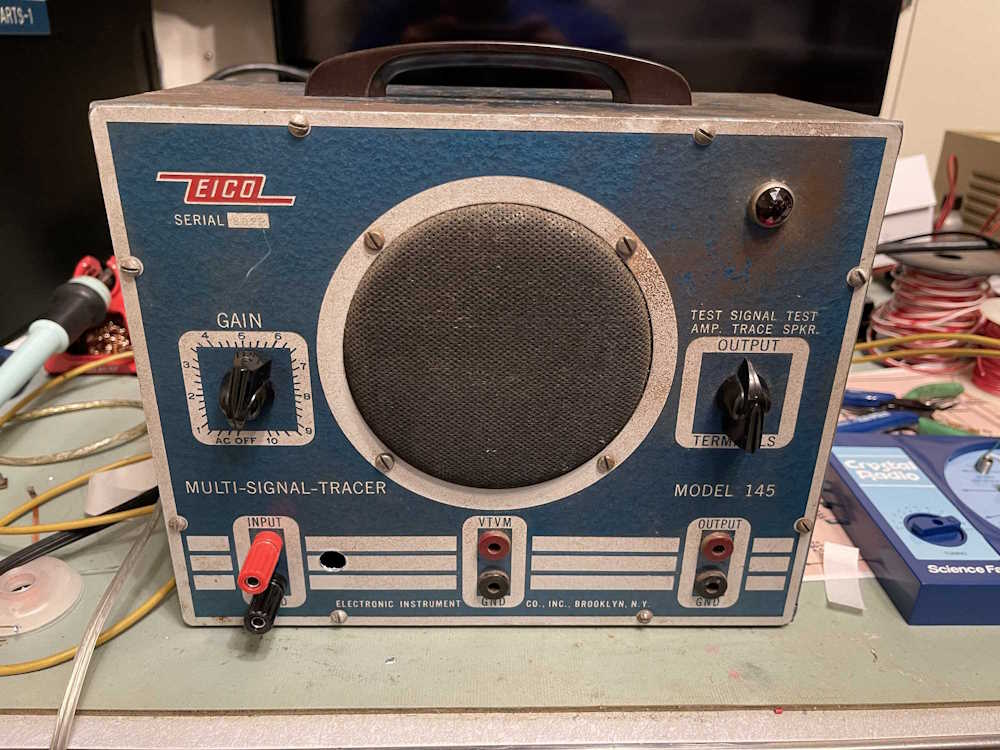
This one features EICO’s colorful scheme, much like the 145 signal tracer I wrote about a couple of years ago. It has comparator and leakage functions in addition to the standard R-C measurements. Leakage is provided by a neon bulb under a pilot jewel in the upper right corner, an unusual bayonet bulb that someone replaced with a standard #47 pilot, probably because they didn’t realize that it wasn’t working because it only lights when you’re using it…not when you turn it on.
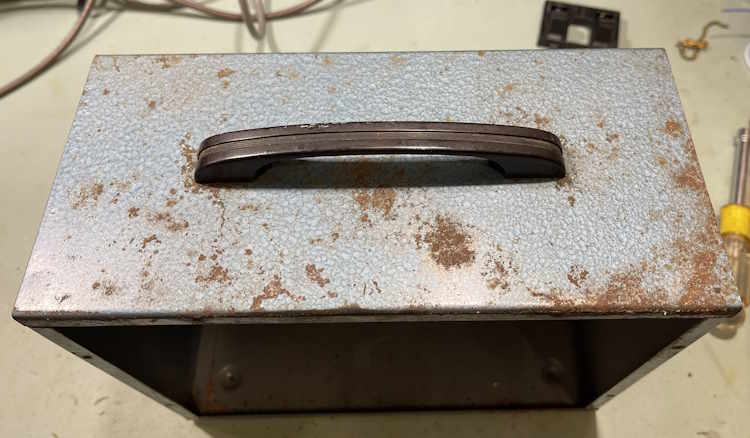
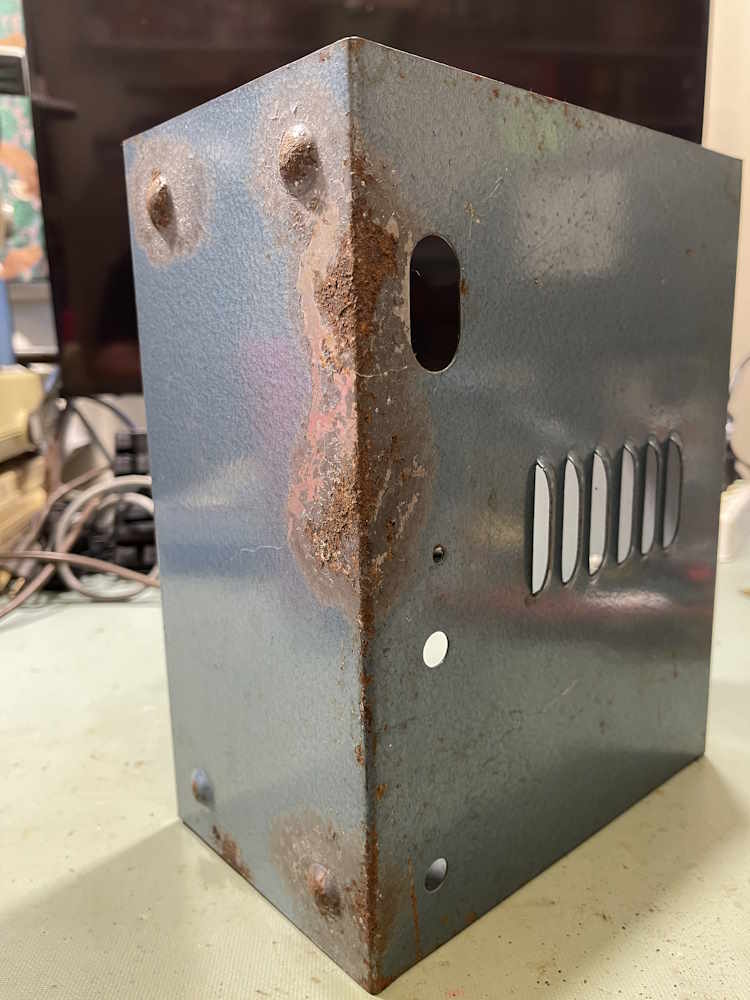
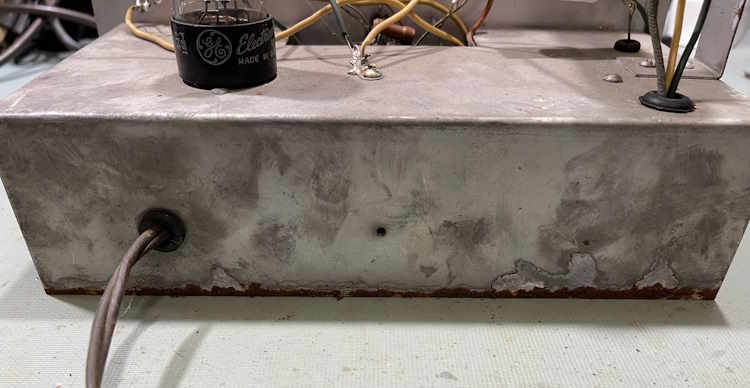
The cabinet has seen some use and abuse.
Rusty Bottoms is playing this show tonight:
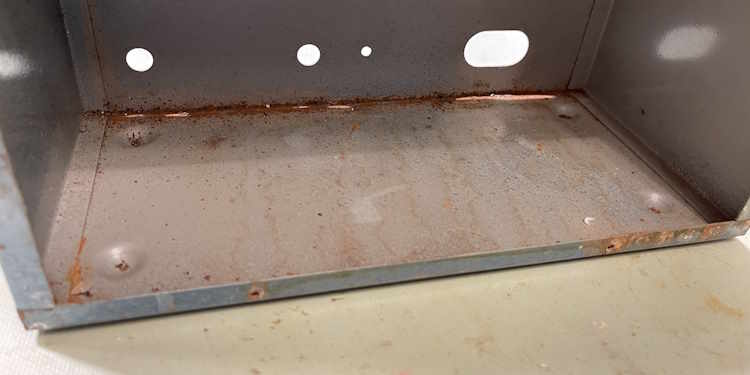
Even the inside is rusty.
The chassis shows a similar amount of rust. This thing had a wet, hard life.
That aside…let’s look at the inside.
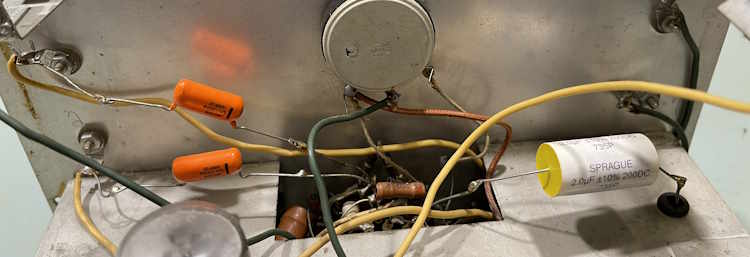
Jay Hooks makes a lot of appearances here.
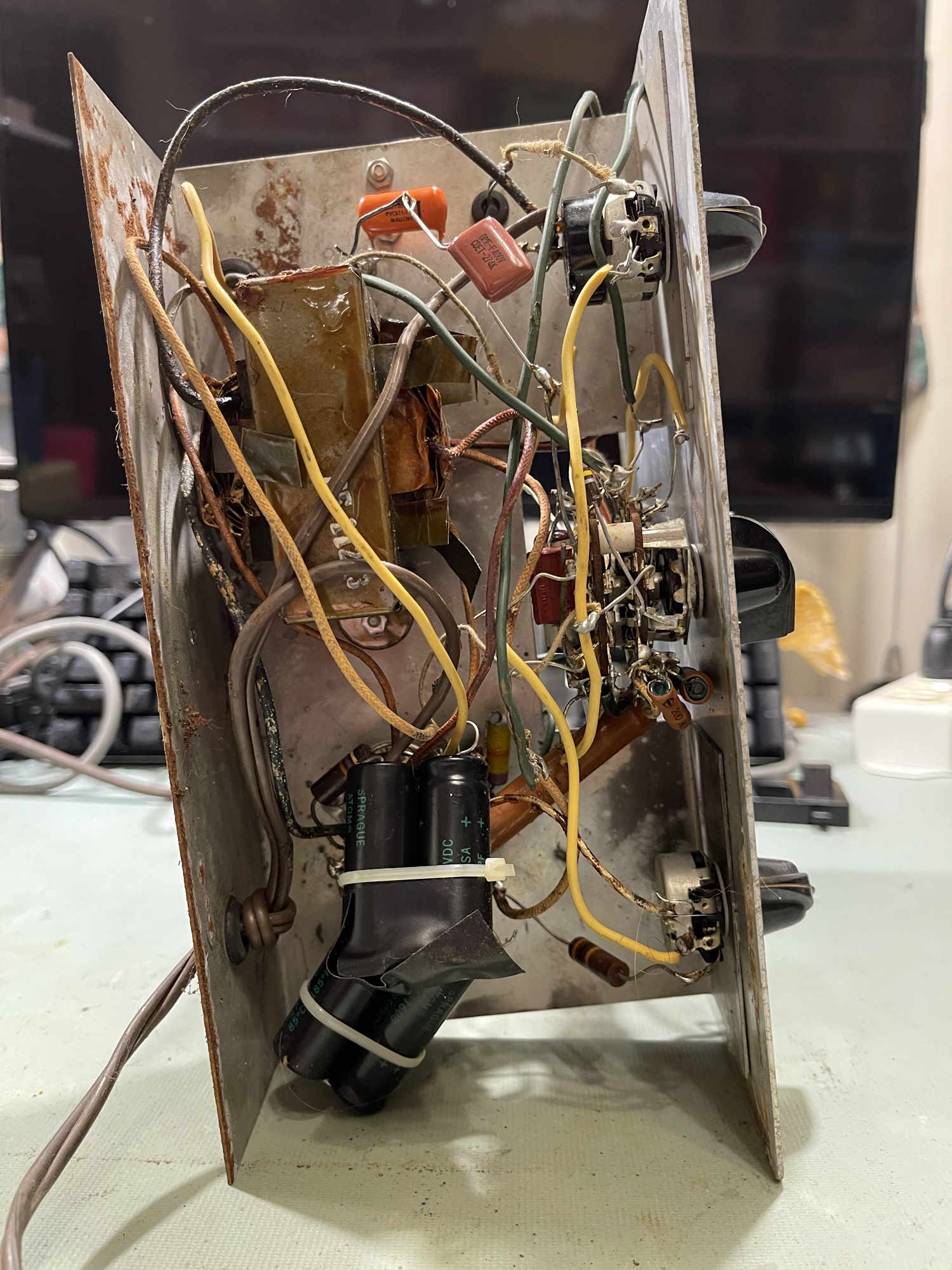
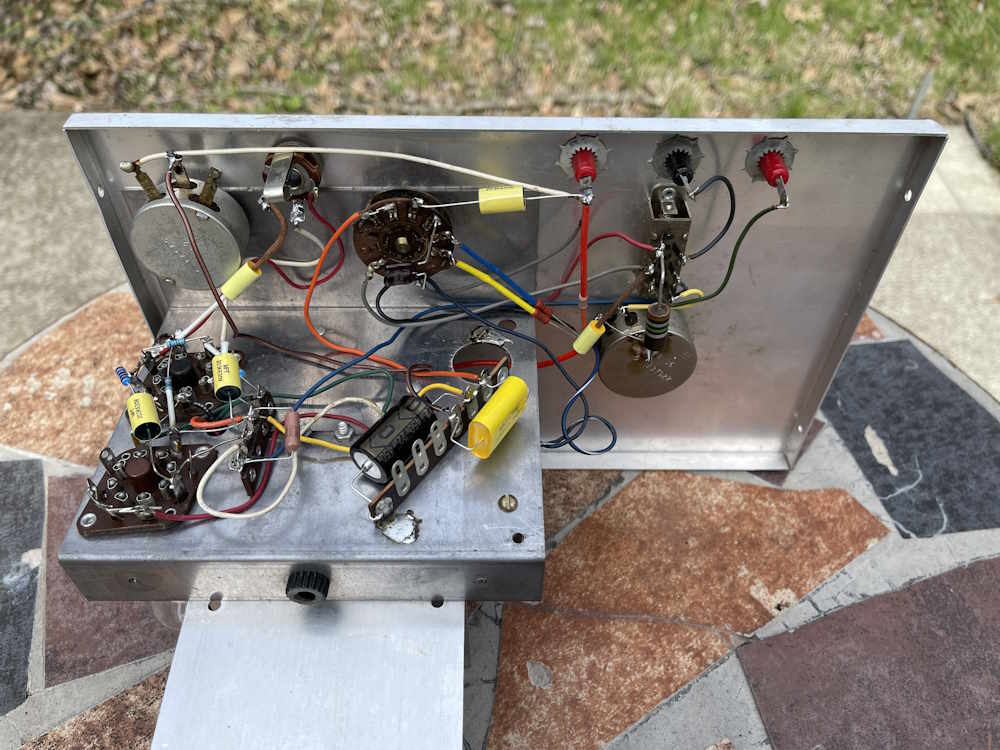
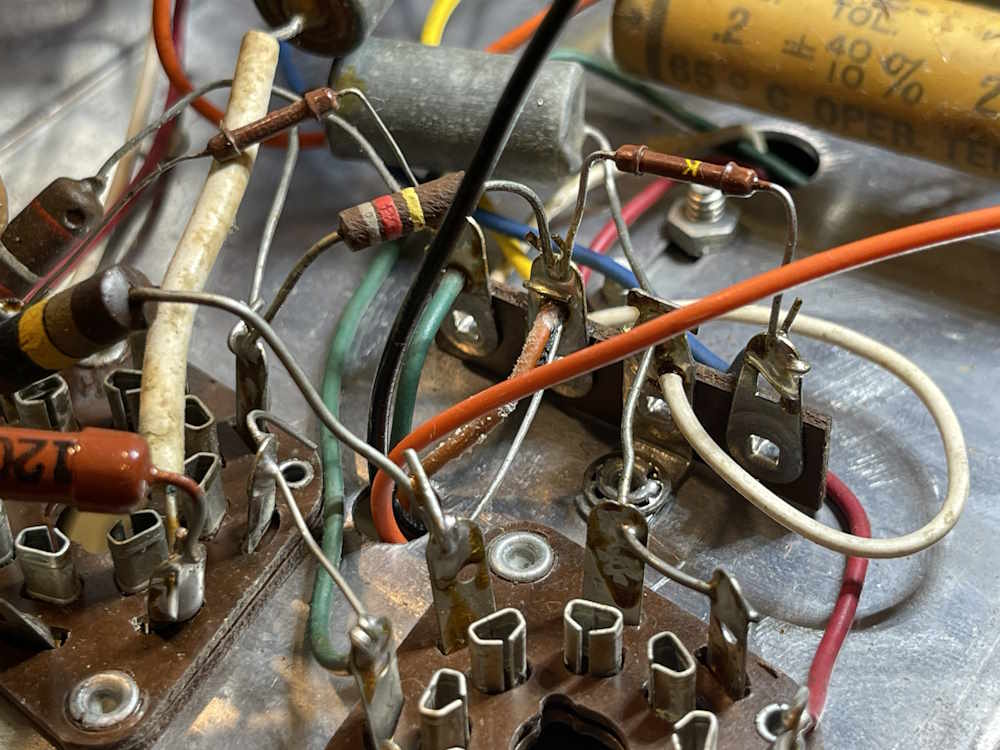
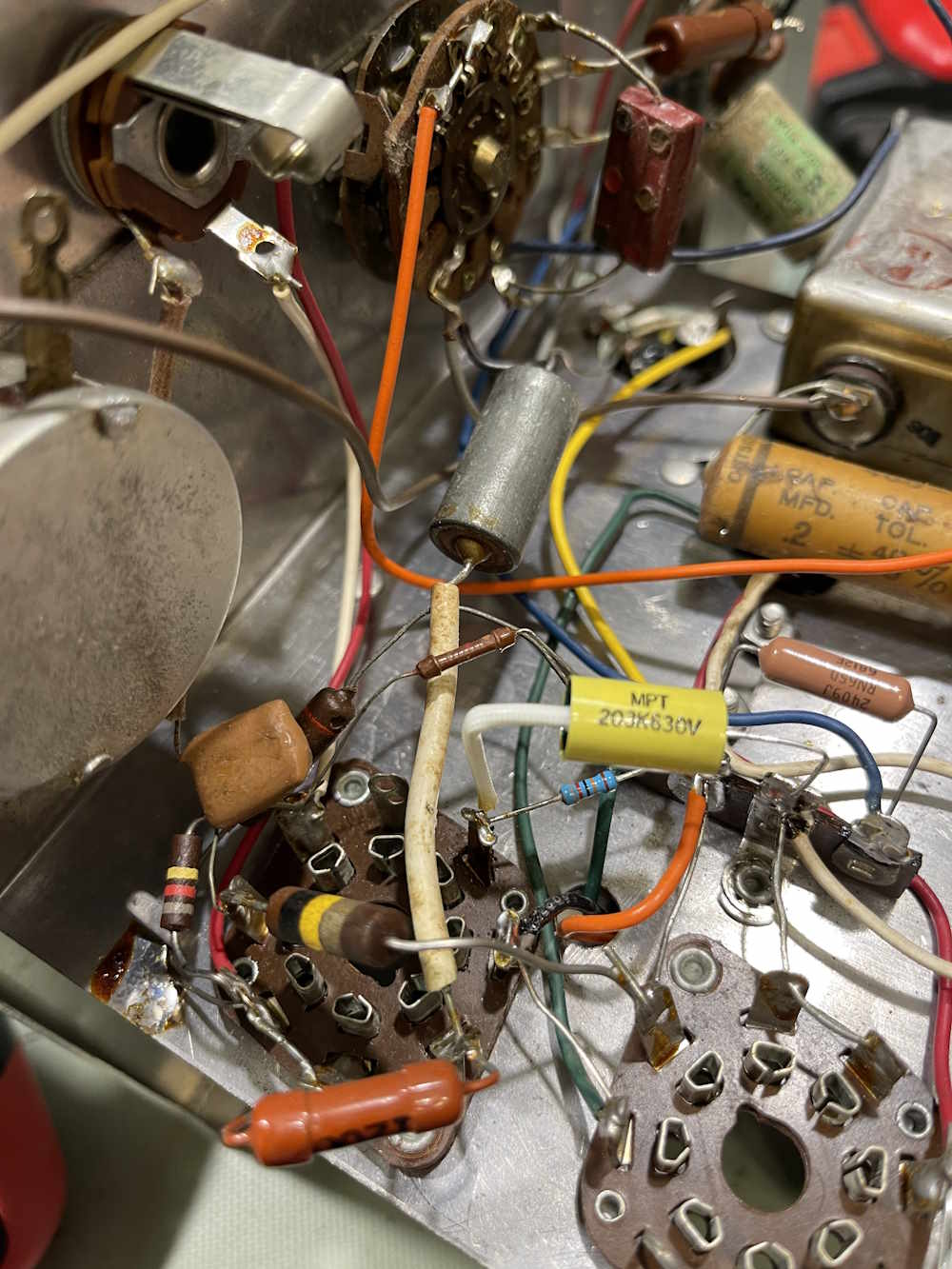
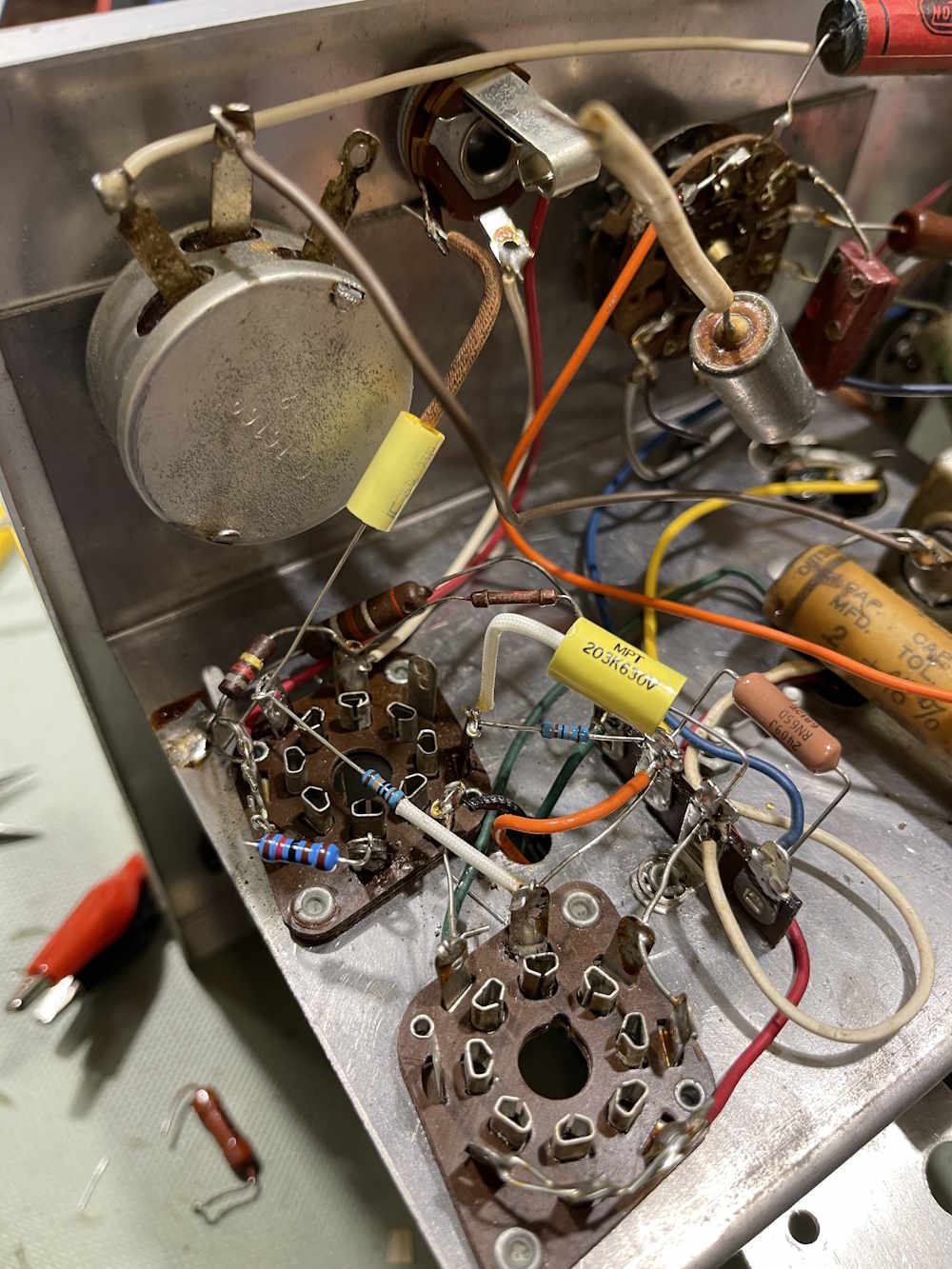
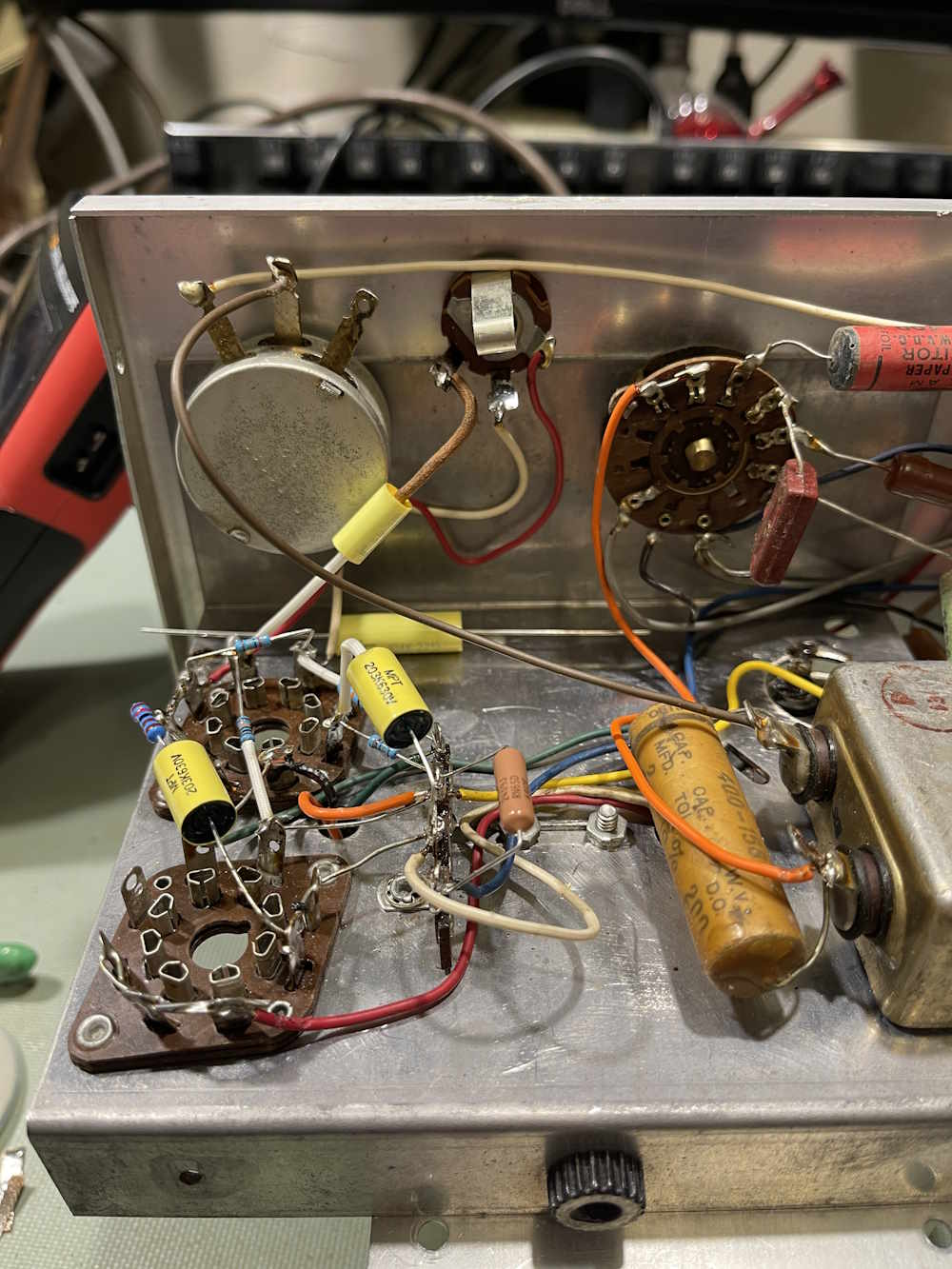
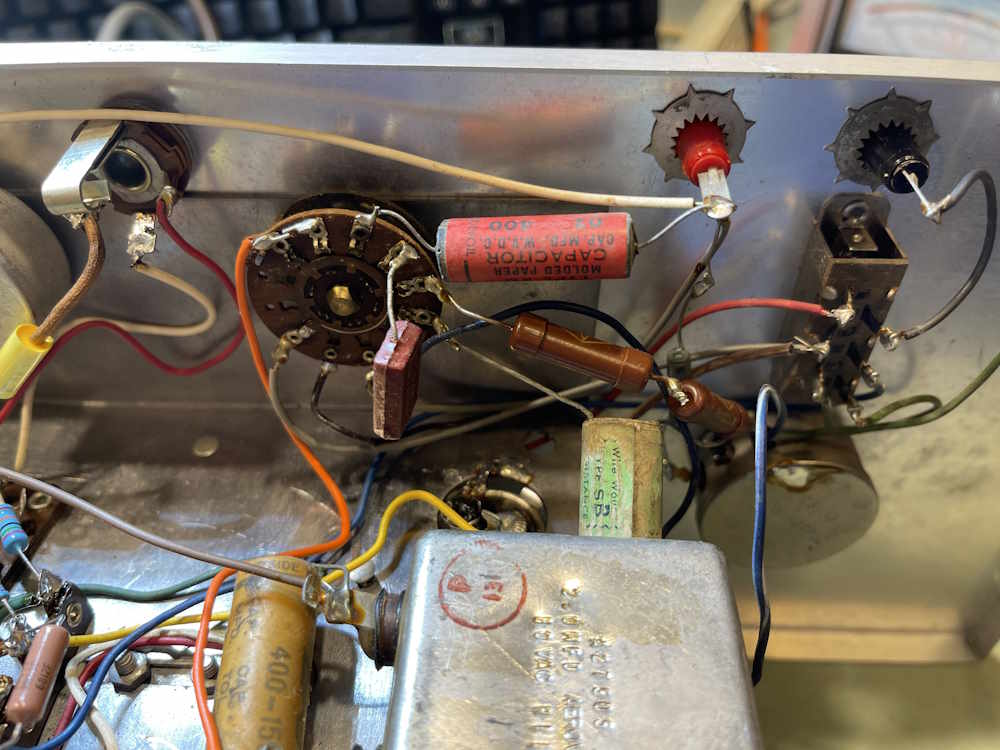
The underside, however, is “Mah boi, what did they do to you?”
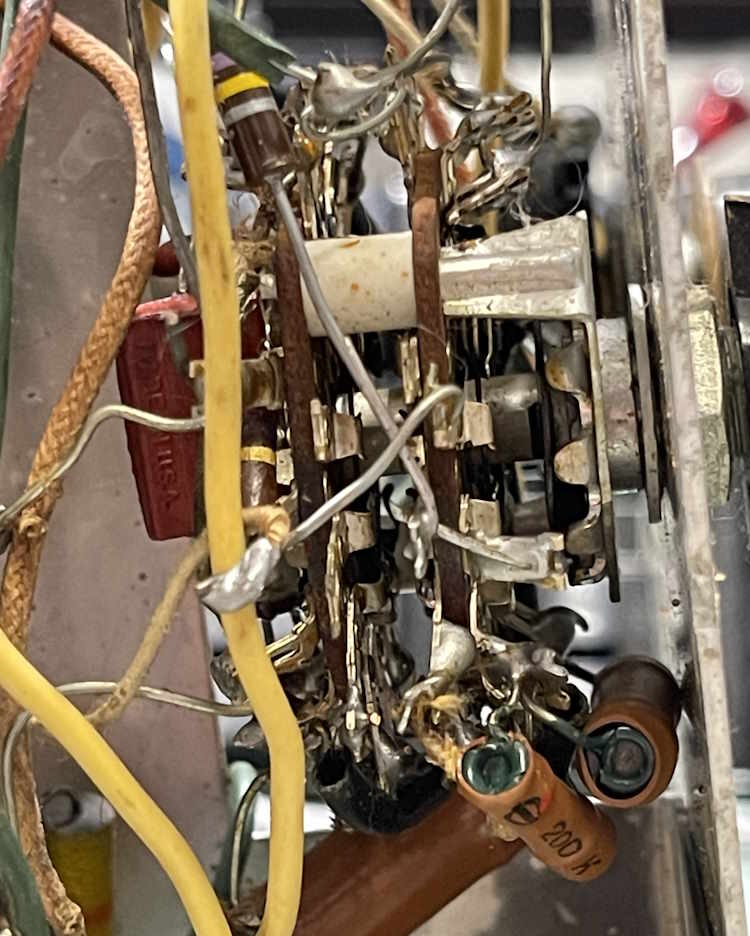
Everything has j-hooks. Everything. Parts. Wires. Everything. ~~Why???
Exactly what was the previous owner trying to resolve here? Was the thing on fire? It amazes me this thing worked at all, especially with those capcitors flying around with no insulation. With all the wires being j-hooked to other wires…it’s like the person just replaced everything for no reason than to replace it.
I’m going to take this challenge, but I need to get a schematic first. I’ll look for one…stay tuned. Hopefully we can make this device a bit happier.
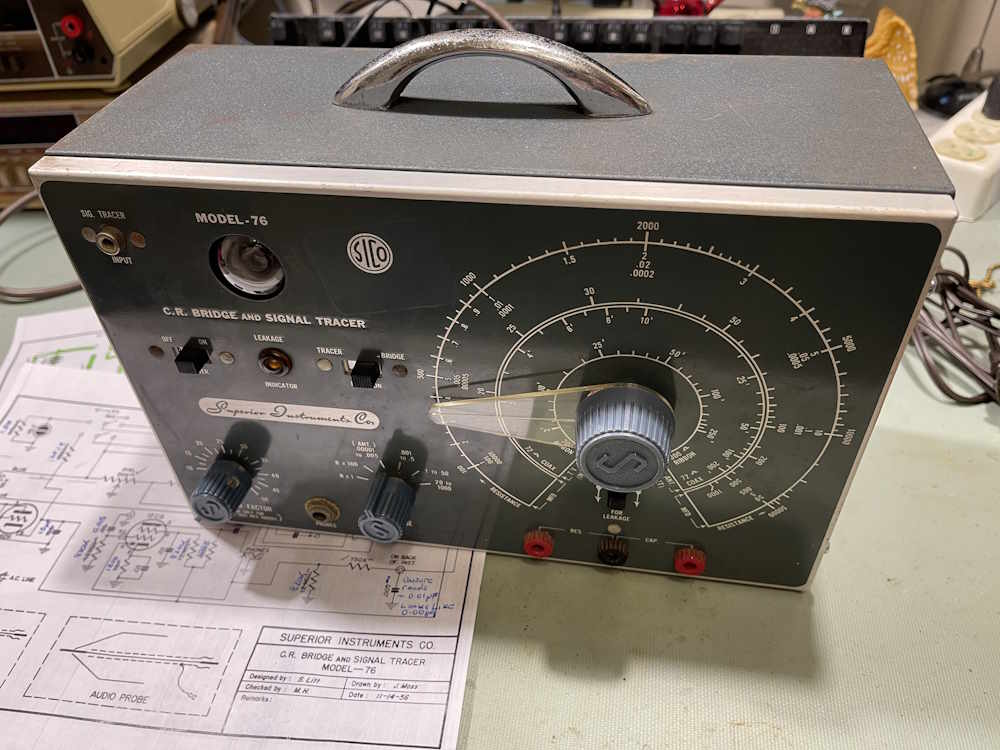
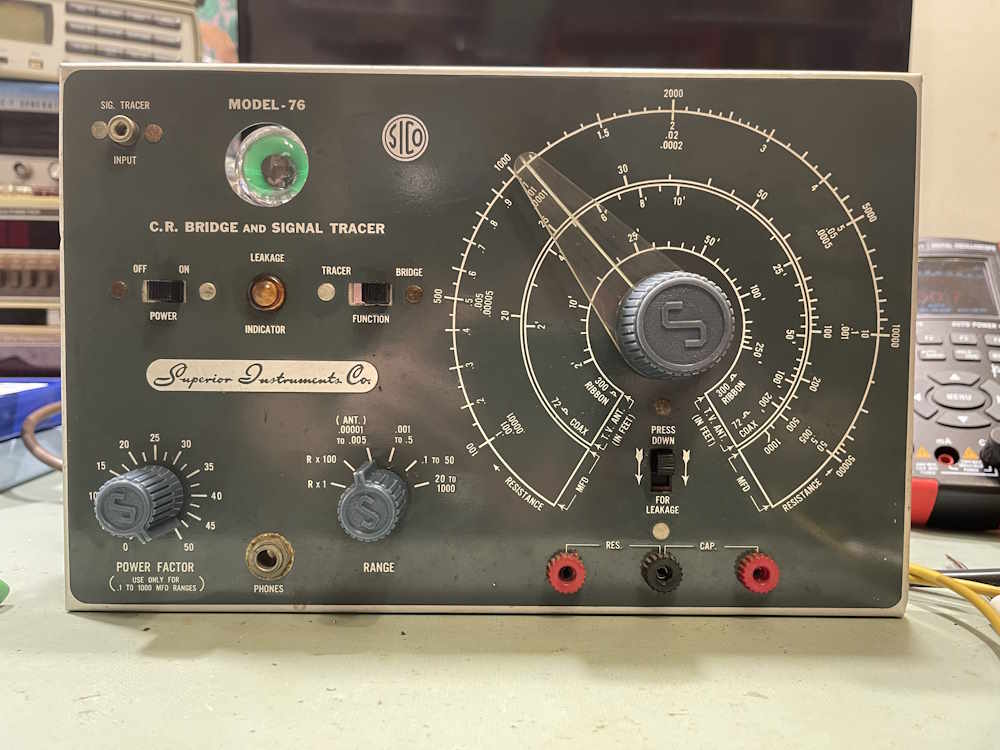
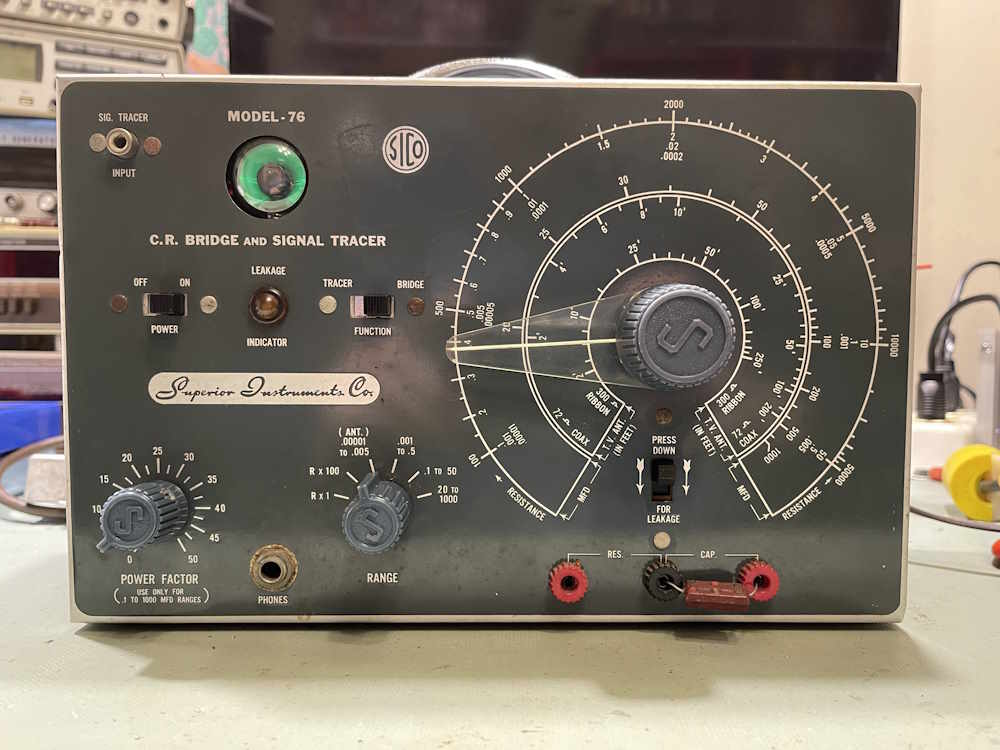
This was an interesting chassis. Not because it’s anything unusual in what it does, but because it definitely shows it was the lower end of the spectrum. Heathkit, Knight, EICO - all of those showed some concern and care in how parts laid in the chassis. This one? Not so much. Things everywhere, parts flying from one side to the other, such a mish-mash of parts and styles and type. I’m still not sure if this one was factory built or kit built, seeing as how it has pop-rivets for everything mounted on the chassis. Seeing as how some of the parts interfere with others, it probably was kit-built.
What do I think about this device?
There wasn’t really anything different about this rebuild except that it required a lot more thought on how to place things, I couldn’t simply move strips around a little or remove parts without drilling them out. That was quite the pain, but it was worked through and eventually everything was re-installed.
I took the opportunity to use some new sleeving I’d purchased, since many of the parts had spacing far longer than anything you could purchase without special dispensation. These parts had a lead j-hooked on, and run to their connection points. I tried to stick with more modern parts like 1% films, good capacitors, and the like - except for the one used in the leakage circuit. This 1.8MΩ @ 2W was hard to find, so I just chose another carbon that was closer to the marked value. It’s not really like it matters, but it is what it is.
I couldn’t get the unit to do much of anything. The eye would close when a part was attached, so something was happening. I’m not sure if the instrument is just that low on the scale, or if the parts I have are bad to the point of being unable to be tested by this device. Regardless, it didn’t seem to do much, and that’s pretty much what I expected. This wasn’t about an accurate instrument, it was about the rebuild process.
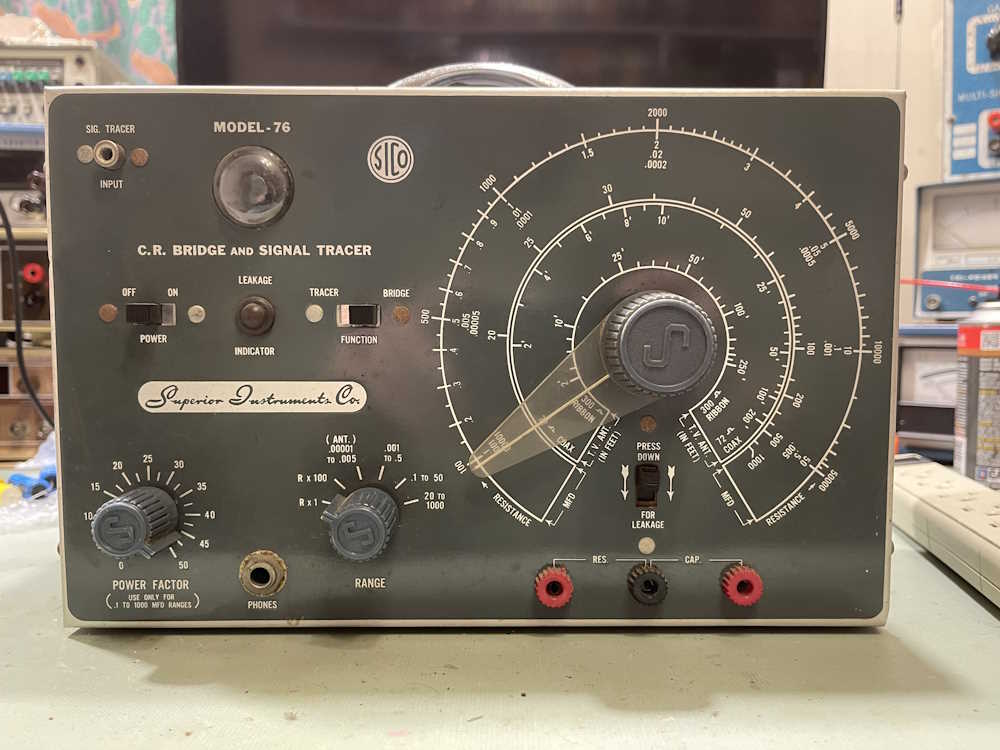
That’s all. This is just a footnote shelf queen. Next up is the Simpson 715, finishing up the rectifier section. After that, an EICO VTVM finally gets it’s time on the bench, and perhaps an EICO 950A - assuming I can find schematics for it because that one is a mess. Stay tuned!
Unfortunately, when hitting some of these parts with high heat, it tends to drive them (temporarily) back towards their actual values - especially in the case of carbon resistors where the heat may drive out some of the water the part has collected over the years.
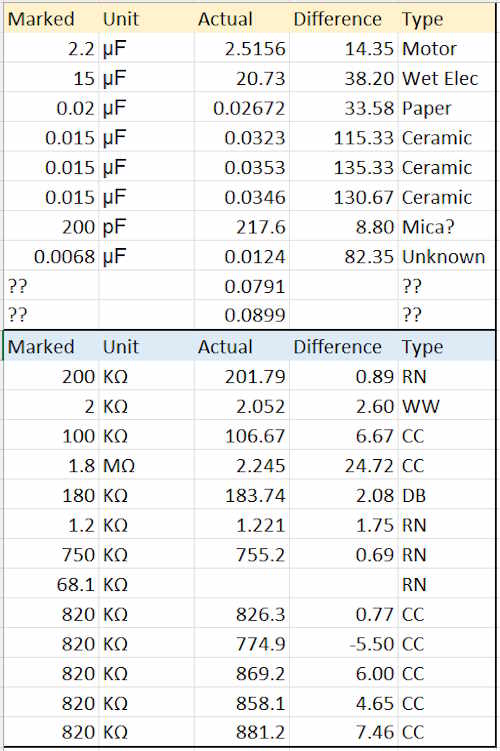
In this case, the manufacturer provided a lot of surplus RN-type components, as the device is mostly WWII surplus. These held up well over the years, and probably were fine to leave in place - had they not been worked over when installed. Carbons…yeah, those probably weren’t anywhere near what they are now due to the 80W iron drying them out. Capacitors, for the most part, were well out of any tolerance, assuming there was a tolerance marked - or even a value marked at all.
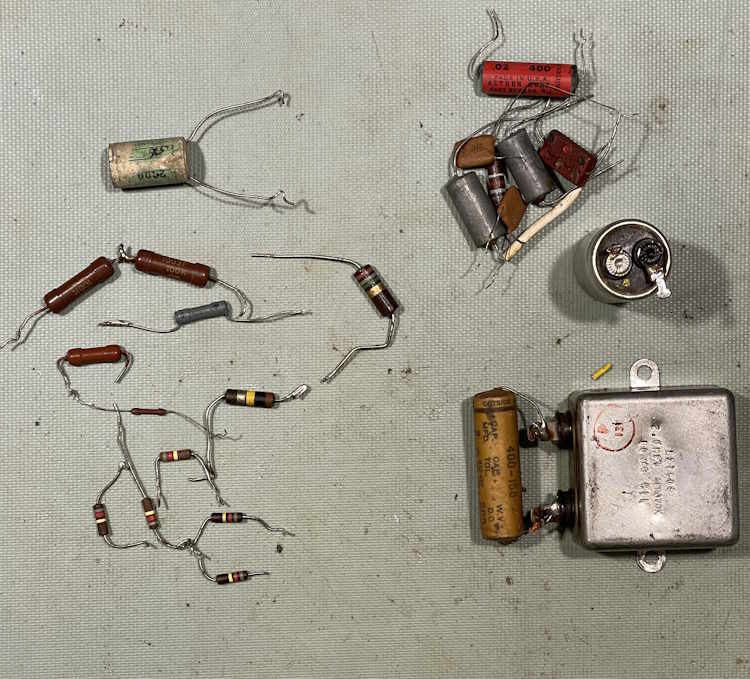
Everything except the 68.1KΩ resistor is in this picture. That part was much like the 750KΩ, some small RN-type that I’m not familiar enough with to identify. It’s probably on the floor or behind some other item on my bench, hidden away due to size. Everything else is right here.
How did they test?
Capacitors, for the most part, are well out of anything I’d call tolerance unless you’re -20/+100. Resistors were mostly pretty good, being mil-spec parts. Carbons were probably better than expected because they were hit with a lot of heat - perhaps I’ll set the 820KΩ parts aside and see how they perform in a year.
In the chart, the following notations are used.
RN - Resistor qualified to MIL-R-10509
WW - Wirewound
DB - Dogbone, probably also RN
CC - Carbon Comp
A part of note
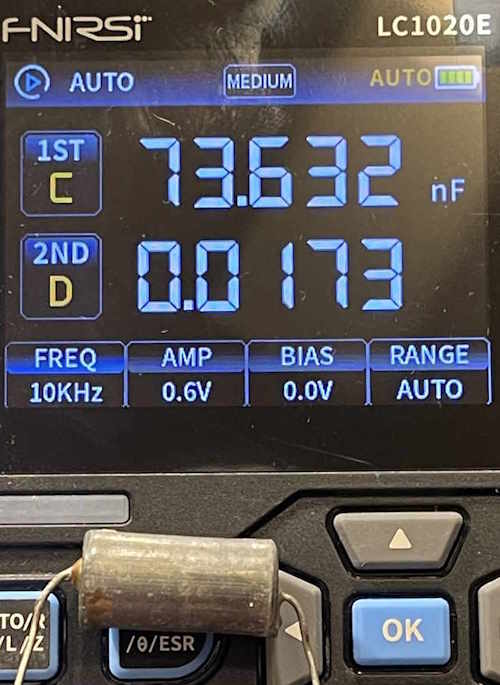
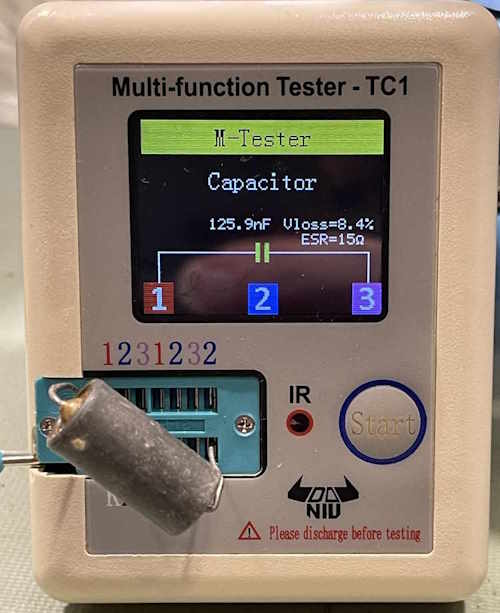
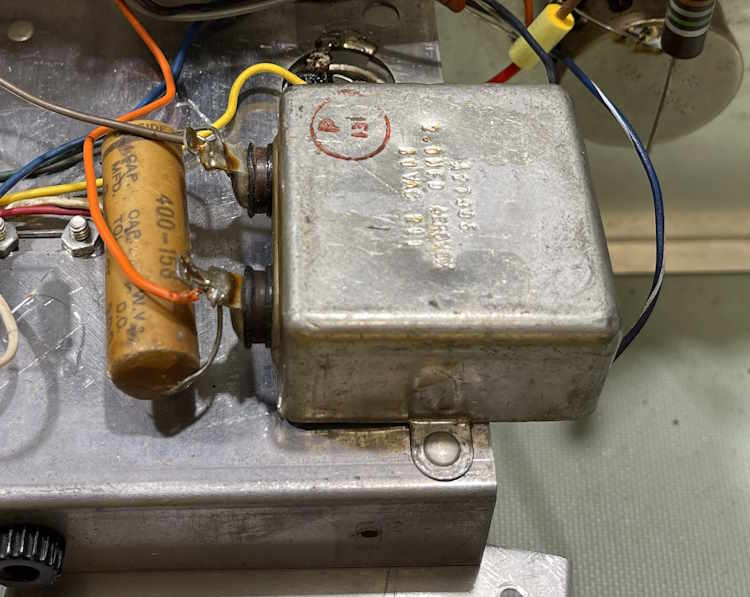
There were two weird metal can capacitors in the unit. There was no label on them, any paper label having come off probably sometime before I was on this earth. Placement suggested they were 0.02μF but they didn’t read anything like that:
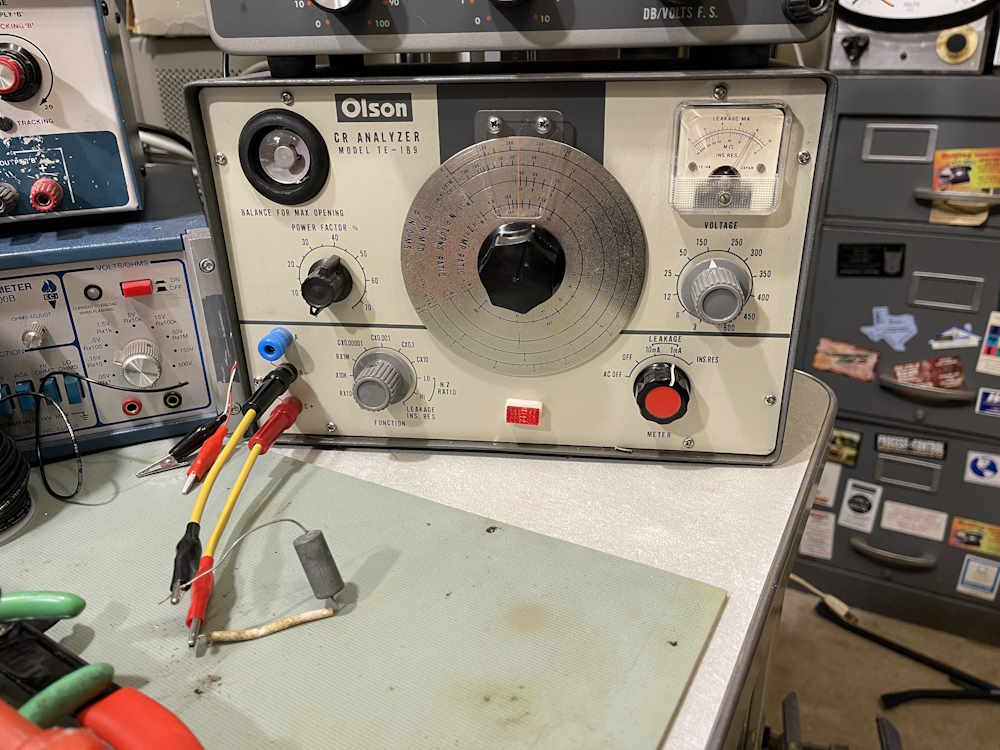
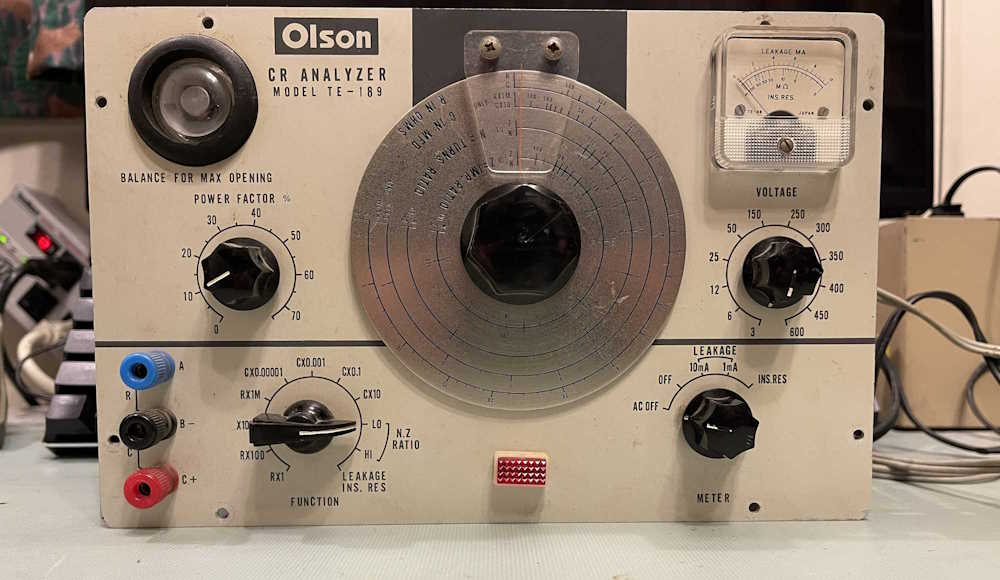
I hooked it up to my Olson C-R bridge, but didn’t get any eye opening at all. I decided to run leakage and see what it did.
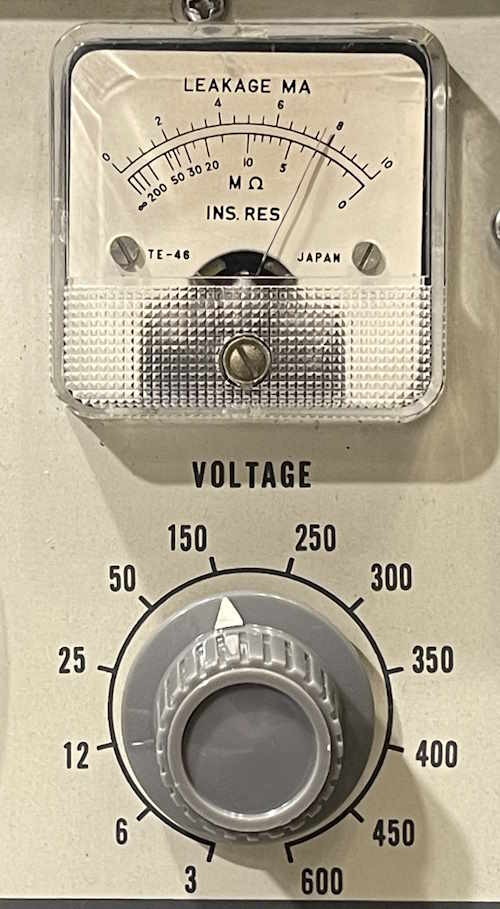
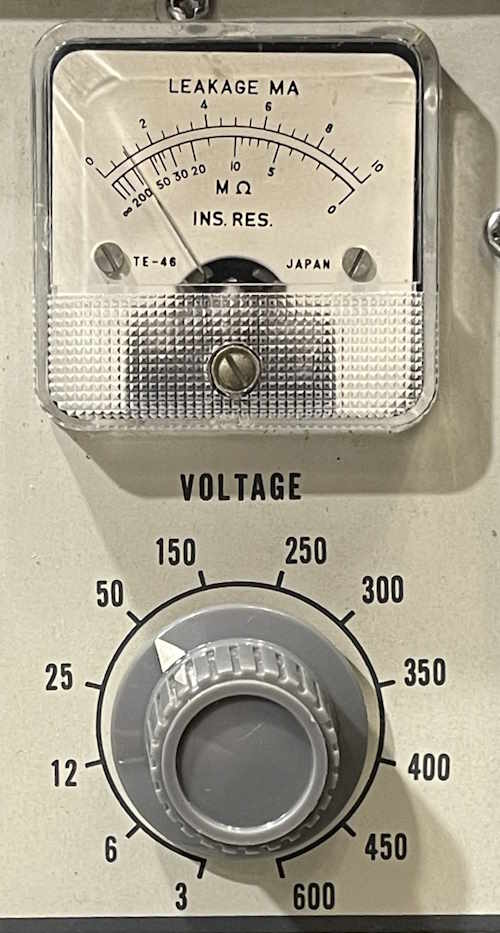
150V, and almost 8mA of leakage? This thing is shot.
Even at 50V, it leaks.
So…whatever these are supposed to be, they aren’t doing it anymore. I’ll toss them in the bin as known leakage test parts.
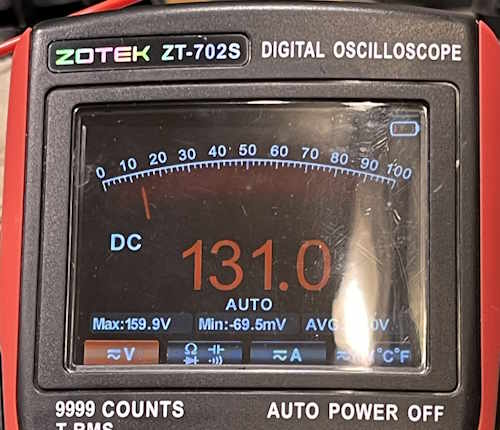
It’s time to power up the unit. I brought it up with a death cheater, and B+ settled in around 130VDC.
That’s probably about right for this, so I replaced the death cheater with a normal cord:
And brought it up assembled and stuck a capacitor in it.
Yeah, it doesn’t do much. Either all of the parts I chose are unable to be tested by this device due to bad components or something else, it didn’t do anything. The eye does close upon part connection, so something is home inside. Just…who knows what it is.
But never right after you did the work. You have something called confirmation bias that that point, that means that you just put it there so it must be right and you’re not going to catch mistakes. Take some time away from the unit, maybe even the next day. You want to kind of forget what you just did.
Here’s the chassis, completed so far:
It’s still messy, but less messy than it was, and all of the parts are of known values.
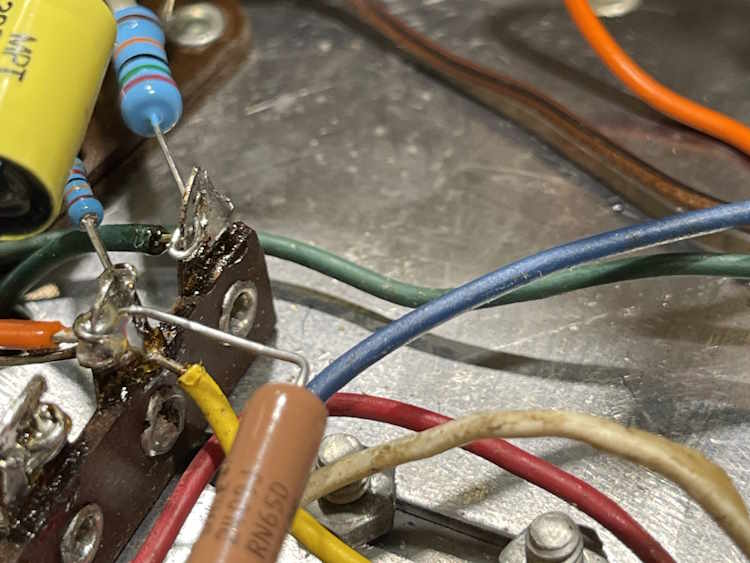
Soldering
Soldering a chassis like this is always an adventure…I do each part in sections, so multiple components might get mounted before I solder things. Sometimes, I don’t solder things right away because I’m thinking that terminal may need something from a later section…regardless, sometimes things do not get soldered. There were a couple here:
Misplaced parts
There was one part I put in the wrong spot. The 180kΩ resistor that’s behind the capacitor in the foreground attaches to the lower terminal of the potentiometer in the background. That should have went to the top terminal. This was an easy fix, unsolder, trim the lead, and re-solder.
Missing parts
Here’s the jack on the back of the unit.
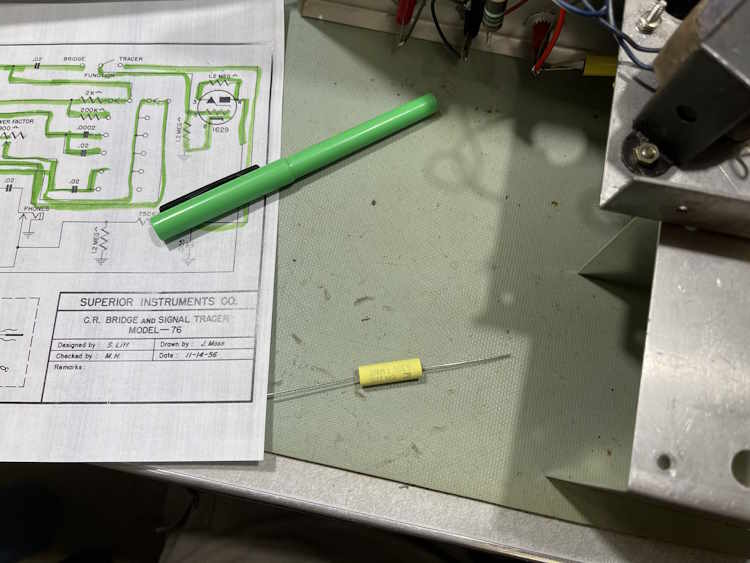
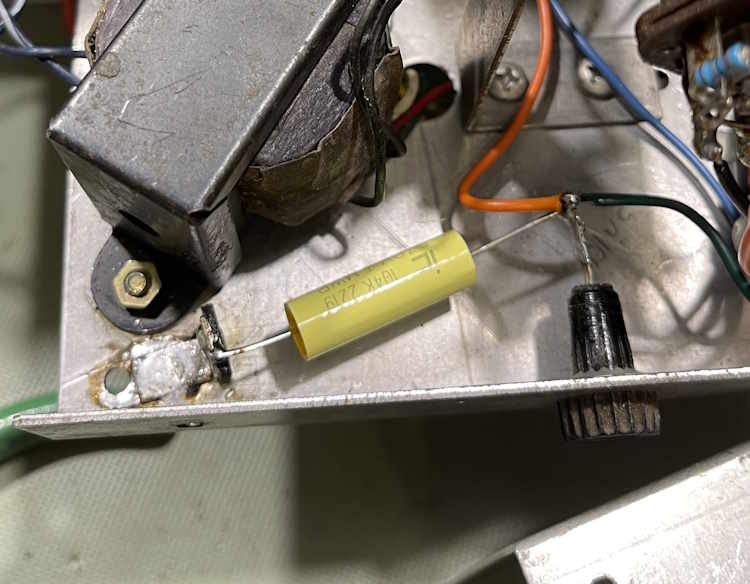
You can see there are two wires on the terminal. There’s also supposed to be a capacitor on that terminal to ground, and that part was laying right behind the unit in the tray I used to hold components. Here it is:
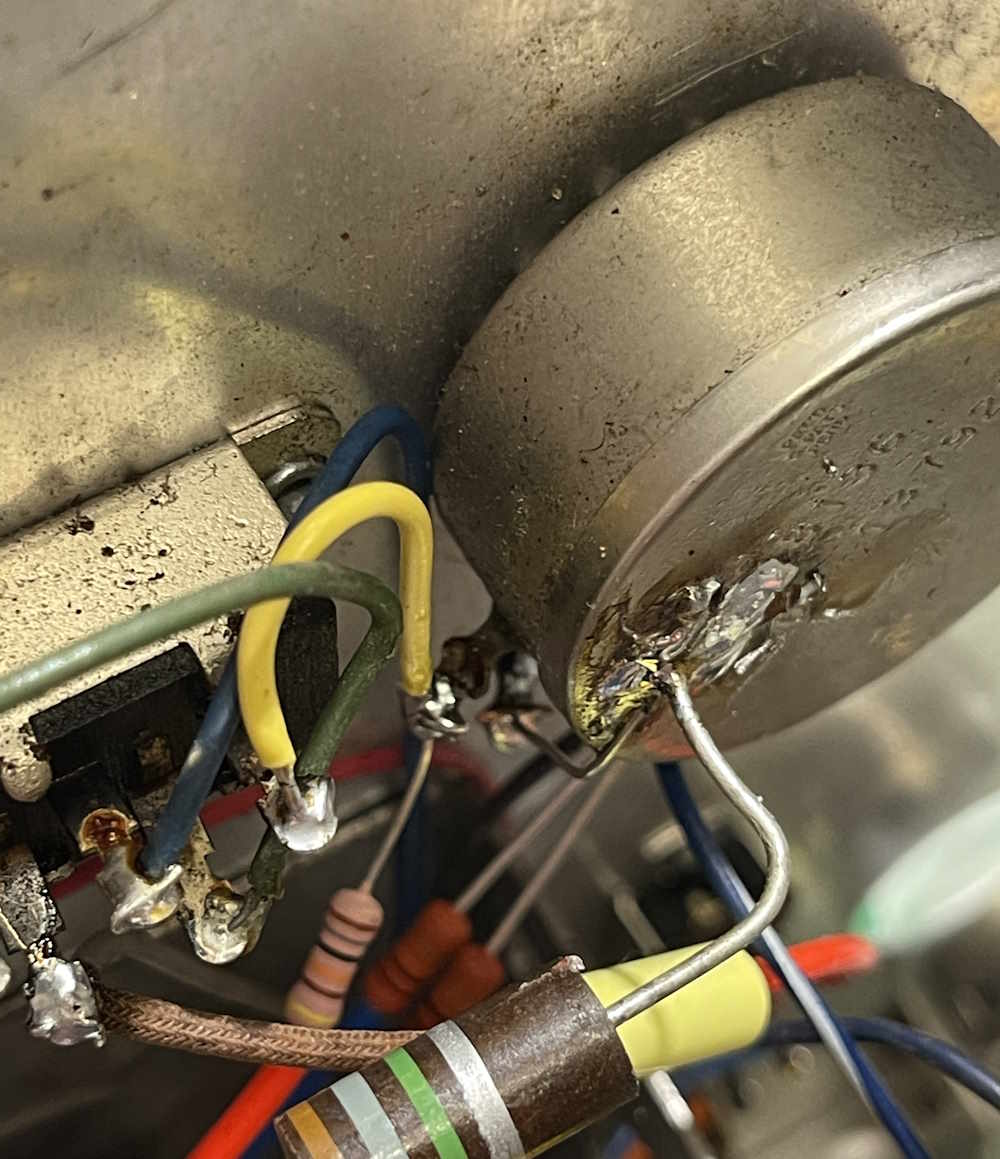
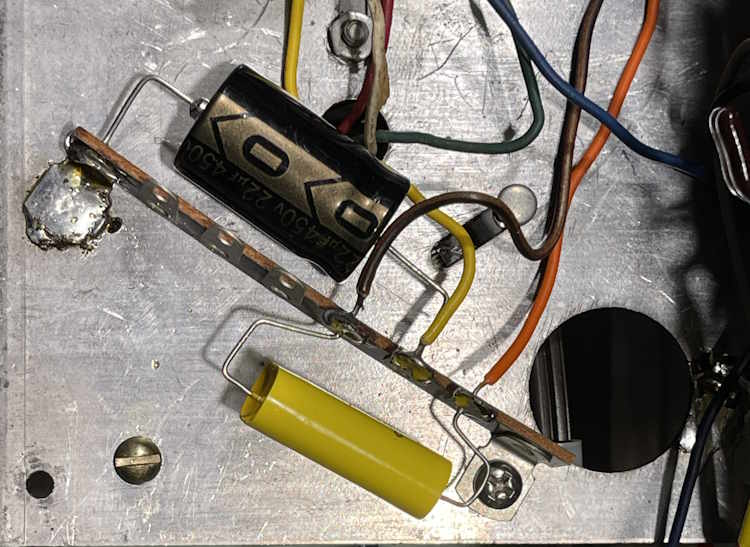
I was going to take it back to a terminal near the AC input, but eh. I took a terminal strip, made it into a 1 lug unit, hit it with 180W of iron and made that my new tie point. It’s a bit messy, but that solder isn’t going anywhere.
Checkout is complete. Everything is now where it should be going, and is soldered properly. Time to move on to the power-up.
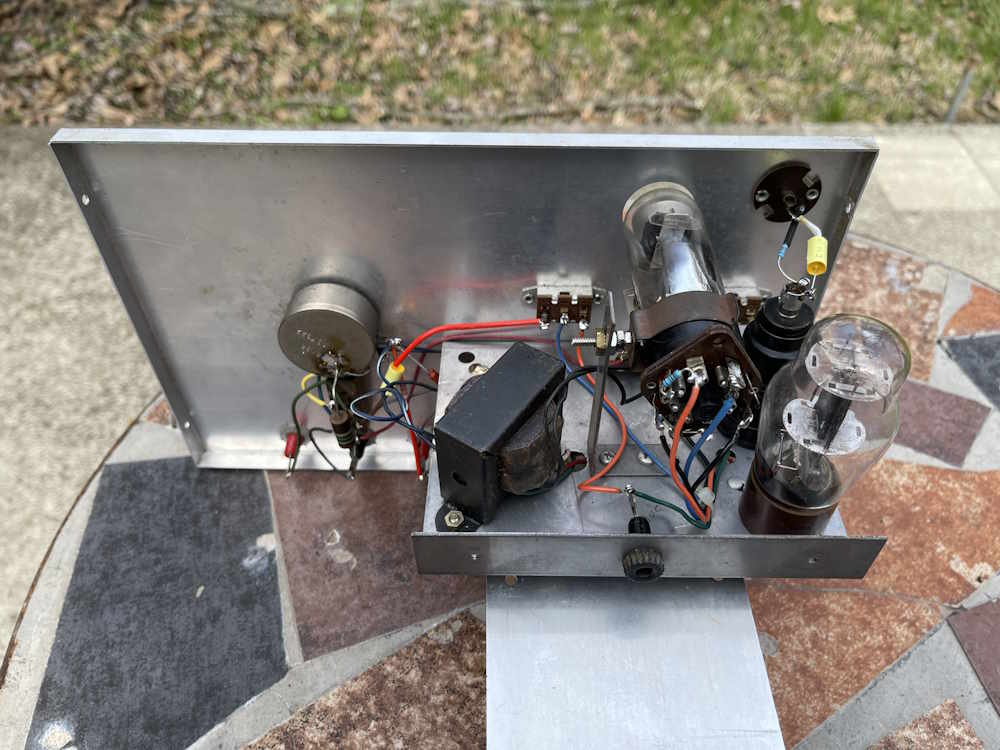
Now that most of the top of the chassis is out of the way (yah right, I forgot some stuff and had to correct some wiring errors from the previous owner…) it’s time to do the bottom of the chassis.
There’s not much to say about this, so here are the rebuild images in no particular order save I tried to follow before with after in a particular section of the unit.
That’s pretty much everything except for the power cord. That comes at the very end, SICo just laid the cord over the chassis and through a tiny hole. There’s not enough room to actually pull the cord’s head through, so the back and power cord become one assembly. I’ll use a death cheater to bring it up after checks.
This thing had a rough life. It doesn’t really work right now save that it lights up and makes glow. Did it ever really work? Well…since I just wrote that, I think you can probably guess what I mean.
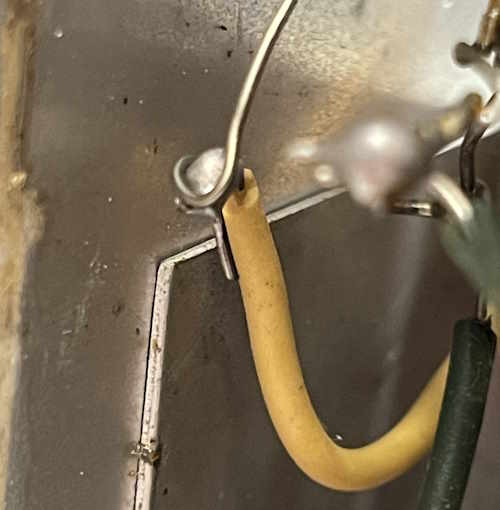
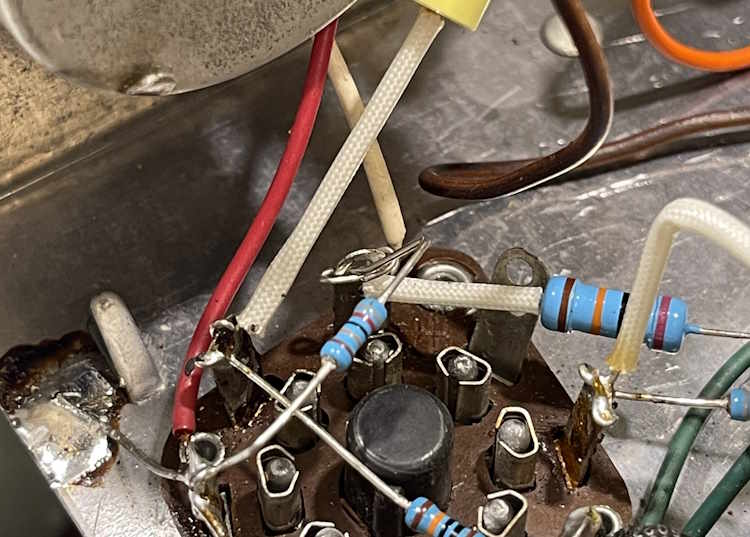
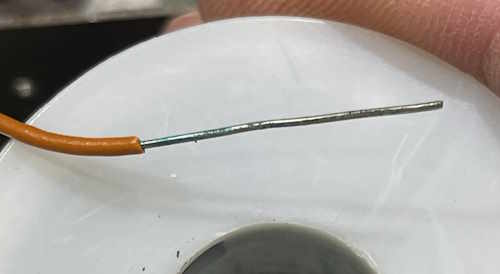
I can’t say I’ve seen a device that has corroded wire like this one does. Not all of them, just some.
It’s hard to see, but it’s speckled with green. I checked wires as I went, some needed replaced, some were replaced just because they were in bad shape otherwise.
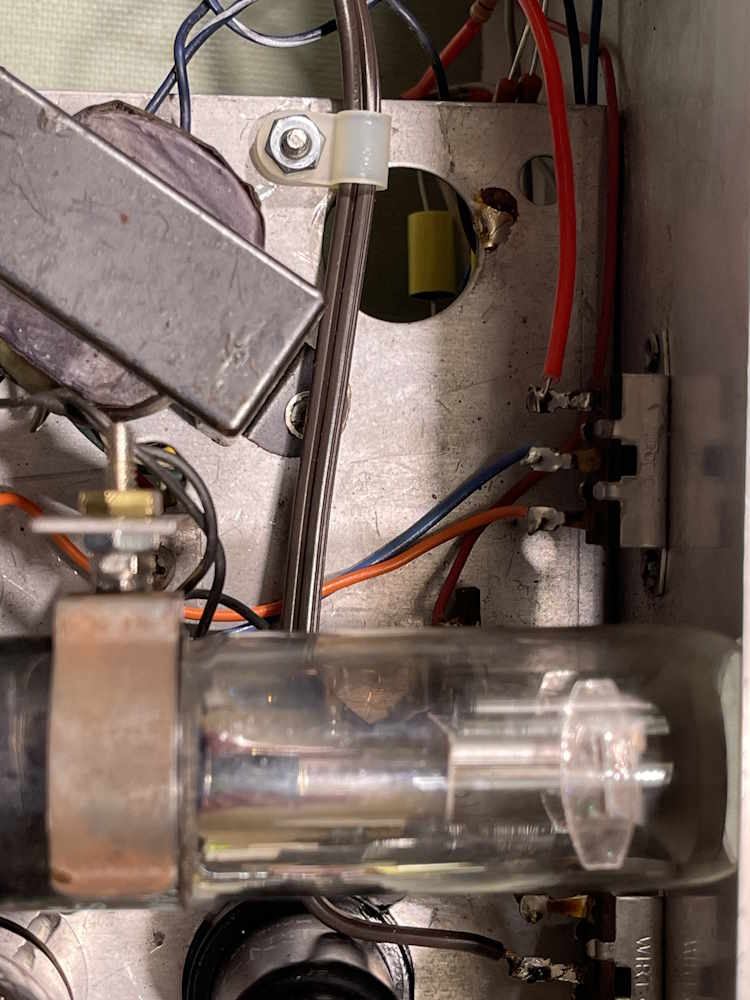
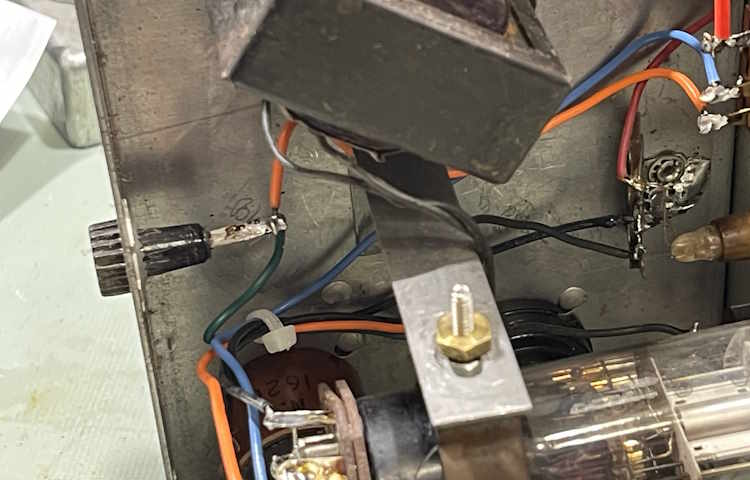
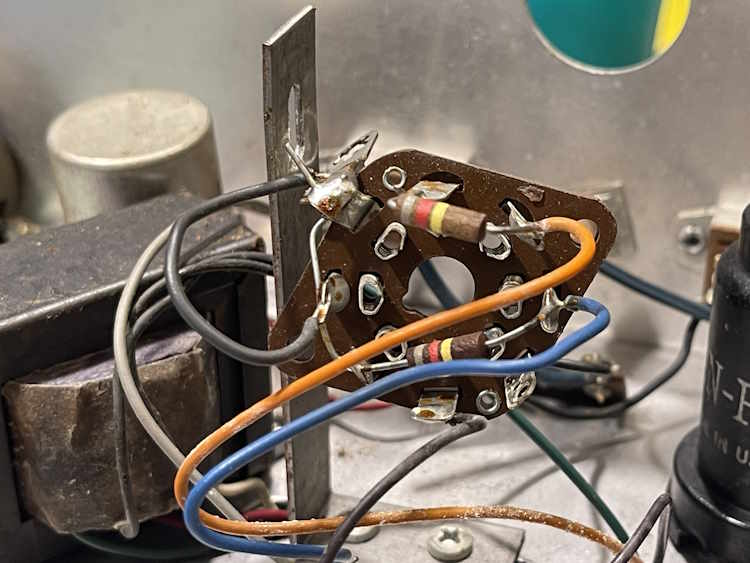
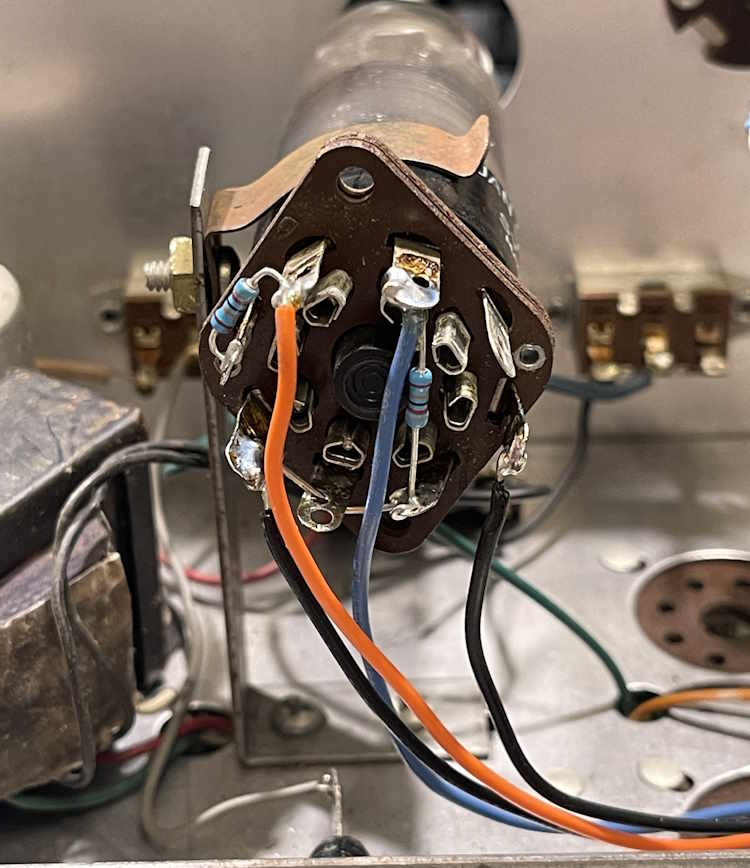
The eye tube socket assembly.
Everything here was attached decently, but stuff just looked bad, and these wires were corroded.
Some new resistors and new wire, and it looks better. Still needs a bit of dressing, but that comes last.
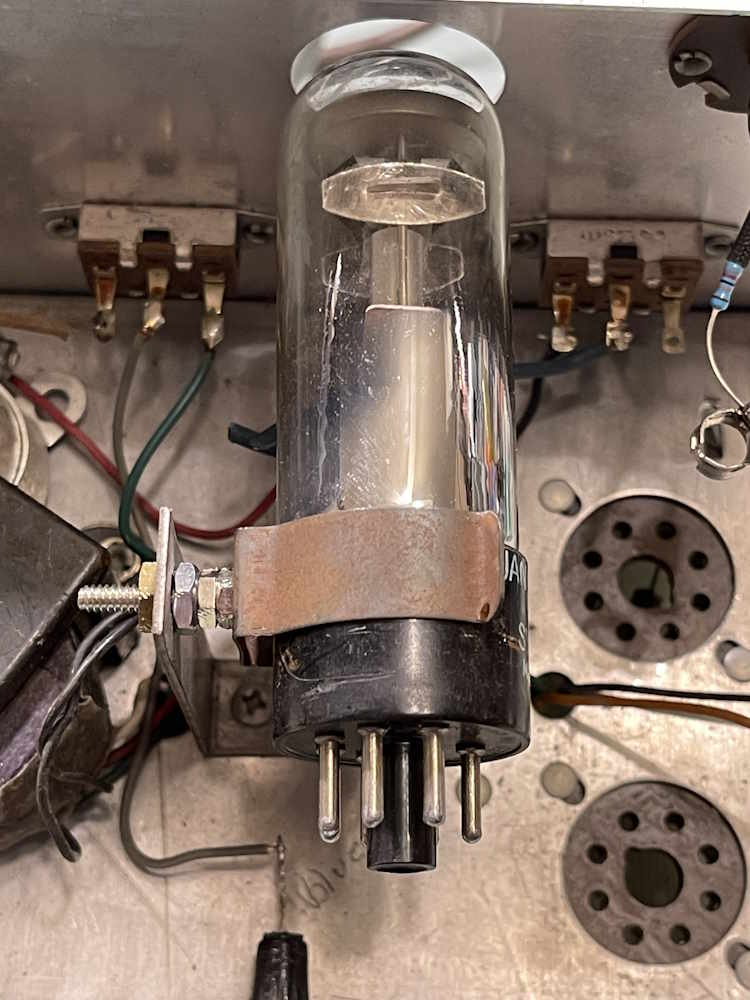
The original builder put the eye tube at a weird slant. While the bracket itself can be moved on a slide, doing so puts the bolt for the bracket up against a terminal strip underneath because it was mounted opposite of how it should have been. That was corrected by just using a longer screw and some nuts as spacers. It’s not like this thing is going anywhere, so mechanical stresses aren’t a concern.
That’s all for the eye tube.
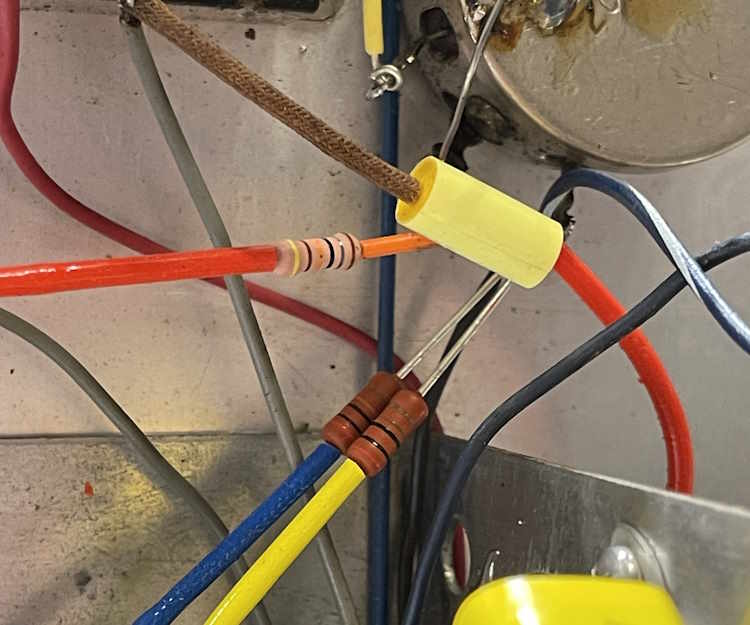
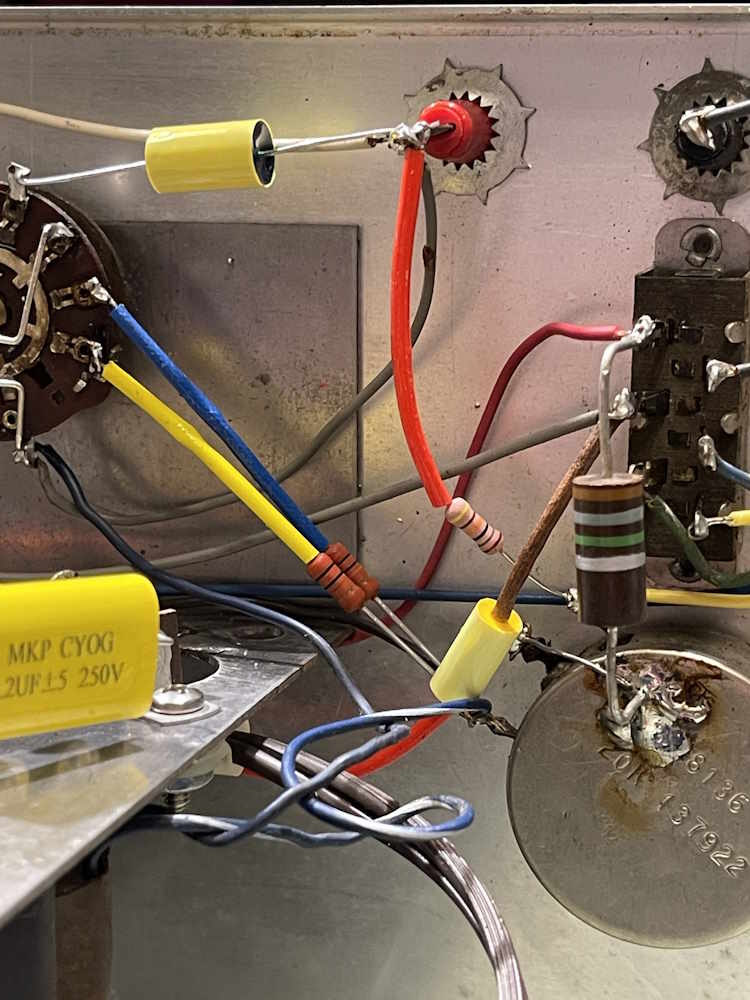
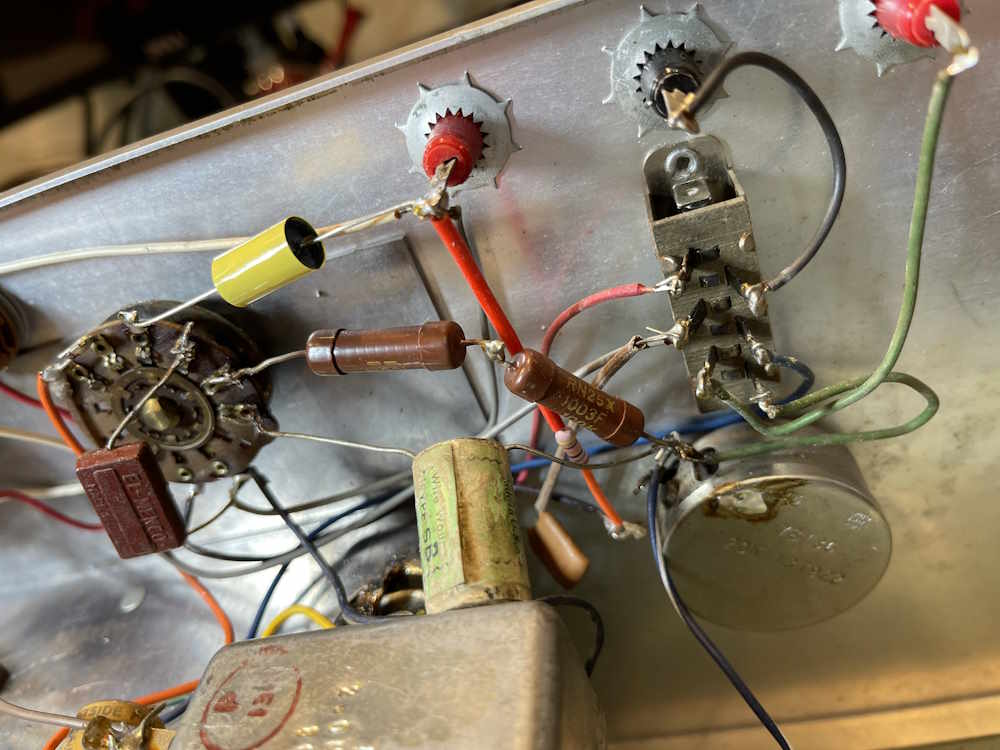
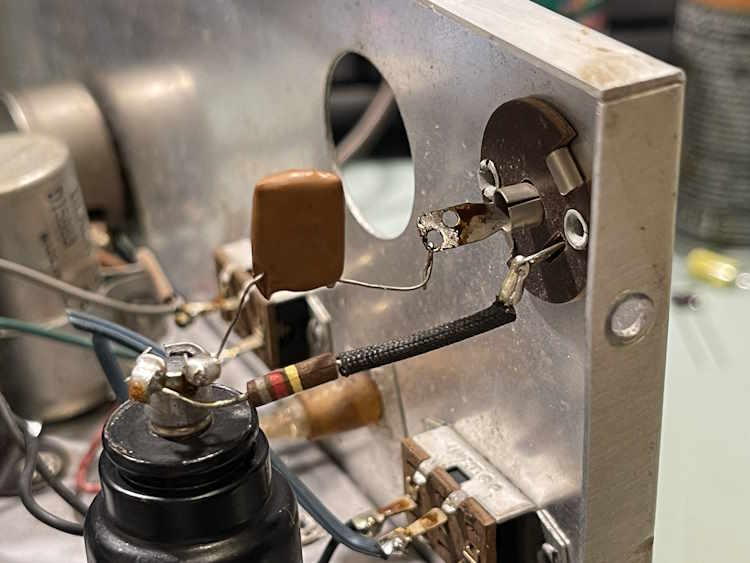
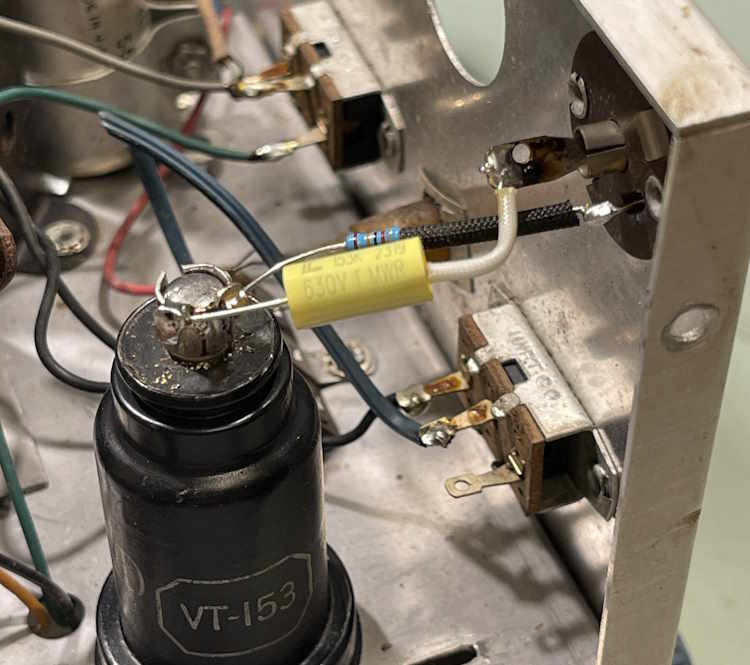
The grid cap for the 12C8.
This is the “signal tracer” portion of the unit, and it uses a WWII surplus tube, the VT-153/12C8. This tube was designed for radio service, and exposes one of it’s grids on the plate cap. That’s where audio is fed in for amplification. There are two parts, a resistor to ground that provides bias for the grid and a blocking capacitor for the audio so you don’t get DC in your device that’s under test.
That was easy enough to re-do.
Fairly standard work, there’s really nothing of note. It’s time to move on to the main body of the unit, and all of it’s “none of this matches anything you wrote down!” mess.
It’s been a while since I’ve done an eBay junk post, so it’s high time. The amount of AI slop has toned itself down a little bit, the wild descriptions of a few years ago have settled into a generic “A valuable and quality device” for most things. No, your hobbyist signal generator from 1963 isn’t widely used in industry.
There are other things on eBay that are quite amusing, however. One of those are these listings for a Delco Vibrator. No, that’s not a toy you have to go to those shops downtown in back alleys for, it’s an electro-mechanical part that was used in automotive radios when tubes were still king. It’s a relay that turns itself off, so it just sits there and vibrates at whatever speed it can, turning power on and off. It’s a mechanical pulse generator, and the pulses it generated were fed to a step-up transformer in order to make B+ for the tubes. There are modern solid-state equivalents if you want to rebuild an old car radio, but sometimes you want to open a can and stuff it so it looks like the OEM part.
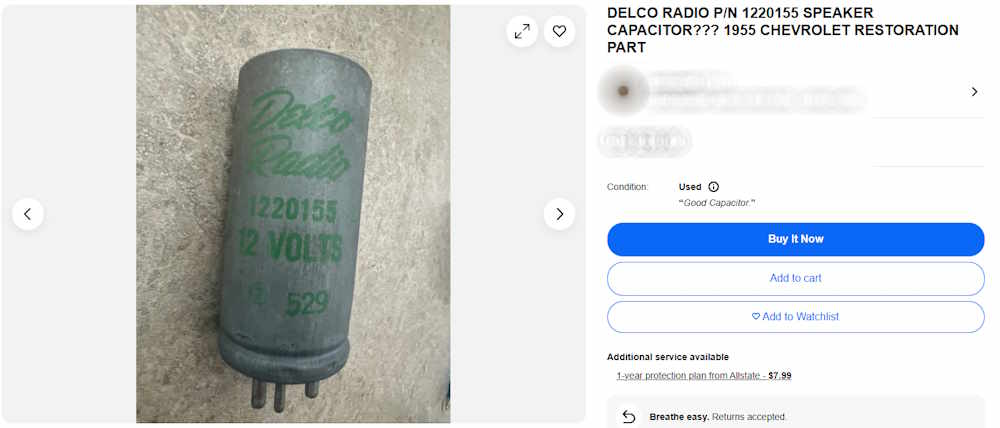
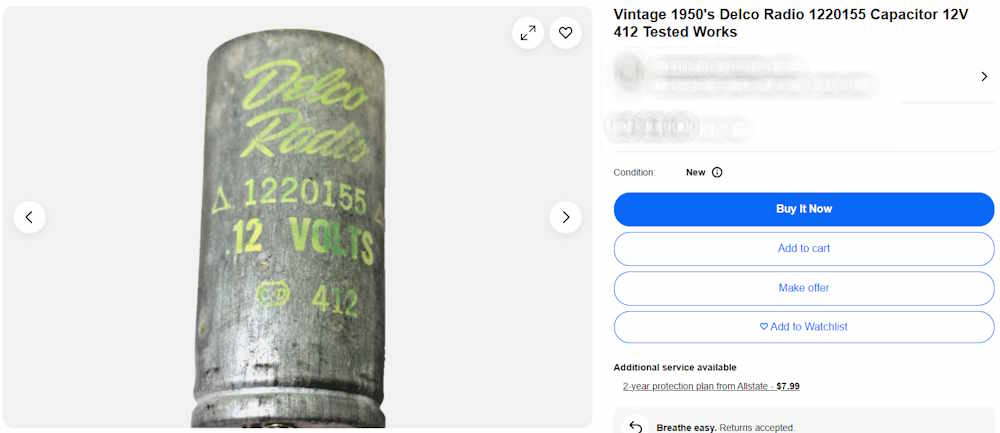
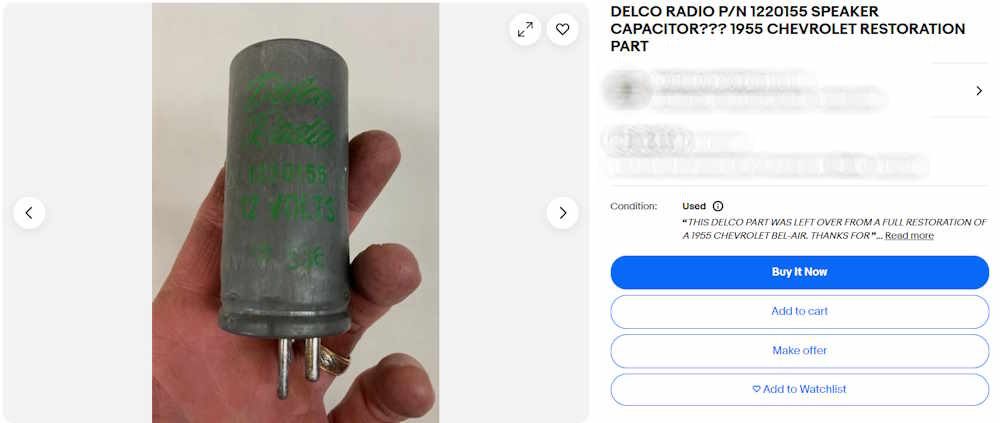
So why post these? They’re amusingly bad - and in some cases probably an outright lie. They’re all Delco 1220155 Vibrators, and a few minutes online would tell you that. Names and prices have been removed to protect the guilty!
Part #1
This one purports to be a “Delco Radio Speaker Capacitor???” Not sure what a Capacitor??? is, but here’s one if you need it.
According to the seller, it’s a double-DIN radio as well. It’s from a working radio to boot.
Part #2
This one is also a capacitor, and the seller has tested it and found that it works. I’m confused as to how this happened, but apparently - it did. Is the seller just writing things there to fill space? Even Mister Owl doesn’t know the answer to that question. I mean…how does it work?
But you get some dust from their warehouse!
Part #3
This is probably the best one. It is from a listing that purports to be an auto parts reseller, and that the unit was left-over from a recent automotive restore. It, like the first one, is a “Speaker Capacitor???” Here’s an idea - if you’re selling auto parts and restoring cars, wouldn’t it be in your best interests to actually, oh, I don’t know, know what you’re selling?
While I could see where an inexperienced seller would make a mistake - these do look like capacitor cans - all you need to do it spend a bit of time online to find out exactly what this is.
One of the things that has been suggested to me is a quick way to find all of the major projects that have appeared on this blog. The easiest way for me to do this would be as you see it here: a single post, similar to hamfest pictures, that collects all of the major device projects that have appeared here.
This hub contains all the the things I am currently working on, or have completed. New projects that are still underway generally appear at the bottom of the post, and the post will grow as more are added. The only things that are not here is a few small things that I did for other people, or the home automation stuff. You can find the latter in a new category on the sidebar aptly labeled “Automation”.
There’s a permanent link on the sidebar that will bring you directly to this hub post.
Click on the title of each item to be taken to that project’s hub.